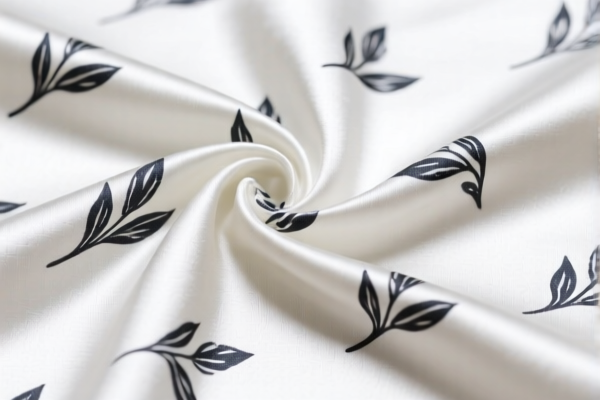
Satin Printing Fabric for Garment Puff Print
CN → US| HS编码 | 关税税率 | 原产国 | 目的国 | 文档 |
|---|---|---|---|---|
| 5407840040 | 49.9% | CN | US | 官方文档 |
| 5407942050 | 49.9% | CN | US | 官方文档 |
商品图片



AI分析
🧵 Satin Printing Fabric for Garment Puff Print
🌐 HS Code Reference & Customs Clearance Guide | 2026 Latest Tariff Analysis | Professional Clearance Strategy
📌 I. Product Definition & Classification: Do You Really Understand "Satin Printing Fabric" for Puff Print?
Satin Printing Fabric, specifically when designated for Garment Puff Print applications, is a woven textile characterized by a glossy surface (satin weave) and printed patterns. In international trade, its classification depends strictly on two critical factors: 1. Material Composition: What percentage of synthetic filaments vs. cotton? 2. Weave Structure: Is it Satin or Twill?
For "Puff Print" applications, the fabric itself is usually a base material. It is typically classified under Chapter 54 (Synthetic Filament Yarn) if it is predominantly synthetic, or Chapter 60/52 if cotton-heavy. However, based on the provided , we focus on the specific Synthetic Filament categories.
⚠️ Key Distinction:
- If the fabric is >85% synthetic filaments → It belongs to different subheadings (not in ).
- If the fabric is <85% synthetic filaments (mixed mainly/solely with cotton) → It falls into the categories detailed below.
- Weave Type: Must be Satin or Twill to qualify for these specific codes. Plain weave fabrics would be excluded.
📦 II. HS Code Classification Details (2026 Latest Tariff Authority Comparison)
| HS Code | Product Description | Key Criteria | Tax Rate (Total) |
|---|---|---|---|
5407.84.00.40 |
Woven fabrics of synthetic filament yarn: Other woven fabrics, containing less than 85 percent by weight of synthetic filaments, mixed mainly or solely with cotton: Printed Satin weave or twill weave | ✅ Synthetic < 85% ✅ Mixed with Cotton ✅ Satin/Twill ✅ Printed |
0.0% |
5407.94.20.50 |
Woven fabrics of synthetic filament yarn: Other woven fabrics: Printed: Other: Satin weave or twill weave | ✅ Synthetic (General Category) ✅ Satin/Twill ✅ Printed ⚠️ Check if <85% cotton mix applies; if not, this is the residual "Other" category |
0.0% |
🔍 Focus Alert:
- Both codes in explicitly require the fabric to be Printed. - Both require a Satin or Twill weave structure. - The primary difference lies in the percentage of synthetic filaments and the mixing with cotton. - Use5407.84.00.40if it is a blend with <85% synthetic (i.e., significant cotton content). - Use5407.94.20.50if it falls under "Other" (likely >85% synthetic but not in the specific 85% bucket, or a different synthetic fiber type not covered in the 85% line, though typically 85% is the cutoff). Note: Verify exact composition against 85% threshold.
💰 III. 2026 Latest Tariff Rate Details (Including Additional Taxes)
✅ Applicable Country: United States (US)
✅ Origin: China (CN) (Assumed based on typical trade context, but verify)
✅ Effective Date: Current Tariff Schedule
🎯 1. 5407.84.00.40 —— Woven Fabrics of Synthetic Filament Yarn (<85% Synthetic, Mixed with Cotton)
| Item | Content |
|---|---|
| Base Tariff | 0.0% (Ad valorem) |
| Section 301 Additional Tariff | 0.0% (See Note Below) |
| Total Tax Rate | 0.0% |
| Tax Calculation | CIF Value × 0.0% = $0 |
| De Minimis Eligibility | ✅ Yes (Low tax value facilitates de minimis claims, but final duty depends on origin) |
| Legal Basis Path | HTSUS:5407.84.00.40 → USTR:Section301List3/4Exclusions (Verify current exclusion status) |
📌 Explanation:
- The base duty for this specific subheading is 0%. - Crucial Check: Historically, many textile goods from China faced Section 301 tariffs (25%). However, many textile items have been excluded or placed under 0% additional duty depending on the specific HTS code and exemption lists. - Since explicitly states "Total Tax: 0.0%", this implies that either: 1. The item qualifies for a Section 301 exclusion, OR 2. It is not subject to the additional 25% tariff under the current list for this specific code. - Action: Always verify the latest USTR exclusion list for5407.84.00.40before shipment. If an exclusion expires, the duty could jump to 25%.
🎯 2. 5407.94.20.50 —— Other Woven Fabrics of Synthetic Filament Yarn (Printed, Satin/Twill)
| Item | Content |
|---|---|
| Base Tariff | 0.0% (Ad valorem) |
| Section 301 Additional Tariff | 0.0% (See Note Below) |
| Total Tax Rate | 0.0% |
| Tax Calculation | CIF Value × 0.0% = $0 |
| De Minimis Eligibility | ✅ Yes |
| Legal Basis Path | HTSUS:5407.94.20.50 → USTR:Section301List3/4Exclusions |
📌 Explanation:
- Similar to the above, the base duty is 0%. - Caution: This is a "Other" category. Ensure that your fabric does not fit more specifically into5407.84(cotton blend) or5407.74(high synthetic content). Misclassification here could lead to audits. - If the fabric is >85% synthetic, it might fall under5407.74.xxxxwhich may have different tax treatments. Verify composition rigorously.
🛠️ IV. Customs Clearance Practical Advice (Real-World Pitfall Avoidance Guide)
✅ 1. Preparation Checklist (Non-negotiable)
| Material | Must Provide | Explanation |
|---|---|---|
| ✅ Composition Label | ✔️ | Must explicitly state "% Synthetic Filament" and "% Cotton". Critical for distinguishing 5407.84 vs 5407.94. |
| ✅ Weave Structure Photo | ✔️ | High-res macro photo showing Satin (shiny surface, floating warp/weft) or Twill (diagonal rib). Not plain weave. |
| ✅ Print Pattern Sample | ✔️ | Confirm it is "Printed" (not dyed or woven-in). |
| ✅ Intended Use Statement | ✔️ | "For Garment Puff Print Application" (Helps customs understand the nature, though HTS is based on material). |
| ✅ Commercial Invoice | ✔️ | Description must match HS Code description: e.g., "Printed Synthetic Fabric, Satin Weave, <85% Synthetic, Mixed with Cotton". |
| ✅ Bill of Lading | ✔️ | Ensure weight and quantity match invoice. |
✅ 2. Declaration Tips (Key Mantras)
🔥 “Weave Type is King, Composition is Queen, Print is Crown!”
| Scenario | Correct Declaration | Wrong Practice |
|---|---|---|
| Fabric is 90% Nylon, 10% Spandex | ❌ Do NOT use 5407.84.00.40 (Cotton mix rule fails). Check other 5407 codes. |
Misclassifying as cotton blend → Audit Risk. |
| Fabric is 60% Polyester, 40% Cotton | ✅ Use 5407.84.00.40 (<85% synthetic, mixed with cotton). |
Using 5407.94 → Overpayment or Misclassification. |
| Fabric is Plain Weave (No Satin/Twill) | ❌ Neither code applies. Use other 5407 subheadings for plain weave. | Forcing Satin/Twill classification → Penalty. |
| Fabric is Dyed, Not Printed | ❌ Neither code applies. Both require "Printed". | Declaring "Printed" when it's "Dyed" → False Declaration. |
✅ 3. Special Case Handling
| Case | Handling Advice |
|---|---|
| Puff Print Foam Application | The "Puff Print" is a post-processing step. Customs classifies the fabric itself. Do not declare as "Printed Foam" unless the foam is part of the fabric structure (which it isn't). Declare as Printed Fabric. |
| Multi-layer Laminated Fabric | If the fabric is laminated with PVC or other materials, it may no longer be classified under Chapter 54. Check Chapter 39 or 59. |
| Small Samples (De Minimis) | If value < $800 and origin is eligible, de minimis may apply. However, if Section 301 tariffs are not excluded, duties may still apply. Check Exclusion List. |
| Suspicion of Misclassification | If unsure between 5407.84 and 5407.94, provide a detailed lab test report on fiber composition to CBP for a Binding Ruling. |
🌍 V. Global Market Customs Comparison (2026 Latest)
| Country/Region | Recommended HS Code | Tariff | Certification Requirements | Notes |
|---|---|---|---|---|
| 🇺🇸 USA | 5407.84.00.40 / 5407.94.20.50 |
0.0% (if excluded) | None specific for fabric | Critical: Verify Section 301 Exclusion. If excluded, 0%. If not, +25%. |
| 🇨🇳 China | 5407.84 / 5407.94 | 0% - 5% | None | Import duties for fabric are low. |
| 🇪🇺 EU | 5407.84 / 5407.94 | 0% - 4% | REACH Compliance | EORI number required. Textile labeling laws apply. |
| 🇬🇧 UK | 5407.84 / 5407.94 | 0% - 4% | UKCA (if applicable) | Post-Brexit rules apply. |
| 🇦🇺 Australia | 5407.84 / 5407.94 | 5% | None | GATS may apply. |
📌 Conclusion:
- The USA is the most complex due to Section 301 tariffs. Even if the base rate is 0%, an additional 25% may apply if no exclusion exists. - EU and UK generally have lower and more stable tariffs for textiles. - Always confirm the latest exclusion list for the US before shipping.
📌 VI. Common Mistakes & Pitfalls Guide (Blood Tears Lessons)
❌ Mistake 1: Assuming "Satin Print Fabric" automatically means 0% duty in the US.
👉 Consequence: If the item is not on the Section 301 exclusion list, you pay 25% additional duty retroactively + penalties.
❌ Mistake 2: Confusing "Dyed" with "Printed".
👉 Consequence: Both HS Codes in require "Printed". If the fabric is solid color (dyed), it is misclassified. Result: Rejection or Fine.
❌ Mistake 3: Misjudging the Synthetic Percentage.
👉 Consequence: If you claim <85% but lab test shows 90%, you are misclassifying. 5407.84 is for <85%. If >85%, you must use a different subheading (e.g., 5407.74). Result: Audit and Back Taxes.
❌ Mistake 4: Ignoring the "Satin or Twill" requirement.
👉 Consequence: If the weave is Plain, these codes are invalid. Result: Misclassification.
✅ Correct Practice:
"Printed Woven Fabric, Satin Weave, Composition: 60% Polyester, 40% Cotton, for Garment Puff Print Application, Model XYZ, Section 301 Excluded."
🎯 VII. Conclusion: Professional Declaration, Save Time, Reduce Costs!
🎯 Remember the Mantra:
🔹 “Check Composition First, Weave Second, Print Third, Exclusion Last!”
🔹 “0% Base Rate doesn’t mean 0% Total Duty! Check Section 301!”
📌 Pro Tip:
- If your fabric is <85% synthetic (cotton blend), use 5407.84.00.40.
- If your fabric is >85% synthetic but fits the "Other" description, use 5407.94.20.50 (if applicable).
- Always verify the USTR Exclusion List for the specific HTS code before finalizing your shipment.
📣 Immediate Action:
📞 Consult with a Customs Broker + Provide Composition Report + Verify Section 301 Exclusion List
🚀 Ensure your Satin Printing Fabric clears customs smoothly, avoiding 25% unexpected tariffs!
✨ Professional Clearance Starts with Accurate Classification!
💼 Every percent of duty counts!
用户评价
关于 HS 编码归类
协调制度(HS)是由世界海关组织(WCO)制定的国际贸易商品分类标准。全球 200 多个国家采用 HS 系统作为海关关税、贸易统计和进出口监管的基础。
每个 HS 编码遵循以下层级结构:
- 章(2 位)——商品大类(例如:第 84 章:机器和机械设备)
- 品目(4 位)——章内的更具体分类
- 子目(6 位)——国际通用细分,所有 WCO 成员国统一使用
- 本国细分(8-10 位)——各国自行扩展的细分编码,如美国 HTSUS 10 位编码
正确的 HS 编码归类对于顺利通关、准确缴纳关税和遵守贸易法规至关重要。错误归类可能导致海关延误、多缴关税或罚款。
从CN进口到US时,适用的关税税率可能包括:
- 最惠国(MFN)税率——适用于 WTO 成员国的标准关税税率
- 普通税率——适用于无贸易协定国家
- 贸易救济关税——附加关税,如 301 条款(反倾销)、232 条款(国家安全)或反补贴税
本页内容仅供参考。如需正式归类,请咨询当地海关或持牌报关代理。