Satin Printing Fabric for Garment Puff Print
CN → US| HS Code | Tariff Rate | Origin | Destination | Doc |
|---|---|---|---|---|
| 5407840040 | 49.9% | CN | US | Official Doc |
| 5407942050 | 49.9% | CN | US | Official Doc |
Product Images
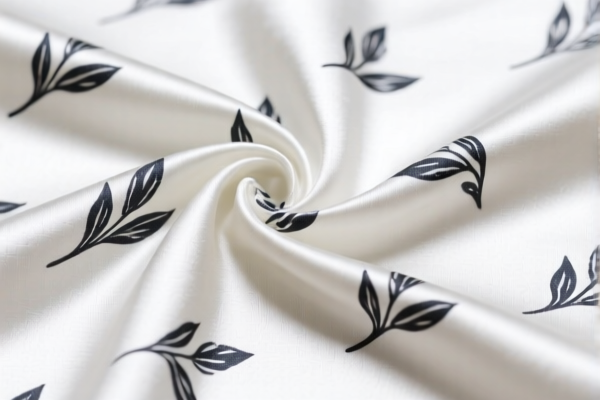



AI Analysis
🧵 Satin Printing Fabric for Garment Puff Print
🌐 HS Code Reference & Customs Clearance Guide | 2026 Latest Tariff Analysis | Professional Clearance Strategy
📌 I. Product Definition & Classification: Do You Really Understand "Satin Printing Fabric" for Puff Print?
Satin Printing Fabric, specifically when designated for Garment Puff Print applications, is a woven textile characterized by a glossy surface (satin weave) and printed patterns. In international trade, its classification depends strictly on two critical factors: 1. Material Composition: What percentage of synthetic filaments vs. cotton? 2. Weave Structure: Is it Satin or Twill?
For "Puff Print" applications, the fabric itself is usually a base material. It is typically classified under Chapter 54 (Synthetic Filament Yarn) if it is predominantly synthetic, or Chapter 60/52 if cotton-heavy. However, based on the provided , we focus on the specific Synthetic Filament categories.
⚠️ Key Distinction:
- If the fabric is >85% synthetic filaments → It belongs to different subheadings (not in ).
- If the fabric is <85% synthetic filaments (mixed mainly/solely with cotton) → It falls into the categories detailed below.
- Weave Type: Must be Satin or Twill to qualify for these specific codes. Plain weave fabrics would be excluded.
📦 II. HS Code Classification Details (2026 Latest Tariff Authority Comparison)
| HS Code | Product Description | Key Criteria | Tax Rate (Total) |
|---|---|---|---|
5407.84.00.40 |
Woven fabrics of synthetic filament yarn: Other woven fabrics, containing less than 85 percent by weight of synthetic filaments, mixed mainly or solely with cotton: Printed Satin weave or twill weave | ✅ Synthetic < 85% ✅ Mixed with Cotton ✅ Satin/Twill ✅ Printed |
0.0% |
5407.94.20.50 |
Woven fabrics of synthetic filament yarn: Other woven fabrics: Printed: Other: Satin weave or twill weave | ✅ Synthetic (General Category) ✅ Satin/Twill ✅ Printed ⚠️ Check if <85% cotton mix applies; if not, this is the residual "Other" category |
0.0% |
🔍 Focus Alert:
- Both codes in explicitly require the fabric to be Printed. - Both require a Satin or Twill weave structure. - The primary difference lies in the percentage of synthetic filaments and the mixing with cotton. - Use5407.84.00.40if it is a blend with <85% synthetic (i.e., significant cotton content). - Use5407.94.20.50if it falls under "Other" (likely >85% synthetic but not in the specific 85% bucket, or a different synthetic fiber type not covered in the 85% line, though typically 85% is the cutoff). Note: Verify exact composition against 85% threshold.
💰 III. 2026 Latest Tariff Rate Details (Including Additional Taxes)
✅ Applicable Country: United States (US)
✅ Origin: China (CN) (Assumed based on typical trade context, but verify)
✅ Effective Date: Current Tariff Schedule
🎯 1. 5407.84.00.40 —— Woven Fabrics of Synthetic Filament Yarn (<85% Synthetic, Mixed with Cotton)
| Item | Content |
|---|---|
| Base Tariff | 0.0% (Ad valorem) |
| Section 301 Additional Tariff | 0.0% (See Note Below) |
| Total Tax Rate | 0.0% |
| Tax Calculation | CIF Value × 0.0% = $0 |
| De Minimis Eligibility | ✅ Yes (Low tax value facilitates de minimis claims, but final duty depends on origin) |
| Legal Basis Path | HTSUS:5407.84.00.40 → USTR:Section301List3/4Exclusions (Verify current exclusion status) |
📌 Explanation:
- The base duty for this specific subheading is 0%. - Crucial Check: Historically, many textile goods from China faced Section 301 tariffs (25%). However, many textile items have been excluded or placed under 0% additional duty depending on the specific HTS code and exemption lists. - Since explicitly states "Total Tax: 0.0%", this implies that either: 1. The item qualifies for a Section 301 exclusion, OR 2. It is not subject to the additional 25% tariff under the current list for this specific code. - Action: Always verify the latest USTR exclusion list for5407.84.00.40before shipment. If an exclusion expires, the duty could jump to 25%.
🎯 2. 5407.94.20.50 —— Other Woven Fabrics of Synthetic Filament Yarn (Printed, Satin/Twill)
| Item | Content |
|---|---|
| Base Tariff | 0.0% (Ad valorem) |
| Section 301 Additional Tariff | 0.0% (See Note Below) |
| Total Tax Rate | 0.0% |
| Tax Calculation | CIF Value × 0.0% = $0 |
| De Minimis Eligibility | ✅ Yes |
| Legal Basis Path | HTSUS:5407.94.20.50 → USTR:Section301List3/4Exclusions |
📌 Explanation:
- Similar to the above, the base duty is 0%. - Caution: This is a "Other" category. Ensure that your fabric does not fit more specifically into5407.84(cotton blend) or5407.74(high synthetic content). Misclassification here could lead to audits. - If the fabric is >85% synthetic, it might fall under5407.74.xxxxwhich may have different tax treatments. Verify composition rigorously.
🛠️ IV. Customs Clearance Practical Advice (Real-World Pitfall Avoidance Guide)
✅ 1. Preparation Checklist (Non-negotiable)
| Material | Must Provide | Explanation |
|---|---|---|
| ✅ Composition Label | ✔️ | Must explicitly state "% Synthetic Filament" and "% Cotton". Critical for distinguishing 5407.84 vs 5407.94. |
| ✅ Weave Structure Photo | ✔️ | High-res macro photo showing Satin (shiny surface, floating warp/weft) or Twill (diagonal rib). Not plain weave. |
| ✅ Print Pattern Sample | ✔️ | Confirm it is "Printed" (not dyed or woven-in). |
| ✅ Intended Use Statement | ✔️ | "For Garment Puff Print Application" (Helps customs understand the nature, though HTS is based on material). |
| ✅ Commercial Invoice | ✔️ | Description must match HS Code description: e.g., "Printed Synthetic Fabric, Satin Weave, <85% Synthetic, Mixed with Cotton". |
| ✅ Bill of Lading | ✔️ | Ensure weight and quantity match invoice. |
✅ 2. Declaration Tips (Key Mantras)
🔥 “Weave Type is King, Composition is Queen, Print is Crown!”
| Scenario | Correct Declaration | Wrong Practice |
|---|---|---|
| Fabric is 90% Nylon, 10% Spandex | ❌ Do NOT use 5407.84.00.40 (Cotton mix rule fails). Check other 5407 codes. |
Misclassifying as cotton blend → Audit Risk. |
| Fabric is 60% Polyester, 40% Cotton | ✅ Use 5407.84.00.40 (<85% synthetic, mixed with cotton). |
Using 5407.94 → Overpayment or Misclassification. |
| Fabric is Plain Weave (No Satin/Twill) | ❌ Neither code applies. Use other 5407 subheadings for plain weave. | Forcing Satin/Twill classification → Penalty. |
| Fabric is Dyed, Not Printed | ❌ Neither code applies. Both require "Printed". | Declaring "Printed" when it's "Dyed" → False Declaration. |
✅ 3. Special Case Handling
| Case | Handling Advice |
|---|---|
| Puff Print Foam Application | The "Puff Print" is a post-processing step. Customs classifies the fabric itself. Do not declare as "Printed Foam" unless the foam is part of the fabric structure (which it isn't). Declare as Printed Fabric. |
| Multi-layer Laminated Fabric | If the fabric is laminated with PVC or other materials, it may no longer be classified under Chapter 54. Check Chapter 39 or 59. |
| Small Samples (De Minimis) | If value < $800 and origin is eligible, de minimis may apply. However, if Section 301 tariffs are not excluded, duties may still apply. Check Exclusion List. |
| Suspicion of Misclassification | If unsure between 5407.84 and 5407.94, provide a detailed lab test report on fiber composition to CBP for a Binding Ruling. |
🌍 V. Global Market Customs Comparison (2026 Latest)
| Country/Region | Recommended HS Code | Tariff | Certification Requirements | Notes |
|---|---|---|---|---|
| 🇺🇸 USA | 5407.84.00.40 / 5407.94.20.50 |
0.0% (if excluded) | None specific for fabric | Critical: Verify Section 301 Exclusion. If excluded, 0%. If not, +25%. |
| 🇨🇳 China | 5407.84 / 5407.94 | 0% - 5% | None | Import duties for fabric are low. |
| 🇪🇺 EU | 5407.84 / 5407.94 | 0% - 4% | REACH Compliance | EORI number required. Textile labeling laws apply. |
| 🇬🇧 UK | 5407.84 / 5407.94 | 0% - 4% | UKCA (if applicable) | Post-Brexit rules apply. |
| 🇦🇺 Australia | 5407.84 / 5407.94 | 5% | None | GATS may apply. |
📌 Conclusion:
- The USA is the most complex due to Section 301 tariffs. Even if the base rate is 0%, an additional 25% may apply if no exclusion exists. - EU and UK generally have lower and more stable tariffs for textiles. - Always confirm the latest exclusion list for the US before shipping.
📌 VI. Common Mistakes & Pitfalls Guide (Blood Tears Lessons)
❌ Mistake 1: Assuming "Satin Print Fabric" automatically means 0% duty in the US.
👉 Consequence: If the item is not on the Section 301 exclusion list, you pay 25% additional duty retroactively + penalties.
❌ Mistake 2: Confusing "Dyed" with "Printed".
👉 Consequence: Both HS Codes in require "Printed". If the fabric is solid color (dyed), it is misclassified. Result: Rejection or Fine.
❌ Mistake 3: Misjudging the Synthetic Percentage.
👉 Consequence: If you claim <85% but lab test shows 90%, you are misclassifying. 5407.84 is for <85%. If >85%, you must use a different subheading (e.g., 5407.74). Result: Audit and Back Taxes.
❌ Mistake 4: Ignoring the "Satin or Twill" requirement.
👉 Consequence: If the weave is Plain, these codes are invalid. Result: Misclassification.
✅ Correct Practice:
"Printed Woven Fabric, Satin Weave, Composition: 60% Polyester, 40% Cotton, for Garment Puff Print Application, Model XYZ, Section 301 Excluded."
🎯 VII. Conclusion: Professional Declaration, Save Time, Reduce Costs!
🎯 Remember the Mantra:
🔹 “Check Composition First, Weave Second, Print Third, Exclusion Last!”
🔹 “0% Base Rate doesn’t mean 0% Total Duty! Check Section 301!”
📌 Pro Tip:
- If your fabric is <85% synthetic (cotton blend), use 5407.84.00.40.
- If your fabric is >85% synthetic but fits the "Other" description, use 5407.94.20.50 (if applicable).
- Always verify the USTR Exclusion List for the specific HTS code before finalizing your shipment.
📣 Immediate Action:
📞 Consult with a Customs Broker + Provide Composition Report + Verify Section 301 Exclusion List
🚀 Ensure your Satin Printing Fabric clears customs smoothly, avoiding 25% unexpected tariffs!
✨ Professional Clearance Starts with Accurate Classification!
💼 Every percent of duty counts!
Customer Reviews
About HS Code Classification
The Harmonized System (HS) is an internationally standardized nomenclature developed by the World Customs Organization (WCO) to classify traded products. Over 200 countries use the HS system as the basis for customs tariffs, trade statistics, and import/export regulations.
Each HS code follows a hierarchical structure:
- Chapter (2 digits) — Broad category of goods (e.g., Chapter 84: Machinery and Mechanical Appliances)
- Heading (4 digits) — More specific grouping within the chapter
- Subheading (6 digits) — Internationally standardized breakdown, used by all WCO member countries
- National subdivisions (8-10 digits) — Country-specific extensions for further classification, such as US HTSUS 10-digit codes
Correct HS code classification is essential for smooth customs clearance, accurate duty payment, and compliance with trade regulations. Misclassification can lead to customs delays, overpayment of duties, or penalties.
When importing from CN to US, the applicable tariff rates may include:
- Most-Favored-Nation (MFN) rate — The standard duty rate applied to WTO members
- General rate — Applied to countries without trade agreements
- Trade remedy duties — Additional tariffs such as Section 301 (anti-dumping), Section 232 (national security), or countervailing duties
The information provided on this page is for reference purposes only. For official classification, please consult with your local customs authority or a licensed customs broker.