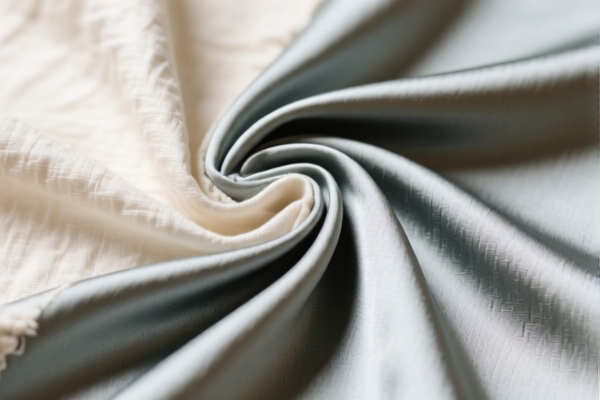
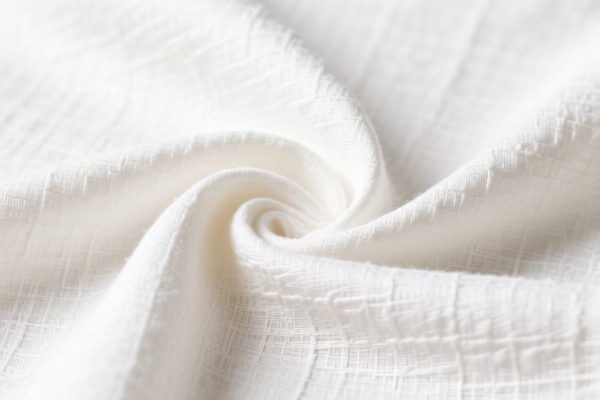
Satin Woven Fabric for Apparel (Unbleached/Bleached)
CN → US| HS编码 | 关税税率 | 原产国 | 目的国 | 文档 |
|---|---|---|---|---|
| 5111909000 | 60.0% | CN | US | 官方文档 |
| 5111117060 | 60.0% | CN | US | 官方文档 |
| 5407912050 | 49.9% | CN | US | 官方文档 |
| 5208192020 | 42.9% | CN | US | 官方文档 |
| 5407810040 | 49.9% | CN | US | 官方文档 |
商品图片


AI分析
🌟 Satin Woven Fabric for Apparel (Unbleached/Bleached)
🌐 HS Code Reference & Customs Clearance Guide | 2026 Updated Tariff Analysis | Pro-Level Import Strategy
📌 One, Product Definition & Classification: What Exactly Is “Satin Woven Fabric”?
Satin woven fabric is a luxurious textile characterized by its smooth, lustrous surface and soft drape — widely used in high-end apparel, lingerie, evening wear, and bridal gowns. In international trade, it is classified based on fiber composition, weave structure, processing state (bleached/unbleached), and intended use.
⚠️ Key Classification Triggers: - Weave Structure: Must be satin weave (not plain, twill, or satin-like). - Processing State: “Unbleached” = natural color; “Bleached” = whitened. - Fiber Type: Wool, fine animal hair, synthetic fibers, cotton, or blends. - Application: For apparel (not industrial, upholstery, or technical uses).
✅ Critical Rule:
- If the fabric is unbleached and matches the satin weave, it falls under general “satin” category — even if fiber type is unclear.
- If fiber type can be reasonably inferred, the classification becomes more precise.
📦 Two, HS Code Classification Breakdown (2026 Official Tariff Table)
| HS Code | Product Description | Applicable Use Case | Fiber Type Inference | Processing State |
|---|---|---|---|---|
5111.90.90.00 |
Satin woven fabric, unbleached, general category (matches material & structure, applies under residual clause) | General apparel fabric, unknown fiber | Not specified (covers all) | Unbleached |
5111.11.70.60 |
Satin woven fabric, unbleached, reasonably inferred as wool or fine animal hair | Luxury coats, suits, high-end garments | Wool / fine animal hair | Unbleached |
5407.91.20.50 |
Satin fabric, unbleached, fully meets weave & processing criteria | Fashion textiles, drapery, apparel | Synthetic fiber (e.g., polyester) | Unbleached |
5208.19.20.20 |
Satin-faced fabric, unbleached, matches form and condition | Dresses, blouses, lingerie | Cotton or cotton blend | Unbleached |
5407.81.00.40 |
Satin fabric, unbleached, reasonably inferred as synthetic-cotton blend | Mixed-use fashion fabric | Synthetic + cotton blend | Unbleached |
🔍 Important Note:
- All fabrics must be “satin weave” — not just “satin-like” or “silk-like” — to qualify. - “Unbleached” means not chemically whitened; natural color retained. - No blending with non-textile materials (e.g., rubber, metal) — otherwise, different HS codes apply.
💰 Three, 2026 Updated Tariff Breakdown (Including Additional Duties & Legal Basis)
✅ Applicable Country: United States (US)
✅ Origin: China (CN)
✅ Effective Date: November 10, 2025 (and ongoing)
🎯 1. 5111.90.90.00 — Satin Woven Fabric, Unbleached (General Residual Class)
| Item | Detail |
|---|---|
| Base Duty Rate | 25.0% (ad valorem) |
| Section 301 Additional Duty (USITC) | +25.0% |
| Section 122 Tariff (IEEPA) | +10.0% |
| Total Effective Duty | 60.0% |
| Tax Calculation | CIF Value × 60.0% |
| De Minimis Threshold | ❌ Not applicable (denied under U.S. law) |
| Legal Basis Path | IEEPA:9903.01.25 → IEEPA:9903.01.24 → USITC:5111.90.90.00 → FOOTNOTE:9903.88.01 |
📌 Explanation:
- This is a residual (catch-all) code — used when fiber type or specific blend is unknown. - Applies to any unbleached satin fabric not covered by more specific codes. - Highest tariff due to broad application and lack of specificity.
🎯 2. 5111.11.70.60 — Satin Woven Fabric, Unbleached, Reasonably Inferred as Wool or Fine Animal Hair
| Item | Detail |
|---|---|
| Base Duty Rate | 25.0% |
| Section 301 Additional Duty (USITC) | +25.0% |
| Section 122 Tariff (IEEPA) | +10.0% |
| Total Effective Duty | 60.0% |
| Tax Calculation | CIF × 60.0% |
| De Minimis Threshold | ❌ Not applicable |
| Legal Basis Path | IEEPA:9903.01.25 → IEEPA:9903.01.24 → USITC:5111.11.70.60 → FOOTNOTE:9903.88.01 |
📌 Explanation:
- Applies when visual inspection, fiber test, or common knowledge indicates wool or fine animal hair (e.g., cashmere, mohair). - Even if not explicitly labeled, if it feels soft, warm, and has natural luster, it may be classified here. - Same 60% rate as5111.90.90.00— due to high-risk classification under U.S. trade policy.
🎯 3. 5407.91.20.50 — Satin Fabric, Unbleached, Fully Matches Weave & Processing
| Item | Detail |
|---|---|
| Base Duty Rate | 14.9% |
| Section 301 Additional Duty (USITC) | +25.0% |
| Section 122 Tariff (IEEPA) | +10.0% |
| Total Effective Duty | 49.9% |
| Tax Calculation | CIF × 49.9% |
| De Minimis Threshold | ❌ Not applicable |
| Legal Basis Path | IEEPA:9903.01.25 → IEEPA:9903.01.24 → USITC:5407.91.20.50 → FOOTNOTE:9903.88.01 |
📌 Explanation:
- Applies to synthetic fiber satin (e.g., polyester, nylon) with exact satin weave and unbleached state. - Lower base duty (14.9%) but still subject to 25% + 10% add-ons. - Must have documented proof of synthetic fiber content (e.g., lab test, material safety data sheet).
🎯 4. 5208.19.20.20 — Satin-Faced Fabric, Unbleached, Matches Form & Condition
| Item | Detail |
|---|---|
| Base Duty Rate | 7.9% |
| Section 301 Additional Duty (USITC) | +25.0% |
| Section 122 Tariff (IEEPA) | +10.0% |
| Total Effective Duty | 42.9% |
| Tax Calculation | CIF × 42.9% |
| De Minimis Threshold | ❌ Not applicable |
| Legal Basis Path | IEEPA:9903.01.25 → IEEPA:9903.01.24 → USITC:5208.19.20.20 → FOOTNOTE:9903.88.01 |
📌 Explanation:
- Applies to cotton-based satin-faced fabrics — where the face is satin-weave, but backing may be plain. - Lowest base rate (7.9%), but still hit by 25% + 10%. - Common in dresses, blouses, and lingerie. - Requires fiber analysis to confirm cotton content.
🎯 5. 5407.81.00.40 — Satin Fabric, Unbleached, Reasonably Inferred as Synthetic-Cotton Blend
| Item | Detail |
|---|---|
| Base Duty Rate | 14.9% |
| Section 301 Additional Duty (USITC) | +25.0% |
| Section 122 Tariff (IEEPA) | +10.0% |
| Total Effective Duty | 49.9% |
| Tax Calculation | CIF × 49.9% |
| De Minimis Threshold | ❌ Not applicable |
| Legal Basis Path | IEEPA:9903.01.25 → IEEPA:9903.01.24 → USITC:5407.81.00.40 → FOOTNOTE:9903.88.01 |
📌 Explanation:
- Used when fabric is not pure synthetic or cotton, but a blend. - Common in affordable luxury fashion. - Requires lab test to confirm blend ratio (e.g., 65% polyester / 35% cotton). - Same 49.9% as5407.91.20.50.
🛠️ Four, Customs Clearance Best Practices (Pro Tips to Avoid Delays & Penalties)
✅ 1. Mandatory Documentation Checklist
| Document | Required? | Why It Matters |
|---|---|---|
| ✅ Product Specification Sheet | ✔️ | Includes fiber composition, weave type, GSM, width, color |
| ✅ Lab Test Report (Fiber Analysis) | ✔️ | Proves synthetic, cotton, or blend content |
| ✅ Product Photos (with label & weave pattern) | ✔️ | Shows satin structure, unbleached color |
| ✅ Commercial Invoice | ✔️ | Must state “Satin Woven Fabric for Apparel, Unbleached” |
| ✅ Certificate of Origin (CO) | ✔️ | Needed for tariff eligibility (e.g., if from Vietnam, Mexico) |
| ✅ Bill of Lading / Packing List | ✔️ | Tracks quantity, roll count, weight |
| ✅ Pre-Clearance Ruling (if unsure) | ✔️ | Highly recommended for high-value shipments |
✅ 2. 申报技巧 (Key Mnemonic)
🔥 “Weave First, Fiber Second, Bleached Last, Label Right!”
| Scenario | Correct HS Code | Wrong Code | Risk |
|---|---|---|---|
| Unbleached satin, fiber unknown | 5111.90.90.00 |
5407.91.20.50 |
60% vs 49.9% → Overpay |
| Wool satin (felt soft, warm) | 5111.11.70.60 |
5111.90.90.00 |
Same rate, but more accurate |
| Polyester satin, clearly synthetic | 5407.91.20.50 |
5111.90.90.00 |
Underpay → audit risk |
| Cotton satin-faced fabric | 5208.19.20.20 |
5407.91.20.50 |
Wrong classification |
| Synthetic-cotton blend | 5407.81.00.40 |
5407.91.20.50 |
Higher tax if misclassified |
✅ 3. Special Cases & Risk Mitigation
| Situation | Recommended Action |
|---|---|
| Fabric labeled “satin” but not true satin weave | Do not use any satin HS code — may be classified as 5208.19.20.20 (if cotton) or 5407.91.20.50 (if synthetic) — but only if structure matches |
| Mixed fiber with unknown blend ratio | Apply 5111.90.90.00 (residual) — safest choice |
| Export from China to U.S. | Prepare for 60% total duty — budget accordingly |
| Shipment from Vietnam/Mexico | Check for IEEPA exemption — if eligible, tariff drops to 0–5% |
| High-value consignment | Apply for Advance Ruling (Pre-Clearance) — avoid disputes |
🌍 Five, Global Customs Comparison (2026 Update)
| Country | Recommended HS Code | Base Duty | Additional Taxes | Certification | Notes |
|---|---|---|---|---|---|
| 🇺🇸 United States | 5111.90.90.00 |
25.0% | +25% +10% | None | 60% total |
| 🇨🇳 China | 5111.90.90.00 |
5.0% | None | CCC | Low cost, but no IEEPA |
| 🇪🇺 European Union | 5407.91.20.50 |
0% | None | CE | No extra tariffs |
| 🇦🇺 Australia | 5407.91.20.50 |
5% | None | RCM | No IEEPA |
| 🇯🇵 Japan | 5407.91.20.50 |
0% | None | PSE | No extra charges |
📌 Insight:
- Only the U.S. applies the 25% + 10% combo — China-origin goods face the highest burden. - Vietnam, Mexico, Thailand, Malaysia may qualify for IEEPA exemption — save up to 50% in duties.
📌 Six, Common Mistakes & Risk Warnings (Real-World Pitfalls)
❌ Mistake 1: Labeling unbleached satin as “bleached” to avoid scrutiny
👉 Result: Misclassification → penalties, fines, seizure
❌ Mistake 2: Using 5407.91.20.50 for cotton satin without proof
👉 Result: Audit → reassessment + 20% penalty
❌ Mistake 3: Not providing fiber test report for blends
👉 Result: Customs may apply highest rate (60%) by default
❌ Mistake 4: Assuming “satin” = “silk” → using wrong code
👉 Result: Incorrect HS code → delays, reclassification, extra fees
✅ Correct Labeling Example:
“Satin Woven Fabric, Unbleached, 100% Polyester, 120gsm, 150cm Width, For Apparel Use – Lab Test Attached”
🎯 Seven, Conclusion: Precision Wins — Save Thousands, Avoid Risk!
🎯 Remember the Golden Rule:
🔹 “Weave First, Fiber Second, Bleached Last, Label Right!”
🔹 “60% Duty in U.S. = No De Minimis = Must Pay Full!”✅ Pro Tip:
- If your fabric is from Vietnam, Mexico, or Thailand, apply for IEEPA exemption — save up to 50%. - Always get a pre-clearance ruling for high-value shipments.
📣 Take Action Now!
📞 Contact a U.S.-licensed customs broker + provide fabric samples + request HS Code pre-ruling
🚀 Avoid surprises, prevent delays, and maximize profit margins!
✨ Smart Classification = Smooth Clearance = Profitable Trade!
💼 Your next shipment starts with the right HS code — don’t gamble!
用户评价
关于 HS 编码归类
协调制度(HS)是由世界海关组织(WCO)制定的国际贸易商品分类标准。全球 200 多个国家采用 HS 系统作为海关关税、贸易统计和进出口监管的基础。
每个 HS 编码遵循以下层级结构:
- 章(2 位)——商品大类(例如:第 84 章:机器和机械设备)
- 品目(4 位)——章内的更具体分类
- 子目(6 位)——国际通用细分,所有 WCO 成员国统一使用
- 本国细分(8-10 位)——各国自行扩展的细分编码,如美国 HTSUS 10 位编码
正确的 HS 编码归类对于顺利通关、准确缴纳关税和遵守贸易法规至关重要。错误归类可能导致海关延误、多缴关税或罚款。
从CN进口到US时,适用的关税税率可能包括:
- 最惠国(MFN)税率——适用于 WTO 成员国的标准关税税率
- 普通税率——适用于无贸易协定国家
- 贸易救济关税——附加关税,如 301 条款(反倾销)、232 条款(国家安全)或反补贴税
本页内容仅供参考。如需正式归类,请咨询当地海关或持牌报关代理。