satin woven fabric for apparel unbleached/bleached
CN → US| HS编码 | 关税税率 | 原产国 | 目的国 | 文档 |
|---|---|---|---|---|
| 5208192020 | 42.9% | CN | US | 官方文档 |
| 5407810040 | 49.9% | CN | US | 官方文档 |
| 5208292020 | 42.7% | CN | US | 官方文档 |
| 5408210030 | 49.9% | CN | US | 官方文档 |
| 5407810040 | 49.9% | CN | US | 官方文档 |
商品图片


AI分析
✨ Satin Woven Fabric for Apparel (Unbleached/Bleached)
🌐 HS Code & Tariff Guide | 2026 U.S. Trade Compliance Deep Dive | Expert Customs Strategy
📌 One Product, Four Critical HS Codes – Know the Difference Before You Ship!
🧵 I. Product Definition & Classification: What Exactly Is “Satin Woven Fabric” for Apparel?
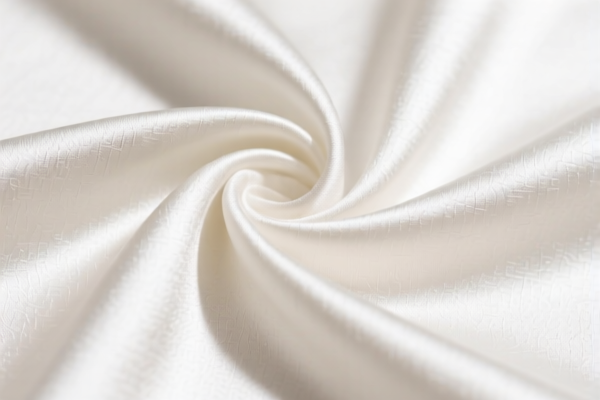
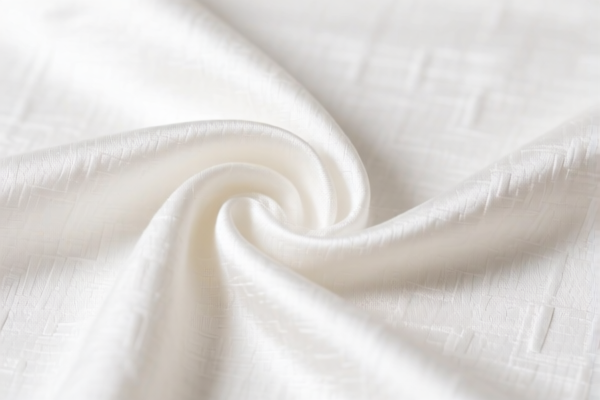
Satin woven fabric is a high-luster, smooth-textured textile characterized by a satin weave structure, where weft or warp threads float over multiple others, creating a shiny, reflective surface on one side and a duller reverse.
In apparel, this fabric is used for:
- Dresses, gowns, and evening wear
- Lingerie and bridal wear
- Linings and trims
- Fashion accessories (scarves, headbands)
⚠️ Key Classification Triggers: - Weave type: Must be satin weave (not twill, plain, or satin-like imitation)
- Fiber content: Can be 100% cotton, cotton-synthetic blend, or 100% synthetic (e.g., polyester)
- Processing: Whether unbleached (natural color) or bleached (white/undyed)
- End use: For apparel, not industrial, home furnishing, or technical textiles🔍 Critical Insight:
Even if the fabric looks like satin, if it’s not woven using a true satin structure, it does not qualify for these HS codes.
📦 II. HS Code Breakdown (2026 U.S. Tariff Schedule – All Four Codes Explained)
| HS Code | Product Description | Fiber Type | Bleaching Status | Key Classification Logic |
|---|---|---|---|---|
5208.19.20.20 |
Satin woven fabric, 100% cotton, unbleached/bleached, for apparel | Cotton | Unbleached/Bleached | Pure cotton satin weave; no synthetic content |
5407.81.00.40 |
Satin woven fabric, synthetic fiber + cotton blend, unbleached/bleached | Cotton + Synthetic (e.g., polyester) | Unbleached/Bleached | Blended fiber with synthetic component; not pure cotton |
5208.29.20.20 |
Satin woven fabric, 100% cotton, unbleached/bleached, for cotton lining or interlining | Cotton | Unbleached/Bleached | Cotton satin used as lining or衬布 (interlining) — not main apparel fabric |
5408.21.00.30 |
Satin woven fabric, 100% synthetic (e.g., polyester), unbleached, with artificial filament | Synthetic (e.g., polyester) | Unbleached | Artificial filament used in weaving; no cotton |
📌 Why These Four Codes?
The U.S. tariff system distinguishes based on: - Fiber composition (cotton vs. synthetic vs. blend)
- Weave structure (must be true satin)
- End use (apparel vs. lining)
- Processing status (bleached vs. unbleached)
💰 III. 2026 U.S. Tariff Breakdown (With Full Legal & Policy Justification)
✅ Applicable Country: China (CN)
✅ Applicable Law: U.S. Trade Act 1974 (Section 301), IEEPA, and 122(a) Tariff Provisions
✅ Effective Date: November 10, 2025 (and ongoing)
🎯 1. 5208.19.20.20 – 100% Cotton Satin Fabric (Unbleached/Bleached)
| Tax Component | Rate | Legal Basis | Explanation |
|---|---|---|---|
| Base Duty | 7.9% | U.S. HTSUS §5208.19.20 | Standard rate for cotton satin |
| Section 301 (USITC) Additional Duty | +25.0% | USITC Footnote 9903.88.01 | Tariff imposed under Section 301 for Chinese goods deemed to have unfair trade practices |
| 122(a) Emergency Tariff | +10.0% | IEEPA (International Emergency Economic Powers Act) | Imposed under national emergency for China-origin goods (since 2025) |
| Total Effective Duty | 42.9% | — | CIF × 42.9% |
🔍 Legal Pathway:
IEEPA:9903.01.25→IEEPA:9903.01.24→USITC:5208.19.20.20→FOOTNOTE:9903.88.01📌 Note:
- No de minimis exemption (0.5% threshold) → Even $100 shipment triggers full 42.9% - Must be true cotton satin — not a cotton-polyester imitation
🎯 2. 5407.81.00.40 – Cotton-Synthetic Blend Satin Fabric (Unbleached/Bleached)
| Tax Component | Rate | Legal Basis | Explanation |
|---|---|---|---|
| Base Duty | 14.9% | U.S. HTSUS §5407.81.00 | Higher base rate for blended fabrics |
| Section 301 (USITC) Additional Duty | +25.0% | USITC Footnote 9903.88.01 | Applies to all China-origin textiles with synthetic content |
| 122(a) Emergency Tariff | +10.0% | IEEPA | Applies to all China-origin textile imports |
| Total Effective Duty | 49.9% | — | CIF × 49.9% |
🔍 Legal Pathway:
IEEPA:9903.01.25→IEEPA:9903.01.24→USITC:5407.81.00.40→FOOTNOTE:9903.88.01📌 Critical Insight:
- Even 1% synthetic fiber triggers this code — no cotton-only exemption - Higher base rate due to blend complexity and import sensitivity
🎯 3. 5208.29.20.20 – 100% Cotton Satin Fabric (For Lining/Interlining)
| Tax Component | Rate | Legal Basis | Explanation |
|---|---|---|---|
| Base Duty | 7.7% | U.S. HTSUS §5208.29.20 | Slightly lower than main apparel code |
| Section 301 (USITC) Additional Duty | +25.0% | USITC Footnote 9903.88.01 | Applies to all cotton satin regardless of use |
| 122(a) Emergency Tariff | +10.0% | IEEPA | Applies to all China-origin cotton goods |
| Total Effective Duty | 42.7% | — | CIF × 42.7% |
🔍 Legal Pathway:
IEEPA:9903.01.25→IEEPA:9903.01.24→USITC:5208.29.20.20→FOOTNOTE:9903.88.01📌 Why Lower Base Duty?
- This code is for interlinings and linings, not primary apparel — lower tariff reflects secondary use
- Still subject to full 35% additional duties (25% + 10%)
🎯 4. 5408.21.00.30 – 100% Synthetic Satin Fabric (Unbleached, Artificial Filament)
| Tax Component | Rate | Legal Basis | Explanation |
|---|---|---|---|
| Base Duty | 14.9% | U.S. HTSUS §5408.21.00 | Same as blended fabric |
| Section 301 (USITC) Additional Duty | +25.0% | USITC Footnote 9903.88.01 | Applies to all synthetic textiles from China |
| 122(a) Emergency Tariff | +10.0% | IEEPA | Applies to all China-origin synthetic fabrics |
| Total Effective Duty | 49.9% | — | CIF × 49.9% |
🔍 Legal Pathway:
IEEPA:9903.01.25→IEEPA:9903.01.24→USITC:5408.21.00.30→FOOTNOTE:9903.88.01📌 Key Note:
- Must be artificial filament (e.g., polyester, nylon) — not natural silk or rayon - Unbleached status does not reduce tariff — all same rate
🛠️ IV. Customs Clearance Best Practices (Pro Tips to Avoid Penalties)
✅ 1. Documentation Checklist (MUST-HAVE)
| Document | Required? | Why It Matters |
|---|---|---|
| ✅ Product Specification Sheet | ✔️ | Must confirm true satin weave, fiber %, and no imitation |
| ✅ Lab Test Report (e.g., AATCC, ISO) | ✔️ | Prove weave structure and fiber composition |
| ✅ Commercial Invoice | ✔️ | Must state: "Satin Woven Fabric for Apparel, [Fiber Content], [Bleaching Status]" |
| ✅ Bill of Lading (BOL) | ✔️ | Must match invoice and HS code |
| ✅ Certificate of Origin (CO) | ✔️ | Required for tariff eligibility |
| ✅ Packing List | ✔️ | Show roll count, weight, dimensions |
| ✅ Photos (with clear weave pattern) | ✔️ | Prevent misclassification |
✅ 2.申报技巧 (Pro申报 Strategies)
🔥 "Fiber First, Use Second, Weave Always!"
| Scenario | Correct HS Code | Common Mistake |
|---|---|---|
| 100% cotton satin, for dress | 5208.19.20.20 |
→ 5208.29.20.20 (wrong use) |
| 60% cotton + 40% polyester satin | 5407.81.00.40 |
→ 5208.19.20.20 (wrong fiber) |
| Cotton satin used as lining | 5208.29.20.20 |
→ 5208.19.20.20 (wrong end use) |
| 100% polyester satin, unbleached | 5408.21.00.30 |
→ 5407.81.00.40 (wrong fiber class) |
✅ 3. Special Cases & Risk Mitigation
| Case | Solution |
|---|---|
| Mixed fabric rolls (some cotton, some synthetic) | Separate by fiber type — cannot combine in one shipment |
| "Satin-like" fabric (not true satin weave) | Do NOT use these codes — may be misclassified as 5407.89.00.00 (other synthetic fabric) → lower tariff but risk of audit |
| Samples or small shipments | Still subject to 42.9%–49.9% — no de minimis relief |
| Re-export or transshipment | Must declare origin — if from China, same tariffs apply |
🌍 V. Global Tariff Comparison (2026)
| Country | Recommended HS Code | Base Duty | Additional Taxes | Total Effective Duty | Notes |
|---|---|---|---|---|---|
| 🇺🇸 USA (China origin) | 5208.19.20.20 |
7.9% | +25% +10% | 42.9% | No de minimis |
| 🇨🇳 China | 5208.19.20.20 |
5% | None | 5% | No extra tariffs |
| 🇪🇺 EU | 5208.19.20 |
0% | None | 0% | If CE compliant |
| 🇦🇺 Australia | 5208.19.20 |
5% | None | 5% | No additional duties |
| 🇯🇵 Japan | 5208.19.20 |
0% | None | 0% | No extra taxes |
📌 Insight:
- U.S. is the only market imposing 35%+附加税 on Chinese satin fabric
- China, EU, Japan, Australia have much lower or zero tariffs — consider re-routing
📌 VI. Common Mistakes & Costly Penalties (Avoid These!)
❌ Mistake 1: Using 5208.19.20.20 for a cotton-polyester blend
👉 Result: Underpayment → Back taxes + 10% penalty + interest
❌ Mistake 2: Declaring "satin fabric" without specifying fiber or weave
👉 Result: Customs reclassifies → higher duty or delayed release
❌ Mistake 3: Shipping unbleached cotton satin as 5208.29.20.20 (lining)
👉 Result: If used in outerwear, incorrect classification → penalty
❌ Mistake 4: Assuming "bleached" = lower duty
👉 Result: No difference — all codes have same附加taxes
✅ Correct Declaration Example:
"Satin Woven Fabric, 100% Cotton, Unbleached, for Evening Gowns, Weave: 4-Harness Satin, 120 x 80, 120 cm Width, HS: 5208.19.20.20"
🎯 VII. Final Verdict: Your 2026 Satin Fabric Strategy
🔹 If you’re shipping from China to the U.S. → Expect 42.9%–49.9% total duty
🔹 If you’re sourcing from Vietnam/Mexico/Thailand → Can apply for IEEPA exemption → 0%–5%
🔹 If you’re using synthetic or blended fabric → 49.9% is unavoidable
🔹 If you’re using cotton-only → Still 42.9% — no relief📌 Pro Tip:
Apply for an Advance Ruling (Pre-Approval) from U.S. Customs before shipment — protects against future disputes.
📣 Call to Action: Don’t Get Caught in the Tariff Trap!
📞 Contact a U.S. Customs Broker + Provide:
- Fabric samples
- Lab reports
- Weave diagram
- Commercial invoice draft✅ Get a pre-approval on HS Code + Duty Rate — avoid surprise costs
🚀 Your satin fabric should shine — not your customs bill!
✨ Precision Classification = Profit Protection
💼 One wrong code can cost 30% of your revenue — don’t gamble!
用户评价
关于 HS 编码归类
协调制度(HS)是由世界海关组织(WCO)制定的国际贸易商品分类标准。全球 200 多个国家采用 HS 系统作为海关关税、贸易统计和进出口监管的基础。
每个 HS 编码遵循以下层级结构:
- 章(2 位)——商品大类(例如:第 84 章:机器和机械设备)
- 品目(4 位)——章内的更具体分类
- 子目(6 位)——国际通用细分,所有 WCO 成员国统一使用
- 本国细分(8-10 位)——各国自行扩展的细分编码,如美国 HTSUS 10 位编码
正确的 HS 编码归类对于顺利通关、准确缴纳关税和遵守贸易法规至关重要。错误归类可能导致海关延误、多缴关税或罚款。
从CN进口到US时,适用的关税税率可能包括:
- 最惠国(MFN)税率——适用于 WTO 成员国的标准关税税率
- 普通税率——适用于无贸易协定国家
- 贸易救济关税——附加关税,如 301 条款(反倾销)、232 条款(国家安全)或反补贴税
本页内容仅供参考。如需正式归类,请咨询当地海关或持牌报关代理。