satin woven fabric for apparel unbleached/bleached
CN → US| HS Code | Tariff Rate | Origin | Destination | Doc |
|---|---|---|---|---|
| 5208192020 | 42.9% | CN | US | Official Doc |
| 5407810040 | 49.9% | CN | US | Official Doc |
| 5208292020 | 42.7% | CN | US | Official Doc |
| 5408210030 | 49.9% | CN | US | Official Doc |
| 5407810040 | 49.9% | CN | US | Official Doc |
Product Images
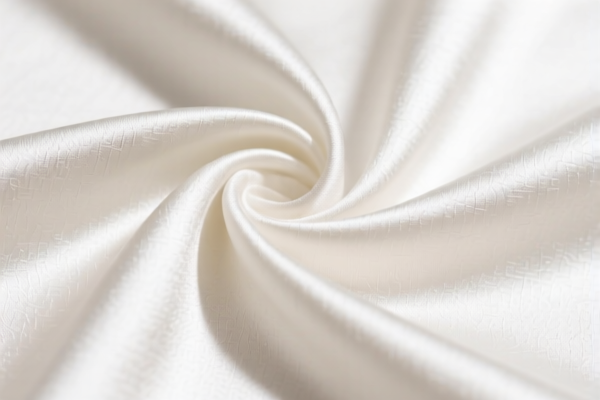
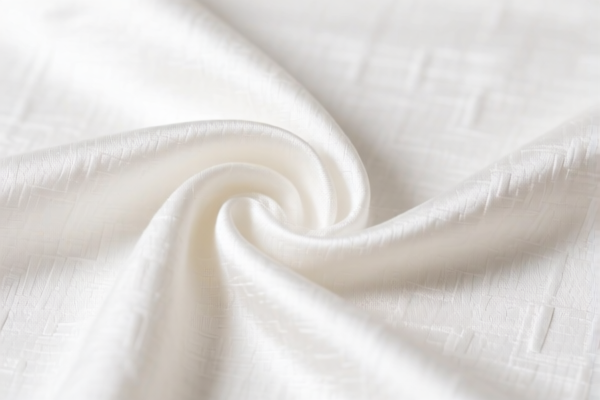


AI Analysis
✨ Satin Woven Fabric for Apparel (Unbleached/Bleached)
🌐 HS Code & Tariff Guide | 2026 U.S. Trade Compliance Deep Dive | Expert Customs Strategy
📌 One Product, Four Critical HS Codes – Know the Difference Before You Ship!
🧵 I. Product Definition & Classification: What Exactly Is “Satin Woven Fabric” for Apparel?
Satin woven fabric is a high-luster, smooth-textured textile characterized by a satin weave structure, where weft or warp threads float over multiple others, creating a shiny, reflective surface on one side and a duller reverse.
In apparel, this fabric is used for:
- Dresses, gowns, and evening wear
- Lingerie and bridal wear
- Linings and trims
- Fashion accessories (scarves, headbands)
⚠️ Key Classification Triggers: - Weave type: Must be satin weave (not twill, plain, or satin-like imitation)
- Fiber content: Can be 100% cotton, cotton-synthetic blend, or 100% synthetic (e.g., polyester)
- Processing: Whether unbleached (natural color) or bleached (white/undyed)
- End use: For apparel, not industrial, home furnishing, or technical textiles🔍 Critical Insight:
Even if the fabric looks like satin, if it’s not woven using a true satin structure, it does not qualify for these HS codes.
📦 II. HS Code Breakdown (2026 U.S. Tariff Schedule – All Four Codes Explained)
| HS Code | Product Description | Fiber Type | Bleaching Status | Key Classification Logic |
|---|---|---|---|---|
5208.19.20.20 |
Satin woven fabric, 100% cotton, unbleached/bleached, for apparel | Cotton | Unbleached/Bleached | Pure cotton satin weave; no synthetic content |
5407.81.00.40 |
Satin woven fabric, synthetic fiber + cotton blend, unbleached/bleached | Cotton + Synthetic (e.g., polyester) | Unbleached/Bleached | Blended fiber with synthetic component; not pure cotton |
5208.29.20.20 |
Satin woven fabric, 100% cotton, unbleached/bleached, for cotton lining or interlining | Cotton | Unbleached/Bleached | Cotton satin used as lining or衬布 (interlining) — not main apparel fabric |
5408.21.00.30 |
Satin woven fabric, 100% synthetic (e.g., polyester), unbleached, with artificial filament | Synthetic (e.g., polyester) | Unbleached | Artificial filament used in weaving; no cotton |
📌 Why These Four Codes?
The U.S. tariff system distinguishes based on: - Fiber composition (cotton vs. synthetic vs. blend)
- Weave structure (must be true satin)
- End use (apparel vs. lining)
- Processing status (bleached vs. unbleached)
💰 III. 2026 U.S. Tariff Breakdown (With Full Legal & Policy Justification)
✅ Applicable Country: China (CN)
✅ Applicable Law: U.S. Trade Act 1974 (Section 301), IEEPA, and 122(a) Tariff Provisions
✅ Effective Date: November 10, 2025 (and ongoing)
🎯 1. 5208.19.20.20 – 100% Cotton Satin Fabric (Unbleached/Bleached)
| Tax Component | Rate | Legal Basis | Explanation |
|---|---|---|---|
| Base Duty | 7.9% | U.S. HTSUS §5208.19.20 | Standard rate for cotton satin |
| Section 301 (USITC) Additional Duty | +25.0% | USITC Footnote 9903.88.01 | Tariff imposed under Section 301 for Chinese goods deemed to have unfair trade practices |
| 122(a) Emergency Tariff | +10.0% | IEEPA (International Emergency Economic Powers Act) | Imposed under national emergency for China-origin goods (since 2025) |
| Total Effective Duty | 42.9% | — | CIF × 42.9% |
🔍 Legal Pathway:
IEEPA:9903.01.25→IEEPA:9903.01.24→USITC:5208.19.20.20→FOOTNOTE:9903.88.01📌 Note:
- No de minimis exemption (0.5% threshold) → Even $100 shipment triggers full 42.9% - Must be true cotton satin — not a cotton-polyester imitation
🎯 2. 5407.81.00.40 – Cotton-Synthetic Blend Satin Fabric (Unbleached/Bleached)
| Tax Component | Rate | Legal Basis | Explanation |
|---|---|---|---|
| Base Duty | 14.9% | U.S. HTSUS §5407.81.00 | Higher base rate for blended fabrics |
| Section 301 (USITC) Additional Duty | +25.0% | USITC Footnote 9903.88.01 | Applies to all China-origin textiles with synthetic content |
| 122(a) Emergency Tariff | +10.0% | IEEPA | Applies to all China-origin textile imports |
| Total Effective Duty | 49.9% | — | CIF × 49.9% |
🔍 Legal Pathway:
IEEPA:9903.01.25→IEEPA:9903.01.24→USITC:5407.81.00.40→FOOTNOTE:9903.88.01📌 Critical Insight:
- Even 1% synthetic fiber triggers this code — no cotton-only exemption - Higher base rate due to blend complexity and import sensitivity
🎯 3. 5208.29.20.20 – 100% Cotton Satin Fabric (For Lining/Interlining)
| Tax Component | Rate | Legal Basis | Explanation |
|---|---|---|---|
| Base Duty | 7.7% | U.S. HTSUS §5208.29.20 | Slightly lower than main apparel code |
| Section 301 (USITC) Additional Duty | +25.0% | USITC Footnote 9903.88.01 | Applies to all cotton satin regardless of use |
| 122(a) Emergency Tariff | +10.0% | IEEPA | Applies to all China-origin cotton goods |
| Total Effective Duty | 42.7% | — | CIF × 42.7% |
🔍 Legal Pathway:
IEEPA:9903.01.25→IEEPA:9903.01.24→USITC:5208.29.20.20→FOOTNOTE:9903.88.01📌 Why Lower Base Duty?
- This code is for interlinings and linings, not primary apparel — lower tariff reflects secondary use
- Still subject to full 35% additional duties (25% + 10%)
🎯 4. 5408.21.00.30 – 100% Synthetic Satin Fabric (Unbleached, Artificial Filament)
| Tax Component | Rate | Legal Basis | Explanation |
|---|---|---|---|
| Base Duty | 14.9% | U.S. HTSUS §5408.21.00 | Same as blended fabric |
| Section 301 (USITC) Additional Duty | +25.0% | USITC Footnote 9903.88.01 | Applies to all synthetic textiles from China |
| 122(a) Emergency Tariff | +10.0% | IEEPA | Applies to all China-origin synthetic fabrics |
| Total Effective Duty | 49.9% | — | CIF × 49.9% |
🔍 Legal Pathway:
IEEPA:9903.01.25→IEEPA:9903.01.24→USITC:5408.21.00.30→FOOTNOTE:9903.88.01📌 Key Note:
- Must be artificial filament (e.g., polyester, nylon) — not natural silk or rayon - Unbleached status does not reduce tariff — all same rate
🛠️ IV. Customs Clearance Best Practices (Pro Tips to Avoid Penalties)
✅ 1. Documentation Checklist (MUST-HAVE)
| Document | Required? | Why It Matters |
|---|---|---|
| ✅ Product Specification Sheet | ✔️ | Must confirm true satin weave, fiber %, and no imitation |
| ✅ Lab Test Report (e.g., AATCC, ISO) | ✔️ | Prove weave structure and fiber composition |
| ✅ Commercial Invoice | ✔️ | Must state: "Satin Woven Fabric for Apparel, [Fiber Content], [Bleaching Status]" |
| ✅ Bill of Lading (BOL) | ✔️ | Must match invoice and HS code |
| ✅ Certificate of Origin (CO) | ✔️ | Required for tariff eligibility |
| ✅ Packing List | ✔️ | Show roll count, weight, dimensions |
| ✅ Photos (with clear weave pattern) | ✔️ | Prevent misclassification |
✅ 2.申报技巧 (Pro申报 Strategies)
🔥 "Fiber First, Use Second, Weave Always!"
| Scenario | Correct HS Code | Common Mistake |
|---|---|---|
| 100% cotton satin, for dress | 5208.19.20.20 |
→ 5208.29.20.20 (wrong use) |
| 60% cotton + 40% polyester satin | 5407.81.00.40 |
→ 5208.19.20.20 (wrong fiber) |
| Cotton satin used as lining | 5208.29.20.20 |
→ 5208.19.20.20 (wrong end use) |
| 100% polyester satin, unbleached | 5408.21.00.30 |
→ 5407.81.00.40 (wrong fiber class) |
✅ 3. Special Cases & Risk Mitigation
| Case | Solution |
|---|---|
| Mixed fabric rolls (some cotton, some synthetic) | Separate by fiber type — cannot combine in one shipment |
| "Satin-like" fabric (not true satin weave) | Do NOT use these codes — may be misclassified as 5407.89.00.00 (other synthetic fabric) → lower tariff but risk of audit |
| Samples or small shipments | Still subject to 42.9%–49.9% — no de minimis relief |
| Re-export or transshipment | Must declare origin — if from China, same tariffs apply |
🌍 V. Global Tariff Comparison (2026)
| Country | Recommended HS Code | Base Duty | Additional Taxes | Total Effective Duty | Notes |
|---|---|---|---|---|---|
| 🇺🇸 USA (China origin) | 5208.19.20.20 |
7.9% | +25% +10% | 42.9% | No de minimis |
| 🇨🇳 China | 5208.19.20.20 |
5% | None | 5% | No extra tariffs |
| 🇪🇺 EU | 5208.19.20 |
0% | None | 0% | If CE compliant |
| 🇦🇺 Australia | 5208.19.20 |
5% | None | 5% | No additional duties |
| 🇯🇵 Japan | 5208.19.20 |
0% | None | 0% | No extra taxes |
📌 Insight:
- U.S. is the only market imposing 35%+附加税 on Chinese satin fabric
- China, EU, Japan, Australia have much lower or zero tariffs — consider re-routing
📌 VI. Common Mistakes & Costly Penalties (Avoid These!)
❌ Mistake 1: Using 5208.19.20.20 for a cotton-polyester blend
👉 Result: Underpayment → Back taxes + 10% penalty + interest
❌ Mistake 2: Declaring "satin fabric" without specifying fiber or weave
👉 Result: Customs reclassifies → higher duty or delayed release
❌ Mistake 3: Shipping unbleached cotton satin as 5208.29.20.20 (lining)
👉 Result: If used in outerwear, incorrect classification → penalty
❌ Mistake 4: Assuming "bleached" = lower duty
👉 Result: No difference — all codes have same附加taxes
✅ Correct Declaration Example:
"Satin Woven Fabric, 100% Cotton, Unbleached, for Evening Gowns, Weave: 4-Harness Satin, 120 x 80, 120 cm Width, HS: 5208.19.20.20"
🎯 VII. Final Verdict: Your 2026 Satin Fabric Strategy
🔹 If you’re shipping from China to the U.S. → Expect 42.9%–49.9% total duty
🔹 If you’re sourcing from Vietnam/Mexico/Thailand → Can apply for IEEPA exemption → 0%–5%
🔹 If you’re using synthetic or blended fabric → 49.9% is unavoidable
🔹 If you’re using cotton-only → Still 42.9% — no relief📌 Pro Tip:
Apply for an Advance Ruling (Pre-Approval) from U.S. Customs before shipment — protects against future disputes.
📣 Call to Action: Don’t Get Caught in the Tariff Trap!
📞 Contact a U.S. Customs Broker + Provide:
- Fabric samples
- Lab reports
- Weave diagram
- Commercial invoice draft✅ Get a pre-approval on HS Code + Duty Rate — avoid surprise costs
🚀 Your satin fabric should shine — not your customs bill!
✨ Precision Classification = Profit Protection
💼 One wrong code can cost 30% of your revenue — don’t gamble!
Customer Reviews
About HS Code Classification
The Harmonized System (HS) is an internationally standardized nomenclature developed by the World Customs Organization (WCO) to classify traded products. Over 200 countries use the HS system as the basis for customs tariffs, trade statistics, and import/export regulations.
Each HS code follows a hierarchical structure:
- Chapter (2 digits) — Broad category of goods (e.g., Chapter 84: Machinery and Mechanical Appliances)
- Heading (4 digits) — More specific grouping within the chapter
- Subheading (6 digits) — Internationally standardized breakdown, used by all WCO member countries
- National subdivisions (8-10 digits) — Country-specific extensions for further classification, such as US HTSUS 10-digit codes
Correct HS code classification is essential for smooth customs clearance, accurate duty payment, and compliance with trade regulations. Misclassification can lead to customs delays, overpayment of duties, or penalties.
When importing from CN to US, the applicable tariff rates may include:
- Most-Favored-Nation (MFN) rate — The standard duty rate applied to WTO members
- General rate — Applied to countries without trade agreements
- Trade remedy duties — Additional tariffs such as Section 301 (anti-dumping), Section 232 (national security), or countervailing duties
The information provided on this page is for reference purposes only. For official classification, please consult with your local customs authority or a licensed customs broker.