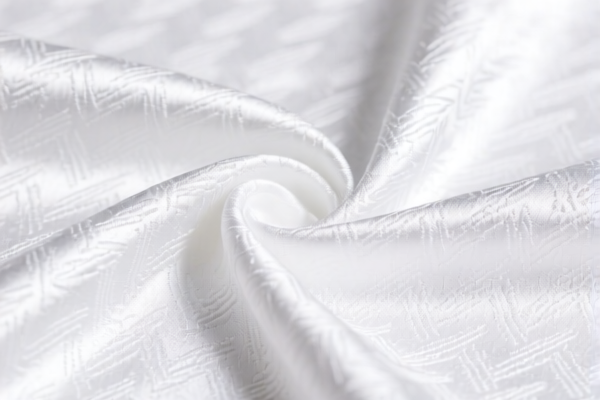
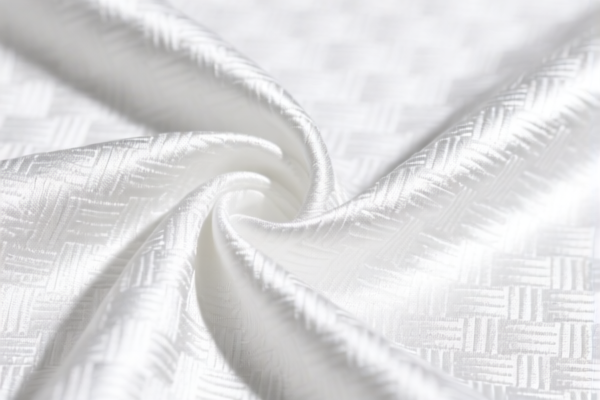
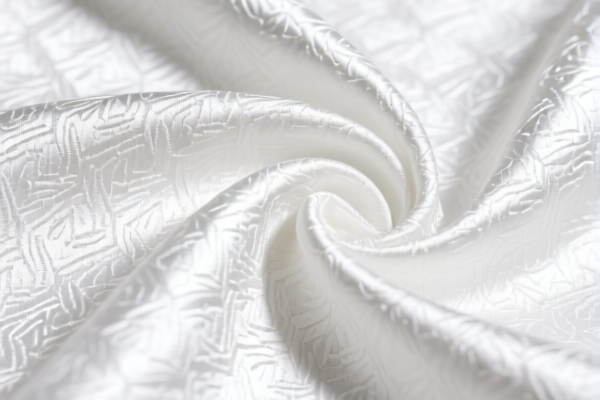
Satin Woven Printed Fabric for Handcraft Reactive Print
CN → US| HS编码 | 关税税率 | 原产国 | 目的国 | 文档 |
|---|---|---|---|---|
| 5408349050 | 47.0% | CN | US | 官方文档 |
| 5407942050 | 49.9% | CN | US | 官方文档 |
| 5407840040 | 49.9% | CN | US | 官方文档 |
| 5407840040 | 49.9% | CN | US | 官方文档 |
| 5407942050 | 49.9% | CN | US | 官方文档 |
商品图片

AI分析
✂️ Satin Woven Printed Fabric for Handcraft (Reactive Print)
🌐 HS Code Reference & Customs Clearance Guide | 2026 Latest Tariff Breakdown | Professional Level Clearance Strategy
📌 I. Product Definition & Classification: Do You Really Understand "Satin Fabric"?
Satin woven printed fabric for handcraft, reactive print, is a decorative textile material characterized by its smooth, lustrous surface and vibrant, colorfast prints. In international trade, it is classified based on fiber composition, weave structure, and end-use. The term "satin" refers to the weave structure (floats on the surface), while "reactive print" indicates the dyeing method used for the pattern.
Key Classification Criteria:
1. Fiber Material: Is it 100% synthetic, a blend with cotton, or mixed with other fibers?
2. Weave Structure: Must be confirmed as "satin" (not plain or twill).
3. Printing Method: Reactive dyeing (high colorfastness).
4. End-Use: For handcraft/decoration (not for apparel or industrial heavy-duty use).
⚠️ Critical Distinction:
- If the fabric is 100% synthetic filament (e.g., polyester, nylon), it falls under 5408.34.90.50.
- If it is a blended filament (e.g., synthetic + cotton) or other synthetic filament types, it falls under 5407.94.20.50 or 5407.84.00.40.
- Misclassification due to incorrect fiber description can lead to significant tariff differences and customs penalties.
📦 II. HS Code Classification Details (2026 Latest Tariff Authority Cross-Reference)
| HS Code | Product Description | Applicable Scenario | Fiber Composition | Total Tax Rate |
|---|---|---|---|---|
5408.34.90.50 |
Satin printed fabric (reactive), 100% synthetic filament | Handcraft, decoration, high-luster applications | 100% Synthetic Filament | 47.0% |
5407.94.20.50 |
Satin printed fabric (reactive), other synthetic filament | Handcraft, lining, general printing | Other Synthetic Filament (non-blended with cotton) | 49.9% |
5407.84.00.40 |
Satin printed fabric (reactive), synthetic & cotton blend | Handcraft, lining, mixed-fiber applications | Synthetic Filament + Cotton Blend | 49.9% |
🔍 Key Reminder:
- All three HS codes apply to satin weave and reactive printing for handcraft/decoration.
- The difference in tariff (47.0% vs. 49.9%) is driven by the fiber composition and specific subheading under Chapter 54.
- Do not confuse with "garment fabric" (Chapter 61/62) or "home textiles" (Chapter 63) unless the final product is converted.
💰 III. 2026 Latest Tariff Rate Detailed Explanation (Including Surtaxes & Policy Add-ons)
✅ Applicable Country: United States (US)
✅ Origin: China (CN)
✅ Effective Date: From November 10, 2025 (for all subsequent imports)
🎯 1. 5408.34.90.50 —— Satin Printed Fabric (100% Synthetic Filament)
| Item | Content |
|---|---|
| Base Duty Rate | 12.0% (ad valorem) |
| USITC Additional Duty | +25% (Under USITC Footnote 9903.88.01, Section 301 Tariff) |
| IEEPA Additional Duty | +10% (China/Hong Kong specific, under IEEPA) |
| Total Tax Rate | 47.0% |
| Tax Calculation | CIF Value × 47.0% |
| De Minimis Exemption Eligible | ❌ No (deny_de_minimis) |
| Legal Basis Path | IEEPA:9903.01.25 → IEEPA:9903.01.24 → USITC:5408.34.90.50 → FOOTNOTE:9903.88.01 |
📌 Explanation:
- "Base Duty 12.0%": Standard MFN rate for synthetic filament woven fabrics.
- "USITC Surtax 25%": Imposed under Section 301 of the Trade Act for Chinese-origin goods.
- "IEEPA Surtax 10%": Additional surcharge under the International Emergency Economic Powers Act targeting specific Chinese imports.
- Total 47.0%: This is a high tariff rate. Pre-calculation is essential for cost control.
🎯 2. 5407.94.20.50 —— Satin Printed Fabric (Other Synthetic Filament)
| Item | Content |
|---|---|
| Base Duty Rate | 14.9% (ad valorem) |
| USITC Additional Duty | +25% |
| IEEPA Additional Duty | +10% |
| Total Tax Rate | 49.9% |
| Tax Calculation | CIF Value × 49.9% |
| De Minimis Exemption Eligible | ❌ No |
| Legal Basis Path | IEEPA:9901.25 → IEEPA:9903.01.24 → USITC:5407.94.20.50 → FOOTNOTE:9903.88.01 |
📌 Note:
- This HS code applies to synthetic filament fabrics not covered under 5408 (e.g., different weave densities or specific filament types).
- Base duty is higher (14.9%) than 5408.34, leading to a higher total rate (49.9%).
- Ensure the fiber description matches customs records precisely to avoid misclassification penalties.
🎯 3. 5407.84.00.40 —— Satin Printed Fabric (Synthetic & Cotton Blend)
| Item | Content |
|---|---|
| Base Duty Rate | 14.9% (ad valorem) |
| USITC Additional Duty | +25% |
| IEEPA Additional Duty | +10% |
| Total Tax Rate | 49.9% |
| Tax Calculation | CIF Value × 49.9% |
| De Minimis Exemption Eligible | ❌ No |
| Legal Basis Path | IEEPA:9901.25 → IEEPA:9903.01.24 → USITC:5407.84.00.40 → FOOTNOTE:9903.88.01 |
📌 Note:
- This HS code applies to blended fabrics (synthetic filament + cotton).
- Same total rate (49.9%) as 5407.94.20.50 due to identical surtax structure.
- Key Declaration Point: Must explicitly state "Synthetic Filament & Cotton Blend" in the commercial invoice and packing list.
🛠️ IV. Customs Clearance Practical Advice (Pitfall Avoidance Guide)
✅ 1. Required Documentation Checklist (None Can Be Missing)
| Document | Must Provide | Description |
|---|---|---|
| ✅ Product Specification Sheet | ✔️ | Includes fiber content (e.g., 100% Poly, or 65% Poly/35% Cotton), weave type (Satin), weight, width. |
| ✅ Fabric Swatch/Photos | ✔️ | Clear photos showing the satin luster and reactive print pattern. |
| ✅ Commercial Invoice | ✔️ | Must clearly state "Satin Woven Printed Fabric, Reactive Print, For Handcraft". |
| ✅ Packing List | ✔️ | Details net/gross weight, dimensions, and package count. |
| ✅ Certificate of Origin (CO) | ✔️ | If applicable for non-China origins (but here origin is China). |
| ✅ Declaration of Fiber Content | ✔️ | Signed statement confirming exact fiber composition to avoid 5407 vs. 5408 disputes. |
| ✅ Third-Party Test Report | ✔️ | Certify reactive dye colorfastness and fabric weight if requested. |
✅ 2. Declaration Tips (Key Mnemonics)
🔥 “Satin is Weave, Reactive is Print, Fiber Determines Code, Blend Increases Tax!”
| Scenario | Correct Declaration | Wrong Practice |
|---|---|---|
| 100% Synthetic Satin | 5408.34.90.50 |
Declare as "Cotton Blend" → 49.9% (Overpayment) or Misclassification Penalty |
| Synthetic-Cotton Blend Satin | 5407.84.00.40 |
Declare as "100% Synthetic" → 47.0% (Underpayment) → Customs Audit & Fine |
| Other Synthetic Satin | 5407.94.20.50 |
Generic "Printed Fabric" → Delayed Clearance |
| Garment Use | N/A (Different Chapter) | Declare as "Handcraft" for apparel → Misuse of HS Code |
✅ 3. Special Case Handling
| Scenario | Handling Advice |
|---|---|
| OEM Custom Printed Fabric | Provide design files and print technique details (Reactive Dye) to prove "Reactive Print" classification. |
| Mixed Containers | If mixed with non-subject goods (e.g., cotton yarn), declare separately. Do not bundle under one HS Code. |
| Sample Shipments | Even for samples, if over de minimis value or commercial intent, full tariff applies. No exemption. |
| Reactive Dye Certification | Provide lab test reports to confirm "Reactive" vs. "Disperse" or "Vat" dye, as duty rates may differ for other print types. |
🌍 V. Global Major Market Clearance Comparison (2026 Latest)
| Country/Region | Recommended HS Code | Tariff (China Origin) | Certification Requirements | Remarks |
|---|---|---|---|---|
| 🇺🇸 USA | 5408.34.90.50 / 5407... |
47.0% ~ 49.9% | None specific for fabric | High Surtax: 301 + IEEPA applies. No de minimis. |
| 🇨🇳 China | 5408.34.90.50 / 5407... |
12.0% ~ 14.9% | N/A | Base duty only. No US-style surtaxes. |
| 🇪🇺 EU | 5408.34.90.50 / 5407... |
9.0% ~ 12.0% | REACH (Chemical Safety) | Lower base duty. No Section 301 equivalent. |
| 🇬🇧 UK | 5408.34.90.50 / 5407... |
9.0% ~ 12.0% | UK REACH | Post-Brexit, similar to EU but separate compliance. |
| 🇯🇵 Japan | 5408.34.90.50 / 5407... |
10.0% ~ 14.0% | FSC (Chemical Substances) | Moderate duty. No special surtaxes for China. |
📌 Conclusion:
- USA is the highest-cost market due to the 30% combined surtax (25% + 10%).
- EU/UK/Japan offer significantly lower duty rates but require chemical compliance (REACH, UK REACH, FSC) for reactive dyes.
- China Domestic costs are lowest, but for export, factor in the US surtax for profitability.
📌 VI. Common Errors & Pitfall Guide (Lessons from Experience)
❌ Error 1: Declaring "100% Polyester" when the fabric is actually "Poly-Cotton Blend"
👉 Consequence: Underpayment of 2.9% on base duty + potential fraud penalties.
Fix: Perform fiber testing or obtain supplier declaration.
❌ Error 2: Using "Textile" as a generic description instead of "Satin Woven Printed Fabric"
👉 Consequence: Customs may classify under a higher-duty generic code or hold shipment for clarification.
Fix: Use precise HS Code description: "Satin Woven, Reactive Print, [Fiber]".
❌ Error 3: Assuming de minimis (de minimis exemption) applies to small shipments
👉 Consequence: Shipment seized or taxed at full rate because Section 301/IEEPA goods deny de minimis exemption.
Fix: Assume 100% tax applies regardless of shipment value.
❌ Error 4: Confusing "Reactive Print" with "Disperse Print"
👉 Consequence: Reactive print requires specific chemical compliance declarations. Mislabeling can cause customs delays or REACH violations in EU.
Fix: Clearly state "Reactive Dye Print" in technical documents.
✅ Correct Practice:
"Satin Woven Printed Fabric, Reactive Print, 100% Synthetic Filament, For Handcraft, Model XYZ, US Origin Prohibited (China Origin)"
🎯 VII. Conclusion: Precise Declaration, Time-Saving, Cost-Efficient!
🎯 Remember the Mnemonic:
🔹 "Satin is Weave, Reactive is Print, Fiber is Key, Blend is Price!"
🔹 "HS Code Determines Life, 47% vs 49.9% matters, Declare Accurately or Pay the Price!"
📌 Tips:
- If your fabric is produced in Vietnam, Thailand, or Malaysia, you may apply for IEEPA Exemption (if applicable to specific country rules) or lower tariffs.
- Consider Advance Ruling from US CBP if you are importing large volumes to ensure classification certainty.
📣 Immediate Action:
📞 Contact a Professional Customs Broker + Provide Fiber Test Reports + Apply for HS Code Advance Ruling
🚀 Ensure your fabric passes customs smoothly, reduces costs, and maximizes profits!
✨ Professional Clearance Starts with Accurate Classification!
💼 Every Dollar of Cost Deserves Precise Calculation!
用户评价
关于 HS 编码归类
协调制度(HS)是由世界海关组织(WCO)制定的国际贸易商品分类标准。全球 200 多个国家采用 HS 系统作为海关关税、贸易统计和进出口监管的基础。
每个 HS 编码遵循以下层级结构:
- 章(2 位)——商品大类(例如:第 84 章:机器和机械设备)
- 品目(4 位)——章内的更具体分类
- 子目(6 位)——国际通用细分,所有 WCO 成员国统一使用
- 本国细分(8-10 位)——各国自行扩展的细分编码,如美国 HTSUS 10 位编码
正确的 HS 编码归类对于顺利通关、准确缴纳关税和遵守贸易法规至关重要。错误归类可能导致海关延误、多缴关税或罚款。
从CN进口到US时,适用的关税税率可能包括:
- 最惠国(MFN)税率——适用于 WTO 成员国的标准关税税率
- 普通税率——适用于无贸易协定国家
- 贸易救济关税——附加关税,如 301 条款(反倾销)、232 条款(国家安全)或反补贴税
本页内容仅供参考。如需正式归类,请咨询当地海关或持牌报关代理。