Satin Woven Printed Fabric for Handcraft Reactive Print
CN → US| HS Code | Tariff Rate | Origin | Destination | Doc |
|---|---|---|---|---|
| 5408349050 | 47.0% | CN | US | Official Doc |
| 5407942050 | 49.9% | CN | US | Official Doc |
| 5407840040 | 49.9% | CN | US | Official Doc |
| 5407840040 | 49.9% | CN | US | Official Doc |
| 5407942050 | 49.9% | CN | US | Official Doc |
Product Images
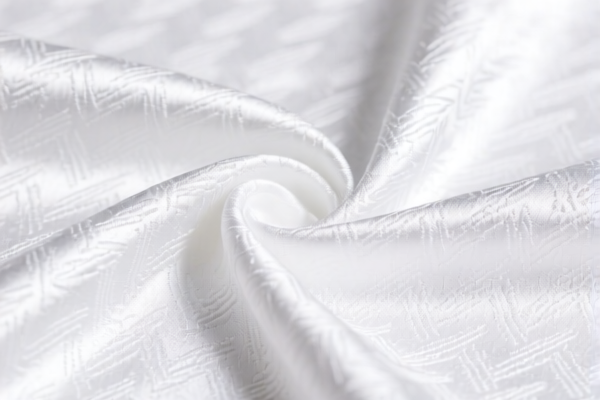
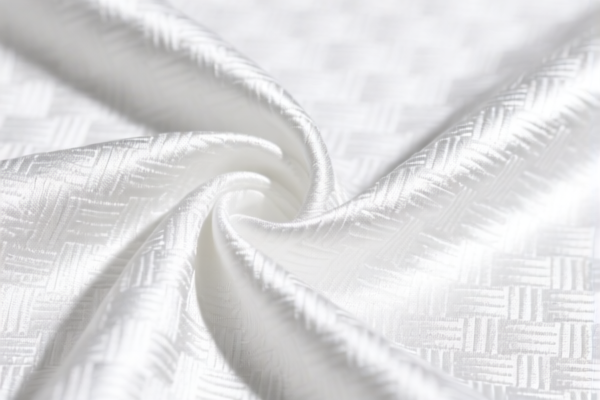
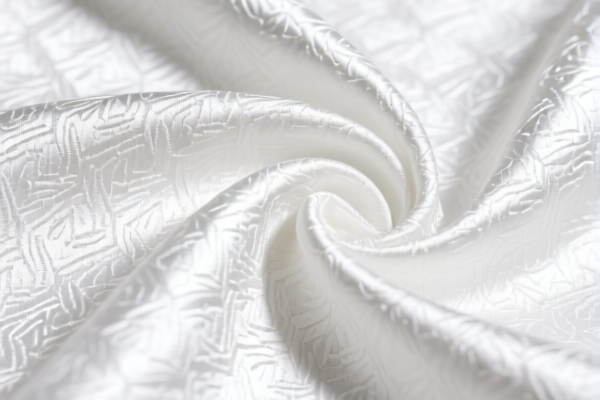

AI Analysis
✂️ Satin Woven Printed Fabric for Handcraft (Reactive Print)
🌐 HS Code Reference & Customs Clearance Guide | 2026 Latest Tariff Breakdown | Professional Level Clearance Strategy
📌 I. Product Definition & Classification: Do You Really Understand "Satin Fabric"?
Satin woven printed fabric for handcraft, reactive print, is a decorative textile material characterized by its smooth, lustrous surface and vibrant, colorfast prints. In international trade, it is classified based on fiber composition, weave structure, and end-use. The term "satin" refers to the weave structure (floats on the surface), while "reactive print" indicates the dyeing method used for the pattern.
Key Classification Criteria:
1. Fiber Material: Is it 100% synthetic, a blend with cotton, or mixed with other fibers?
2. Weave Structure: Must be confirmed as "satin" (not plain or twill).
3. Printing Method: Reactive dyeing (high colorfastness).
4. End-Use: For handcraft/decoration (not for apparel or industrial heavy-duty use).
⚠️ Critical Distinction:
- If the fabric is 100% synthetic filament (e.g., polyester, nylon), it falls under 5408.34.90.50.
- If it is a blended filament (e.g., synthetic + cotton) or other synthetic filament types, it falls under 5407.94.20.50 or 5407.84.00.40.
- Misclassification due to incorrect fiber description can lead to significant tariff differences and customs penalties.
📦 II. HS Code Classification Details (2026 Latest Tariff Authority Cross-Reference)
| HS Code | Product Description | Applicable Scenario | Fiber Composition | Total Tax Rate |
|---|---|---|---|---|
5408.34.90.50 |
Satin printed fabric (reactive), 100% synthetic filament | Handcraft, decoration, high-luster applications | 100% Synthetic Filament | 47.0% |
5407.94.20.50 |
Satin printed fabric (reactive), other synthetic filament | Handcraft, lining, general printing | Other Synthetic Filament (non-blended with cotton) | 49.9% |
5407.84.00.40 |
Satin printed fabric (reactive), synthetic & cotton blend | Handcraft, lining, mixed-fiber applications | Synthetic Filament + Cotton Blend | 49.9% |
🔍 Key Reminder:
- All three HS codes apply to satin weave and reactive printing for handcraft/decoration.
- The difference in tariff (47.0% vs. 49.9%) is driven by the fiber composition and specific subheading under Chapter 54.
- Do not confuse with "garment fabric" (Chapter 61/62) or "home textiles" (Chapter 63) unless the final product is converted.
💰 III. 2026 Latest Tariff Rate Detailed Explanation (Including Surtaxes & Policy Add-ons)
✅ Applicable Country: United States (US)
✅ Origin: China (CN)
✅ Effective Date: From November 10, 2025 (for all subsequent imports)
🎯 1. 5408.34.90.50 —— Satin Printed Fabric (100% Synthetic Filament)
| Item | Content |
|---|---|
| Base Duty Rate | 12.0% (ad valorem) |
| USITC Additional Duty | +25% (Under USITC Footnote 9903.88.01, Section 301 Tariff) |
| IEEPA Additional Duty | +10% (China/Hong Kong specific, under IEEPA) |
| Total Tax Rate | 47.0% |
| Tax Calculation | CIF Value × 47.0% |
| De Minimis Exemption Eligible | ❌ No (deny_de_minimis) |
| Legal Basis Path | IEEPA:9903.01.25 → IEEPA:9903.01.24 → USITC:5408.34.90.50 → FOOTNOTE:9903.88.01 |
📌 Explanation:
- "Base Duty 12.0%": Standard MFN rate for synthetic filament woven fabrics.
- "USITC Surtax 25%": Imposed under Section 301 of the Trade Act for Chinese-origin goods.
- "IEEPA Surtax 10%": Additional surcharge under the International Emergency Economic Powers Act targeting specific Chinese imports.
- Total 47.0%: This is a high tariff rate. Pre-calculation is essential for cost control.
🎯 2. 5407.94.20.50 —— Satin Printed Fabric (Other Synthetic Filament)
| Item | Content |
|---|---|
| Base Duty Rate | 14.9% (ad valorem) |
| USITC Additional Duty | +25% |
| IEEPA Additional Duty | +10% |
| Total Tax Rate | 49.9% |
| Tax Calculation | CIF Value × 49.9% |
| De Minimis Exemption Eligible | ❌ No |
| Legal Basis Path | IEEPA:9901.25 → IEEPA:9903.01.24 → USITC:5407.94.20.50 → FOOTNOTE:9903.88.01 |
📌 Note:
- This HS code applies to synthetic filament fabrics not covered under 5408 (e.g., different weave densities or specific filament types).
- Base duty is higher (14.9%) than 5408.34, leading to a higher total rate (49.9%).
- Ensure the fiber description matches customs records precisely to avoid misclassification penalties.
🎯 3. 5407.84.00.40 —— Satin Printed Fabric (Synthetic & Cotton Blend)
| Item | Content |
|---|---|
| Base Duty Rate | 14.9% (ad valorem) |
| USITC Additional Duty | +25% |
| IEEPA Additional Duty | +10% |
| Total Tax Rate | 49.9% |
| Tax Calculation | CIF Value × 49.9% |
| De Minimis Exemption Eligible | ❌ No |
| Legal Basis Path | IEEPA:9901.25 → IEEPA:9903.01.24 → USITC:5407.84.00.40 → FOOTNOTE:9903.88.01 |
📌 Note:
- This HS code applies to blended fabrics (synthetic filament + cotton).
- Same total rate (49.9%) as 5407.94.20.50 due to identical surtax structure.
- Key Declaration Point: Must explicitly state "Synthetic Filament & Cotton Blend" in the commercial invoice and packing list.
🛠️ IV. Customs Clearance Practical Advice (Pitfall Avoidance Guide)
✅ 1. Required Documentation Checklist (None Can Be Missing)
| Document | Must Provide | Description |
|---|---|---|
| ✅ Product Specification Sheet | ✔️ | Includes fiber content (e.g., 100% Poly, or 65% Poly/35% Cotton), weave type (Satin), weight, width. |
| ✅ Fabric Swatch/Photos | ✔️ | Clear photos showing the satin luster and reactive print pattern. |
| ✅ Commercial Invoice | ✔️ | Must clearly state "Satin Woven Printed Fabric, Reactive Print, For Handcraft". |
| ✅ Packing List | ✔️ | Details net/gross weight, dimensions, and package count. |
| ✅ Certificate of Origin (CO) | ✔️ | If applicable for non-China origins (but here origin is China). |
| ✅ Declaration of Fiber Content | ✔️ | Signed statement confirming exact fiber composition to avoid 5407 vs. 5408 disputes. |
| ✅ Third-Party Test Report | ✔️ | Certify reactive dye colorfastness and fabric weight if requested. |
✅ 2. Declaration Tips (Key Mnemonics)
🔥 “Satin is Weave, Reactive is Print, Fiber Determines Code, Blend Increases Tax!”
| Scenario | Correct Declaration | Wrong Practice |
|---|---|---|
| 100% Synthetic Satin | 5408.34.90.50 |
Declare as "Cotton Blend" → 49.9% (Overpayment) or Misclassification Penalty |
| Synthetic-Cotton Blend Satin | 5407.84.00.40 |
Declare as "100% Synthetic" → 47.0% (Underpayment) → Customs Audit & Fine |
| Other Synthetic Satin | 5407.94.20.50 |
Generic "Printed Fabric" → Delayed Clearance |
| Garment Use | N/A (Different Chapter) | Declare as "Handcraft" for apparel → Misuse of HS Code |
✅ 3. Special Case Handling
| Scenario | Handling Advice |
|---|---|
| OEM Custom Printed Fabric | Provide design files and print technique details (Reactive Dye) to prove "Reactive Print" classification. |
| Mixed Containers | If mixed with non-subject goods (e.g., cotton yarn), declare separately. Do not bundle under one HS Code. |
| Sample Shipments | Even for samples, if over de minimis value or commercial intent, full tariff applies. No exemption. |
| Reactive Dye Certification | Provide lab test reports to confirm "Reactive" vs. "Disperse" or "Vat" dye, as duty rates may differ for other print types. |
🌍 V. Global Major Market Clearance Comparison (2026 Latest)
| Country/Region | Recommended HS Code | Tariff (China Origin) | Certification Requirements | Remarks |
|---|---|---|---|---|
| 🇺🇸 USA | 5408.34.90.50 / 5407... |
47.0% ~ 49.9% | None specific for fabric | High Surtax: 301 + IEEPA applies. No de minimis. |
| 🇨🇳 China | 5408.34.90.50 / 5407... |
12.0% ~ 14.9% | N/A | Base duty only. No US-style surtaxes. |
| 🇪🇺 EU | 5408.34.90.50 / 5407... |
9.0% ~ 12.0% | REACH (Chemical Safety) | Lower base duty. No Section 301 equivalent. |
| 🇬🇧 UK | 5408.34.90.50 / 5407... |
9.0% ~ 12.0% | UK REACH | Post-Brexit, similar to EU but separate compliance. |
| 🇯🇵 Japan | 5408.34.90.50 / 5407... |
10.0% ~ 14.0% | FSC (Chemical Substances) | Moderate duty. No special surtaxes for China. |
📌 Conclusion:
- USA is the highest-cost market due to the 30% combined surtax (25% + 10%).
- EU/UK/Japan offer significantly lower duty rates but require chemical compliance (REACH, UK REACH, FSC) for reactive dyes.
- China Domestic costs are lowest, but for export, factor in the US surtax for profitability.
📌 VI. Common Errors & Pitfall Guide (Lessons from Experience)
❌ Error 1: Declaring "100% Polyester" when the fabric is actually "Poly-Cotton Blend"
👉 Consequence: Underpayment of 2.9% on base duty + potential fraud penalties.
Fix: Perform fiber testing or obtain supplier declaration.
❌ Error 2: Using "Textile" as a generic description instead of "Satin Woven Printed Fabric"
👉 Consequence: Customs may classify under a higher-duty generic code or hold shipment for clarification.
Fix: Use precise HS Code description: "Satin Woven, Reactive Print, [Fiber]".
❌ Error 3: Assuming de minimis (de minimis exemption) applies to small shipments
👉 Consequence: Shipment seized or taxed at full rate because Section 301/IEEPA goods deny de minimis exemption.
Fix: Assume 100% tax applies regardless of shipment value.
❌ Error 4: Confusing "Reactive Print" with "Disperse Print"
👉 Consequence: Reactive print requires specific chemical compliance declarations. Mislabeling can cause customs delays or REACH violations in EU.
Fix: Clearly state "Reactive Dye Print" in technical documents.
✅ Correct Practice:
"Satin Woven Printed Fabric, Reactive Print, 100% Synthetic Filament, For Handcraft, Model XYZ, US Origin Prohibited (China Origin)"
🎯 VII. Conclusion: Precise Declaration, Time-Saving, Cost-Efficient!
🎯 Remember the Mnemonic:
🔹 "Satin is Weave, Reactive is Print, Fiber is Key, Blend is Price!"
🔹 "HS Code Determines Life, 47% vs 49.9% matters, Declare Accurately or Pay the Price!"
📌 Tips:
- If your fabric is produced in Vietnam, Thailand, or Malaysia, you may apply for IEEPA Exemption (if applicable to specific country rules) or lower tariffs.
- Consider Advance Ruling from US CBP if you are importing large volumes to ensure classification certainty.
📣 Immediate Action:
📞 Contact a Professional Customs Broker + Provide Fiber Test Reports + Apply for HS Code Advance Ruling
🚀 Ensure your fabric passes customs smoothly, reduces costs, and maximizes profits!
✨ Professional Clearance Starts with Accurate Classification!
💼 Every Dollar of Cost Deserves Precise Calculation!
Customer Reviews
About HS Code Classification
The Harmonized System (HS) is an internationally standardized nomenclature developed by the World Customs Organization (WCO) to classify traded products. Over 200 countries use the HS system as the basis for customs tariffs, trade statistics, and import/export regulations.
Each HS code follows a hierarchical structure:
- Chapter (2 digits) — Broad category of goods (e.g., Chapter 84: Machinery and Mechanical Appliances)
- Heading (4 digits) — More specific grouping within the chapter
- Subheading (6 digits) — Internationally standardized breakdown, used by all WCO member countries
- National subdivisions (8-10 digits) — Country-specific extensions for further classification, such as US HTSUS 10-digit codes
Correct HS code classification is essential for smooth customs clearance, accurate duty payment, and compliance with trade regulations. Misclassification can lead to customs delays, overpayment of duties, or penalties.
When importing from CN to US, the applicable tariff rates may include:
- Most-Favored-Nation (MFN) rate — The standard duty rate applied to WTO members
- General rate — Applied to countries without trade agreements
- Trade remedy duties — Additional tariffs such as Section 301 (anti-dumping), Section 232 (national security), or countervailing duties
The information provided on this page is for reference purposes only. For official classification, please consult with your local customs authority or a licensed customs broker.