Scientific Film Roll
CN → US| HS编码 | 关税税率 | 原产国 | 目的国 | 文档 |
|---|---|---|---|---|
| 3920995000 | 40.8% | CN | US | 官方文档 |
| 3921905050 | 39.8% | CN | US | 官方文档 |
| 3921190090 | 41.5% | CN | US | 官方文档 |
| 3920992000 | 39.2% | CN | US | 官方文档 |
| 3919905040 | 40.8% | CN | US | 官方文档 |
| 3919905060 | 40.8% | CN | US | 官方文档 |
商品图片
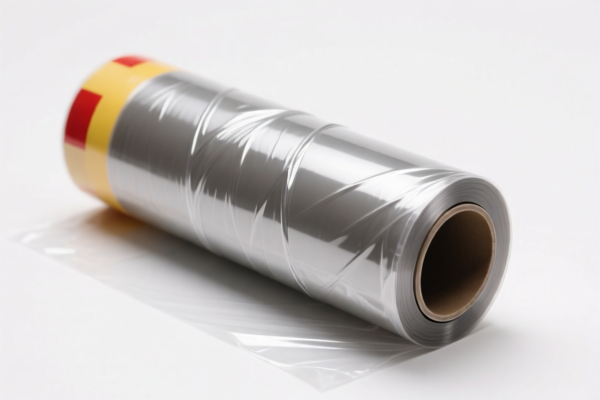

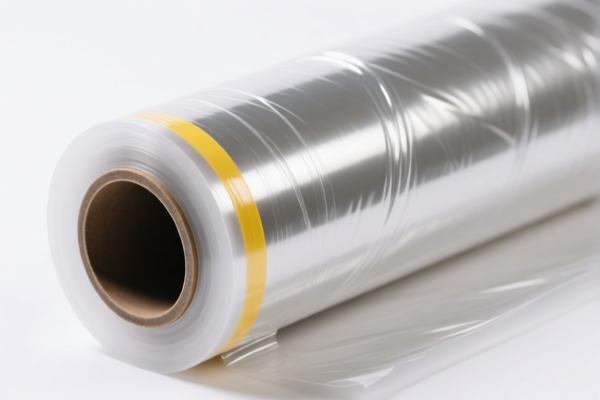
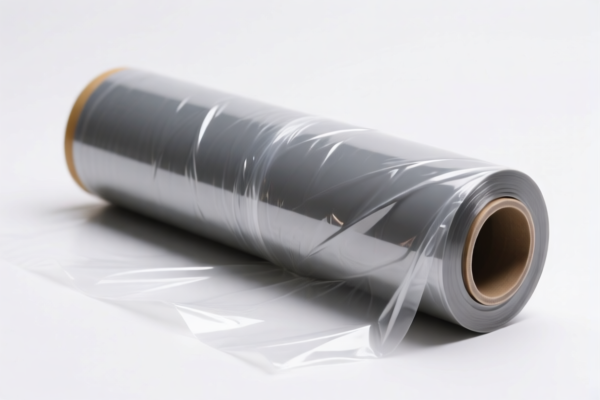
AI分析
🧪 Scientific Film Roll: The Ultimate HS Code & Tariff Breakdown (2026 Update)
🌐 HS Code Reference & Customs Clearance Guide | 2026 Latest Tariff Analysis | Professional Clearance Strategy
📌 I. Product Definition & Classification: What Exactly is a "Scientific Film Roll"?
In the world of international trade, "Scientific Film Roll" is not a single standardized product but a broad category. It generally refers to thin, flexible plastic materials used in laboratories, medical diagnostics, industrial sensing, or precision packaging.
Key Characteristics: * Form: Rolls (Coils), Sheets, or Tapes. * Material: Almost exclusively Plastic/Polymers (e.g., PET, PVC, PE, PP, PTFE). * Function: May be plain, coated, laminated, or have specific scientific properties (optical clarity, chemical resistance, conductivity).
⚠️ Critical Distinction for Customs:
- Is it Self-Adhesive? If it has an adhesive backing, it likely falls under Chapter 3919 (Self-adhesive plates/sheets/film).
- Is it Plain/Uncoated? If it’s just a plastic film without adhesives, it falls under Chapter 3920 (Other plates/sheets/film) or Chapter 3921 (Other plates/sheets/film).
- "Scientific" is not an HS Code: You must classify based on material composition and physical form, not its intended use.
📦 II. HS Code Classification Details (2026 Authority Cross-Reference)
Based on the provided data, here are the 6 specific HS Codes associated with "Scientific Film Roll," categorized by their logical grouping.
| HS Code | Product Description | Key Attributes | Why This Code? |
|---|---|---|---|
| 3920.99.50.00 | Scientific Film Roll | Roll form, Plastic material, "Other" plastic products. | Fits 3920 (Other plates/sheets/film) + 99 (Other) + 50 (Specific subheading for plastic films). Generic plastic film classification. |
| 3921.90.50.50 | Scientific Film Roll | Roll form, Plastic material, Matches plastic classification. | Fits 3921 (Other plates/sheets/film, non-cellular/non-reinforced). Often used for films that don't fit specific 3920 subheadings or are "other" plastics. |
| 3921.19.00.90 | Scientific Film Roll | Roll form, Plastic/Polymers, "Other" plastic products. | Fits 3921.19 (Other plates/sheets/film, of plastics). The .90 suffix usually captures "Other" unspecified plastic types. |
| 3920.99.20.00 | Scientific Film Roll | Roll/Belt/Sheet form, Plastic/Polymers, Non-cellular & Non-reinforced. | Fits 3920.99 (Other) + 20 (Specific for non-cellular/non-reinforced plastics). Precision classification for structural plastic films. |
| 3919.90.50.40 | Film Roll (Coil) | Film/Coil form, Plastic material, "Other" plastic products. | Fits 3919 (Self-adhesive plates/sheets/film). Crucial: If the scientific film has an adhesive backing (e.g., for sensors), this is the correct chapter. |
| 3919.90.50.60 | Film Roll (Coil) | Film/Coil form, Plastic material, Self-adhesive film & Coil form. | Fits 3919 (Self-adhesive). The .60 suffix explicitly denotes Self-adhesive films in coil form. |
🔍 Priority Note:
- 3919 codes are for Self-Adhesive films. If your "scientific film" is sticky (e.g., tape, adhesive labels), use these.
- 3920/3921 codes are for Non-Adhesive films. If it’s just a sheet/roll of plastic, use these.
💰 III. 2026 Latest Tariff Rate Breakdown (Including Surcharges & Policy Add-ons)
✅ Applicable Country: USA (US)
✅ Origin: China (CN)
✅ Effective Date: Current rates including 301 & IEEPA surcharges
✅ Total Tax Range: 39.2% – 41.5% (Significantly high due to trade tensions)
🎯 1. Non-Adhesive Films (Chapters 3920 & 3921)
These codes apply if the film is NOT self-adhesive.
| HS Code | Base Tariff | Section 301 Surcharge | IEEPA 122 Clause | Total Effective Tax | Legal Basis Path |
|---|---|---|---|---|---|
| 3920.99.20.00 | 4.2% | 25.0% | 10% | 39.2% | USITC:3920.99.20 → FOOTNOTE:301 → IEEPA:122 |
| 3921.90.50.50 | 4.8% | 25.0% | 10% | 39.8% | USITC:3921.90.50 → FOOTNOTE:301 → IEEPA:122 |
| 3921.19.00.90 | 6.5% | 25.0% | 10% | 41.5% | USITC:3921.19.00 → FOOTNOTE:301 → IEEPA:122 |
| 3920.99.50.00 | 5.8% | 25.0% | 10% | 40.8% | USITC:3920.99.50 → FOOTNOTE:301 → IEEPA:122 |
📌 Explanation:
- Base Tariff: Varies by specific plastic type (e.g., 6.5% for 3921.19.00.90 vs 4.2% for 3920.99.20.00).
- Section 301 Surcharge: Fixed at 25.0% for most Chinese-origin plastics.
- IEEPA 122 Clause: A recent policy add-on of 10% applied to specific Chinese goods.
- ⚠️ Cost Alert: The total tax is nearly 40%. This is a major cost factor. Do not ignore the 122 Clause!
🎯 2. Self-Adhesive Films (Chapter 3919)
These codes apply if the film HAS an adhesive backing.
| HS Code | Base Tariff | Section 301 Surcharge | IEEPA 122 Clause | Total Effective Tax | Legal Basis Path |
|---|---|---|---|---|---|
| 3919.90.50.40 | 5.8% | 25.0% | 10% | 40.8% | USITC:3919.90.50 → FOOTNOTE:301 → IEEPA:122 |
| 3919.90.50.60 | 5.8% | 25.0% | 10% | 40.8% | USITC:3919.90.50 → FOOTNOTE:301 → IEEPA:122 |
📌 Explanation:
- Self-adhesive films carry a slightly higher base tariff (5.8%) than some plain films, leading to a 40.8% total rate.
- Clarification: Ensure the product is indeed self-adhesive. If it’s not, declaring it under 3919 may lead to penalties for misclassification.
🛠️ IV. Customs Clearance Practical Advice (Avoiding Pitfalls)
✅ 1. Essential Documentation Checklist
| Document | Required? | Purpose |
|---|---|---|
| ✅ Product Spec Sheet | ✔️ | Must detail material (e.g., PET, PVC), thickness, width, and whether it is self-adhesive. |
| ✅ Commercial Invoice | ✔️ | Must clearly state: "Scientific Film Roll, Plastic, Roll Form." Avoid vague terms like "plastic sheet." |
| ✅ Packing List | ✔️ | Confirm roll dimensions (inner core size, outer diameter) to support "Roll" classification. |
| ✅ Material Composition Proof | ✔️ | Lab report or manufacturer declaration proving it is Plastic/Polymers (not rubber, paper, or metal). |
| ✅ Adhesive Confirmation | ✔️ | If applying for 3919, provide a photo showing the adhesive backing. If applying for 3920/3921, confirm no adhesive. |
| ✅ Certificate of Origin (CO) | ✔️ | Mandatory to calculate correct base tariff and verify Chinese origin. |
✅ 2. Declaration Tips (Key Mnemonics)
🔥 "Adhesive? Go 3919. Plain? Go 3920/21. Roll Form is King. Material is Key."
| Scenario | Correct HS Code Chapter | Wrong Declaration | Consequence |
|---|---|---|---|
| Sticky Film Roll | 3919 (Self-Adhesive) | Declared as 3920 (Plain) | Misclassification → Penalties + Back Taxes |
| Plain Plastic Film | 3920 or 3921 | Declared as 3919 (Self-Adhesive) | Over-declaration → Audit risk |
| "Scientific Use" | Does Not Matter | Using "Scientific" as primary descriptor | Customs ignores use; focuses on material/shape |
| Mixed Materials | N/A | Declaring as pure plastic | Must classify by essential character |
✅ 3. Special Considerations
| Case | Recommendation |
|---|---|
| Multilayer Film | If layers are different materials, classify by the essential character (usually the outermost or functional layer). |
| Coated Film | If coated with chemicals for scientific use, still classify under 3920/3921 unless the coating changes the fundamental nature (e.g., becomes a magnetic tape). |
| Sample vs. Commercial | Small samples may still be subject to duties but can sometimes claim de minimis if under $800 (for US citizens), but B2B shipments do not qualify for de minimis under current IEEPA rules. |
| HTS vs. HS | The codes provided are HTSUS (Harmonized Tariff Schedule of the US). Ensure your supplier uses HTSUS for US imports. |
🌍 V. Global Market Comparison (2026 Outlook)
| Region | Recommended HS Code | Est. Tariff (China Origin) | Key Requirement |
|---|---|---|---|
| 🇺🇸 USA | 3920.99.50.00 / 3919.90.50.60 | 39.2% – 41.5% | IEEPA 122 Clause applies. High scrutiny. |
| 🇨🇳 China | 3920.99 / 3919.90 | 5% – 6.5% | Basic customs clearance. No surcharges. |
| 🇪🇺 EU | 3920.91 / 3919.90 | 6.5% | CE marking may be required if for consumer use. |
| 🇯🇵 Japan | 3920.99 / 3919.90 | 3.0% – 5.0% | PSE certification if electrical components are integrated. |
📌 Conclusion:
- USA is the most expensive market for this product due to layered tariffs (Base + 301 + IEEPA).
- Diversification Strategy: Consider sourcing from Vietnam, Thailand, or Malaysia to avoid the 25% Section 301 and 10% IEEPA surcharges.
- Pre-Clearance: Given the high rate, Advance Ruling from US CBP is highly recommended to lock in the HS Code and avoid disputes.
📌 VI. Common Errors & Pitfalls (Lessons Learned)
❌ Error 1: Declaring "Scientific Film" without specifying Adhesive vs. Non-Adhesive.
👉 Result: Customs cannot determine if it’s 3919 or 3920 → Shipment held for examination.
❌ Error 2: Ignoring the 122 Clause IEEPA Surcharge.
👉 Result: Underpayment of duties → Financial penalty + Interest.
❌ Error 3: Using vague descriptions like "Plastic Roll."
👉 Result: Customs may apply a higher default tariff or require reclassification → Delay in clearance.
❌ Error 4: Assuming "Scientific" means duty-free.
👉 Result: There is no general duty-free status for scientific plastics in the US. They are subject to standard tariffs.
✅ Correct Approach:
"Plastic Film Roll, PET Material, 0.1mm Thickness, Non-Adhesive, Roll Form, For Laboratory Use, Model XYZ"
🎯 VII. Conclusion: Precision in Classification Saves Money
🎯 Remember the Golden Rule:
🔹 "Adhesive? 3919. Plain? 3920/21. Total Tax is ~40%. Don't guess, verify!"
🔹 "Material + Form = HS Code. 'Scientific' is just a use case, not a tariff code."
📌 Pro Tip:
If your film is used for high-tech semiconductor manufacturing, check if it qualifies for any specific industrial exemptions (rare, but possible).
For standard scientific films, budget for ~40% duty in your cost model.
📣 Immediate Action:
📞 Consult a Customs Broker: Provide photos and specs.
📄 Request a Pre-Submission Review: With your customs broker, submit details to CBP for an Advance Ruling.
🚀 Optimize Supply Chain: If volume is high, explore FTA (Free Trade Agreement) routes to avoid US surcharges.
✨ Professional clearance starts with accurate classification!
💼 Your profit margin depends on the HS Code you choose!
用户评价
关于 HS 编码归类
协调制度(HS)是由世界海关组织(WCO)制定的国际贸易商品分类标准。全球 200 多个国家采用 HS 系统作为海关关税、贸易统计和进出口监管的基础。
每个 HS 编码遵循以下层级结构:
- 章(2 位)——商品大类(例如:第 84 章:机器和机械设备)
- 品目(4 位)——章内的更具体分类
- 子目(6 位)——国际通用细分,所有 WCO 成员国统一使用
- 本国细分(8-10 位)——各国自行扩展的细分编码,如美国 HTSUS 10 位编码
正确的 HS 编码归类对于顺利通关、准确缴纳关税和遵守贸易法规至关重要。错误归类可能导致海关延误、多缴关税或罚款。
从CN进口到US时,适用的关税税率可能包括:
- 最惠国(MFN)税率——适用于 WTO 成员国的标准关税税率
- 普通税率——适用于无贸易协定国家
- 贸易救济关税——附加关税,如 301 条款(反倾销)、232 条款(国家安全)或反补贴税
本页内容仅供参考。如需正式归类,请咨询当地海关或持牌报关代理。