Scientific Film Roll
CN → US| HS Code | Tariff Rate | Origin | Destination | Doc |
|---|---|---|---|---|
| 3920995000 | 40.8% | CN | US | Official Doc |
| 3921905050 | 39.8% | CN | US | Official Doc |
| 3921190090 | 41.5% | CN | US | Official Doc |
| 3920992000 | 39.2% | CN | US | Official Doc |
| 3919905040 | 40.8% | CN | US | Official Doc |
| 3919905060 | 40.8% | CN | US | Official Doc |
Product Images
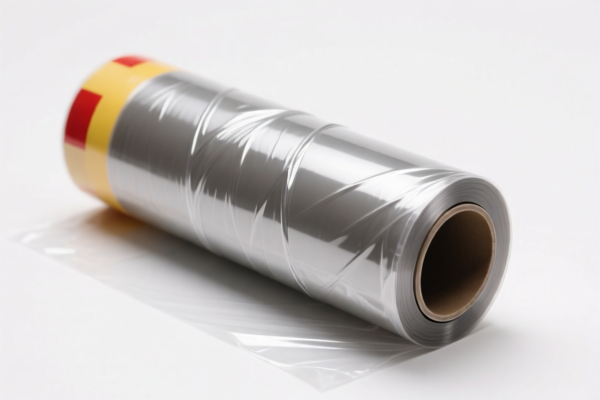

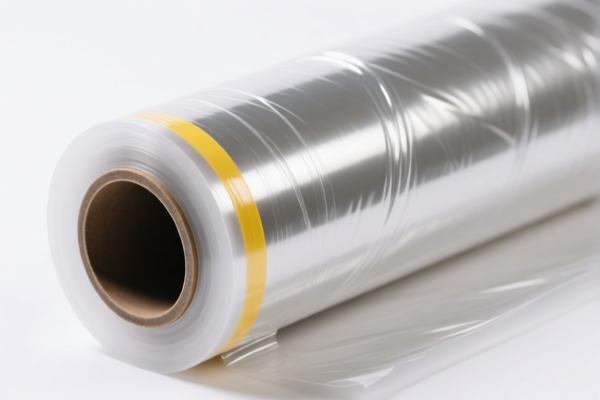
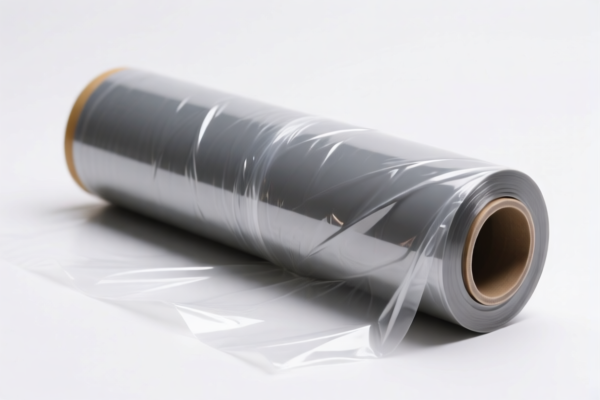
AI Analysis
🧪 Scientific Film Roll: The Ultimate HS Code & Tariff Breakdown (2026 Update)
🌐 HS Code Reference & Customs Clearance Guide | 2026 Latest Tariff Analysis | Professional Clearance Strategy
📌 I. Product Definition & Classification: What Exactly is a "Scientific Film Roll"?
In the world of international trade, "Scientific Film Roll" is not a single standardized product but a broad category. It generally refers to thin, flexible plastic materials used in laboratories, medical diagnostics, industrial sensing, or precision packaging.
Key Characteristics: * Form: Rolls (Coils), Sheets, or Tapes. * Material: Almost exclusively Plastic/Polymers (e.g., PET, PVC, PE, PP, PTFE). * Function: May be plain, coated, laminated, or have specific scientific properties (optical clarity, chemical resistance, conductivity).
⚠️ Critical Distinction for Customs:
- Is it Self-Adhesive? If it has an adhesive backing, it likely falls under Chapter 3919 (Self-adhesive plates/sheets/film).
- Is it Plain/Uncoated? If it’s just a plastic film without adhesives, it falls under Chapter 3920 (Other plates/sheets/film) or Chapter 3921 (Other plates/sheets/film).
- "Scientific" is not an HS Code: You must classify based on material composition and physical form, not its intended use.
📦 II. HS Code Classification Details (2026 Authority Cross-Reference)
Based on the provided data, here are the 6 specific HS Codes associated with "Scientific Film Roll," categorized by their logical grouping.
| HS Code | Product Description | Key Attributes | Why This Code? |
|---|---|---|---|
| 3920.99.50.00 | Scientific Film Roll | Roll form, Plastic material, "Other" plastic products. | Fits 3920 (Other plates/sheets/film) + 99 (Other) + 50 (Specific subheading for plastic films). Generic plastic film classification. |
| 3921.90.50.50 | Scientific Film Roll | Roll form, Plastic material, Matches plastic classification. | Fits 3921 (Other plates/sheets/film, non-cellular/non-reinforced). Often used for films that don't fit specific 3920 subheadings or are "other" plastics. |
| 3921.19.00.90 | Scientific Film Roll | Roll form, Plastic/Polymers, "Other" plastic products. | Fits 3921.19 (Other plates/sheets/film, of plastics). The .90 suffix usually captures "Other" unspecified plastic types. |
| 3920.99.20.00 | Scientific Film Roll | Roll/Belt/Sheet form, Plastic/Polymers, Non-cellular & Non-reinforced. | Fits 3920.99 (Other) + 20 (Specific for non-cellular/non-reinforced plastics). Precision classification for structural plastic films. |
| 3919.90.50.40 | Film Roll (Coil) | Film/Coil form, Plastic material, "Other" plastic products. | Fits 3919 (Self-adhesive plates/sheets/film). Crucial: If the scientific film has an adhesive backing (e.g., for sensors), this is the correct chapter. |
| 3919.90.50.60 | Film Roll (Coil) | Film/Coil form, Plastic material, Self-adhesive film & Coil form. | Fits 3919 (Self-adhesive). The .60 suffix explicitly denotes Self-adhesive films in coil form. |
🔍 Priority Note:
- 3919 codes are for Self-Adhesive films. If your "scientific film" is sticky (e.g., tape, adhesive labels), use these.
- 3920/3921 codes are for Non-Adhesive films. If it’s just a sheet/roll of plastic, use these.
💰 III. 2026 Latest Tariff Rate Breakdown (Including Surcharges & Policy Add-ons)
✅ Applicable Country: USA (US)
✅ Origin: China (CN)
✅ Effective Date: Current rates including 301 & IEEPA surcharges
✅ Total Tax Range: 39.2% – 41.5% (Significantly high due to trade tensions)
🎯 1. Non-Adhesive Films (Chapters 3920 & 3921)
These codes apply if the film is NOT self-adhesive.
| HS Code | Base Tariff | Section 301 Surcharge | IEEPA 122 Clause | Total Effective Tax | Legal Basis Path |
|---|---|---|---|---|---|
| 3920.99.20.00 | 4.2% | 25.0% | 10% | 39.2% | USITC:3920.99.20 → FOOTNOTE:301 → IEEPA:122 |
| 3921.90.50.50 | 4.8% | 25.0% | 10% | 39.8% | USITC:3921.90.50 → FOOTNOTE:301 → IEEPA:122 |
| 3921.19.00.90 | 6.5% | 25.0% | 10% | 41.5% | USITC:3921.19.00 → FOOTNOTE:301 → IEEPA:122 |
| 3920.99.50.00 | 5.8% | 25.0% | 10% | 40.8% | USITC:3920.99.50 → FOOTNOTE:301 → IEEPA:122 |
📌 Explanation:
- Base Tariff: Varies by specific plastic type (e.g., 6.5% for 3921.19.00.90 vs 4.2% for 3920.99.20.00).
- Section 301 Surcharge: Fixed at 25.0% for most Chinese-origin plastics.
- IEEPA 122 Clause: A recent policy add-on of 10% applied to specific Chinese goods.
- ⚠️ Cost Alert: The total tax is nearly 40%. This is a major cost factor. Do not ignore the 122 Clause!
🎯 2. Self-Adhesive Films (Chapter 3919)
These codes apply if the film HAS an adhesive backing.
| HS Code | Base Tariff | Section 301 Surcharge | IEEPA 122 Clause | Total Effective Tax | Legal Basis Path |
|---|---|---|---|---|---|
| 3919.90.50.40 | 5.8% | 25.0% | 10% | 40.8% | USITC:3919.90.50 → FOOTNOTE:301 → IEEPA:122 |
| 3919.90.50.60 | 5.8% | 25.0% | 10% | 40.8% | USITC:3919.90.50 → FOOTNOTE:301 → IEEPA:122 |
📌 Explanation:
- Self-adhesive films carry a slightly higher base tariff (5.8%) than some plain films, leading to a 40.8% total rate.
- Clarification: Ensure the product is indeed self-adhesive. If it’s not, declaring it under 3919 may lead to penalties for misclassification.
🛠️ IV. Customs Clearance Practical Advice (Avoiding Pitfalls)
✅ 1. Essential Documentation Checklist
| Document | Required? | Purpose |
|---|---|---|
| ✅ Product Spec Sheet | ✔️ | Must detail material (e.g., PET, PVC), thickness, width, and whether it is self-adhesive. |
| ✅ Commercial Invoice | ✔️ | Must clearly state: "Scientific Film Roll, Plastic, Roll Form." Avoid vague terms like "plastic sheet." |
| ✅ Packing List | ✔️ | Confirm roll dimensions (inner core size, outer diameter) to support "Roll" classification. |
| ✅ Material Composition Proof | ✔️ | Lab report or manufacturer declaration proving it is Plastic/Polymers (not rubber, paper, or metal). |
| ✅ Adhesive Confirmation | ✔️ | If applying for 3919, provide a photo showing the adhesive backing. If applying for 3920/3921, confirm no adhesive. |
| ✅ Certificate of Origin (CO) | ✔️ | Mandatory to calculate correct base tariff and verify Chinese origin. |
✅ 2. Declaration Tips (Key Mnemonics)
🔥 "Adhesive? Go 3919. Plain? Go 3920/21. Roll Form is King. Material is Key."
| Scenario | Correct HS Code Chapter | Wrong Declaration | Consequence |
|---|---|---|---|
| Sticky Film Roll | 3919 (Self-Adhesive) | Declared as 3920 (Plain) | Misclassification → Penalties + Back Taxes |
| Plain Plastic Film | 3920 or 3921 | Declared as 3919 (Self-Adhesive) | Over-declaration → Audit risk |
| "Scientific Use" | Does Not Matter | Using "Scientific" as primary descriptor | Customs ignores use; focuses on material/shape |
| Mixed Materials | N/A | Declaring as pure plastic | Must classify by essential character |
✅ 3. Special Considerations
| Case | Recommendation |
|---|---|
| Multilayer Film | If layers are different materials, classify by the essential character (usually the outermost or functional layer). |
| Coated Film | If coated with chemicals for scientific use, still classify under 3920/3921 unless the coating changes the fundamental nature (e.g., becomes a magnetic tape). |
| Sample vs. Commercial | Small samples may still be subject to duties but can sometimes claim de minimis if under $800 (for US citizens), but B2B shipments do not qualify for de minimis under current IEEPA rules. |
| HTS vs. HS | The codes provided are HTSUS (Harmonized Tariff Schedule of the US). Ensure your supplier uses HTSUS for US imports. |
🌍 V. Global Market Comparison (2026 Outlook)
| Region | Recommended HS Code | Est. Tariff (China Origin) | Key Requirement |
|---|---|---|---|
| 🇺🇸 USA | 3920.99.50.00 / 3919.90.50.60 | 39.2% – 41.5% | IEEPA 122 Clause applies. High scrutiny. |
| 🇨🇳 China | 3920.99 / 3919.90 | 5% – 6.5% | Basic customs clearance. No surcharges. |
| 🇪🇺 EU | 3920.91 / 3919.90 | 6.5% | CE marking may be required if for consumer use. |
| 🇯🇵 Japan | 3920.99 / 3919.90 | 3.0% – 5.0% | PSE certification if electrical components are integrated. |
📌 Conclusion:
- USA is the most expensive market for this product due to layered tariffs (Base + 301 + IEEPA).
- Diversification Strategy: Consider sourcing from Vietnam, Thailand, or Malaysia to avoid the 25% Section 301 and 10% IEEPA surcharges.
- Pre-Clearance: Given the high rate, Advance Ruling from US CBP is highly recommended to lock in the HS Code and avoid disputes.
📌 VI. Common Errors & Pitfalls (Lessons Learned)
❌ Error 1: Declaring "Scientific Film" without specifying Adhesive vs. Non-Adhesive.
👉 Result: Customs cannot determine if it’s 3919 or 3920 → Shipment held for examination.
❌ Error 2: Ignoring the 122 Clause IEEPA Surcharge.
👉 Result: Underpayment of duties → Financial penalty + Interest.
❌ Error 3: Using vague descriptions like "Plastic Roll."
👉 Result: Customs may apply a higher default tariff or require reclassification → Delay in clearance.
❌ Error 4: Assuming "Scientific" means duty-free.
👉 Result: There is no general duty-free status for scientific plastics in the US. They are subject to standard tariffs.
✅ Correct Approach:
"Plastic Film Roll, PET Material, 0.1mm Thickness, Non-Adhesive, Roll Form, For Laboratory Use, Model XYZ"
🎯 VII. Conclusion: Precision in Classification Saves Money
🎯 Remember the Golden Rule:
🔹 "Adhesive? 3919. Plain? 3920/21. Total Tax is ~40%. Don't guess, verify!"
🔹 "Material + Form = HS Code. 'Scientific' is just a use case, not a tariff code."
📌 Pro Tip:
If your film is used for high-tech semiconductor manufacturing, check if it qualifies for any specific industrial exemptions (rare, but possible).
For standard scientific films, budget for ~40% duty in your cost model.
📣 Immediate Action:
📞 Consult a Customs Broker: Provide photos and specs.
📄 Request a Pre-Submission Review: With your customs broker, submit details to CBP for an Advance Ruling.
🚀 Optimize Supply Chain: If volume is high, explore FTA (Free Trade Agreement) routes to avoid US surcharges.
✨ Professional clearance starts with accurate classification!
💼 Your profit margin depends on the HS Code you choose!
Customer Reviews
About HS Code Classification
The Harmonized System (HS) is an internationally standardized nomenclature developed by the World Customs Organization (WCO) to classify traded products. Over 200 countries use the HS system as the basis for customs tariffs, trade statistics, and import/export regulations.
Each HS code follows a hierarchical structure:
- Chapter (2 digits) — Broad category of goods (e.g., Chapter 84: Machinery and Mechanical Appliances)
- Heading (4 digits) — More specific grouping within the chapter
- Subheading (6 digits) — Internationally standardized breakdown, used by all WCO member countries
- National subdivisions (8-10 digits) — Country-specific extensions for further classification, such as US HTSUS 10-digit codes
Correct HS code classification is essential for smooth customs clearance, accurate duty payment, and compliance with trade regulations. Misclassification can lead to customs delays, overpayment of duties, or penalties.
When importing from CN to US, the applicable tariff rates may include:
- Most-Favored-Nation (MFN) rate — The standard duty rate applied to WTO members
- General rate — Applied to countries without trade agreements
- Trade remedy duties — Additional tariffs such as Section 301 (anti-dumping), Section 232 (national security), or countervailing duties
The information provided on this page is for reference purposes only. For official classification, please consult with your local customs authority or a licensed customs broker.