Screw
CN → US| HS编码 | 关税税率 | 原产国 | 目的国 | 文档 |
|---|---|---|---|---|
| 7415338010 | 88.0% | CN | US | 官方文档 |
| 7318152095 | 85.0% | CN | US | 官方文档 |
| 7415330500 | 88.0% | CN | US | 官方文档 |
| 8308206000 | 35.0% | CN | US | 官方文档 |
| 7318152010 | 85.0% | CN | US | 官方文档 |
商品图片
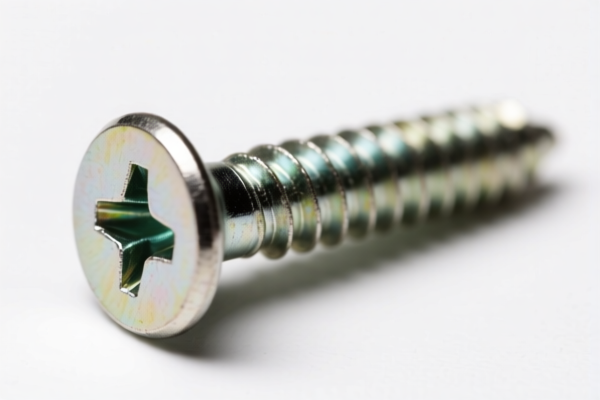
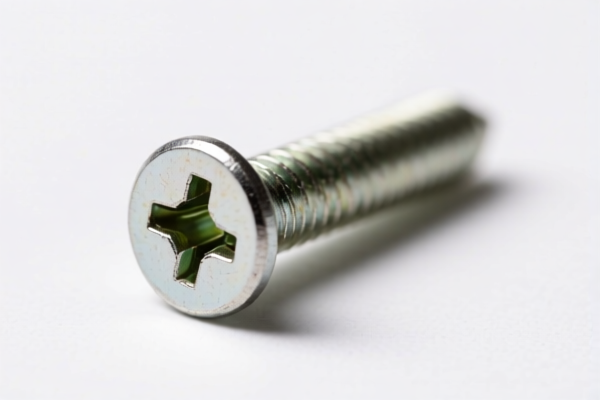
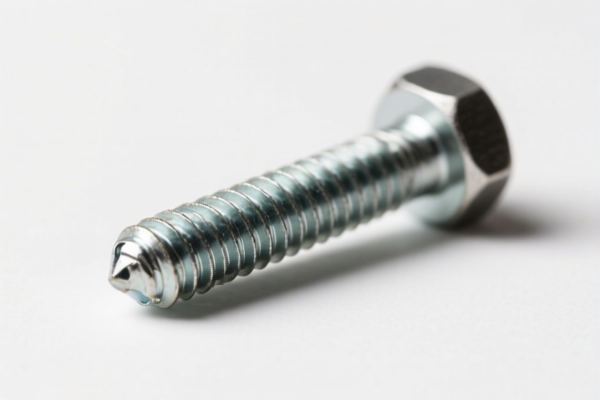
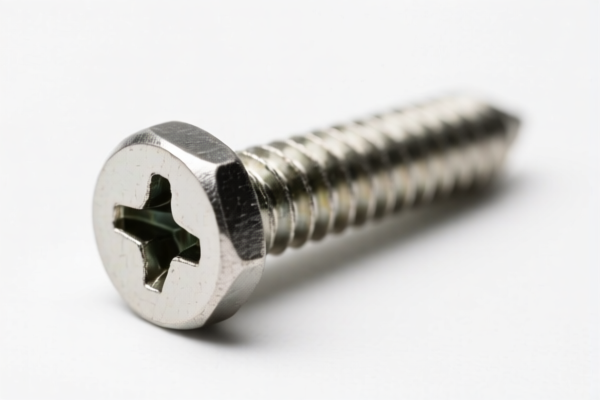
AI分析
🔩 Screws (Metal Fasteners)
🌐 HS Code Reference & Customs Clearance Guide | 2026 Latest Tariff Analysis | Professional Strategy for Iron/Steel & Copper Fasteners
📌 I. Product Definition & Classification: Do You Really Understand "Screws"?
In international trade, "Screws" are not a single unified category. The HS Code classification depends strictly on the material composition and specific structural type (e.g., whether it is classified as a rivet or a standard threaded fastener). Misclassification can lead to massive duty discrepancies, especially under current US trade restrictions (Section 301, Section 232, and IEEPA).
Key Distinction: * Iron/Steel Screws: Generally classified under Chapter 73. These are subject to significant anti-dumping/countervailing duties and Section 301/232 tariffs. * Copper Screws: Generally classified under Chapter 74. These are also heavily targeted by trade restrictions but may have different base rates. * Rivets/Other Fasteners: Some screw-like fasteners may be classified as "Rivets" (Chapter 83) if they meet specific structural criteria, potentially altering the tariff profile.
⚠️ Critical Warning:
- Material is King: Iron/Steel vs. Copper determines the Chapter (73 vs. 74).
- Tariff Shock: Both categories face up to 88% total duty due to overlapping US trade policies.
- Structure Matters: If the item is technically a "Rivet" or "Clip," it falls under Chapter 83, which has a lower total tax rate (35%).
📦 II. HS Code Classification Matrix (2026 Latest Tariff Data)
| HS Code | Product Description (Inferred) | Material | Form/Structure Match | Total Tax Rate |
|---|---|---|---|---|
7415.33.80.10 |
Screws | Copper | Morphology Match | 88.0% |
7318.15.20.95 |
Screws | Iron/Steel | Morphology Match | 85.0% |
7415.33.05.00 |
Screws | Copper/Copper-head | Morphology Match | 88.0% |
8308.20.60.00 |
Screws (Rivets/Clips) | Base Metal | Classified as Rivets | 35.0% |
7318.15.20.10 |
Screws (Threaded) | Iron/Steel | Classified as Threaded Products | 85.0% |
🔍 Key Insight:
- Copper Screws (7415.33.xx) consistently incur the highest duty (88%).
- Iron/Steel Screws (7318.15.xx) incur 85%.
- Rivet-type Fasteners (8308.20.60.00) offer the lowest duty (35%), but only if the product structurally qualifies as a rivet/clip rather than a screw.
💰 III. Detailed Tariff Breakdown (2026 US Market Analysis)
✅ Applicable Market: United States (US)
✅ Origin: China (CN)
✅ Effective Period: Current tariffs apply (Section 301, 232, IEEPA)
🎯 1. 7415.33.80.10 & 7415.33.05.00 — Copper Screws
Scenario A: 7415.33.80.10 (Copper Screws)
Scenario B: 7415.33.05.00 (Copper/Copper-head Screws)
| Item | Content |
|---|---|
| Base Duty (MFN) | 3.0% (Ad Valorem) |
| Section 301 Tariff | +25.0% (List 4B/4C adjustments) |
| IEEPA Tariff (Section 122/10%) | +10.0% (Specific China restrictions) |
| Section 232 Tariff (Steel/Aluminum/Copper) | +50.0% |
| Total Duty Rate | 88.0% |
| Calculation Basis | CIF Value × 88% |
| De Minimis Exemption | ❌ Not Eligible (High duty goods excluded from $800 exemption) |
📌 Explanation:
- The 50% Section 232 tariff applies to copper products originating from China.
- The 25% Section 301 tariff applies to general Chinese imports.
- The 10% IEEPA tariff is a specific additional levy on certain Chinese goods.
- Result: 3% + 25% + 10% + 50% = 88%. This is an extremely high cost barrier.
🎯 2. 7318.15.20.95 & 7318.15.20.10 — Iron/Steel Screws
Scenario A: 7318.15.20.95 (Steel Screws, Morphology Match)
Scenario B: 7318.15.20.10 (Steel Screws, Threaded Products)
| Item | Content |
|---|---|
| Base Duty (MFN) | 0.0% (Often duty-free for standard fasteners) |
| Section 301 Tariff | +25.0% |
| IEEPA Tariff (Section 122/10%) | +10.0% |
| Section 232 Tariff (Steel) | +50.0% |
| Total Duty Rate | 85.0% |
| Calculation Basis | CIF Value × 85% |
| De Minimis Exemption | ❌ Not Eligible |
📌 Explanation:
- Unlike copper, steel often has a 0% base MFN rate.
- However, the 50% Section 232 tariff on steel is the dominant cost driver.
- Combined with 25% (Sec 301) and 10% (IEEPA), the total is 85%.
- Difference from Copper: 3% lower total due to 0% base rate vs. 3% base rate.
🎯 3. 8308.20.60.00 — Screws Classified as Rivets/Base Metal
| Item | Content |
|---|---|
| Base Duty (MFN) | 0.0% |
| Section 301 Tariff | +25.0% |
| IEEPA Tariff (Section 122/10%) | +10.0% |
| Section 232 Tariff | 0.0% (Note: Rivets may not trigger Section 232 if classified under Ch 83, or the rate differs) |
| Total Duty Rate | 35.0% |
| Calculation Basis | CIF Value × 35% |
| De Minimis Exemption | ❌ Not Eligible (Likely, as it's still a Chinese metal fastener) |
📌 Explanation:
- This classification is the "Sweet Spot" for cost optimization.
- By arguing the product is a Rivet or Clip (Chapter 83) rather than a Screw (Chapter 73/74), you avoid the 50% Section 232 tariff and potentially reduce Section 301 applicability.
- Total: 35% is significantly lower than 85-88%.
- Risk: Customs may reject this if the item is clearly a screw (requires thread engagement and nut/washer).
🛠️ IV. Customs Clearance Practical Advice (Pitfall Avoidance)
✅ 1. Documentation Checklist (Non-Negotiable)
| Document | Required | Details |
|---|---|---|
| ✅ Product Specifications | ✔️ | Must explicitly state Material (e.g., "Copper Alloy C11000" or "Stainless Steel 304"). Vague terms like "Metal Screw" are rejected. |
| ✅ Technical Drawings | ✔️ | Show head type, thread type, and length. Critical for distinguishing between Screw (Ch 73/74) and Rivet (Ch 83). |
| ✅ Material Certificates | ✔️ | Mill test certificates proving composition (e.g., % Copper, % Iron). |
| ✅ Commercial Invoice | ✔️ | Detailed description: "Copper Screw, Hex Head, M4x10mm". Do not just write "Screws". |
| ✅ Packing List | ✔️ | Weight and dimensions. |
| ✅ Country of Origin | ✔️ | Must match the tariff logic (e.g., China triggers high duties). |
✅ 2. Classification Strategy & Tips
🔥 "Material Defines Chapter, Structure Defines Code, Policy Defines Price!"
| Scenario | Correct HS Code | Tax Rate | Risk Level |
|---|---|---|---|
| Standard Copper Screw | 7415.33.80.10 |
88% | High Cost |
| Standard Steel Screw | 7318.15.20.10 |
85% | High Cost |
| Product is a Rivet | 8308.20.60.00 |
35% | Low Cost (Optimal) |
| Vague Description | ⚠️ Pending | Uncertain | High Risk (Audit/Seizure) |
📌 Strategic Tip:
- If your product can technically function as a Rivet (e.g., solid pin, no internal thread, peened on installation), classify under8308.20.60.00.
- If it is a threaded screw requiring a nut or tap, it must be 73/74. Do not misclassify to avoid fraud penalties.
✅ 3. Special Case Handling
| Situation | Handling Advice |
|---|---|
| Mixed Materials | If a screw has a copper head and steel shaft, Customs may classify based on the principal value or material. Declare both materials clearly. |
| Section 232 Exemptions | Check if your specific product code has an exclusion from the 50% tariff. Exclusions are rare and time-limited. |
| De Minimis ($800) | ❌ Do not rely on De Minimis. High-duty items (35%+) from China are explicitly excluded from the $800 de minimis exemption for certain high-value or restricted goods. |
| Pre-Ruling | Apply for an Advance Ruling from CBP. This is crucial for high-value shipments to confirm if 8308.20.60.00 is acceptable. |
🌍 V. Global Market Comparison (2026)
| Country/Region | Recommended HS Code | Est. Duty (China Origin) | Key Requirement |
|---|---|---|---|
| 🇺🇸 USA | 7318.15.20.10 / 7415.33.80.10 |
85-88% | Section 301/232/IEEPA apply. High compliance burden. |
| 🇨🇳 China | 7318.15.20.10 |
5-10% | Standard import duty. No Section 301. |
| 🇪🇺 EU | 7318.15.20.10 |
4.7% | No Section 301. CE marking may be required for specific applications. |
| 🇯🇵 Japan | 7318.15.20.10 |
3.0% | Low duty. JIS standards apply for quality. |
📌 Conclusion:
- The US market is the most expensive due to overlapping tariff policies.
- Diversification: Consider sourcing steel/copper fasteners from Vietnam, Mexico, or India to mitigate Section 301/232 tariffs (check Rules of Origin carefully).
📌 VI. Common Mistakes & Pitfalls (Lessons Learned)
❌ Mistake 1: Using generic terms like "Fasteners" or "Screws" without material specification.
👉 Consequence: Customs assigns worst-case HS Code + 100% audit rate + seizure risk.
❌ Mistake 2: Classifying Threaded Screws as Rivets (8308.20.60.00) to save 50%.
👉 Consequence: If inspected and found to be threaded screws, you face fraud penalties, back duties, and potential blacklisting.
❌ Mistake 3: Ignoring IEEPA 10% + Section 301 25% + Section 232 50%.
👉 Consequence: Profit margin evaporates. 88% duty is often unprofitable for low-margin hardware.
✅ Correct Action:
"Threaded? → Ch 73/74. Solid Pin? → Ch 83. Copper? → Ch 74. Steel? → Ch 73. Always Verify!"
🎯 VII. Conclusion: Professional Classification, Cost Optimization
🎯 Key Takeaways:
🔹 Copper Screws: ~88% Total Duty.
🔹 Steel Screws: ~85% Total Duty.
🔹 Rivets (if applicable): ~35% Total Duty.
🔹 Strategy: If structurally possible, classify as Rivets to save 50%. If not, budget for 85-88%.
📌 Pro Tip:
- For high-volume shipments, apply for a Binding Ruling with US CBP.
- Consider Supply Chain Shift to non-China origins if US market is the primary destination.
📣 Immediate Action:
📞 Contact your freight forwarder with material specs and technical drawings.
📄 Request a Pre-Clearance Review for HS Code7318.15.20.10or8308.20.60.00.
🚀 Do not ship without confirming the final duty rate!
✨ Precision in Classification = Precision in Profit!
💼 Every 1% of duty saved is 1% of profit kept!
用户评价
关于 HS 编码归类
协调制度(HS)是由世界海关组织(WCO)制定的国际贸易商品分类标准。全球 200 多个国家采用 HS 系统作为海关关税、贸易统计和进出口监管的基础。
每个 HS 编码遵循以下层级结构:
- 章(2 位)——商品大类(例如:第 84 章:机器和机械设备)
- 品目(4 位)——章内的更具体分类
- 子目(6 位)——国际通用细分,所有 WCO 成员国统一使用
- 本国细分(8-10 位)——各国自行扩展的细分编码,如美国 HTSUS 10 位编码
正确的 HS 编码归类对于顺利通关、准确缴纳关税和遵守贸易法规至关重要。错误归类可能导致海关延误、多缴关税或罚款。
从CN进口到US时,适用的关税税率可能包括:
- 最惠国(MFN)税率——适用于 WTO 成员国的标准关税税率
- 普通税率——适用于无贸易协定国家
- 贸易救济关税——附加关税,如 301 条款(反倾销)、232 条款(国家安全)或反补贴税
本页内容仅供参考。如需正式归类,请咨询当地海关或持牌报关代理。