Screw
CN → US| HS Code | Tariff Rate | Origin | Destination | Doc |
|---|---|---|---|---|
| 7415338010 | 88.0% | CN | US | Official Doc |
| 7318152095 | 85.0% | CN | US | Official Doc |
| 7415330500 | 88.0% | CN | US | Official Doc |
| 8308206000 | 35.0% | CN | US | Official Doc |
| 7318152010 | 85.0% | CN | US | Official Doc |
Product Images
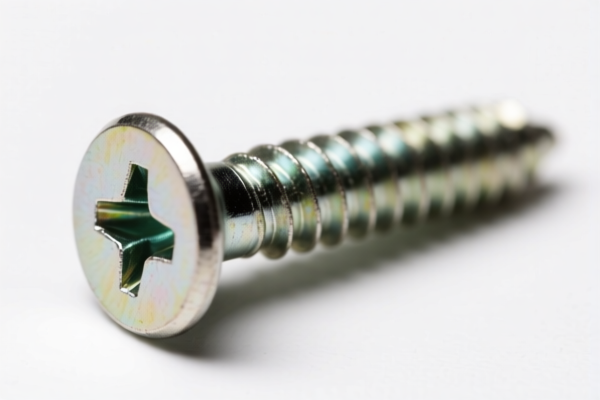
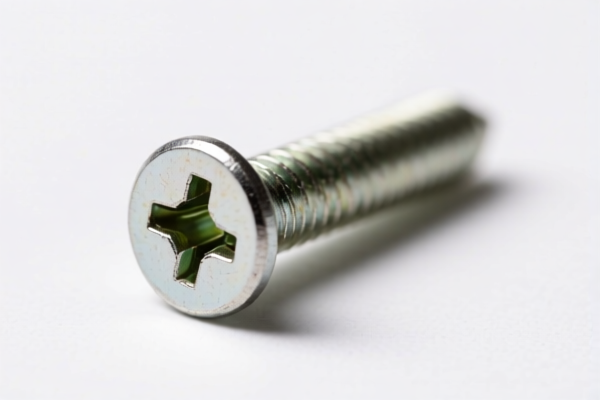
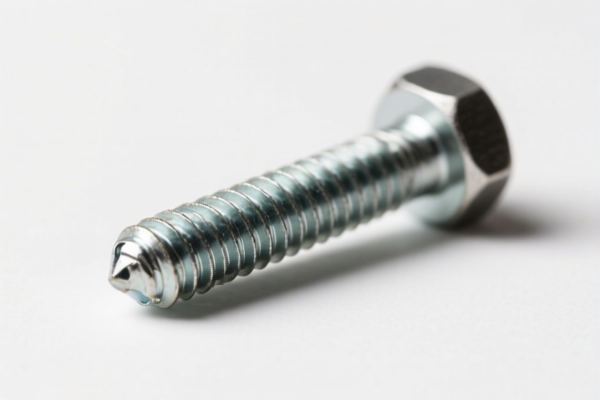
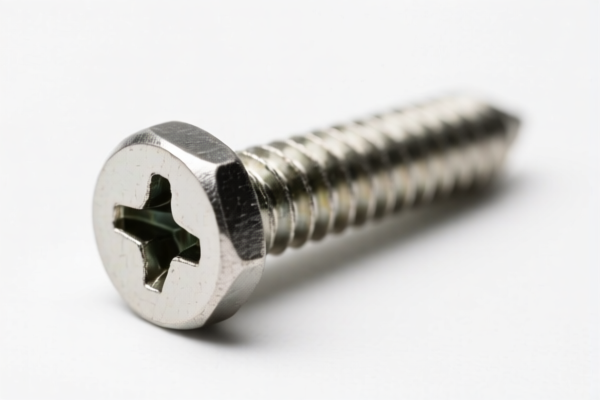
AI Analysis
🔩 Screws (Metal Fasteners)
🌐 HS Code Reference & Customs Clearance Guide | 2026 Latest Tariff Analysis | Professional Strategy for Iron/Steel & Copper Fasteners
📌 I. Product Definition & Classification: Do You Really Understand "Screws"?
In international trade, "Screws" are not a single unified category. The HS Code classification depends strictly on the material composition and specific structural type (e.g., whether it is classified as a rivet or a standard threaded fastener). Misclassification can lead to massive duty discrepancies, especially under current US trade restrictions (Section 301, Section 232, and IEEPA).
Key Distinction: * Iron/Steel Screws: Generally classified under Chapter 73. These are subject to significant anti-dumping/countervailing duties and Section 301/232 tariffs. * Copper Screws: Generally classified under Chapter 74. These are also heavily targeted by trade restrictions but may have different base rates. * Rivets/Other Fasteners: Some screw-like fasteners may be classified as "Rivets" (Chapter 83) if they meet specific structural criteria, potentially altering the tariff profile.
⚠️ Critical Warning:
- Material is King: Iron/Steel vs. Copper determines the Chapter (73 vs. 74).
- Tariff Shock: Both categories face up to 88% total duty due to overlapping US trade policies.
- Structure Matters: If the item is technically a "Rivet" or "Clip," it falls under Chapter 83, which has a lower total tax rate (35%).
📦 II. HS Code Classification Matrix (2026 Latest Tariff Data)
| HS Code | Product Description (Inferred) | Material | Form/Structure Match | Total Tax Rate |
|---|---|---|---|---|
7415.33.80.10 |
Screws | Copper | Morphology Match | 88.0% |
7318.15.20.95 |
Screws | Iron/Steel | Morphology Match | 85.0% |
7415.33.05.00 |
Screws | Copper/Copper-head | Morphology Match | 88.0% |
8308.20.60.00 |
Screws (Rivets/Clips) | Base Metal | Classified as Rivets | 35.0% |
7318.15.20.10 |
Screws (Threaded) | Iron/Steel | Classified as Threaded Products | 85.0% |
🔍 Key Insight:
- Copper Screws (7415.33.xx) consistently incur the highest duty (88%).
- Iron/Steel Screws (7318.15.xx) incur 85%.
- Rivet-type Fasteners (8308.20.60.00) offer the lowest duty (35%), but only if the product structurally qualifies as a rivet/clip rather than a screw.
💰 III. Detailed Tariff Breakdown (2026 US Market Analysis)
✅ Applicable Market: United States (US)
✅ Origin: China (CN)
✅ Effective Period: Current tariffs apply (Section 301, 232, IEEPA)
🎯 1. 7415.33.80.10 & 7415.33.05.00 — Copper Screws
Scenario A: 7415.33.80.10 (Copper Screws)
Scenario B: 7415.33.05.00 (Copper/Copper-head Screws)
| Item | Content |
|---|---|
| Base Duty (MFN) | 3.0% (Ad Valorem) |
| Section 301 Tariff | +25.0% (List 4B/4C adjustments) |
| IEEPA Tariff (Section 122/10%) | +10.0% (Specific China restrictions) |
| Section 232 Tariff (Steel/Aluminum/Copper) | +50.0% |
| Total Duty Rate | 88.0% |
| Calculation Basis | CIF Value × 88% |
| De Minimis Exemption | ❌ Not Eligible (High duty goods excluded from $800 exemption) |
📌 Explanation:
- The 50% Section 232 tariff applies to copper products originating from China.
- The 25% Section 301 tariff applies to general Chinese imports.
- The 10% IEEPA tariff is a specific additional levy on certain Chinese goods.
- Result: 3% + 25% + 10% + 50% = 88%. This is an extremely high cost barrier.
🎯 2. 7318.15.20.95 & 7318.15.20.10 — Iron/Steel Screws
Scenario A: 7318.15.20.95 (Steel Screws, Morphology Match)
Scenario B: 7318.15.20.10 (Steel Screws, Threaded Products)
| Item | Content |
|---|---|
| Base Duty (MFN) | 0.0% (Often duty-free for standard fasteners) |
| Section 301 Tariff | +25.0% |
| IEEPA Tariff (Section 122/10%) | +10.0% |
| Section 232 Tariff (Steel) | +50.0% |
| Total Duty Rate | 85.0% |
| Calculation Basis | CIF Value × 85% |
| De Minimis Exemption | ❌ Not Eligible |
📌 Explanation:
- Unlike copper, steel often has a 0% base MFN rate.
- However, the 50% Section 232 tariff on steel is the dominant cost driver.
- Combined with 25% (Sec 301) and 10% (IEEPA), the total is 85%.
- Difference from Copper: 3% lower total due to 0% base rate vs. 3% base rate.
🎯 3. 8308.20.60.00 — Screws Classified as Rivets/Base Metal
| Item | Content |
|---|---|
| Base Duty (MFN) | 0.0% |
| Section 301 Tariff | +25.0% |
| IEEPA Tariff (Section 122/10%) | +10.0% |
| Section 232 Tariff | 0.0% (Note: Rivets may not trigger Section 232 if classified under Ch 83, or the rate differs) |
| Total Duty Rate | 35.0% |
| Calculation Basis | CIF Value × 35% |
| De Minimis Exemption | ❌ Not Eligible (Likely, as it's still a Chinese metal fastener) |
📌 Explanation:
- This classification is the "Sweet Spot" for cost optimization.
- By arguing the product is a Rivet or Clip (Chapter 83) rather than a Screw (Chapter 73/74), you avoid the 50% Section 232 tariff and potentially reduce Section 301 applicability.
- Total: 35% is significantly lower than 85-88%.
- Risk: Customs may reject this if the item is clearly a screw (requires thread engagement and nut/washer).
🛠️ IV. Customs Clearance Practical Advice (Pitfall Avoidance)
✅ 1. Documentation Checklist (Non-Negotiable)
| Document | Required | Details |
|---|---|---|
| ✅ Product Specifications | ✔️ | Must explicitly state Material (e.g., "Copper Alloy C11000" or "Stainless Steel 304"). Vague terms like "Metal Screw" are rejected. |
| ✅ Technical Drawings | ✔️ | Show head type, thread type, and length. Critical for distinguishing between Screw (Ch 73/74) and Rivet (Ch 83). |
| ✅ Material Certificates | ✔️ | Mill test certificates proving composition (e.g., % Copper, % Iron). |
| ✅ Commercial Invoice | ✔️ | Detailed description: "Copper Screw, Hex Head, M4x10mm". Do not just write "Screws". |
| ✅ Packing List | ✔️ | Weight and dimensions. |
| ✅ Country of Origin | ✔️ | Must match the tariff logic (e.g., China triggers high duties). |
✅ 2. Classification Strategy & Tips
🔥 "Material Defines Chapter, Structure Defines Code, Policy Defines Price!"
| Scenario | Correct HS Code | Tax Rate | Risk Level |
|---|---|---|---|
| Standard Copper Screw | 7415.33.80.10 |
88% | High Cost |
| Standard Steel Screw | 7318.15.20.10 |
85% | High Cost |
| Product is a Rivet | 8308.20.60.00 |
35% | Low Cost (Optimal) |
| Vague Description | ⚠️ Pending | Uncertain | High Risk (Audit/Seizure) |
📌 Strategic Tip:
- If your product can technically function as a Rivet (e.g., solid pin, no internal thread, peened on installation), classify under8308.20.60.00.
- If it is a threaded screw requiring a nut or tap, it must be 73/74. Do not misclassify to avoid fraud penalties.
✅ 3. Special Case Handling
| Situation | Handling Advice |
|---|---|
| Mixed Materials | If a screw has a copper head and steel shaft, Customs may classify based on the principal value or material. Declare both materials clearly. |
| Section 232 Exemptions | Check if your specific product code has an exclusion from the 50% tariff. Exclusions are rare and time-limited. |
| De Minimis ($800) | ❌ Do not rely on De Minimis. High-duty items (35%+) from China are explicitly excluded from the $800 de minimis exemption for certain high-value or restricted goods. |
| Pre-Ruling | Apply for an Advance Ruling from CBP. This is crucial for high-value shipments to confirm if 8308.20.60.00 is acceptable. |
🌍 V. Global Market Comparison (2026)
| Country/Region | Recommended HS Code | Est. Duty (China Origin) | Key Requirement |
|---|---|---|---|
| 🇺🇸 USA | 7318.15.20.10 / 7415.33.80.10 |
85-88% | Section 301/232/IEEPA apply. High compliance burden. |
| 🇨🇳 China | 7318.15.20.10 |
5-10% | Standard import duty. No Section 301. |
| 🇪🇺 EU | 7318.15.20.10 |
4.7% | No Section 301. CE marking may be required for specific applications. |
| 🇯🇵 Japan | 7318.15.20.10 |
3.0% | Low duty. JIS standards apply for quality. |
📌 Conclusion:
- The US market is the most expensive due to overlapping tariff policies.
- Diversification: Consider sourcing steel/copper fasteners from Vietnam, Mexico, or India to mitigate Section 301/232 tariffs (check Rules of Origin carefully).
📌 VI. Common Mistakes & Pitfalls (Lessons Learned)
❌ Mistake 1: Using generic terms like "Fasteners" or "Screws" without material specification.
👉 Consequence: Customs assigns worst-case HS Code + 100% audit rate + seizure risk.
❌ Mistake 2: Classifying Threaded Screws as Rivets (8308.20.60.00) to save 50%.
👉 Consequence: If inspected and found to be threaded screws, you face fraud penalties, back duties, and potential blacklisting.
❌ Mistake 3: Ignoring IEEPA 10% + Section 301 25% + Section 232 50%.
👉 Consequence: Profit margin evaporates. 88% duty is often unprofitable for low-margin hardware.
✅ Correct Action:
"Threaded? → Ch 73/74. Solid Pin? → Ch 83. Copper? → Ch 74. Steel? → Ch 73. Always Verify!"
🎯 VII. Conclusion: Professional Classification, Cost Optimization
🎯 Key Takeaways:
🔹 Copper Screws: ~88% Total Duty.
🔹 Steel Screws: ~85% Total Duty.
🔹 Rivets (if applicable): ~35% Total Duty.
🔹 Strategy: If structurally possible, classify as Rivets to save 50%. If not, budget for 85-88%.
📌 Pro Tip:
- For high-volume shipments, apply for a Binding Ruling with US CBP.
- Consider Supply Chain Shift to non-China origins if US market is the primary destination.
📣 Immediate Action:
📞 Contact your freight forwarder with material specs and technical drawings.
📄 Request a Pre-Clearance Review for HS Code7318.15.20.10or8308.20.60.00.
🚀 Do not ship without confirming the final duty rate!
✨ Precision in Classification = Precision in Profit!
💼 Every 1% of duty saved is 1% of profit kept!
Customer Reviews
About HS Code Classification
The Harmonized System (HS) is an internationally standardized nomenclature developed by the World Customs Organization (WCO) to classify traded products. Over 200 countries use the HS system as the basis for customs tariffs, trade statistics, and import/export regulations.
Each HS code follows a hierarchical structure:
- Chapter (2 digits) — Broad category of goods (e.g., Chapter 84: Machinery and Mechanical Appliances)
- Heading (4 digits) — More specific grouping within the chapter
- Subheading (6 digits) — Internationally standardized breakdown, used by all WCO member countries
- National subdivisions (8-10 digits) — Country-specific extensions for further classification, such as US HTSUS 10-digit codes
Correct HS code classification is essential for smooth customs clearance, accurate duty payment, and compliance with trade regulations. Misclassification can lead to customs delays, overpayment of duties, or penalties.
When importing from CN to US, the applicable tariff rates may include:
- Most-Favored-Nation (MFN) rate — The standard duty rate applied to WTO members
- General rate — Applied to countries without trade agreements
- Trade remedy duties — Additional tariffs such as Section 301 (anti-dumping), Section 232 (national security), or countervailing duties
The information provided on this page is for reference purposes only. For official classification, please consult with your local customs authority or a licensed customs broker.