Seaweed Handbag
CN → US商品图片
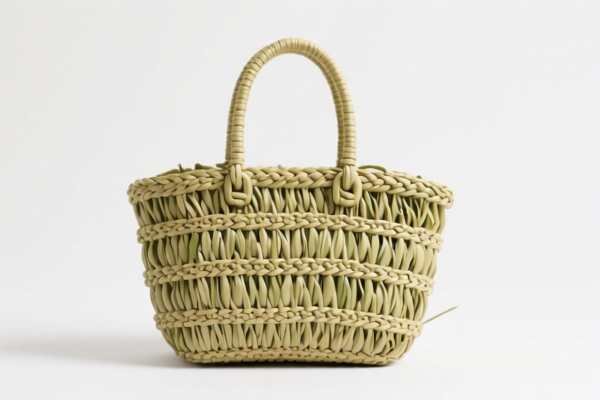
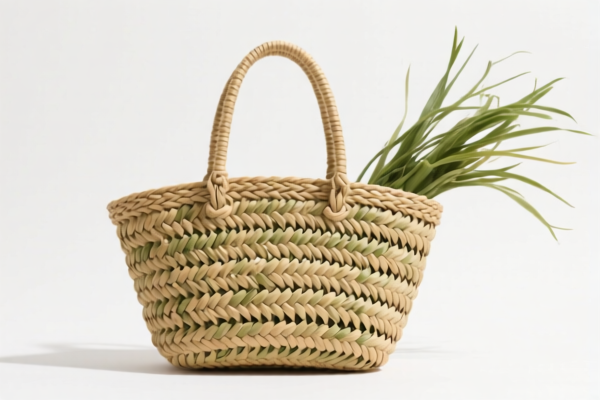
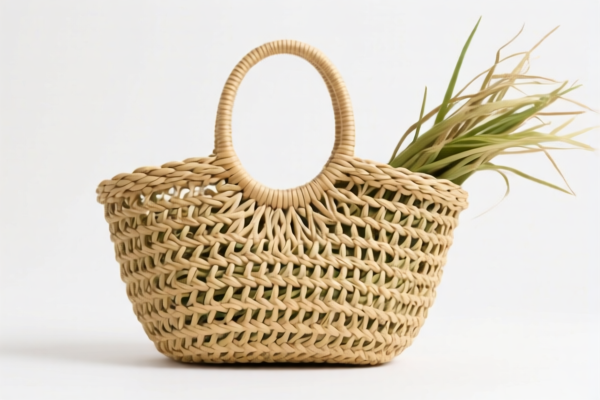
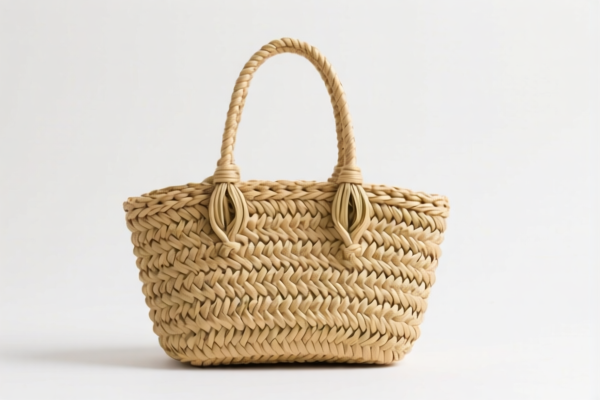
AI分析
🎒 Seaweed Handbag (Sustainable Fashion Accessory)
🌐 HS Code Reference & Customs Clearance Guide | 2026 Latest Tariff Analysis | Eco-Friendly Compliance Strategy
📌 I. Product Definition & Classification: What Exactly is a "Seaweed Handbag"?
In the evolving landscape of sustainable fashion, "Seaweed Handbags" generally refer to accessories made from bio-based materials derived from seaweed extracts (such as PHA/PHA-based bioplastics, alginate fibers, or composite seaweed-leather). They are NOT classified as fresh vegetables or agricultural products.
International trade classifies these goods based on their primary material composition and function:
- Bio-based Plastic/Composite Material Bags: If the bag is made from molded seaweed-derived biopolymers (e.g., PHA, Alginate-based leather substitutes), it is treated as a plastic article or a bag with outer surface of plastic sheeting.
- Textile Bags with Seaweed Fiber: If woven from natural seaweed fibers (rare, but possible), it may fall under woven fabric bags.
⚠️ Critical Distinction:
- If the bag is made primarily of plastic sheeting (even if bio-based like PHA), it typically falls under HS 4202 (Articles of apparel, traveling goods, handbags...).
- Do NOT classify as "Vegetables" (Chapter 12) or "Food" (Chapter 20). These are consumer goods, not food items.
📦 II. HS Code Classification Details (2026 Latest Tariff Alignment)
| HS Code | Product Description | Application Scenario | Material Basis |
|---|---|---|---|
4202.92.00.00 |
Handbags with outer surface of plastic sheeting or textile materials, not stiffened | Most common: Seaweed-based "leather" bags, molded bio-plastic handbags | ✅ PHA/Alginate Composite |
4202.32.00.00 |
Pocketbooks, wallets, etc., with outer surface of plastic sheeting | Small seaweed-wallets, coin purses | ✅ PHA/Alginate Composite |
4202.31.00.00 |
Pocketbooks, wallets, etc., with outer surface of leather or composition leather | If seaweed leather is certified as "composition leather" | ✅ Seaweed Composite Leather |
3926.90.90.00 |
Other articles of plastics and articles of other materials of headings 3901 to 3914 | If the bag is purely a molded plastic accessory (e.g., stiff clutch) | ✅ Pure Bioplastic |
6307.90.00.00 |
Other made up textile articles | If made primarily of woven seaweed fibers (rare) | ✅ Natural Fiber |
🔍 Key Reminder:
- The majority of commercial "seaweed bags" are made from bioplastic composites (PHA/PLA/Alginate). These are almost universally classified under4202.92.00.00(Handbags of plastic sheeting) in the US and EU.
- Do not use HS Code 3926 unless the item is not a functional handbag but a decorative plastic object.
- If the bag has metal hardware, it does not change the classification; the primary material determines the code.
💰 III. 2026 Latest Tariff Rate Details (Including Duties, Surcharges, and Policy Add-ons)
✅ Applicable Country: United States (US)
✅ Country of Origin: China (CN)
✅ Effective Date: Post-November 10, 2025 (Current Trade Environment)
🎯 1. 4202.92.00.00 – Handbags with Outer Surface of Plastic Sheeting
| Item | Content |
|---|---|
| Base Rate (MFN) | 12% (ad valorem) |
| USITC Additional Duty (Section 301) | +25% (Footnote 9903.88.01) |
| IEEPA Additional Duty | +10% (For China/HK origin, effective Nov 10, 2025) |
| Total Duty Rate | 47% |
| Tax Calculation | CIF Value × 47% |
| De Minimis Eligibility | ❌ Denied (deny_de_minimis) – Section 321 exemption does not apply to Section 301 goods |
| Legal Pathway | IEEPA:9903.01.25 → IEEPA:9903.01.24 → USITC:4202.92.00.00 → FOOTNOTE:9903.88.01 |
📌 Explanation:
- "USITC Additional Duty 25%": Based on the USTR’s List 4A under Section 301 of the Trade Act.
- "IEEPA 10%": Under the International Emergency Economic Powers Act, targeting Chinese-origin goods.
- Total 47%: This is a high tariff burden. Even though the product is "eco-friendly," it does not currently enjoy automatic tariff exemptions in the US unless specific green tech exemptions apply (rare for consumer handbags).
🎯 2. 3926.90.90.00 – Other Articles of Plastic
| Item | Content |
|---|---|
| Base Rate (MFN) | 5.3% |
| USITC Additional Duty | +25% |
| IEEPA Additional Duty | +10% |
| Total Duty Rate | 40.3% |
| Tax Calculation | CIF Value × 40.3% |
| De Minimis Eligibility | ❌ Denied |
| Legal Pathway | IEEPA:9903.01.25 → USITC:3926.90.90.00 → FOOTNOTE:9903.88.01 |
📌 Note:
- If your product is a stiff, molded plastic clutch without textile/leather-like properties, it may fall here.
- Lower base rate (5.3%) but still hit by 35% in surcharges.
- Recommendation: Classify as4202.92.00.00if it functions as a handbag, as it is more accurate legally.
🛠️ IV. Customs Clearance Practical Advice (Avoid Pitfalls)
✅ 1. Required Documentation Checklist
| Document | Mandatory? | Explanation |
|---|---|---|
| ✅ Product Spec Sheet | ✔️ | Must state material composition (e.g., "60% PHA Bioplastic, 40% Algae Fiber") |
| ✅ Material Certificate | ✔️ | Proof of bio-based content (e.g., ASTM D6866 for biobased carbon content) |
| ✅ Commercial Invoice | ✔️ | Clearly state "Handbag, Made of Bioplastic/Seaweed Composite" |
| ✅ Packing List | ✔️ | List all components (straps, clasps, stuffing) |
| ✅ FCC/CE Certification | ✔️ | If electronic components (e.g., LED lighting) are included |
| ✅ Customs Bond | ✔️ | Required for Section 301 goods |
✅ 2. Declaration Tips (Key Mantra)
🔥 "Declare Material, Not 'Seaweed' Alone! Use 'Bioplastic Handbag'!"
| Scenario | Correct Declaration | Incorrect Declaration |
|---|---|---|
| Bag made of seaweed-derived PHA | 4202.92.00.00 |
"Seaweed Product" → Misclassification Risk |
| Bag with seaweed fibers + plastic lining | 4202.92.00.00 |
"Textile Bag" → May face higher scrutiny |
| Small seaweed wallet | 4202.32.00.00 |
"Plastic Article" → Inaccurate |
| Stiff seaweed-clay clutch | 3926.90.90.00 |
4202 → Incorrect (not a flexible bag) |
✅ 3. Special Cases
| Scenario | Handling Advice |
|---|---|
| OEM Custom Design | Provide design drawings to prove it is a "handbag" and not a "plastic toy." |
| "Eco-Friendly" Marketing | Do not claim "Tariff Exemption for Green Products" unless you have a specific ruling. Currently, no automatic exemption exists for consumer fashion items. |
| Mixed Materials | If the bag is 51% seaweed composite, classify as plastic handbag. If 51% natural fiber, classify as textile bag. |
| Samples | Even samples are subject to 47% duty if declared as commercial goods. Use non-commercial samples carefully. |
🌍 V. Global Market Clearance Comparison (2026 Latest)
| Country/Region | Recommended HS Code | Duty Rate (China Origin) | Certification Requirements | Notes |
|---|---|---|---|---|
| 🇺🇸 USA | 4202.92.00.00 |
47% (12% + 25% + 10%) | FCC (if electronic) | High duty, no green exemption |
| 🇨🇳 China | 4202.92.00.00 |
10% | No special cert | Moderate duty |
| 🇪🇺 EU | 4202.92.00.00 |
12% | REACH, RoHS | No Section 301 equivalent, but high VAT |
| 🇦🇺 Australia | 4202.92.00.00 |
5% | ACCC Labeling | Lower duty, focus on labeling |
| 🇯🇵 Japan | 4202.92.00.00 |
10.8% | JIS Certification | Moderate duty |
📌 Conclusion:
- USA is the most challenging market due to 301 + IEEPA surcharges.
- EU and Australia are more favorable, but REACH compliance in the EU is strict for new bio-materials.
- Consider Third-Country Assembly: If you can assemble the final product in Vietnam, Mexico, or Malaysia, you may avoid US China-specific tariffs.
📌 VI. Common Mistakes & Pitfalls (Lessons Learned)
❌ Mistake 1: Declaring as "Vegetable Product" (HS 1211 or 2001)
👉 Result: Smuggling suspicion, cargo seizure, and heavy fines. Seaweed handbags are manufactured goods, not food.
❌ Mistake 2: Claiming "Biodegradable" without documentation
👉 Result: FTC/EU Greenwashing investigations. Must have certification (e.g., BPI, DIN CERTCO).
❌ Mistake 3: Ignoring the "Plastic" component
👉 Result: If the bag is 100% PHA bioplastic, it is still plastic under HS codes. Do not use "Natural Fiber" codes incorrectly.
❌ Mistake 4: Assuming "Eco-Friendly" = "Zero Duty"
👉 Result: In the US, no automatic tariff exemption exists for sustainable fashion items. You must pay the full 47%.
✅ Correct Declaration Example:
"Handbag, Women's, Outer Surface of Bioplastic (PHA/Alginate Composite), Lining Polyester, with Metal Hardware, Model SEAW-001, FCC Certified"
🎯 VII. Conclusion: Smart Clearance for Sustainable Goods
🎯 Remember the Mantra:
🔹 "Seaweed Bag = Plastic Bag for Customs!"
🔹 "47% Duty in US, 12% in EU, Plan Ahead!"
🔹 "Declare Material, Not 'Green'!"
📌 Pro Tip:
- If your seaweed handbag is exported to the US, consider pricing in the higher duty or shifting supply chain to a non-China country to avoid the 35% surcharge.
- Apply for an Advance Ruling (CUS-RUL) from US Customs (CBP) to confirm your HS code and duty liability before shipment.
📣 Immediate Action:
📞 Consult a Licensed Customs Broker + Provide Material SDS + Request Advance Ruling
🚀 Ensure Compliance, Avoid Seizure, Protect Your Eco-Brand!
✨ Professional Clearance Starts with Accurate Classification!
💼 Sustainability in Design, Precision in Customs!
用户评价
关于 HS 编码归类
协调制度(HS)是由世界海关组织(WCO)制定的国际贸易商品分类标准。全球 200 多个国家采用 HS 系统作为海关关税、贸易统计和进出口监管的基础。
每个 HS 编码遵循以下层级结构:
- 章(2 位)——商品大类(例如:第 84 章:机器和机械设备)
- 品目(4 位)——章内的更具体分类
- 子目(6 位)——国际通用细分,所有 WCO 成员国统一使用
- 本国细分(8-10 位)——各国自行扩展的细分编码,如美国 HTSUS 10 位编码
正确的 HS 编码归类对于顺利通关、准确缴纳关税和遵守贸易法规至关重要。错误归类可能导致海关延误、多缴关税或罚款。
从CN进口到US时,适用的关税税率可能包括:
- 最惠国(MFN)税率——适用于 WTO 成员国的标准关税税率
- 普通税率——适用于无贸易协定国家
- 贸易救济关税——附加关税,如 301 条款(反倾销)、232 条款(国家安全)或反补贴税
本页内容仅供参考。如需正式归类,请咨询当地海关或持牌报关代理。