Seaweed Handbag
CN → USProduct Images
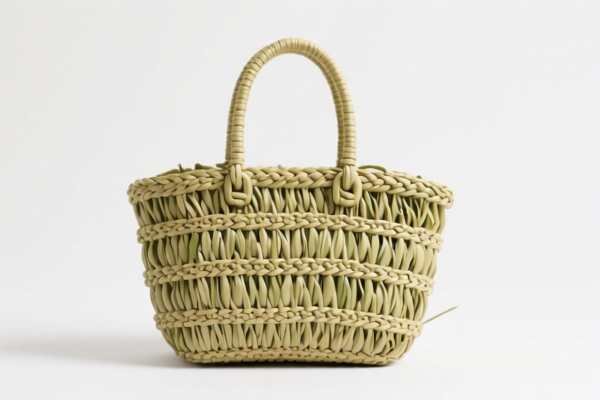
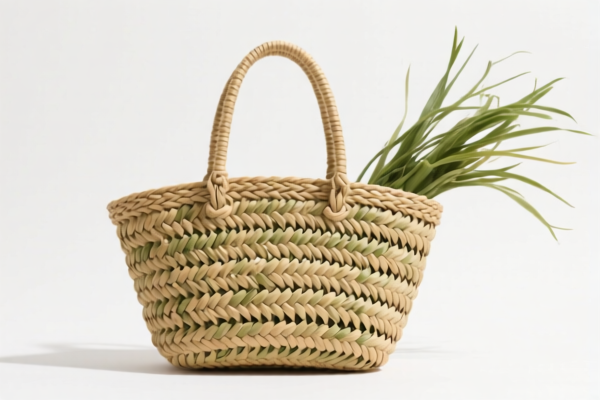
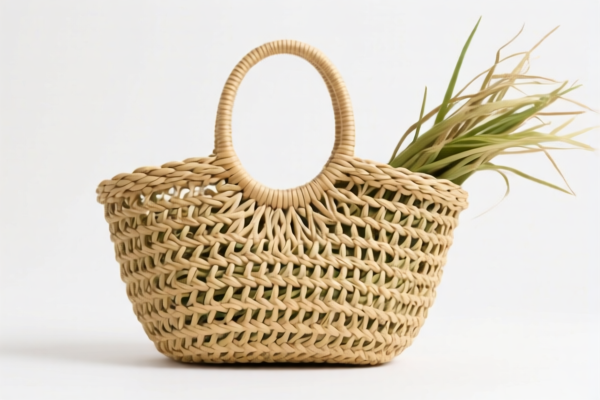
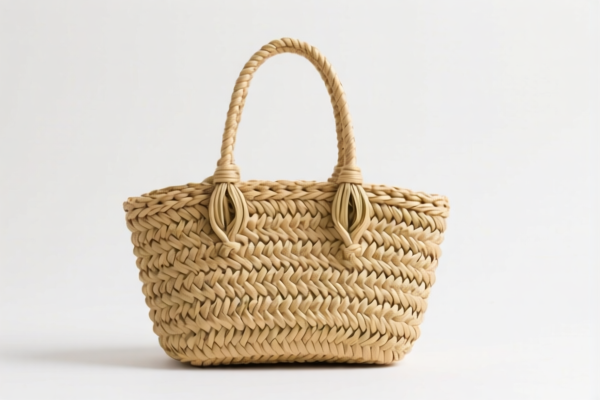
AI Analysis
🎒 Seaweed Handbag (Sustainable Fashion Accessory)
🌐 HS Code Reference & Customs Clearance Guide | 2026 Latest Tariff Analysis | Eco-Friendly Compliance Strategy
📌 I. Product Definition & Classification: What Exactly is a "Seaweed Handbag"?
In the evolving landscape of sustainable fashion, "Seaweed Handbags" generally refer to accessories made from bio-based materials derived from seaweed extracts (such as PHA/PHA-based bioplastics, alginate fibers, or composite seaweed-leather). They are NOT classified as fresh vegetables or agricultural products.
International trade classifies these goods based on their primary material composition and function:
- Bio-based Plastic/Composite Material Bags: If the bag is made from molded seaweed-derived biopolymers (e.g., PHA, Alginate-based leather substitutes), it is treated as a plastic article or a bag with outer surface of plastic sheeting.
- Textile Bags with Seaweed Fiber: If woven from natural seaweed fibers (rare, but possible), it may fall under woven fabric bags.
⚠️ Critical Distinction:
- If the bag is made primarily of plastic sheeting (even if bio-based like PHA), it typically falls under HS 4202 (Articles of apparel, traveling goods, handbags...).
- Do NOT classify as "Vegetables" (Chapter 12) or "Food" (Chapter 20). These are consumer goods, not food items.
📦 II. HS Code Classification Details (2026 Latest Tariff Alignment)
| HS Code | Product Description | Application Scenario | Material Basis |
|---|---|---|---|
4202.92.00.00 |
Handbags with outer surface of plastic sheeting or textile materials, not stiffened | Most common: Seaweed-based "leather" bags, molded bio-plastic handbags | ✅ PHA/Alginate Composite |
4202.32.00.00 |
Pocketbooks, wallets, etc., with outer surface of plastic sheeting | Small seaweed-wallets, coin purses | ✅ PHA/Alginate Composite |
4202.31.00.00 |
Pocketbooks, wallets, etc., with outer surface of leather or composition leather | If seaweed leather is certified as "composition leather" | ✅ Seaweed Composite Leather |
3926.90.90.00 |
Other articles of plastics and articles of other materials of headings 3901 to 3914 | If the bag is purely a molded plastic accessory (e.g., stiff clutch) | ✅ Pure Bioplastic |
6307.90.00.00 |
Other made up textile articles | If made primarily of woven seaweed fibers (rare) | ✅ Natural Fiber |
🔍 Key Reminder:
- The majority of commercial "seaweed bags" are made from bioplastic composites (PHA/PLA/Alginate). These are almost universally classified under4202.92.00.00(Handbags of plastic sheeting) in the US and EU.
- Do not use HS Code 3926 unless the item is not a functional handbag but a decorative plastic object.
- If the bag has metal hardware, it does not change the classification; the primary material determines the code.
💰 III. 2026 Latest Tariff Rate Details (Including Duties, Surcharges, and Policy Add-ons)
✅ Applicable Country: United States (US)
✅ Country of Origin: China (CN)
✅ Effective Date: Post-November 10, 2025 (Current Trade Environment)
🎯 1. 4202.92.00.00 – Handbags with Outer Surface of Plastic Sheeting
| Item | Content |
|---|---|
| Base Rate (MFN) | 12% (ad valorem) |
| USITC Additional Duty (Section 301) | +25% (Footnote 9903.88.01) |
| IEEPA Additional Duty | +10% (For China/HK origin, effective Nov 10, 2025) |
| Total Duty Rate | 47% |
| Tax Calculation | CIF Value × 47% |
| De Minimis Eligibility | ❌ Denied (deny_de_minimis) – Section 321 exemption does not apply to Section 301 goods |
| Legal Pathway | IEEPA:9903.01.25 → IEEPA:9903.01.24 → USITC:4202.92.00.00 → FOOTNOTE:9903.88.01 |
📌 Explanation:
- "USITC Additional Duty 25%": Based on the USTR’s List 4A under Section 301 of the Trade Act.
- "IEEPA 10%": Under the International Emergency Economic Powers Act, targeting Chinese-origin goods.
- Total 47%: This is a high tariff burden. Even though the product is "eco-friendly," it does not currently enjoy automatic tariff exemptions in the US unless specific green tech exemptions apply (rare for consumer handbags).
🎯 2. 3926.90.90.00 – Other Articles of Plastic
| Item | Content |
|---|---|
| Base Rate (MFN) | 5.3% |
| USITC Additional Duty | +25% |
| IEEPA Additional Duty | +10% |
| Total Duty Rate | 40.3% |
| Tax Calculation | CIF Value × 40.3% |
| De Minimis Eligibility | ❌ Denied |
| Legal Pathway | IEEPA:9903.01.25 → USITC:3926.90.90.00 → FOOTNOTE:9903.88.01 |
📌 Note:
- If your product is a stiff, molded plastic clutch without textile/leather-like properties, it may fall here.
- Lower base rate (5.3%) but still hit by 35% in surcharges.
- Recommendation: Classify as4202.92.00.00if it functions as a handbag, as it is more accurate legally.
🛠️ IV. Customs Clearance Practical Advice (Avoid Pitfalls)
✅ 1. Required Documentation Checklist
| Document | Mandatory? | Explanation |
|---|---|---|
| ✅ Product Spec Sheet | ✔️ | Must state material composition (e.g., "60% PHA Bioplastic, 40% Algae Fiber") |
| ✅ Material Certificate | ✔️ | Proof of bio-based content (e.g., ASTM D6866 for biobased carbon content) |
| ✅ Commercial Invoice | ✔️ | Clearly state "Handbag, Made of Bioplastic/Seaweed Composite" |
| ✅ Packing List | ✔️ | List all components (straps, clasps, stuffing) |
| ✅ FCC/CE Certification | ✔️ | If electronic components (e.g., LED lighting) are included |
| ✅ Customs Bond | ✔️ | Required for Section 301 goods |
✅ 2. Declaration Tips (Key Mantra)
🔥 "Declare Material, Not 'Seaweed' Alone! Use 'Bioplastic Handbag'!"
| Scenario | Correct Declaration | Incorrect Declaration |
|---|---|---|
| Bag made of seaweed-derived PHA | 4202.92.00.00 |
"Seaweed Product" → Misclassification Risk |
| Bag with seaweed fibers + plastic lining | 4202.92.00.00 |
"Textile Bag" → May face higher scrutiny |
| Small seaweed wallet | 4202.32.00.00 |
"Plastic Article" → Inaccurate |
| Stiff seaweed-clay clutch | 3926.90.90.00 |
4202 → Incorrect (not a flexible bag) |
✅ 3. Special Cases
| Scenario | Handling Advice |
|---|---|
| OEM Custom Design | Provide design drawings to prove it is a "handbag" and not a "plastic toy." |
| "Eco-Friendly" Marketing | Do not claim "Tariff Exemption for Green Products" unless you have a specific ruling. Currently, no automatic exemption exists for consumer fashion items. |
| Mixed Materials | If the bag is 51% seaweed composite, classify as plastic handbag. If 51% natural fiber, classify as textile bag. |
| Samples | Even samples are subject to 47% duty if declared as commercial goods. Use non-commercial samples carefully. |
🌍 V. Global Market Clearance Comparison (2026 Latest)
| Country/Region | Recommended HS Code | Duty Rate (China Origin) | Certification Requirements | Notes |
|---|---|---|---|---|
| 🇺🇸 USA | 4202.92.00.00 |
47% (12% + 25% + 10%) | FCC (if electronic) | High duty, no green exemption |
| 🇨🇳 China | 4202.92.00.00 |
10% | No special cert | Moderate duty |
| 🇪🇺 EU | 4202.92.00.00 |
12% | REACH, RoHS | No Section 301 equivalent, but high VAT |
| 🇦🇺 Australia | 4202.92.00.00 |
5% | ACCC Labeling | Lower duty, focus on labeling |
| 🇯🇵 Japan | 4202.92.00.00 |
10.8% | JIS Certification | Moderate duty |
📌 Conclusion:
- USA is the most challenging market due to 301 + IEEPA surcharges.
- EU and Australia are more favorable, but REACH compliance in the EU is strict for new bio-materials.
- Consider Third-Country Assembly: If you can assemble the final product in Vietnam, Mexico, or Malaysia, you may avoid US China-specific tariffs.
📌 VI. Common Mistakes & Pitfalls (Lessons Learned)
❌ Mistake 1: Declaring as "Vegetable Product" (HS 1211 or 2001)
👉 Result: Smuggling suspicion, cargo seizure, and heavy fines. Seaweed handbags are manufactured goods, not food.
❌ Mistake 2: Claiming "Biodegradable" without documentation
👉 Result: FTC/EU Greenwashing investigations. Must have certification (e.g., BPI, DIN CERTCO).
❌ Mistake 3: Ignoring the "Plastic" component
👉 Result: If the bag is 100% PHA bioplastic, it is still plastic under HS codes. Do not use "Natural Fiber" codes incorrectly.
❌ Mistake 4: Assuming "Eco-Friendly" = "Zero Duty"
👉 Result: In the US, no automatic tariff exemption exists for sustainable fashion items. You must pay the full 47%.
✅ Correct Declaration Example:
"Handbag, Women's, Outer Surface of Bioplastic (PHA/Alginate Composite), Lining Polyester, with Metal Hardware, Model SEAW-001, FCC Certified"
🎯 VII. Conclusion: Smart Clearance for Sustainable Goods
🎯 Remember the Mantra:
🔹 "Seaweed Bag = Plastic Bag for Customs!"
🔹 "47% Duty in US, 12% in EU, Plan Ahead!"
🔹 "Declare Material, Not 'Green'!"
📌 Pro Tip:
- If your seaweed handbag is exported to the US, consider pricing in the higher duty or shifting supply chain to a non-China country to avoid the 35% surcharge.
- Apply for an Advance Ruling (CUS-RUL) from US Customs (CBP) to confirm your HS code and duty liability before shipment.
📣 Immediate Action:
📞 Consult a Licensed Customs Broker + Provide Material SDS + Request Advance Ruling
🚀 Ensure Compliance, Avoid Seizure, Protect Your Eco-Brand!
✨ Professional Clearance Starts with Accurate Classification!
💼 Sustainability in Design, Precision in Customs!
Customer Reviews
About HS Code Classification
The Harmonized System (HS) is an internationally standardized nomenclature developed by the World Customs Organization (WCO) to classify traded products. Over 200 countries use the HS system as the basis for customs tariffs, trade statistics, and import/export regulations.
Each HS code follows a hierarchical structure:
- Chapter (2 digits) — Broad category of goods (e.g., Chapter 84: Machinery and Mechanical Appliances)
- Heading (4 digits) — More specific grouping within the chapter
- Subheading (6 digits) — Internationally standardized breakdown, used by all WCO member countries
- National subdivisions (8-10 digits) — Country-specific extensions for further classification, such as US HTSUS 10-digit codes
Correct HS code classification is essential for smooth customs clearance, accurate duty payment, and compliance with trade regulations. Misclassification can lead to customs delays, overpayment of duties, or penalties.
When importing from CN to US, the applicable tariff rates may include:
- Most-Favored-Nation (MFN) rate — The standard duty rate applied to WTO members
- General rate — Applied to countries without trade agreements
- Trade remedy duties — Additional tariffs such as Section 301 (anti-dumping), Section 232 (national security), or countervailing duties
The information provided on this page is for reference purposes only. For official classification, please consult with your local customs authority or a licensed customs broker.