Self adhesive Glass Bead Reflective Plastic Tape
CN → US| HS编码 | 关税税率 | 原产国 | 目的国 | 文档 |
|---|---|---|---|---|
| 3919101050 | 41.5% | CN | US | 官方文档 |
| 3926909989 | 22.8% | CN | US | 官方文档 |
| 3919101010 | 41.5% | CN | US | 官方文档 |
| 7018105000 | 35.0% | CN | US | 官方文档 |
| 3919901000 | 41.5% | CN | US | 官方文档 |
商品图片
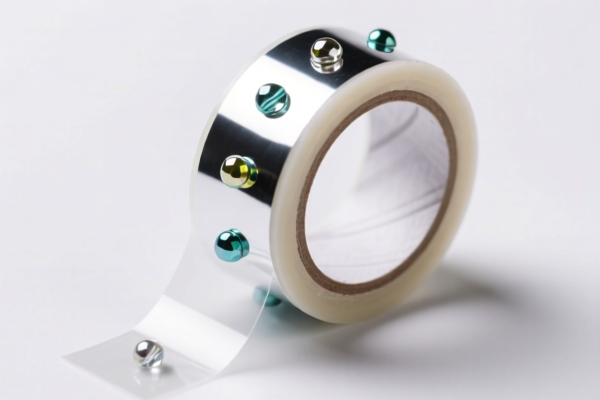
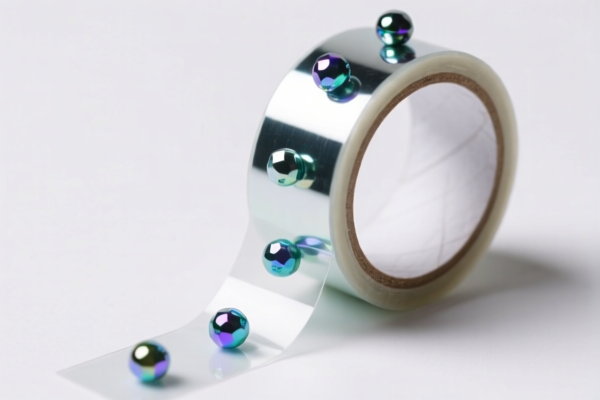
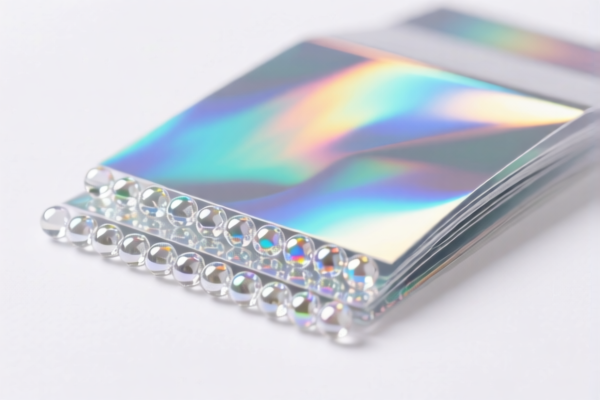
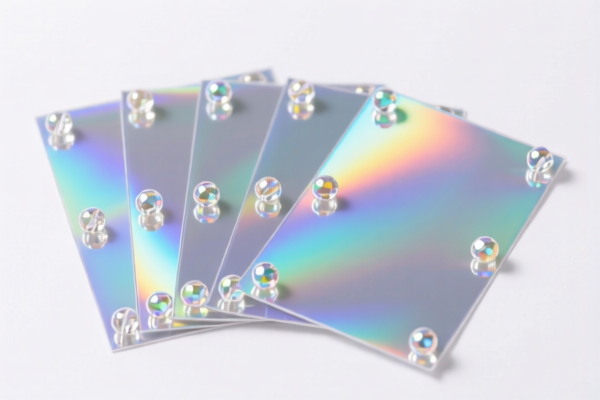
AI分析
🌟 Self-Adhesive Glass Bead Reflective Plastic Tape
🌐 HS Code Reference & Customs Clearance Guide | 2026 Latest Tariff Analysis | Professional Clearance Strategy
📌 I. Product Definition & Classification: What Exactly is "Reflective Tape"?
Self-adhesive glass bead reflective plastic tape is a composite material widely used in traffic safety, road markings, and high-visibility signage. In international trade, its classification depends heavily on the dominant material, structure, and primary function.
The core debate lies in whether it is classified as a plastic article (Chapter 39) or a glass product (Chapter 70). Most customs authorities prioritize the plastic backing/support as the essential character, leading to classifications under Chapter 39. However, some interpretations focusing on the "glass bead" content may lead to Chapter 70.
⚠️ Key Distinction Point:
- If the plastic film/base is the structural support and the beads are a surface coating → Chapter 39 (Plastics) is the standard approach.
- If the goods are viewed primarily as "glass articles" with a plastic adhesive backing → Chapter 70 (Glass) might be argued (less common for tapes).
- Critical Note: The presence of "122 Clause Tariffs" (Section 301/US Trade Act implications) significantly impacts the total tax burden for Chinese-origin goods.
📦 II. HS Code Classification Details (2026 Latest Tariff Authority Comparison)
| HS Code | Product Description | Applicable Scenario | Basis for Classification |
|---|---|---|---|
3919.10.10.50 |
Self-adhesive plates, sheets, film, foil, tape, strip and other flat shapes, of plastics, whether or not in rolls, self-adhesive, of a width not exceeding 20 cm, of glass beads or other retroreflecting material | Standard reflective tape, ≤20cm width, plastic base | ✅ Plastic Base + Retroreflecting Material |
3926.90.99.89 |
Other articles of plastics and articles of other materials of heading 39.01 to 39.14 | If deemed a "general plastic article" not fitting specific tape subheadings | ⚠️ Fallback Classification (Less Specific) |
3919.10.10.10 |
Self-adhesive plates, sheets, film, foil, tape, strip and other flat shapes, of plastics, whether or not in rolls, self-adhesive, of a width not exceeding 20 cm, of glass beads or other retroreflecting material (Road Marking Strip特征) | Tapes specifically designed as road marking strips | ✅ Plastic Base + Road Marking Feature |
7018.10.50.00 |
Glass microspheres and other glass minute products; glass spheres, balls and similar; glass tubing, bent, flattened, or otherwise worked, but not optically worked; glass figures and ornaments | If customs argues the "Glass Bead" is the primary value/function | ❌ Glass Product (Rare for Tape) |
3919.90.10.00 |
Self-adhesive plates, sheets, film, foil, tape, strip and other flat shapes, of plastics, whether or not in rolls, self-adhesive, other (Reflective Plastic Film) | If the adhesive nature is less prominent or classified as a general reflective film | ⚠️ General Plastic Film |
🔍 重点提醒 (Key Reminder):
-3919.10.10.50and3919.10.10.10are the most accurate for standard self-adhesive reflective tapes.
-3926.90.99.89is a riskier, lower-priority classification that might attract scrutiny if the specific tape heading (3919) is clearly applicable.
-7018.10.50.00is generally incorrect for tapes because the plastic backing provides the structural integrity, not the glass. However, if the tape is merely a thin coating on a glass substrate (uncommon for "plastic tape"), this might apply.
-3919.90.10.00is a "catch-all" if the specific retroreflecting criteria aren't met, but usually, reflective tapes qualify for3919.10.
💰 III. 2026 Latest Tariff Rate Breakdown (Including Surcharges & Policy Add-ons)
✅ Applicable Country: United States (US)
✅ Origin: China (CN)
✅ Effective Time: 2025/2026 (Including subsequent imports)
🎯 1. 3919.10.10.50 & 3919.10.10.10 —— Self-Adhesive Reflective Tape (Plastic Base)
| Item | Content |
|---|---|
| Base Tariff Rate | 6.5% (Ad Valorem) |
| USITC Supplementary Tariff (Section 301) | +25.0% |
| IEEPA/122 Clause Tariff | +10.0% |
| Total Effective Tariff | 41.5% |
| Tax Calculation | CIF Value × 41.5% |
| De Minimis Exemption Eligible? | ❌ NO (Denied for these HS codes under current enforcement) |
| Legal Basis Path | USITC:3919.10.10.50 → FOOTNOTE:301_Tariffs → IEEPA:122_Clause |
📌 Explanation:
- The 6.5% base rate is the standard Most Favored Nation (MFN) rate for plastic tapes.
- The 25% surcharge is the standard Section 301 tariff for Chinese plastic articles.
- The 10% additional tariff refers to specific trade enforcement measures (often linked to 122 Clause or specific USITC rulings on Chinese imports).
- Total 41.5% is a high tariff, significantly impacting profit margins. This is the most common classification for this product.
🎯 2. 3926.90.99.89 —— Other Plastic Articles (Fallback)
| Item | Content |
|---|---|
| Base Tariff Rate | 5.3% |
| USITC Supplementary Tariff (Section 301) | +7.5% |
| IEEPA/122 Clause Tariff | +10.0% |
| Total Effective Tariff | 22.8% |
| Tax Calculation | CIF Value × 22.8% |
| De Minimis Exemption Eligible? | ❌ NO |
| Legal Basis Path | USITC:3926.90.99.89 → FOOTNOTE:301_Tariffs_7.5% → IEEPA:122_Clause |
📌 Note:
- This classification has a lower total tariff (22.8%) compared to the specific tape headings.
- However, it is riskier. Customs may reject this if they believe the product clearly fits3919.10(specific provision over general). Misclassification can lead to penalties and back-taxes.
- Use this only if the product structure is ambiguous (e.g., not clearly a "tape" in the traditional sense).
🎯 3. 7018.10.50.00 —— Glass Products (Misclassification Risk)
| Item | Content |
|---|---|
| Base Tariff Rate | 0.0% |
| USITC Supplementary Tariff (Section 301) | +25.0% |
| IEEPA/122 Clause Tariff | +10.0% |
| Total Effective Tariff | 35.0% |
| Tax Calculation | CIF Value × 35.0% |
| De Minimis Exemption Eligible? | ❌ NO |
| Legal Basis Path | USITC:7018.10.50.00 → FOOTNOTE:301_Tariffs → IEEPA:122_Clause |
📌 Explanation:
- Although the base rate is 0%, the high surcharges bring the total to 35.0%.
- This classification is rarely accepted for plastic-backed tapes. If challenged, it could lead to longer clearance times and demands for proof that the "glass" is the essential character.
🎯 4. 3919.90.10.00 —— Other Self-Adhesive Plastic Films
| Item | Content |
|---|---|
| Base Tariff Rate | 6.5% |
| USITC Supplementary Tariff (Section 301) | +25.0% |
| IEEPA/122 Clause Tariff | +10.0% |
| Total Effective Tariff | 41.5% |
| Tax Calculation | CIF Value × 41.5% |
| De Minimis Exemption Eligible? | ❌ NO |
| Legal Basis Path | USITC:3919.90.10.00 → FOOTNOTE:301_Tariffs → IEEPA:122_Clause |
📌 Note:
- Same tariff as the specific tape headings (3919.10).
- This is a "catch-all" for plastic films that don't fit the specific3919.10retroreflecting criteria. It carries the same high tax burden.
🛠️ IV. Customs Clearance Practical Advice (Real-World Pitfall Guide)
✅ 1. Required Documentation Checklist (None Missing)
| Document | Mandatory | Notes |
|---|---|---|
| ✅ Product Specification Sheet | ✔️ | Must detail: Width, Roll Length, Base Material (Plastic Type), Bead Type, Adhesive Type, Reflectivity Coefficient. |
| ✅ Product Photos | ✔️ | Clear shots of the cross-section showing layers: Plastic base, Adhesive, Glass Beads, Retroreflective Layer. |
| ✅ Commercial Invoice | ✔️ | Must clearly state "Self-Adhesive Glass Bead Reflective Plastic Tape". Avoid vague terms like "Signage Material". |
| ✅ Packing List | ✔️ | Detail rolls per carton, total weight, dimensions. |
| ✅ Certificate of Origin (CO) | ✔️ | Essential for determining origin-based surcharges. |
| ✅ Third-Party Test Report | ✔️ | RETR (Retroreflective) performance test results to justify 3919.10 classification. |
✅ 2. Declaration Tips (Key Mantra)
🔥 “Plastic Base is King, Beads are Surface, Width Determines Subheading!”
| Scenario | Correct Declaration | Incorrect Approach |
|---|---|---|
| Standard Tape (≤20cm) | 3919.10.10.50 / 3919.10.10.10 |
Classify as 3926 (General Plastic) → Risk of rejection |
| Wide Tape (>20cm) | Different subheading (not in data) | Force 3919.10.10.xx → Misclassification |
| Glass Beads Loose | Not Tape (Heading 70.18) | Declare as Tape → Wrong Chapter |
| Non-Adhesive Reflective Film | 3920.xx or 3919.90 |
Declare as Self-Adhesive → Wrong Heading |
✅ 3. Special Situation Handling
| Situation | Handling Advice |
|---|---|
| Mixed Materials | If the backing is not plastic (e.g., fabric), classify under Chapter 59 (Impregnated Textiles). |
| High-Value Premium Tape | Provide detailed specs to justify 3919.10.10.50 over 3919.90.10.00 if tax rates differ (in this data, they are same, but specificity helps clearance speed). |
| Customs Inquiry | If questioned on 7018 vs 3919, emphasize that plastic is the structural support and adhesive is the key feature, making Chapter 39 the correct chapter per GRI 1 & 3. |
🌍 V. Global Market Clearance Comparison (2026 Latest)
| Country/Region | Recommended HS Code | Tariff (China Origin) | Certification Required | Notes |
|---|---|---|---|---|
| 🇺🇸 USA | 3919.10.10.50 |
41.5% (High) | None specific, but RETR tests recommended | High Section 301 + 122 Clause tariffs apply. |
| 🇨🇳 China | 3919.10.10.50 |
~6.5% + VAT | None | Low import tariffs for domestic production. |
| 🇪🇺 EU | 3919.10 |
~6.5% | CE (if applicable for safety gear) | No Section 301 surcharges. |
| 🇦🇺 Australia | 3919.10 |
~5% | RCM | Moderate tariffs. |
| 🇯🇵 Japan | 3919.10 |
~0-6.5% | PSE (if electrical, not applicable here) | Generally low tariffs. |
📌 Conclusion:
- The USA is the most challenging market due to the 41.5% total tariff.
- EU, Japan, and Australia are more favorable from a tariff perspective.
- Ensure your product description in the commercial invoice matches the HS Code definition precisely to avoid delays.
📌 VI. Common Mistakes & Pitfall Guide (Lessons Learned)
❌ Mistake 1: Classifying as 3926.90.99.89 to save 18.7% tax.
👉 Consequence: Customs may reject it if the product clearly fits 3919.10. Risk of penalties, audits, and back-taxes.
Only use
3926if the product is structurally ambiguous.
❌ Mistake 2: Claiming 7018.10.50.00 because it contains "Glass Beads".
👉 Consequence: Customs will likely reclassify to Chapter 39. Delay in clearance.
Remember: The plastic backing determines the Chapter.
❌ Mistake 3: Ignoring the "122 Clause" or "Section 301" in cost calculation.
👉 Consequence: Unexpected high taxes at destination. Profit margin wiped out.
Always calculate total landed cost including all surcharges.
❌ Mistake 4: Vague description "Reflective Tape".
👉 Consequence: Customs officer uses discretion, potentially leading to higher duty assessment or requests for samples.
Be specific: "Self-Adhesive Glass Bead Reflective Plastic Tape, Width 5cm".
✅ Correct Practice:
"Self-Adhesive Reflective Tape, Plastic Base, Glass Bead Coating, 2-inch Width, RETR Certified, Model ABC, Origin: China"
🎯 VII. Conclusion: Professional Declaration for Cost Efficiency
🎯 Key Takeaways:
🔹 "Plastic Base = Chapter 39; Glass Beads = Feature, not Chapter."
🔹 "USA Tariff = 41.5% for Standard Tapes (3919.10); Budget Accordingly."
🔹 "Specificity Wins: Use3919.10.10.50for clear tape products to avoid ambiguity."
📌 Pro Tip:
If you are exporting to the US, consider supply chain diversification (e.g., Vietnam, Mexico) if tariffs are prohibitive, as goods from these countries may be exempt from Section 301/122 tariffs.
For other markets, the 6.5% base rate is manageable, but ensure proper documentation to avoid delays.
📣 Immediate Action:
📞 Consult a Customs Broker for pre-classification verification.
📄 Prepare Detailed Specs highlighting the plastic base and adhesive properties.
🚀 Plan for High US Duties or explore alternative markets with lower barriers.
✨ Professional Clearance Starts with Accurate Classification!
💼 Every Percent of Tax Matters in Global Trade!
用户评价
关于 HS 编码归类
协调制度(HS)是由世界海关组织(WCO)制定的国际贸易商品分类标准。全球 200 多个国家采用 HS 系统作为海关关税、贸易统计和进出口监管的基础。
每个 HS 编码遵循以下层级结构:
- 章(2 位)——商品大类(例如:第 84 章:机器和机械设备)
- 品目(4 位)——章内的更具体分类
- 子目(6 位)——国际通用细分,所有 WCO 成员国统一使用
- 本国细分(8-10 位)——各国自行扩展的细分编码,如美国 HTSUS 10 位编码
正确的 HS 编码归类对于顺利通关、准确缴纳关税和遵守贸易法规至关重要。错误归类可能导致海关延误、多缴关税或罚款。
从CN进口到US时,适用的关税税率可能包括:
- 最惠国(MFN)税率——适用于 WTO 成员国的标准关税税率
- 普通税率——适用于无贸易协定国家
- 贸易救济关税——附加关税,如 301 条款(反倾销)、232 条款(国家安全)或反补贴税
本页内容仅供参考。如需正式归类,请咨询当地海关或持牌报关代理。