Self adhesive Glass Bead Reflective Plastic Tape
CN → US| HS Code | Tariff Rate | Origin | Destination | Doc |
|---|---|---|---|---|
| 3919101050 | 41.5% | CN | US | Official Doc |
| 3926909989 | 22.8% | CN | US | Official Doc |
| 3919101010 | 41.5% | CN | US | Official Doc |
| 7018105000 | 35.0% | CN | US | Official Doc |
| 3919901000 | 41.5% | CN | US | Official Doc |
Product Images
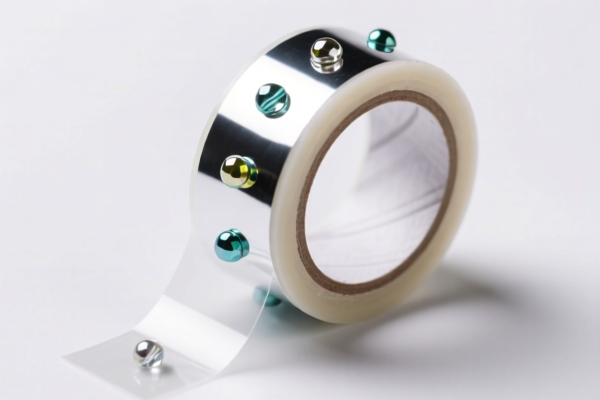
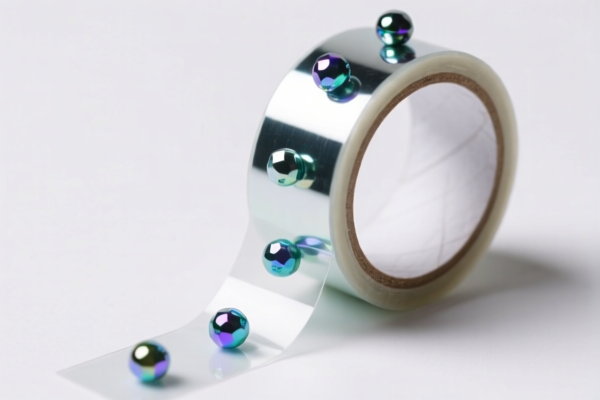
AI Analysis
🌟 Self-Adhesive Glass Bead Reflective Plastic Tape
🌐 HS Code Reference & Customs Clearance Guide | 2026 Latest Tariff Analysis | Professional Clearance Strategy
📌 I. Product Definition & Classification: What Exactly is "Reflective Tape"?
Self-adhesive glass bead reflective plastic tape is a composite material widely used in traffic safety, road markings, and high-visibility signage. In international trade, its classification depends heavily on the dominant material, structure, and primary function.
The core debate lies in whether it is classified as a plastic article (Chapter 39) or a glass product (Chapter 70). Most customs authorities prioritize the plastic backing/support as the essential character, leading to classifications under Chapter 39. However, some interpretations focusing on the "glass bead" content may lead to Chapter 70.
⚠️ Key Distinction Point:
- If the plastic film/base is the structural support and the beads are a surface coating → Chapter 39 (Plastics) is the standard approach.
- If the goods are viewed primarily as "glass articles" with a plastic adhesive backing → Chapter 70 (Glass) might be argued (less common for tapes).
- Critical Note: The presence of "122 Clause Tariffs" (Section 301/US Trade Act implications) significantly impacts the total tax burden for Chinese-origin goods.
📦 II. HS Code Classification Details (2026 Latest Tariff Authority Comparison)
| HS Code | Product Description | Applicable Scenario | Basis for Classification |
|---|---|---|---|
3919.10.10.50 |
Self-adhesive plates, sheets, film, foil, tape, strip and other flat shapes, of plastics, whether or not in rolls, self-adhesive, of a width not exceeding 20 cm, of glass beads or other retroreflecting material | Standard reflective tape, ≤20cm width, plastic base | ✅ Plastic Base + Retroreflecting Material |
3926.90.99.89 |
Other articles of plastics and articles of other materials of heading 39.01 to 39.14 | If deemed a "general plastic article" not fitting specific tape subheadings | ⚠️ Fallback Classification (Less Specific) |
3919.10.10.10 |
Self-adhesive plates, sheets, film, foil, tape, strip and other flat shapes, of plastics, whether or not in rolls, self-adhesive, of a width not exceeding 20 cm, of glass beads or other retroreflecting material (Road Marking Strip特征) | Tapes specifically designed as road marking strips | ✅ Plastic Base + Road Marking Feature |
7018.10.50.00 |
Glass microspheres and other glass minute products; glass spheres, balls and similar; glass tubing, bent, flattened, or otherwise worked, but not optically worked; glass figures and ornaments | If customs argues the "Glass Bead" is the primary value/function | ❌ Glass Product (Rare for Tape) |
3919.90.10.00 |
Self-adhesive plates, sheets, film, foil, tape, strip and other flat shapes, of plastics, whether or not in rolls, self-adhesive, other (Reflective Plastic Film) | If the adhesive nature is less prominent or classified as a general reflective film | ⚠️ General Plastic Film |
🔍 重点提醒 (Key Reminder):
-3919.10.10.50and3919.10.10.10are the most accurate for standard self-adhesive reflective tapes.
-3926.90.99.89is a riskier, lower-priority classification that might attract scrutiny if the specific tape heading (3919) is clearly applicable.
-7018.10.50.00is generally incorrect for tapes because the plastic backing provides the structural integrity, not the glass. However, if the tape is merely a thin coating on a glass substrate (uncommon for "plastic tape"), this might apply.
-3919.90.10.00is a "catch-all" if the specific retroreflecting criteria aren't met, but usually, reflective tapes qualify for3919.10.
💰 III. 2026 Latest Tariff Rate Breakdown (Including Surcharges & Policy Add-ons)
✅ Applicable Country: United States (US)
✅ Origin: China (CN)
✅ Effective Time: 2025/2026 (Including subsequent imports)
🎯 1. 3919.10.10.50 & 3919.10.10.10 —— Self-Adhesive Reflective Tape (Plastic Base)
| Item | Content |
|---|---|
| Base Tariff Rate | 6.5% (Ad Valorem) |
| USITC Supplementary Tariff (Section 301) | +25.0% |
| IEEPA/122 Clause Tariff | +10.0% |
| Total Effective Tariff | 41.5% |
| Tax Calculation | CIF Value × 41.5% |
| De Minimis Exemption Eligible? | ❌ NO (Denied for these HS codes under current enforcement) |
| Legal Basis Path | USITC:3919.10.10.50 → FOOTNOTE:301_Tariffs → IEEPA:122_Clause |
📌 Explanation:
- The 6.5% base rate is the standard Most Favored Nation (MFN) rate for plastic tapes.
- The 25% surcharge is the standard Section 301 tariff for Chinese plastic articles.
- The 10% additional tariff refers to specific trade enforcement measures (often linked to 122 Clause or specific USITC rulings on Chinese imports).
- Total 41.5% is a high tariff, significantly impacting profit margins. This is the most common classification for this product.
🎯 2. 3926.90.99.89 —— Other Plastic Articles (Fallback)
| Item | Content |
|---|---|
| Base Tariff Rate | 5.3% |
| USITC Supplementary Tariff (Section 301) | +7.5% |
| IEEPA/122 Clause Tariff | +10.0% |
| Total Effective Tariff | 22.8% |
| Tax Calculation | CIF Value × 22.8% |
| De Minimis Exemption Eligible? | ❌ NO |
| Legal Basis Path | USITC:3926.90.99.89 → FOOTNOTE:301_Tariffs_7.5% → IEEPA:122_Clause |
📌 Note:
- This classification has a lower total tariff (22.8%) compared to the specific tape headings.
- However, it is riskier. Customs may reject this if they believe the product clearly fits3919.10(specific provision over general). Misclassification can lead to penalties and back-taxes.
- Use this only if the product structure is ambiguous (e.g., not clearly a "tape" in the traditional sense).
🎯 3. 7018.10.50.00 —— Glass Products (Misclassification Risk)
| Item | Content |
|---|---|
| Base Tariff Rate | 0.0% |
| USITC Supplementary Tariff (Section 301) | +25.0% |
| IEEPA/122 Clause Tariff | +10.0% |
| Total Effective Tariff | 35.0% |
| Tax Calculation | CIF Value × 35.0% |
| De Minimis Exemption Eligible? | ❌ NO |
| Legal Basis Path | USITC:7018.10.50.00 → FOOTNOTE:301_Tariffs → IEEPA:122_Clause |
📌 Explanation:
- Although the base rate is 0%, the high surcharges bring the total to 35.0%.
- This classification is rarely accepted for plastic-backed tapes. If challenged, it could lead to longer clearance times and demands for proof that the "glass" is the essential character.
🎯 4. 3919.90.10.00 —— Other Self-Adhesive Plastic Films
| Item | Content |
|---|---|
| Base Tariff Rate | 6.5% |
| USITC Supplementary Tariff (Section 301) | +25.0% |
| IEEPA/122 Clause Tariff | +10.0% |
| Total Effective Tariff | 41.5% |
| Tax Calculation | CIF Value × 41.5% |
| De Minimis Exemption Eligible? | ❌ NO |
| Legal Basis Path | USITC:3919.90.10.00 → FOOTNOTE:301_Tariffs → IEEPA:122_Clause |
📌 Note:
- Same tariff as the specific tape headings (3919.10).
- This is a "catch-all" for plastic films that don't fit the specific3919.10retroreflecting criteria. It carries the same high tax burden.
🛠️ IV. Customs Clearance Practical Advice (Real-World Pitfall Guide)
✅ 1. Required Documentation Checklist (None Missing)
| Document | Mandatory | Notes |
|---|---|---|
| ✅ Product Specification Sheet | ✔️ | Must detail: Width, Roll Length, Base Material (Plastic Type), Bead Type, Adhesive Type, Reflectivity Coefficient. |
| ✅ Product Photos | ✔️ | Clear shots of the cross-section showing layers: Plastic base, Adhesive, Glass Beads, Retroreflective Layer. |
| ✅ Commercial Invoice | ✔️ | Must clearly state "Self-Adhesive Glass Bead Reflective Plastic Tape". Avoid vague terms like "Signage Material". |
| ✅ Packing List | ✔️ | Detail rolls per carton, total weight, dimensions. |
| ✅ Certificate of Origin (CO) | ✔️ | Essential for determining origin-based surcharges. |
| ✅ Third-Party Test Report | ✔️ | RETR (Retroreflective) performance test results to justify 3919.10 classification. |
✅ 2. Declaration Tips (Key Mantra)
🔥 “Plastic Base is King, Beads are Surface, Width Determines Subheading!”
| Scenario | Correct Declaration | Incorrect Approach |
|---|---|---|
| Standard Tape (≤20cm) | 3919.10.10.50 / 3919.10.10.10 |
Classify as 3926 (General Plastic) → Risk of rejection |
| Wide Tape (>20cm) | Different subheading (not in data) | Force 3919.10.10.xx → Misclassification |
| Glass Beads Loose | Not Tape (Heading 70.18) | Declare as Tape → Wrong Chapter |
| Non-Adhesive Reflective Film | 3920.xx or 3919.90 |
Declare as Self-Adhesive → Wrong Heading |
✅ 3. Special Situation Handling
| Situation | Handling Advice |
|---|---|
| Mixed Materials | If the backing is not plastic (e.g., fabric), classify under Chapter 59 (Impregnated Textiles). |
| High-Value Premium Tape | Provide detailed specs to justify 3919.10.10.50 over 3919.90.10.00 if tax rates differ (in this data, they are same, but specificity helps clearance speed). |
| Customs Inquiry | If questioned on 7018 vs 3919, emphasize that plastic is the structural support and adhesive is the key feature, making Chapter 39 the correct chapter per GRI 1 & 3. |
🌍 V. Global Market Clearance Comparison (2026 Latest)
| Country/Region | Recommended HS Code | Tariff (China Origin) | Certification Required | Notes |
|---|---|---|---|---|
| 🇺🇸 USA | 3919.10.10.50 |
41.5% (High) | None specific, but RETR tests recommended | High Section 301 + 122 Clause tariffs apply. |
| 🇨🇳 China | 3919.10.10.50 |
~6.5% + VAT | None | Low import tariffs for domestic production. |
| 🇪🇺 EU | 3919.10 |
~6.5% | CE (if applicable for safety gear) | No Section 301 surcharges. |
| 🇦🇺 Australia | 3919.10 |
~5% | RCM | Moderate tariffs. |
| 🇯🇵 Japan | 3919.10 |
~0-6.5% | PSE (if electrical, not applicable here) | Generally low tariffs. |
📌 Conclusion:
- The USA is the most challenging market due to the 41.5% total tariff.
- EU, Japan, and Australia are more favorable from a tariff perspective.
- Ensure your product description in the commercial invoice matches the HS Code definition precisely to avoid delays.
📌 VI. Common Mistakes & Pitfall Guide (Lessons Learned)
❌ Mistake 1: Classifying as 3926.90.99.89 to save 18.7% tax.
👉 Consequence: Customs may reject it if the product clearly fits 3919.10. Risk of penalties, audits, and back-taxes.
Only use
3926if the product is structurally ambiguous.
❌ Mistake 2: Claiming 7018.10.50.00 because it contains "Glass Beads".
👉 Consequence: Customs will likely reclassify to Chapter 39. Delay in clearance.
Remember: The plastic backing determines the Chapter.
❌ Mistake 3: Ignoring the "122 Clause" or "Section 301" in cost calculation.
👉 Consequence: Unexpected high taxes at destination. Profit margin wiped out.
Always calculate total landed cost including all surcharges.
❌ Mistake 4: Vague description "Reflective Tape".
👉 Consequence: Customs officer uses discretion, potentially leading to higher duty assessment or requests for samples.
Be specific: "Self-Adhesive Glass Bead Reflective Plastic Tape, Width 5cm".
✅ Correct Practice:
"Self-Adhesive Reflective Tape, Plastic Base, Glass Bead Coating, 2-inch Width, RETR Certified, Model ABC, Origin: China"
🎯 VII. Conclusion: Professional Declaration for Cost Efficiency
🎯 Key Takeaways:
🔹 "Plastic Base = Chapter 39; Glass Beads = Feature, not Chapter."
🔹 "USA Tariff = 41.5% for Standard Tapes (3919.10); Budget Accordingly."
🔹 "Specificity Wins: Use3919.10.10.50for clear tape products to avoid ambiguity."
📌 Pro Tip:
If you are exporting to the US, consider supply chain diversification (e.g., Vietnam, Mexico) if tariffs are prohibitive, as goods from these countries may be exempt from Section 301/122 tariffs.
For other markets, the 6.5% base rate is manageable, but ensure proper documentation to avoid delays.
📣 Immediate Action:
📞 Consult a Customs Broker for pre-classification verification.
📄 Prepare Detailed Specs highlighting the plastic base and adhesive properties.
🚀 Plan for High US Duties or explore alternative markets with lower barriers.
✨ Professional Clearance Starts with Accurate Classification!
💼 Every Percent of Tax Matters in Global Trade!
Customer Reviews
About HS Code Classification
The Harmonized System (HS) is an internationally standardized nomenclature developed by the World Customs Organization (WCO) to classify traded products. Over 200 countries use the HS system as the basis for customs tariffs, trade statistics, and import/export regulations.
Each HS code follows a hierarchical structure:
- Chapter (2 digits) — Broad category of goods (e.g., Chapter 84: Machinery and Mechanical Appliances)
- Heading (4 digits) — More specific grouping within the chapter
- Subheading (6 digits) — Internationally standardized breakdown, used by all WCO member countries
- National subdivisions (8-10 digits) — Country-specific extensions for further classification, such as US HTSUS 10-digit codes
Correct HS code classification is essential for smooth customs clearance, accurate duty payment, and compliance with trade regulations. Misclassification can lead to customs delays, overpayment of duties, or penalties.
When importing from CN to US, the applicable tariff rates may include:
- Most-Favored-Nation (MFN) rate — The standard duty rate applied to WTO members
- General rate — Applied to countries without trade agreements
- Trade remedy duties — Additional tariffs such as Section 301 (anti-dumping), Section 232 (national security), or countervailing duties
The information provided on this page is for reference purposes only. For official classification, please consult with your local customs authority or a licensed customs broker.