Self adhesive Low temperature Label
CN → US| HS编码 | 关税税率 | 原产国 | 目的国 | 文档 |
|---|---|---|---|---|
| 4821102000 | 35.0% | CN | US | 官方文档 |
| 3926909989 | 22.8% | CN | US | 官方文档 |
| 3926100000 | 15.3% | CN | US | 官方文档 |
| 4821902000 | 35.0% | CN | US | 官方文档 |
| 3919905060 | 40.8% | CN | US | 官方文档 |
商品图片
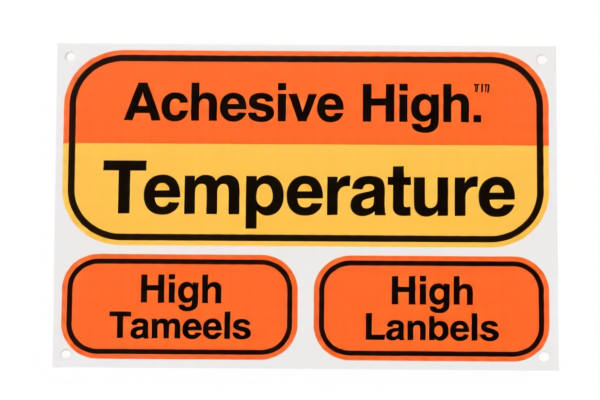
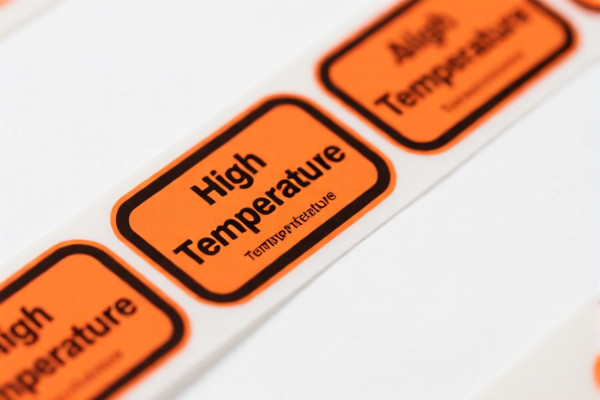
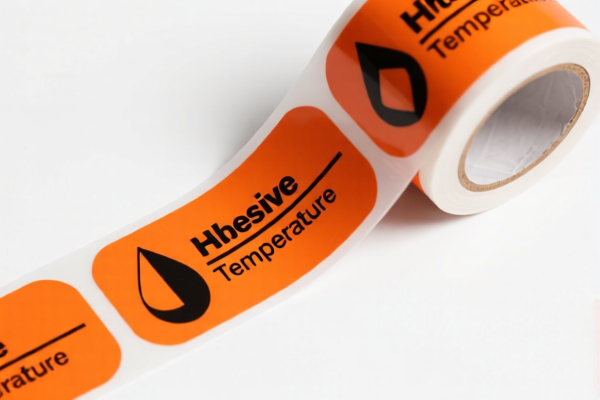
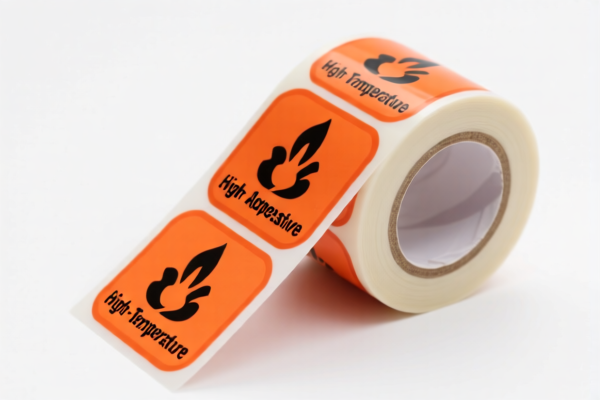
AI分析
🏷️ Self-Adhesive Low Temperature Label
🌐 HS Code Reference & Customs Clearance Guide | 2026 Latest Tariff Analysis | Professional Clearance Strategy
📌 I. Product Definition & Classification: What Exactly is a "Self-Adhesive Low Temperature Label"?
Low-temperature labels are specialized adhesive products designed to withstand extreme cold conditions (often down to -40°C or lower) without losing adhesion or becoming brittle. In international trade, their classification hinges on two critical factors: Material Composition and Function.
⚠️ Key Distinction Points:
- If the label is Paper-based (even with adhesive backing) → Classified under Chapter 48 (Paper/Paperboard).
- If the label is Plastic/Polymer-based (e.g., PP, PE, Vinyl) → Classified under Chapter 39 (Plastics/Plastic Articles).
- If it is a Self-Adhesive Sheet (rolls/sheets primarily defined by the adhesive nature rather than as a final "label" product) → May fall under 3919 (Self-adhesive plates/sheets).
📦 II. HS Code Classification Details (2026 Latest Tariff Authority Comparison)
| HS Code | Product Description | Matching Logic & Material Inference | Total Tax Rate (US/China) |
|---|---|---|---|
4821.10.20.00 |
Paper Labels, Self-Adhesive | Material: Paper. Function: Label. Logic: "Self-adhesive" is a common form for labels. No material conflict with paper labels. |
35.0% |
3926.90.99.89 |
Other Plastic Products, n.e.c. | Material: Plastic/Composite inferred. Form: "Other articles". Logic: Fits "Plastic and other materials" category; shape is "other articles" with no conflicting characteristics. |
22.8% |
3926.10.00.00 |
Plastic Articles for Office/School Supplies | Material: Plastic/Adhesive material inferred. Usage: Office/School supplies (Labels). Logic: Matches "Other plastic articles"; usage fits office/school supply labels. |
15.3% |
4821.90.20.00 |
Other Paper Labels/Markings | Material: Paper/Cardboard inferred. Feature: "Self-adhesive" matches "Self-adhesive" in classification. Logic: "Label" fits material/usage; "Material" reasonably inferred as paper/cardboard. |
35.0% |
3919.90.50.60 |
Self-Adhesive Plates, Sheets, Tape (Plastic) | Feature: "Self-adhesive" matches "Self-adhesive". Form: Sheets/Films. Logic: "Material" inferred as plastic (common for self-adhesive rolls); no conflict with "of plastics". |
40.8% |
🔍 Crucial Note:
- The term "Low Temperature" does not change the HS Code directly. It is a performance specification. The classification remains strictly dependent on the base material (Paper vs. Plastic).
- Customs Warning: Misdeclaring a plastic label as paper (or vice versa) can lead to significant duty discrepancies and penalties. Always verify the substrate material.
💰 III. 2026 Latest Tariff Rate Breakdown (Including Additional Duties & Policy Surcharges)
✅ Applicable Country: United States (US)
✅ Origin: China (CN)
✅ Effective Time: From November 10, 2025 (including subsequent imports)
🎯 1. 4821.10.20.00 & 4821.90.20.00 —— Paper-Based Self-Adhesive Labels
| Item | Content |
|---|---|
| Base Tariff | 0.0% (Ad Valorem) |
| Section 301 Tariff | +25.0% (Additional Duty) |
| Section 122 Tariff | +10.0% (Specific US Policy Duty) |
| Total Tax Rate | 35.0% |
| Tax Calculation | CIF Value × 35% |
| De Minimis Exemption | ❌ Not Eligible (High tariff base excludes low-value exemption in many contexts) |
| Legal Basis Path | Section 301: Footnote 9903.88.01 → Section 122: IEPA/USITC Specific Clause → USITC:4821.10.20.00 |
📌 Explanation:
- Base 0%: Paper labels have no standard MFN tariff.
- 25% Section 301: Applies to most Chinese-origin goods in Chapter 48.
- 10% Section 122: A specific surcharge applied to certain imports from China.
- Total 35%: This is a high-risk classification for cost calculation. Paper labels face the same heavy duties as many other Chinese goods.
🎯 2. 3926.90.99.89 —— Other Plastic Products (General Plastic Labels)
| Item | Content |
|---|---|
| Base Tariff | 5.3% |
| Section 301 Tariff | +7.5% (Reduced rate for specific subcategories) |
| Section 122 Tariff | +10.0% |
| Total Tax Rate | 22.8% |
| Tax Calculation | CIF Value × 22.8% |
| De Minimis Exemption | ❌ Not Eligible |
| Legal Basis Path | Section 301: Specific Footnote → Section 122 → USITC:3926.90.99.89 |
📌 Explanation:
- This classification applies to general plastic articles not specifically listed elsewhere.
- Lower Total Duty (22.8%) compared to paper labels (35%) or specific self-adhesive plastic sheets (40.8%).
- Suitable for mixed-material or general-purpose plastic labels.
🎯 3. 3926.10.00.00 —— Plastic Articles for Office/School Use
| Item | Content |
|---|---|
| Base Tariff | 5.3% |
| Section 301 Tariff | 0.0% (Exempt or Lower Rate) |
| Section 122 Tariff | +10.0% |
| Total Tax Rate | 15.3% |
| Tax Calculation | CIF Value × 15.3% |
| De Minimis Exemption | ❌ Not Eligible |
| Legal Basis Path | USITC:3926.10.00.00 → Section 122 |
📌 Explanation:
- Lowest Total Duty (15.3%) among the options.
- Requirement: Must clearly qualify as "Office or School Supplies."
- Strategy: If your low-temperature labels are marketed for labeling food containers in offices, schools, or retail environments, this is the most cost-effective classification. You must provide evidence of this usage.
🎯 4. 3919.90.50.60 —— Self-Adhesive Plastic Plates/Sheets
| Item | Content |
|---|---|
| Base Tariff | 5.8% |
| Section 301 Tariff | +25.0% |
| Section 122 Tariff | +10.0% |
| Total Tax Rate | 40.8% |
| Tax Calculation | CIF Value × 40.8% |
| De Minimis Exemption | ❌ Not Eligible |
| Legal Basis Path | Section 301 → Section 122 → USITC:3919.90.50.60 |
📌 Explanation:
- Highest Total Duty (40.8%).
- Risk: This classification is for "Self-Adhesive Sheets/Plates" (raw material form). If you are importing pre-cut labels, customs may reject this classification in favor of3926(Articles) or4821(Labels).
- Avoid unless importing bulk rolls of self-adhesive plastic film specifically for cutting.
🛠️ IV. Customs Clearance Practical Advice (Real-World Pitfall Guide)
✅ 1. Essential Documentation Checklist (No Exceptions)
| Document | Mandatory? | Purpose |
|---|---|---|
| ✅ Material Composition Sheet | ✔️ | Critical: Must state % of Paper vs. Plastic/PP/PE. Determines Chapter 48 vs. 39. |
| ✅ Temperature Test Report | ✔️ | Proves "Low Temperature" resistance (e.g., -20°C to -40°C). Supports technical description. |
| ✅ Product Photos (Cut & Roll) | ✔️ | Shows if it's pre-cut labels (Chapter 48/3926) or rolls (Chapter 3919). |
| ✅ Commercial Invoice | ✔️ | Clear description: "Self-Adhesive Low-Temperature Label, Paper/Plastic, For Cold Chain Logistics." |
| ✅ Bill of Lading/Air Waybill | ✔️ | Standard shipping docs. |
| ✅ Origin Certificate (CO) | ✔️ | Required for US import compliance. |
✅ 2. Declaration Strategy (Key Tips)
🔥 “Material First, Usage Second, Form Matters!”
| Scenario | Correct HS Code | Wrong Declaration | Consequence |
|---|---|---|---|
| Paper Base Label | 4821.10.20.00 or 4821.90.20.00 |
Declare as 3926 (Plastic) |
Over-declaring Plastic: May face scrutiny, but duty is 35% anyway. However, if misdeclared as non-China origin, severe penalty. |
| Plastic Base Label (Office Use) | 3926.10.00.00 |
Declare as 3919 (Sheets) |
High Duty Trap: Saves 25.5% duty if 3926.10 is approved. But requires strong evidence of "Office/School" use. |
| Bulk Roll of Plastic Film | 3919.90.50.60 |
Declare as 3926 (Articles) |
Under-declaring Duty: 40.8% vs 22.8%/15.3%. Risk of audit if cut labels are found inside. |
| Mixed Material (e.g., Paper Face + Plastic Liner) | 4821 or 3926 |
Vague "Label" | Customs Detention: Must specify dominant material. |
📌 Pro Tip:
- If using Plastic (PP/PE), argue for3926.10.00.00(15.3%) by emphasizing Office/School/Cold Chain Logistics use.
- If using Paper, accept the 35% duty (4821) as it is standard for paper labels.
- Avoid3919unless you are literally importing rolls of adhesive tape/film for further manufacturing.
✅ 3. Special Circumstances Handling
| Situation | Handling Advice |
|---|---|
| OEM Labels for Cold Chain Logistics | Provide client contract stating use in "Cold Chain" or "Logistics." This supports "Office/Industrial" usage under 3926.10 if plastic. |
| Pre-Cut vs. Rolls | Pre-cut labels strongly favor 4821 or 3926. Rolls favor 3919 or 3926.90. |
| Composite Materials | If >50% paper by weight/value, likely 4821. If plastic coating is dominant, consider 3926. |
| Small Sample Shipments | Even for de minimis values, the 10% Section 122 and 25% Section 301 often still apply or trigger detailed review. Do not assume exemption. |
🌍 V. Global Market Clearance Comparison (2026 Latest)
| Country/Region | Recommended HS Code (Plastic Label) | Tax Rate (China Origin) | Certification/Notes |
|---|---|---|---|
| 🇺🇸 USA | 3926.10.00.00 (If Office/Use) |
15.3% | Best for cost. Requires "Office/School" justification. |
| 🇺🇸 USA | 4821.10.20.00 (Paper) |
35.0% | Standard for paper. No reduction available. |
| 🇨🇳 China | 3926.90.99 or 4821 |
5-10% | Low import duty. No Section 122/301. |
| 🇪🇺 EU | 4821.10 or 3926.90 |
0-4% | Generally low tariffs. No major anti-dumping on labels. |
| 🇦🇺 Australia | 4821.10 or 3926.90 |
5% | Standard MFN rate. |
📌 Conclusion:
- USA is the most complex market due to Section 301 and 122 tariffs.
- Plastic labels classified as3926.10.00.00(15.3%) offer the best savings in the US.
- Paper labels (4821) are taxed heavily (35%) regardless of use.
📌 VI. Common Errors & Pitfall Guide (Lessons Learned)
❌ Error 1: Declaring all plastic labels as 3919 (Self-Adhesive Sheets)
👉 Consequence: Duty jumps to 40.8%. Customs may reject if items are pre-cut labels.
❌ Error 2: Declaring Paper Labels as 3926 (Plastic) to save duty
👉 Consequence: 35% duty applies to both, but risk of fraud penalty if material analysis proves paper.
❌ Error 3: Ignoring "Low Temperature" specification
👉 Consequence: Not a direct tariff impact, but if labels fail in cold chain, client claims damages. Ensure technical specs are clear to avoid disputes.
✅ Correct Declaration Example:
"Self-Adhesive Low-Temperature Label, Paper Base, Adhesive Backing, Pre-Cut, For Cold Storage Use, Model XYZ"
→ Likely HS:4821.10.20.00(35.0%)"Self-Adhesive Low-Temperature Label, PP Material, Plastic, Office/Laboratory Use, Rolls"
→ Likely HS:3926.10.00.00(15.3%) → Best Option for Plastic
🎯 VII. Conclusion: Professional Declaration, Cost Optimization!
🎯 Remember These Key Points:
🔹 "Paper = 35%, Plastic Office Use = 15.3%, Plastic Sheets = 40.8%!"
🔹 "Low Temperature is a Feature, Not a Class! Material is King!"
🔹 "Section 301 & 122 apply to ALL Chinese labels. Plan accordingly!"
📌 Pro Tip:
If you are importing plastic labels, aggressively pursue 3926.10.00.00 by providing documentation that highlights Office, Laboratory, or School usage. This can save you 20%+ in duties compared to paper or general plastic articles.
📣 Immediate Action:
📞 Consult with your customs broker to verify material composition.
📄 Prepare Material Safety Data Sheets (MSDS) and Usage Statements.
🚀 Optimize your supply chain to minimize the 35% vs 15.3% duty gap!
✨ Professional Clearance Starts with Precise Classification!
💼 Every Percent Saved is Profit Gained!
用户评价
关于 HS 编码归类
协调制度(HS)是由世界海关组织(WCO)制定的国际贸易商品分类标准。全球 200 多个国家采用 HS 系统作为海关关税、贸易统计和进出口监管的基础。
每个 HS 编码遵循以下层级结构:
- 章(2 位)——商品大类(例如:第 84 章:机器和机械设备)
- 品目(4 位)——章内的更具体分类
- 子目(6 位)——国际通用细分,所有 WCO 成员国统一使用
- 本国细分(8-10 位)——各国自行扩展的细分编码,如美国 HTSUS 10 位编码
正确的 HS 编码归类对于顺利通关、准确缴纳关税和遵守贸易法规至关重要。错误归类可能导致海关延误、多缴关税或罚款。
从CN进口到US时,适用的关税税率可能包括:
- 最惠国(MFN)税率——适用于 WTO 成员国的标准关税税率
- 普通税率——适用于无贸易协定国家
- 贸易救济关税——附加关税,如 301 条款(反倾销)、232 条款(国家安全)或反补贴税
本页内容仅供参考。如需正式归类,请咨询当地海关或持牌报关代理。