Self adhesive PVC Label
CN → US| HS编码 | 关税税率 | 原产国 | 目的国 | 文档 |
|---|---|---|---|---|
| 3919905060 | 40.8% | CN | US | 官方文档 |
| 3919102055 | 40.8% | CN | US | 官方文档 |
| 3926909989 | 22.8% | CN | US | 官方文档 |
| 4821902000 | 35.0% | CN | US | 官方文档 |
| 4821102000 | 35.0% | CN | US | 官方文档 |
商品图片
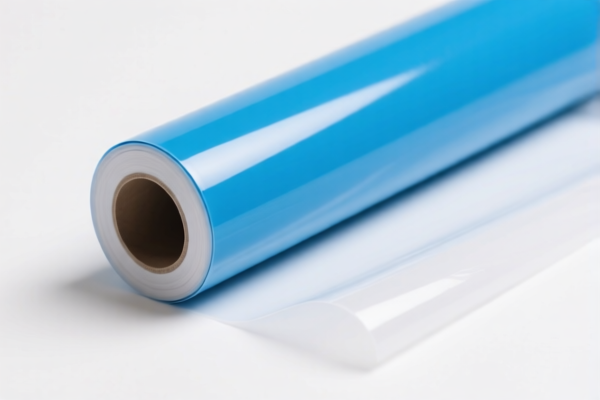
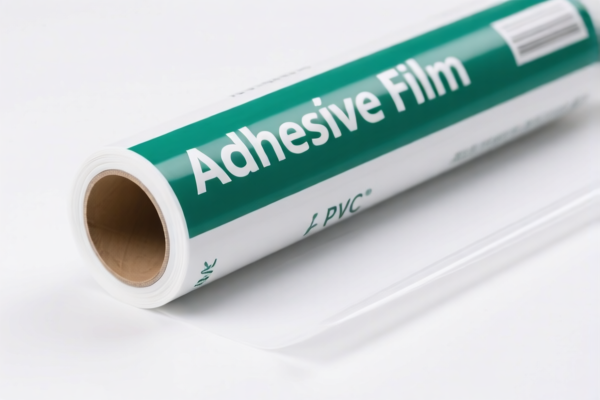
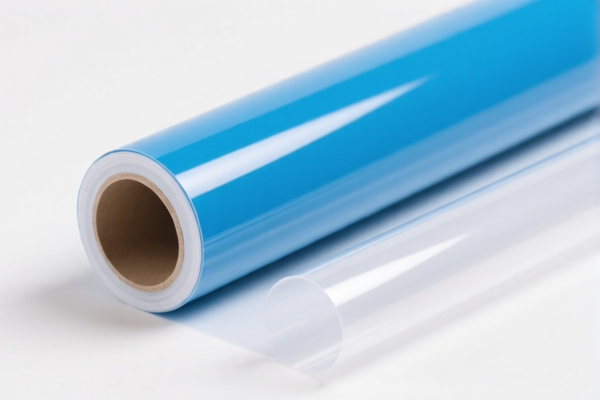

AI分析
🏷️ Self-Adhesive PVC Labels (Plastic Adhesive Labels)
🌐 HS Code Reference & Customs Clearance Guide | 2026 Latest Tariff Analysis | Professional Entry Strategy
📌 I. Product Definition & Classification: Do You Really Understand "Self-Adhesive Labels"?
Self-adhesive PVC labels are widely used in packaging, logistics, product identification, and retail. In international trade, their classification depends heavily on material composition, physical form, and specific application. While PVC is a plastic, the final HS Code can vary significantly based on whether customs authorities view the item as a "plastic sheet/product" or a "paper/cardboard label."
⚠️ Key Distinction Point:
- If classified strictly under Chapter 39 (Plastics): Treated as self-adhesive plastic sheets or plates.
- If classified under Chapter 48 (Paper/Cardboard): Treated as labeling goods, even if made of PVC (due to specific interpretive logic allowing material diversity).
- Risk Factor: Misclassification leads to drastic tax differences (22.8% vs. 40.8%).
📦 II. HS Code Classification Details (Based on Provided Data)
| HS Code | Product Description | Summary Logic | Total Tax Rate |
|---|---|---|---|
3919.90.50.60 |
Self-adhesive plastic materials (PVC Labels) | Classified as self-adhesive PVC, fitting the self-adhesive nature and sheet-like form. | 40.8% |
3919.10.20.55 |
Self-adhesive plastic materials (Flat PVC Labels) | Classified as flat self-adhesive plastic, suitable for PVC label characteristics. | 40.8% |
3926.90.99.89 |
Other plastic articles and products | Classified as plastic products/labels, fitting PVC material use and morphological features. | 22.8% |
4821.90.20.00 |
Paper/Cardboard Labels (Diverse Logic) | Classified as paper/cardboard material; acknowledges logical diversity in material inference for PVC. | 35.0% |
4821.10.20.00 |
Paper Labels (Labeling Use) | Classified as paper labels based on function; PVC requires comprehensive judgment with plastic HS codes. | 35.0% |
🔍 Key Insight:
- Chapters 39 (Plastics) generally attract higher duties (40.8%) due to additional trade remedies.
- Chapter 48 (Paper/Cardboard) sits in the middle (35.0%), but may face scrutiny if the PVC nature is not clearly explained.
-3926.90.99.89offers the lowest duty (22.8%) but requires strong justification that the label is a "general plastic article" rather than a specific self-adhesive sheet.
💰 III. 2026 Latest Tariff Rate Details (Including Surcharges & Policy Add-ons)
✅ Applicable Country: United States (US)
✅ Origin: China (CN)
✅ Effective Time: 2025/2026 (Current Trade Era)
🎯 1. Group A: 3919.90.50.60 & 3919.10.20.55 (Self-Adhesive Plastic Sheets)
Total Tax: 40.8%
| Item | Details |
|---|---|
| Base Tariff | 5.8% |
| Section 301 Tariff | +25.0% (High-value anti-dumping/countervailing measures) |
| Section 122 Tariff | +10.0% (Specific trade remedy/countermeasure) |
| Total Effective Rate | 40.8% |
| Calculation Basis | CIF Value × 40.8% |
| De Minimis Exemption | ❌ Not Applicable (Due to high tariff rates) |
| Legal Basis Path | USITC:3919.xxxx → Section 301: Footnote 9903 → Section 122 |
📌 Explanation:
- The 5.8% base rate is standard for self-adhesive plastic plates/sheets.
- The 25% addition is the classic Section 301 tariff on Chinese plastics.
- The 10% Section 122 tariff adds an extra layer of cost.
- Total 40.8% is extremely high. This classification is risky for cost-sensitive imports.
🎯 2. Group B: 3926.90.99.89 (Other Plastic Articles)
Total Tax: 22.8%
| Item | Details |
|---|---|
| Base Tariff | 5.3% |
| Section 301 Tariff | +7.5% (Reduced section for certain plastic articles) |
| Section 122 Tariff | +10.0% |
| Total Effective Rate | 22.8% |
| Calculation Basis | CIF Value × 22.8% |
| De Minimis Exemption | ❌ Not Applicable |
| Legal Basis Path | USITC:3926.90.99 → Section 301: Footnote 9903 (Reduced Rate) → Section 122 |
📌 Explanation:
- This is the most cost-effective option among the provided codes.
- However, you must prove the label is not a "self-adhesive sheet" (which triggers the higher 3919 codes). It must be argued as a "finished plastic product/artificial article."
🎯 3. Group C: 4821.90.20.00 & 4821.10.20.00 (Paper/Cardboard Labels)
Total Tax: 35.0%
| Item | Details |
|---|---|
| Base Tariff | 0.0% |
| Section 301 Tariff | +25.0% |
| Section 122 Tariff | +10.0% |
| Total Effective Rate | 35.0% |
| Calculation Basis | CIF Value × 35.0% |
| De Minimis Exemption | ❌ Not Applicable |
| Legal Basis Path | USITC:4821.xxxx → Section 301 → Section 122 |
📌 Explanation:
- Although the base tariff is 0%, the Section 301 and 122 surcharges bring it to 35.0%.
- Risk: Customs may reject this classification because PVC is a plastic, not paper. Using these codes requires a robust explanation for "material inference diversity," which could lead to audits or reclassification penalties.
🛠️ IV. Customs Clearance Practical Advice (Real-World Pitfall Guide)
✅ 1. Preparation Checklist (Must-Haves)
| Document | Required | Purpose |
|---|---|---|
| ✅ Product Spec Sheet | ✔️ | Must explicitly state Material: 100% PVC, Adhesive Type, Backing Paper Type. |
| ✅ High-Res Photos | ✔️ | Show the label’s flexibility, adhesive side, and application example. |
| ✅ Commercial Invoice | ✔️ | Description must match HS Code logic (e.g., "PVC Plastic Label" vs. "Adhesive Sheet"). |
| ✅ Packing List | ✔️ | Detail roll length, width, and quantity. |
| ✅ Origin Certificate | ✔️ | Prove China origin to anticipate Section 301/122 duties. |
✅ 2. Declaration Strategy (Critical Tips)
🔥 "Material Truth, Logical Consistency, Cost Optimization!"
| Situation | Recommended HS Code | Reasoning |
|---|---|---|
| Standard PVC Self-Adhesive Label | 3926.90.99.89 |
Lowest duty (22.8%). Argue as "Finished Plastic Article" rather than raw "Adhesive Sheet." |
| Raw PVC Adhesive Rolls (Unprocessed) | 3919.90.50.60 |
If it’s just adhesive plastic sheets without finished label shape, use this. But duty is 40.8%. |
| Paper-Based Labels | 4821.90.20.00 |
Avoid for PVC. Only use if the product is genuinely paper. Using this for PVC risks classification disputes. |
| Mixed Material (PVC + Paper Backing) | 3926.90.99.89 |
Focus on the PVC component as the essential character. |
✅ 3. Special Handling
| Scenario | Advice |
|---|---|
| High Volume Import | Negotiate with Customs Broker: Try to classify under 3926 (22.8%) instead of 3919 (40.8%). Provide engineering drawings showing the label as a "finished product." |
| Customs Audit | If classified under 4821 (Paper), be ready to explain why PVC is treated as paper. This is risky. Better to stick to Plastic chapters (39). |
| Section 122 Awareness | All listed codes include a 10% Section 122 tariff. This is non-negotiable for Chinese-origin plastic/paper labels. Factor this into your pricing. |
🌍 V. Global Market Comparison (2026)
| Market | Recommended HS Code | Est. Total Duty | Notes |
|---|---|---|---|
| 🇺🇸 USA | 3926.90.99.89 |
22.8% | Best option among provided data. Includes S301 + S122. |
| 🇺🇸 USA | 3919.90.50.60 |
40.8% | Avoid if possible. High cost. |
| 🇨🇳 China | 3919.90.50.60 |
~5-10% | Low duty, but focus on export, not import. |
| 🇪🇺 EU | 3919.90.50.60 |
~6.5% | No Section 301/122. Much lower duty than US. |
| 🇦🇺 Australia | 3919.90.50.60 |
~5% | FTA may apply for some origins, but PVC remains competitive. |
📌 Conclusion:
- The USA market is the most expensive for Chinese PVC labels due to Section 301 (25% or 7.5%) and Section 122 (10%).
-3926.90.99.89is the strategic winner for US imports, saving ~18% in duties compared to3919codes.
📌 VI. Common Errors & Pitfalls (Blood Lessons)
❌ Error 1: Classifying PVC Labels as 4821 (Paper) without justification.
👉 Consequence: Customs may reject it, leading to reclassification to 3919 (40.8%) + penalties + delay.
❌ Error 2: Declaring "Self-Adhesive Sheets" (3919) for finished labels.
👉 Consequence: Overpaying tariffs (40.8% vs. 22.8%). You can save money by proving it’s a "finished article."
❌ Error 3: Ignoring Section 122 Tariff.
👉 Consequence: Unexpected 10% extra cost at customs. Must be budgeted in advance.
❌ Error 4: Vague Description: "Labels."
👉 Consequence: Customs assigns the highest default duty. Be specific: "PVC Self-Adhesive Labels, Finished, 2x3 inches."
✅ Correct Approach:
"Self-Adhesive PVC Label, Finished Product, 100% Polyvinyl Chloride, With Acrylic Adhesive, Used for Industrial Packaging, HS: 3926.90.99.89"
🎯 VII. Conclusion: Smart Classification, Higher Profits!
🎯 Remember the Mantra:
🔹 "PVC is Plastic, Not Paper."
🔹 "3926 saves 18% vs. 3919."
🔹 "S301 + S122 = 35-40% Duty in US."
📌 Pro Tip:
If your volume is significant, consider Advance Ruling (Pre-classification) with US Customs (CBP) for 3926.90.99.89. This locks in the 22.8% rate and prevents future disputes.
📣 Immediate Action:
📞 Contact your customs broker to review your product samples.
📄 Prepare technical specs highlighting "Finished Plastic Article" status.
🚀 Optimize your supply chain to absorb or pass on the 22.8% duty vs. 40.8% pitfall.
✨ Professional clearance starts with precise classification!
💼 Your profit margin depends on the last digit of the HS Code!
用户评价
关于 HS 编码归类
协调制度(HS)是由世界海关组织(WCO)制定的国际贸易商品分类标准。全球 200 多个国家采用 HS 系统作为海关关税、贸易统计和进出口监管的基础。
每个 HS 编码遵循以下层级结构:
- 章(2 位)——商品大类(例如:第 84 章:机器和机械设备)
- 品目(4 位)——章内的更具体分类
- 子目(6 位)——国际通用细分,所有 WCO 成员国统一使用
- 本国细分(8-10 位)——各国自行扩展的细分编码,如美国 HTSUS 10 位编码
正确的 HS 编码归类对于顺利通关、准确缴纳关税和遵守贸易法规至关重要。错误归类可能导致海关延误、多缴关税或罚款。
从CN进口到US时,适用的关税税率可能包括:
- 最惠国(MFN)税率——适用于 WTO 成员国的标准关税税率
- 普通税率——适用于无贸易协定国家
- 贸易救济关税——附加关税,如 301 条款(反倾销)、232 条款(国家安全)或反补贴税
本页内容仅供参考。如需正式归类,请咨询当地海关或持牌报关代理。