Self adhesive PVC Label
CN → US| HS Code | Tariff Rate | Origin | Destination | Doc |
|---|---|---|---|---|
| 3919905060 | 40.8% | CN | US | Official Doc |
| 3919102055 | 40.8% | CN | US | Official Doc |
| 3926909989 | 22.8% | CN | US | Official Doc |
| 4821902000 | 35.0% | CN | US | Official Doc |
| 4821102000 | 35.0% | CN | US | Official Doc |
Product Images
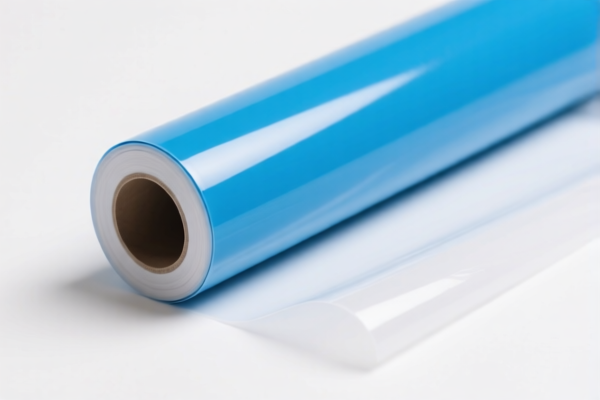
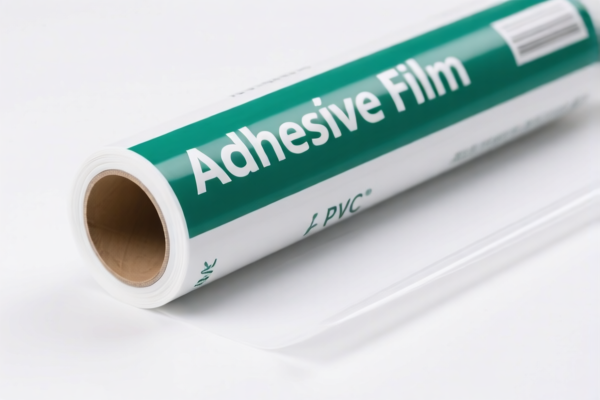
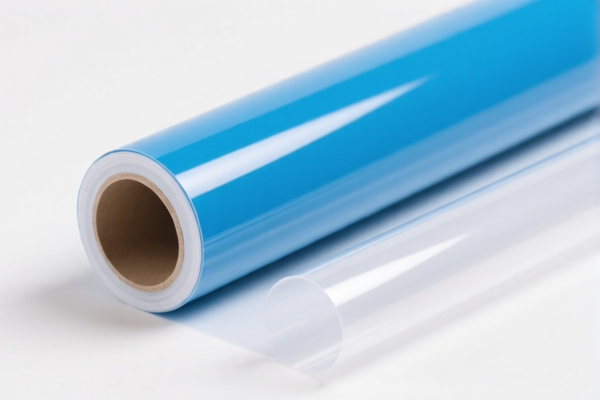

AI Analysis
🏷️ Self-Adhesive PVC Labels (Plastic Adhesive Labels)
🌐 HS Code Reference & Customs Clearance Guide | 2026 Latest Tariff Analysis | Professional Entry Strategy
📌 I. Product Definition & Classification: Do You Really Understand "Self-Adhesive Labels"?
Self-adhesive PVC labels are widely used in packaging, logistics, product identification, and retail. In international trade, their classification depends heavily on material composition, physical form, and specific application. While PVC is a plastic, the final HS Code can vary significantly based on whether customs authorities view the item as a "plastic sheet/product" or a "paper/cardboard label."
⚠️ Key Distinction Point:
- If classified strictly under Chapter 39 (Plastics): Treated as self-adhesive plastic sheets or plates.
- If classified under Chapter 48 (Paper/Cardboard): Treated as labeling goods, even if made of PVC (due to specific interpretive logic allowing material diversity).
- Risk Factor: Misclassification leads to drastic tax differences (22.8% vs. 40.8%).
📦 II. HS Code Classification Details (Based on Provided Data)
| HS Code | Product Description | Summary Logic | Total Tax Rate |
|---|---|---|---|
3919.90.50.60 |
Self-adhesive plastic materials (PVC Labels) | Classified as self-adhesive PVC, fitting the self-adhesive nature and sheet-like form. | 40.8% |
3919.10.20.55 |
Self-adhesive plastic materials (Flat PVC Labels) | Classified as flat self-adhesive plastic, suitable for PVC label characteristics. | 40.8% |
3926.90.99.89 |
Other plastic articles and products | Classified as plastic products/labels, fitting PVC material use and morphological features. | 22.8% |
4821.90.20.00 |
Paper/Cardboard Labels (Diverse Logic) | Classified as paper/cardboard material; acknowledges logical diversity in material inference for PVC. | 35.0% |
4821.10.20.00 |
Paper Labels (Labeling Use) | Classified as paper labels based on function; PVC requires comprehensive judgment with plastic HS codes. | 35.0% |
🔍 Key Insight:
- Chapters 39 (Plastics) generally attract higher duties (40.8%) due to additional trade remedies.
- Chapter 48 (Paper/Cardboard) sits in the middle (35.0%), but may face scrutiny if the PVC nature is not clearly explained.
-3926.90.99.89offers the lowest duty (22.8%) but requires strong justification that the label is a "general plastic article" rather than a specific self-adhesive sheet.
💰 III. 2026 Latest Tariff Rate Details (Including Surcharges & Policy Add-ons)
✅ Applicable Country: United States (US)
✅ Origin: China (CN)
✅ Effective Time: 2025/2026 (Current Trade Era)
🎯 1. Group A: 3919.90.50.60 & 3919.10.20.55 (Self-Adhesive Plastic Sheets)
Total Tax: 40.8%
| Item | Details |
|---|---|
| Base Tariff | 5.8% |
| Section 301 Tariff | +25.0% (High-value anti-dumping/countervailing measures) |
| Section 122 Tariff | +10.0% (Specific trade remedy/countermeasure) |
| Total Effective Rate | 40.8% |
| Calculation Basis | CIF Value × 40.8% |
| De Minimis Exemption | ❌ Not Applicable (Due to high tariff rates) |
| Legal Basis Path | USITC:3919.xxxx → Section 301: Footnote 9903 → Section 122 |
📌 Explanation:
- The 5.8% base rate is standard for self-adhesive plastic plates/sheets.
- The 25% addition is the classic Section 301 tariff on Chinese plastics.
- The 10% Section 122 tariff adds an extra layer of cost.
- Total 40.8% is extremely high. This classification is risky for cost-sensitive imports.
🎯 2. Group B: 3926.90.99.89 (Other Plastic Articles)
Total Tax: 22.8%
| Item | Details |
|---|---|
| Base Tariff | 5.3% |
| Section 301 Tariff | +7.5% (Reduced section for certain plastic articles) |
| Section 122 Tariff | +10.0% |
| Total Effective Rate | 22.8% |
| Calculation Basis | CIF Value × 22.8% |
| De Minimis Exemption | ❌ Not Applicable |
| Legal Basis Path | USITC:3926.90.99 → Section 301: Footnote 9903 (Reduced Rate) → Section 122 |
📌 Explanation:
- This is the most cost-effective option among the provided codes.
- However, you must prove the label is not a "self-adhesive sheet" (which triggers the higher 3919 codes). It must be argued as a "finished plastic product/artificial article."
🎯 3. Group C: 4821.90.20.00 & 4821.10.20.00 (Paper/Cardboard Labels)
Total Tax: 35.0%
| Item | Details |
|---|---|
| Base Tariff | 0.0% |
| Section 301 Tariff | +25.0% |
| Section 122 Tariff | +10.0% |
| Total Effective Rate | 35.0% |
| Calculation Basis | CIF Value × 35.0% |
| De Minimis Exemption | ❌ Not Applicable |
| Legal Basis Path | USITC:4821.xxxx → Section 301 → Section 122 |
📌 Explanation:
- Although the base tariff is 0%, the Section 301 and 122 surcharges bring it to 35.0%.
- Risk: Customs may reject this classification because PVC is a plastic, not paper. Using these codes requires a robust explanation for "material inference diversity," which could lead to audits or reclassification penalties.
🛠️ IV. Customs Clearance Practical Advice (Real-World Pitfall Guide)
✅ 1. Preparation Checklist (Must-Haves)
| Document | Required | Purpose |
|---|---|---|
| ✅ Product Spec Sheet | ✔️ | Must explicitly state Material: 100% PVC, Adhesive Type, Backing Paper Type. |
| ✅ High-Res Photos | ✔️ | Show the label’s flexibility, adhesive side, and application example. |
| ✅ Commercial Invoice | ✔️ | Description must match HS Code logic (e.g., "PVC Plastic Label" vs. "Adhesive Sheet"). |
| ✅ Packing List | ✔️ | Detail roll length, width, and quantity. |
| ✅ Origin Certificate | ✔️ | Prove China origin to anticipate Section 301/122 duties. |
✅ 2. Declaration Strategy (Critical Tips)
🔥 "Material Truth, Logical Consistency, Cost Optimization!"
| Situation | Recommended HS Code | Reasoning |
|---|---|---|
| Standard PVC Self-Adhesive Label | 3926.90.99.89 |
Lowest duty (22.8%). Argue as "Finished Plastic Article" rather than raw "Adhesive Sheet." |
| Raw PVC Adhesive Rolls (Unprocessed) | 3919.90.50.60 |
If it’s just adhesive plastic sheets without finished label shape, use this. But duty is 40.8%. |
| Paper-Based Labels | 4821.90.20.00 |
Avoid for PVC. Only use if the product is genuinely paper. Using this for PVC risks classification disputes. |
| Mixed Material (PVC + Paper Backing) | 3926.90.99.89 |
Focus on the PVC component as the essential character. |
✅ 3. Special Handling
| Scenario | Advice |
|---|---|
| High Volume Import | Negotiate with Customs Broker: Try to classify under 3926 (22.8%) instead of 3919 (40.8%). Provide engineering drawings showing the label as a "finished product." |
| Customs Audit | If classified under 4821 (Paper), be ready to explain why PVC is treated as paper. This is risky. Better to stick to Plastic chapters (39). |
| Section 122 Awareness | All listed codes include a 10% Section 122 tariff. This is non-negotiable for Chinese-origin plastic/paper labels. Factor this into your pricing. |
🌍 V. Global Market Comparison (2026)
| Market | Recommended HS Code | Est. Total Duty | Notes |
|---|---|---|---|
| 🇺🇸 USA | 3926.90.99.89 |
22.8% | Best option among provided data. Includes S301 + S122. |
| 🇺🇸 USA | 3919.90.50.60 |
40.8% | Avoid if possible. High cost. |
| 🇨🇳 China | 3919.90.50.60 |
~5-10% | Low duty, but focus on export, not import. |
| 🇪🇺 EU | 3919.90.50.60 |
~6.5% | No Section 301/122. Much lower duty than US. |
| 🇦🇺 Australia | 3919.90.50.60 |
~5% | FTA may apply for some origins, but PVC remains competitive. |
📌 Conclusion:
- The USA market is the most expensive for Chinese PVC labels due to Section 301 (25% or 7.5%) and Section 122 (10%).
-3926.90.99.89is the strategic winner for US imports, saving ~18% in duties compared to3919codes.
📌 VI. Common Errors & Pitfalls (Blood Lessons)
❌ Error 1: Classifying PVC Labels as 4821 (Paper) without justification.
👉 Consequence: Customs may reject it, leading to reclassification to 3919 (40.8%) + penalties + delay.
❌ Error 2: Declaring "Self-Adhesive Sheets" (3919) for finished labels.
👉 Consequence: Overpaying tariffs (40.8% vs. 22.8%). You can save money by proving it’s a "finished article."
❌ Error 3: Ignoring Section 122 Tariff.
👉 Consequence: Unexpected 10% extra cost at customs. Must be budgeted in advance.
❌ Error 4: Vague Description: "Labels."
👉 Consequence: Customs assigns the highest default duty. Be specific: "PVC Self-Adhesive Labels, Finished, 2x3 inches."
✅ Correct Approach:
"Self-Adhesive PVC Label, Finished Product, 100% Polyvinyl Chloride, With Acrylic Adhesive, Used for Industrial Packaging, HS: 3926.90.99.89"
🎯 VII. Conclusion: Smart Classification, Higher Profits!
🎯 Remember the Mantra:
🔹 "PVC is Plastic, Not Paper."
🔹 "3926 saves 18% vs. 3919."
🔹 "S301 + S122 = 35-40% Duty in US."
📌 Pro Tip:
If your volume is significant, consider Advance Ruling (Pre-classification) with US Customs (CBP) for 3926.90.99.89. This locks in the 22.8% rate and prevents future disputes.
📣 Immediate Action:
📞 Contact your customs broker to review your product samples.
📄 Prepare technical specs highlighting "Finished Plastic Article" status.
🚀 Optimize your supply chain to absorb or pass on the 22.8% duty vs. 40.8% pitfall.
✨ Professional clearance starts with precise classification!
💼 Your profit margin depends on the last digit of the HS Code!
Customer Reviews
About HS Code Classification
The Harmonized System (HS) is an internationally standardized nomenclature developed by the World Customs Organization (WCO) to classify traded products. Over 200 countries use the HS system as the basis for customs tariffs, trade statistics, and import/export regulations.
Each HS code follows a hierarchical structure:
- Chapter (2 digits) — Broad category of goods (e.g., Chapter 84: Machinery and Mechanical Appliances)
- Heading (4 digits) — More specific grouping within the chapter
- Subheading (6 digits) — Internationally standardized breakdown, used by all WCO member countries
- National subdivisions (8-10 digits) — Country-specific extensions for further classification, such as US HTSUS 10-digit codes
Correct HS code classification is essential for smooth customs clearance, accurate duty payment, and compliance with trade regulations. Misclassification can lead to customs delays, overpayment of duties, or penalties.
When importing from CN to US, the applicable tariff rates may include:
- Most-Favored-Nation (MFN) rate — The standard duty rate applied to WTO members
- General rate — Applied to countries without trade agreements
- Trade remedy duties — Additional tariffs such as Section 301 (anti-dumping), Section 232 (national security), or countervailing duties
The information provided on this page is for reference purposes only. For official classification, please consult with your local customs authority or a licensed customs broker.