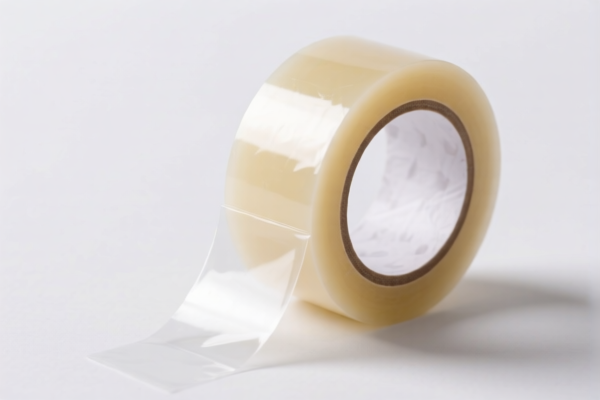
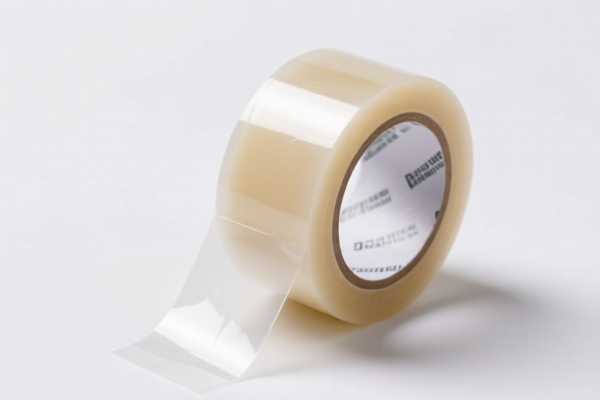
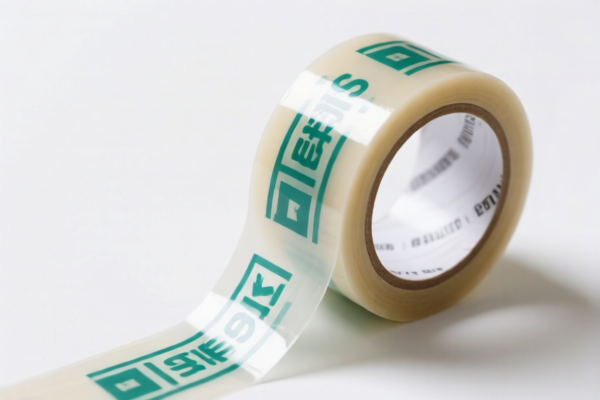
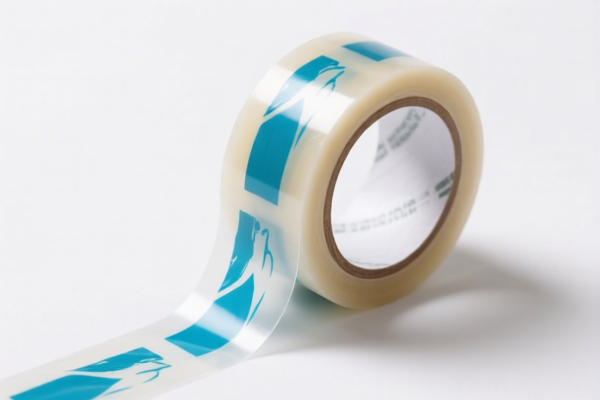
Self adhesive Polyethylene Fiber Tape
CN → US| HS编码 | 关税税率 | 原产国 | 目的国 | 文档 |
|---|---|---|---|---|
| 4008115000 | 38.3% | CN | US | 官方文档 |
| 3921110000 | 40.3% | CN | US | 官方文档 |
| 3919102055 | 40.8% | CN | US | 官方文档 |
| 4008111000 | 35.0% | CN | US | 官方文档 |
| 3919905060 | 40.8% | CN | US | 官方文档 |
商品图片
AI分析
📦 Self-Adhesive Polyethylene Fiber Tape: The Ultimate HS Code & Tariff Breakdown
🌐 HS Code Reference & Customs Clearance Guide | 2026 Latest Tariff Analysis | Professional Clearance Strategy
📌 I. Product Definition & Classification: What is "Self-Adhesive Polyethylene Fiber Tape"?
Self-adhesive polyethylene fiber tape is a specialized industrial sealing and insulation material. It consists of a polyethylene (PE) foam or film substrate combined with glass fiber or synthetic fiber reinforcement, coated with a pressure-sensitive adhesive.
In international trade, classification depends heavily on the primary material and the physical form of the backing: * Foam Structure: If the backing is cellular/foamy (soft, compressible), it may fall under Chapter 40 (Rubber) or Chapter 39 (Plastics - Plates/Sheets). * Film/Tape Structure: If it is a flat, flexible sheet with adhesive, it typically falls under Chapter 39 (Plastics - Self-adhesive Tapes). * Material Composition: Since the core is Polyethylene (PE), it is primarily a plastic product, though some variations with rubber-based adhesives or natural rubber backings might be classified differently.
⚠️ Key Distinction Point:
- Is the backing Foamed (sponge-like) or Film/Weave (flat)?
- Is the primary characteristic Rubber (elastic) or Plastic (rigid/flexible plastic)?
- Note: "Polyethylene" is a plastic. Therefore, most standard PE fiber tapes are classified under Chapter 39, unless the adhesive/backing system makes Rubber the essential character.
📊 II. HS Code Classification Details (Based on Provided Data)
Based on the provided data <DATA>, here are the 5 possible HS Codes for "Self-Adhesive Foam Tape" (a close functional equivalent often confused or overlapping with PE Fiber Tape depending on exact formulation).
| HS Code | Product Description (Summary) | Total Tax Rate | Tax Breakdown |
|---|---|---|---|
| 4008.11.50.00 | Foam rubber plates, sheets, strips; Self-adhesive foam tape classified as foam rubber, matching foam material characteristics. | 38.3% | Base: 3.3% Add-on: 25.0% Section 301: 10% |
| 3921.11.00.00 | Other plastic plates, sheets, film, foil, and strip; Base is Plastic (EVA/PE Foam). | 40.3% | Base: 5.3% Add-on: 25.0% Section 301: 10% |
| 3919.10.20.55 | Plastic self-adhesive flat tape; Matches polymer material and form characteristics. | 40.8% | Base: 5.8% Add-on: 25.0% Section 301: 10% |
| 4008.11.10.00 | Natural rubber foam plates, sheets, strips; Form and category consistent. | 35.0% | Base: 0.0% Add-on: 25.0% Section 301: 10% |
| 3919.90.50.60 | Plastic self-adhesive tape; Material inferred as Polyethylene or Polyurethane plastic. | 40.8% | Base: 5.8% Add-on: 25.0% Section 301: 10% |
🔍 Key Insight from Data:
- The classification fluctuates between Chapter 40 (Rubber) and Chapter 39 (Plastics) based on whether customs views the "Foam" aspect (Chapter 40) or the "Tape/Plastic" aspect (Chapter 39) as dominant. - PE (Polyethylene) is explicitly linked to Chapter 39 in codes3921.11.00.00and3919.90.50.60. - Tariff Burden: All options carry significant US trade restrictions (Section 301 + IEEPA).
💰 III. Detailed Tariff Rate Explanation (2026 Current Rates)
✅ Applicable Country: United States (US)
✅ Origin: China (CN) (Implied by the 25% + 10% add-ons)
✅ Effective Date: Current (Post-2025/2026 Policy)
🎯 1. 4008.11.10.00 – Natural Rubber Foam Sheets/Strips (Lowest Tax)
| Item | Content |
|---|---|
| Base Tariff | 0% |
| USITC Add-on (Sec 301) | +25% |
| IEEPA Add-on (China-specific) | +10% |
| Total Rate | 35.0% |
| Calculation | CIF Value × 35% |
| De Minimis Exemption | ❌ Denied |
| Legal Path | Base: 0% → Sec 301: +25% → IEEPA: +10% |
📌 Explanation:
- This is the lowest tax bracket in the provided data. - It assumes the product is classified as Natural Rubber Foam. - Risk: If your product is Polyethylene (Plastic), customs may reject this code and reclassify it to Chapter 39, leading to higher taxes and penalties.
🎯 2. 4008.11.50.00 – Foam Rubber Plates/Sheets
| Item | Content |
|---|---|
| Base Tariff | 3.3% |
| USITC Add-on (Sec 301) | +25% |
| IEEPA Add-on (China-specific) | +10% |
| Total Rate | 38.3% |
| Calculation | CIF Value × 38.3% |
| De Minimis Exemption | ❌ Denied |
📌 Explanation:
- Slightly higher base rate than4008.11.10.00. - Still classified under Rubber (Chapter 40).
🎯 3. 3921.11.00.00 – Other Plastic Plates/Sheets (PE Foam Base)
| Item | Content |
|---|---|
| Base Tariff | 5.3% |
| USITC Add-on (Sec 301) | +25% |
| IEEPA Add-on (China-specific) | +10% |
| Total Rate | 40.3% |
| Calculation | CIF Value × 40.3% |
| De Minimis Exemption | ❌ Denied |
📌 Explanation:
- This is a likely candidate for PE Foam Tape if viewed as a "sheet" rather than a "tape." - Higher base rate reflects the plastic processing complexity.
🎯 4. 3919.10.20.55 & 3919.90.50.60 – Plastic Self-Adhesive Tapes (Highest Tax)
| Item | Content |
|---|---|
| Base Tariff | 5.8% |
| USITC Add-on (Sec 301) | +25% |
| IEEPA Add-on (China-specific) | +10% |
| Total Rate | 40.8% |
| Calculation | CIF Value × 40.8% |
| De Minimis Exemption | ❌ Denied |
📌 Explanation:
- These codes explicitly classify the item as Self-Adhesive Tape (Chapter 39). -3919.10is for self-adhesive tapes of plastics, whether or not in rolls. - This is the most common classification for commercial "tape" products but carries the highest total tax rate.
🛠️ IV. Customs Clearance Practical Advice (Avoid Pitfalls)
✅ 1. Preparation Checklist (Essential Documents)
| Document | Required? | Notes |
|---|---|---|
| ✅ Product Spec Sheet | ✔️ | Must specify: Material (PE Foam vs. Rubber), Adhesive Type (Acrylic vs. Rubber), Thickness, Width. |
| ✅ Physical Sample | ✔️ | Customs may request a sample to test elasticity and composition. |
| ✅ Photos (Raw & Packaged) | ✔️ | Show the cross-section to prove it is "Foam" or "Film." |
| ✅ Invoice & Packing List | ✔️ | Clearly state "Self-Adhesive Polyethylene Tape" or "Foam Tape." |
| ✅ Certificate of Origin | ✔️ | If shipped from China, expect higher tariffs. |
✅ 2. Classification Strategy (Critical Decision)
| Scenario | Recommended HS Code | Why? |
|---|---|---|
| Product is 100% PE Foam + Pressure Sensitive Adhesive | 3921.11.00.00 or 3919.10.20.55 |
Polyethylene is a plastic. "Tape" form favors 3919. "Sheet/Foam" form favors 3921. |
| Product contains Natural Rubber in the backing/adhesive | 4008.11.10.00 |
If rubber is the essential character, use Chapter 40 for lower base tax (0%). |
| Product is Glass Fiber reinforced PE | 3919.90.50.60 |
Fiber reinforcement often pushes it to "Other" plastic tapes. |
🚨 Warning:
- Do NOT claim4008.11.10.00(Rubber) if your product is clearly Polyethylene (Plastic) without sufficient rubber content. Customs audits frequently reclassify plastic foams as plastics, resulting in retroactive tax payments and fines. - Consistency is Key: Ensure your marketing materials and spec sheets align with the chosen HS Code.
✅ 3. Special Handling Tips
- Labeling: Label as "Self-Adhesive Foam Tape" rather than just "Fiber Tape" if the foam characteristic is dominant.
- Packaging: Declare the exact dimensions and weight. Customs uses these to verify if it matches the "Strip" or "Tape" definition.
- Advance Ruling: Given the 25-40% tax rate, consider applying for a Binding Ruling from CBP (Customs and Border Protection) to secure the correct HS Code before shipment.
🌍 V. Global Market Comparison (2026)
| Country/Region | Recommended HS Code | Est. Duty (China Origin) | Key Requirements |
|---|---|---|---|
| 🇺🇸 USA | 3919.10.20.55 / 3921.11.00.00 |
40.3% - 40.8% | High scrutiny on "Plastic vs. Rubber." |
| 🇺🇸 USA (Rubber Claim) | 4008.11.10.00 |
35.0% | High risk of misclassification audit. |
| 🇪🇺 EU | 3919.10.20.00 |
~4% | CE Marking, REACH Compliance. |
| 🇨🇳 China | 3919.10.20.00 |
5-10% | CCC Certification (if applicable). |
| 🇯🇵 Japan | 3919.10.20.00 |
6-8% | PSE Mark (if electrical use). |
📌 Takeaway:
- The US market is the most expensive due to Section 301 and IEEPA tariffs. - China-origin goods face a massive 25-40% duty burden. - EU/Japan are significantly more favorable, with no additional "trade war" tariffs.
📌 VI. Common Mistakes & Pitfalls
❌ Mistake 1: Calling it "Rubber Tape" when it's "Polyethylene."
👉 Result: Customs reclassifies to Chapter 39, charges ~40.8%, and issues a penalty for false declaration.
❌ Mistake 2: Ignoring the "Foam" vs. "Film" distinction.
👉 Result: 3921 (Foam/Sheets) and 3919 (Tapes) have different base rates. Misclassification leads to underpayment/overpayment issues.
❌ Mistake 3: Assuming De Minimis (Section 321) applies.
👉 Result: No! Items under Section 301 (China) are excluded from de minimis tax-free entry for most commercial shipments. Expect full tax at border.
✅ Best Practice:
Use precise description:
"Self-Adhesive Polyethylene Foam Tape, Reinforced with Glass Fiber, Pressure-Sensitive Adhesive, Roll Format."
🎯 VII. Conclusion: Strategic Clearance Advice
🎯 Remember:
🔹 "Plastic is King in Chapter 39": If it's Polyethylene, lean towards
3919or3921.
🔹 "Rubber offers lower base tax but higher risk": Only use4008if you have chemical proof of rubber content.
🔹 "US Taxes are Brutal": Budget for 40%+ total landed cost impact.
📣 Immediate Action:
- Test your product: Confirm if the backing is PE (Plastic) or Rubber.
- Consult a Customs Broker: Apply for a Binding Ruling if shipment value is high.
- Check Origin: If possible, consider sourcing from non-China origins to avoid the 25% + 10% add-ons.
✨ Smart Classification Saves Money!
💼 Precision in HS Codes = Profit in Your Pocket!
用户评价
关于 HS 编码归类
协调制度(HS)是由世界海关组织(WCO)制定的国际贸易商品分类标准。全球 200 多个国家采用 HS 系统作为海关关税、贸易统计和进出口监管的基础。
每个 HS 编码遵循以下层级结构:
- 章(2 位)——商品大类(例如:第 84 章:机器和机械设备)
- 品目(4 位)——章内的更具体分类
- 子目(6 位)——国际通用细分,所有 WCO 成员国统一使用
- 本国细分(8-10 位)——各国自行扩展的细分编码,如美国 HTSUS 10 位编码
正确的 HS 编码归类对于顺利通关、准确缴纳关税和遵守贸易法规至关重要。错误归类可能导致海关延误、多缴关税或罚款。
从CN进口到US时,适用的关税税率可能包括:
- 最惠国(MFN)税率——适用于 WTO 成员国的标准关税税率
- 普通税率——适用于无贸易协定国家
- 贸易救济关税——附加关税,如 301 条款(反倾销)、232 条款(国家安全)或反补贴税
本页内容仅供参考。如需正式归类,请咨询当地海关或持牌报关代理。