Self adhesive Polyethylene Fiber Tape
CN → US| HS Code | Tariff Rate | Origin | Destination | Doc |
|---|---|---|---|---|
| 4008115000 | 38.3% | CN | US | Official Doc |
| 3921110000 | 40.3% | CN | US | Official Doc |
| 3919102055 | 40.8% | CN | US | Official Doc |
| 4008111000 | 35.0% | CN | US | Official Doc |
| 3919905060 | 40.8% | CN | US | Official Doc |
Product Images
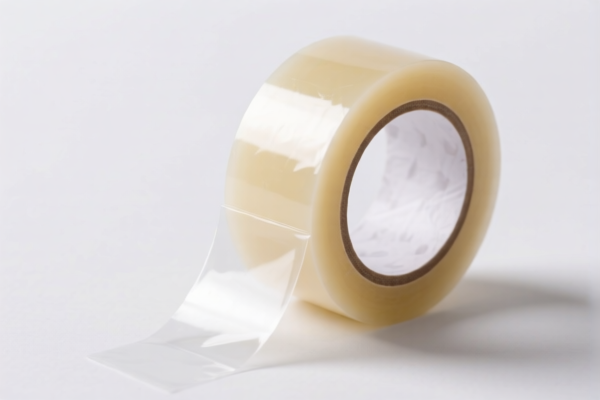
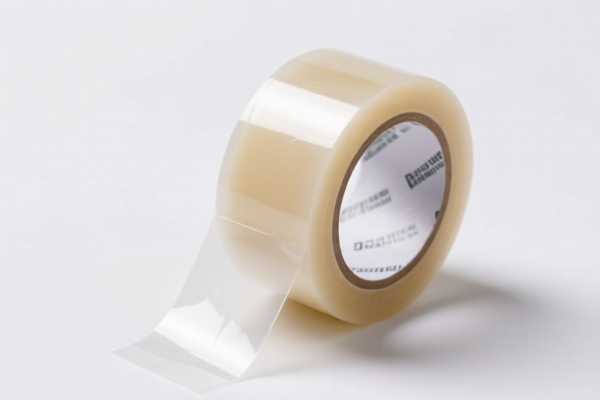
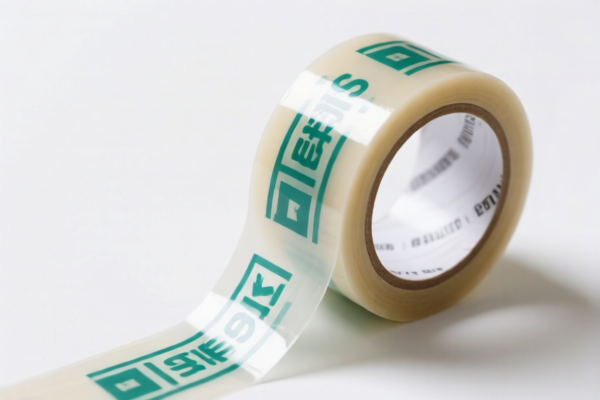
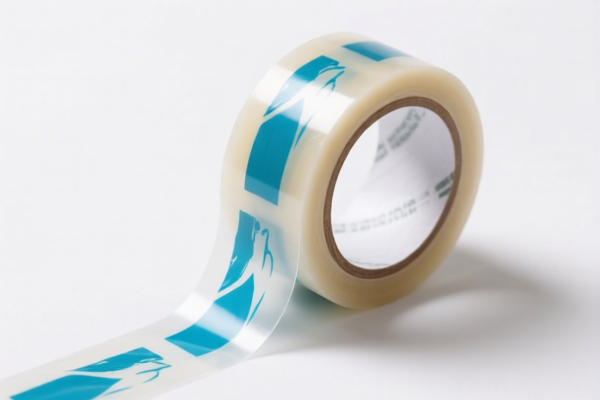
AI Analysis
📦 Self-Adhesive Polyethylene Fiber Tape: The Ultimate HS Code & Tariff Breakdown
🌐 HS Code Reference & Customs Clearance Guide | 2026 Latest Tariff Analysis | Professional Clearance Strategy
📌 I. Product Definition & Classification: What is "Self-Adhesive Polyethylene Fiber Tape"?
Self-adhesive polyethylene fiber tape is a specialized industrial sealing and insulation material. It consists of a polyethylene (PE) foam or film substrate combined with glass fiber or synthetic fiber reinforcement, coated with a pressure-sensitive adhesive.
In international trade, classification depends heavily on the primary material and the physical form of the backing: * Foam Structure: If the backing is cellular/foamy (soft, compressible), it may fall under Chapter 40 (Rubber) or Chapter 39 (Plastics - Plates/Sheets). * Film/Tape Structure: If it is a flat, flexible sheet with adhesive, it typically falls under Chapter 39 (Plastics - Self-adhesive Tapes). * Material Composition: Since the core is Polyethylene (PE), it is primarily a plastic product, though some variations with rubber-based adhesives or natural rubber backings might be classified differently.
⚠️ Key Distinction Point:
- Is the backing Foamed (sponge-like) or Film/Weave (flat)?
- Is the primary characteristic Rubber (elastic) or Plastic (rigid/flexible plastic)?
- Note: "Polyethylene" is a plastic. Therefore, most standard PE fiber tapes are classified under Chapter 39, unless the adhesive/backing system makes Rubber the essential character.
📊 II. HS Code Classification Details (Based on Provided Data)
Based on the provided data <DATA>, here are the 5 possible HS Codes for "Self-Adhesive Foam Tape" (a close functional equivalent often confused or overlapping with PE Fiber Tape depending on exact formulation).
| HS Code | Product Description (Summary) | Total Tax Rate | Tax Breakdown |
|---|---|---|---|
| 4008.11.50.00 | Foam rubber plates, sheets, strips; Self-adhesive foam tape classified as foam rubber, matching foam material characteristics. | 38.3% | Base: 3.3% Add-on: 25.0% Section 301: 10% |
| 3921.11.00.00 | Other plastic plates, sheets, film, foil, and strip; Base is Plastic (EVA/PE Foam). | 40.3% | Base: 5.3% Add-on: 25.0% Section 301: 10% |
| 3919.10.20.55 | Plastic self-adhesive flat tape; Matches polymer material and form characteristics. | 40.8% | Base: 5.8% Add-on: 25.0% Section 301: 10% |
| 4008.11.10.00 | Natural rubber foam plates, sheets, strips; Form and category consistent. | 35.0% | Base: 0.0% Add-on: 25.0% Section 301: 10% |
| 3919.90.50.60 | Plastic self-adhesive tape; Material inferred as Polyethylene or Polyurethane plastic. | 40.8% | Base: 5.8% Add-on: 25.0% Section 301: 10% |
🔍 Key Insight from Data:
- The classification fluctuates between Chapter 40 (Rubber) and Chapter 39 (Plastics) based on whether customs views the "Foam" aspect (Chapter 40) or the "Tape/Plastic" aspect (Chapter 39) as dominant. - PE (Polyethylene) is explicitly linked to Chapter 39 in codes3921.11.00.00and3919.90.50.60. - Tariff Burden: All options carry significant US trade restrictions (Section 301 + IEEPA).
💰 III. Detailed Tariff Rate Explanation (2026 Current Rates)
✅ Applicable Country: United States (US)
✅ Origin: China (CN) (Implied by the 25% + 10% add-ons)
✅ Effective Date: Current (Post-2025/2026 Policy)
🎯 1. 4008.11.10.00 – Natural Rubber Foam Sheets/Strips (Lowest Tax)
| Item | Content |
|---|---|
| Base Tariff | 0% |
| USITC Add-on (Sec 301) | +25% |
| IEEPA Add-on (China-specific) | +10% |
| Total Rate | 35.0% |
| Calculation | CIF Value × 35% |
| De Minimis Exemption | ❌ Denied |
| Legal Path | Base: 0% → Sec 301: +25% → IEEPA: +10% |
📌 Explanation:
- This is the lowest tax bracket in the provided data. - It assumes the product is classified as Natural Rubber Foam. - Risk: If your product is Polyethylene (Plastic), customs may reject this code and reclassify it to Chapter 39, leading to higher taxes and penalties.
🎯 2. 4008.11.50.00 – Foam Rubber Plates/Sheets
| Item | Content |
|---|---|
| Base Tariff | 3.3% |
| USITC Add-on (Sec 301) | +25% |
| IEEPA Add-on (China-specific) | +10% |
| Total Rate | 38.3% |
| Calculation | CIF Value × 38.3% |
| De Minimis Exemption | ❌ Denied |
📌 Explanation:
- Slightly higher base rate than4008.11.10.00. - Still classified under Rubber (Chapter 40).
🎯 3. 3921.11.00.00 – Other Plastic Plates/Sheets (PE Foam Base)
| Item | Content |
|---|---|
| Base Tariff | 5.3% |
| USITC Add-on (Sec 301) | +25% |
| IEEPA Add-on (China-specific) | +10% |
| Total Rate | 40.3% |
| Calculation | CIF Value × 40.3% |
| De Minimis Exemption | ❌ Denied |
📌 Explanation:
- This is a likely candidate for PE Foam Tape if viewed as a "sheet" rather than a "tape." - Higher base rate reflects the plastic processing complexity.
🎯 4. 3919.10.20.55 & 3919.90.50.60 – Plastic Self-Adhesive Tapes (Highest Tax)
| Item | Content |
|---|---|
| Base Tariff | 5.8% |
| USITC Add-on (Sec 301) | +25% |
| IEEPA Add-on (China-specific) | +10% |
| Total Rate | 40.8% |
| Calculation | CIF Value × 40.8% |
| De Minimis Exemption | ❌ Denied |
📌 Explanation:
- These codes explicitly classify the item as Self-Adhesive Tape (Chapter 39). -3919.10is for self-adhesive tapes of plastics, whether or not in rolls. - This is the most common classification for commercial "tape" products but carries the highest total tax rate.
🛠️ IV. Customs Clearance Practical Advice (Avoid Pitfalls)
✅ 1. Preparation Checklist (Essential Documents)
| Document | Required? | Notes |
|---|---|---|
| ✅ Product Spec Sheet | ✔️ | Must specify: Material (PE Foam vs. Rubber), Adhesive Type (Acrylic vs. Rubber), Thickness, Width. |
| ✅ Physical Sample | ✔️ | Customs may request a sample to test elasticity and composition. |
| ✅ Photos (Raw & Packaged) | ✔️ | Show the cross-section to prove it is "Foam" or "Film." |
| ✅ Invoice & Packing List | ✔️ | Clearly state "Self-Adhesive Polyethylene Tape" or "Foam Tape." |
| ✅ Certificate of Origin | ✔️ | If shipped from China, expect higher tariffs. |
✅ 2. Classification Strategy (Critical Decision)
| Scenario | Recommended HS Code | Why? |
|---|---|---|
| Product is 100% PE Foam + Pressure Sensitive Adhesive | 3921.11.00.00 or 3919.10.20.55 |
Polyethylene is a plastic. "Tape" form favors 3919. "Sheet/Foam" form favors 3921. |
| Product contains Natural Rubber in the backing/adhesive | 4008.11.10.00 |
If rubber is the essential character, use Chapter 40 for lower base tax (0%). |
| Product is Glass Fiber reinforced PE | 3919.90.50.60 |
Fiber reinforcement often pushes it to "Other" plastic tapes. |
🚨 Warning:
- Do NOT claim4008.11.10.00(Rubber) if your product is clearly Polyethylene (Plastic) without sufficient rubber content. Customs audits frequently reclassify plastic foams as plastics, resulting in retroactive tax payments and fines. - Consistency is Key: Ensure your marketing materials and spec sheets align with the chosen HS Code.
✅ 3. Special Handling Tips
- Labeling: Label as "Self-Adhesive Foam Tape" rather than just "Fiber Tape" if the foam characteristic is dominant.
- Packaging: Declare the exact dimensions and weight. Customs uses these to verify if it matches the "Strip" or "Tape" definition.
- Advance Ruling: Given the 25-40% tax rate, consider applying for a Binding Ruling from CBP (Customs and Border Protection) to secure the correct HS Code before shipment.
🌍 V. Global Market Comparison (2026)
| Country/Region | Recommended HS Code | Est. Duty (China Origin) | Key Requirements |
|---|---|---|---|
| 🇺🇸 USA | 3919.10.20.55 / 3921.11.00.00 |
40.3% - 40.8% | High scrutiny on "Plastic vs. Rubber." |
| 🇺🇸 USA (Rubber Claim) | 4008.11.10.00 |
35.0% | High risk of misclassification audit. |
| 🇪🇺 EU | 3919.10.20.00 |
~4% | CE Marking, REACH Compliance. |
| 🇨🇳 China | 3919.10.20.00 |
5-10% | CCC Certification (if applicable). |
| 🇯🇵 Japan | 3919.10.20.00 |
6-8% | PSE Mark (if electrical use). |
📌 Takeaway:
- The US market is the most expensive due to Section 301 and IEEPA tariffs. - China-origin goods face a massive 25-40% duty burden. - EU/Japan are significantly more favorable, with no additional "trade war" tariffs.
📌 VI. Common Mistakes & Pitfalls
❌ Mistake 1: Calling it "Rubber Tape" when it's "Polyethylene."
👉 Result: Customs reclassifies to Chapter 39, charges ~40.8%, and issues a penalty for false declaration.
❌ Mistake 2: Ignoring the "Foam" vs. "Film" distinction.
👉 Result: 3921 (Foam/Sheets) and 3919 (Tapes) have different base rates. Misclassification leads to underpayment/overpayment issues.
❌ Mistake 3: Assuming De Minimis (Section 321) applies.
👉 Result: No! Items under Section 301 (China) are excluded from de minimis tax-free entry for most commercial shipments. Expect full tax at border.
✅ Best Practice:
Use precise description:
"Self-Adhesive Polyethylene Foam Tape, Reinforced with Glass Fiber, Pressure-Sensitive Adhesive, Roll Format."
🎯 VII. Conclusion: Strategic Clearance Advice
🎯 Remember:
🔹 "Plastic is King in Chapter 39": If it's Polyethylene, lean towards
3919or3921.
🔹 "Rubber offers lower base tax but higher risk": Only use4008if you have chemical proof of rubber content.
🔹 "US Taxes are Brutal": Budget for 40%+ total landed cost impact.
📣 Immediate Action:
- Test your product: Confirm if the backing is PE (Plastic) or Rubber.
- Consult a Customs Broker: Apply for a Binding Ruling if shipment value is high.
- Check Origin: If possible, consider sourcing from non-China origins to avoid the 25% + 10% add-ons.
✨ Smart Classification Saves Money!
💼 Precision in HS Codes = Profit in Your Pocket!
Customer Reviews
About HS Code Classification
The Harmonized System (HS) is an internationally standardized nomenclature developed by the World Customs Organization (WCO) to classify traded products. Over 200 countries use the HS system as the basis for customs tariffs, trade statistics, and import/export regulations.
Each HS code follows a hierarchical structure:
- Chapter (2 digits) — Broad category of goods (e.g., Chapter 84: Machinery and Mechanical Appliances)
- Heading (4 digits) — More specific grouping within the chapter
- Subheading (6 digits) — Internationally standardized breakdown, used by all WCO member countries
- National subdivisions (8-10 digits) — Country-specific extensions for further classification, such as US HTSUS 10-digit codes
Correct HS code classification is essential for smooth customs clearance, accurate duty payment, and compliance with trade regulations. Misclassification can lead to customs delays, overpayment of duties, or penalties.
When importing from CN to US, the applicable tariff rates may include:
- Most-Favored-Nation (MFN) rate — The standard duty rate applied to WTO members
- General rate — Applied to countries without trade agreements
- Trade remedy duties — Additional tariffs such as Section 301 (anti-dumping), Section 232 (national security), or countervailing duties
The information provided on this page is for reference purposes only. For official classification, please consult with your local customs authority or a licensed customs broker.