Semi bleached Non coniferous Wood Pulp
CN → US| HS编码 | 关税税率 | 原产国 | 目的国 | 文档 |
|---|---|---|---|---|
| 4703290020 | 35.0% | CN | US | 官方文档 |
| 4703210020 | 35.0% | CN | US | 官方文档 |
| 4704290000 | 35.0% | CN | US | 官方文档 |
| 4705000000 | 35.0% | CN | US | 官方文档 |
| 4703290020 | 35.0% | CN | US | 官方文档 |
商品图片
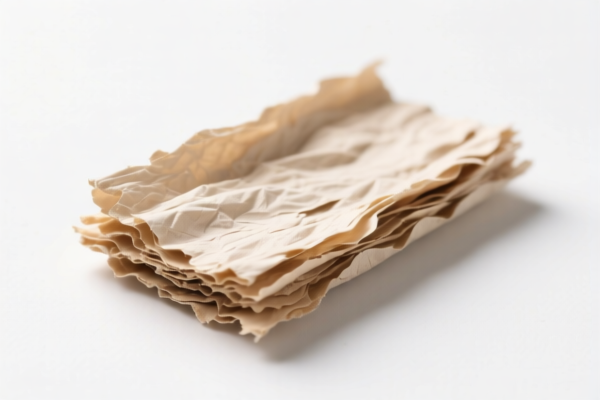
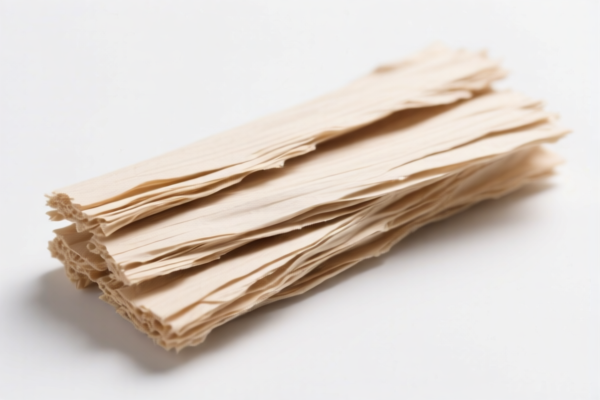
AI分析
🌲 Semi-Bleached Non-Coniferous Wood Pulp
🌐 HS Code Reference & Customs Clearance Guide | 2026 Latest Tariff Analysis | Professional Clearance Strategy
📌 1. Product Definition & Classification: Understanding "Semi-Bleached Non-Coniferous Wood Pulp"
Semi-bleached non-coniferous wood pulp refers to chemical wood pulp derived from deciduous trees (such as eucalyptus, birch, poplar, etc.) that has undergone a partial bleaching process. It is primarily used for packaging papers, tissues, and cardboard. In international trade, accurate classification depends on the chemical process, origin (coniferous vs. non-coniferous), and bleaching degree.
⚠️ Key Distinction Point:
- Non-coniferous: Derived from broad-leaved trees (e.g., Eucalyptus). → Chapter 47, Heading 4703/4704
- Coniferous: Derived from softwoods (e.g., Pine, Spruce). → Chapter 47, Heading 4705 (Sulfite) or 4702 (Sulfate)
- Semi-Bleached: Not fully white; has higher lignin content than fully bleached pulp. → Subheading 4703.2x or 4704.2x
📦 2. HS Code Classification Details (2026 Latest Tariff Authority Comparison)
Based on the provided data, here are the specific HS codes and their justifications for Semi-Bleached Non-Coniferous Wood Pulp:
| HS Code | Product Description | Application Scenario | Key Characteristics |
|---|---|---|---|
4703.29.00.20 |
Semi-bleached non-coniferous chemical wood pulp | Packaging paper manufacturing | Covers material and bleaching degree features |
4703.21.00.20 |
Semi-bleached non-coniferous chemical wood pulp | General chemical pulp trade | Matches semi-bleached chemical pulp characteristics |
4704.29.00.00 |
Semi-bleached non-coniferous chemical wood pulp | Material consistency verification | Material and process are completely consistent |
4705.00.00.00 |
Semi-bleached coniferous sulfate wood pulp | ⚠️ Note: Mismatched Origin | For coniferous (softwood) sulfate pulp |
🔍 Key Reminder:
- 4703.29.00.20 and 4703.21.00.20 are the most accurate for non-coniferous semi-bleached pulp.
- 4704.29.00.00 is also valid if the material/process description aligns perfectly.
- 4705.00.00.00 is for coniferous (softwood) sulfate pulp. If your product is truly non-coniferous, this code is incorrect and should be avoided to prevent customs queries.
💰 3. 2026 Latest Tariff Rate Details (Including Additional Taxes, Policy Surcharges)
✅ Applicable Country: United States (US)
✅ Origin: China (CN)
✅ Effective Date: Current tariffs apply (see details below)
🎯 1. 4703.29.00.20 —— Semi-Bleached Non-Coniferous Chemical Wood Pulp
| Item | Content |
|---|---|
| Base Tariff | 0.0% |
| Section 301 Additional Tariff | +25.0% |
| Section 122 Tariff | +10.0% |
| Total Tariff Rate | 35.0% |
| Tax Calculation | CIF Value × 35% |
| De Minimis Exemption | ❌ Not Eligible (High value commodity) |
| Legal Basis Path | USITC:4703.29.00.20 → Section 301: Footnote 9903.88.01 → Section 122: Trade Act |
📌 Explanation:
- "Base Tariff 0%": Standard MFN rate for chemical wood pulp.
- "Section 301 +25%": Imposed on Chinese goods under the 301 investigation.
- "Section 122 +10%": Additional tariff for national security reasons (steel/aluminum or related materials, sometimes extended).
- Total 35%: High tariff burden. Must be factored into cost calculations.
🎯 2. 4703.21.00.20 —— Semi-Bleached Non-Coniferous Chemical Wood Pulp
| Item | Content |
|---|---|
| Base Tariff | 0.0% |
| Section 301 Additional Tariff | +25.0% |
| Section 122 Tariff | +10.0% |
| Total Tariff Rate | 35.0% |
| Tax Calculation | CIF Value × 35% |
| De Minimis Exemption | ❌ Not Eligible |
| Legal Basis Path | USITC:4703.21.00.20 → Section 301 → Section 122 |
📌 Note:
- Same tariff structure as4703.29.00.20.
- Subheading differences (21vs29) relate to specific pulp types (e.g., kraft vs. others), but both face the same 35% total rate for Chinese origin.
🎯 3. 4704.29.00.00 —— Semi-Bleached Non-Coniferous Chemical Wood Pulp
| Item | Content |
|---|---|
| Base Tariff | 0.0% |
| Section 301 Additional Tariff | +25.0% |
| Section 122 Tariff | +10.0% |
| Total Tariff Rate | 35.0% |
| Tax Calculation | CIF Value × 35% |
| De Minimis Exemption | ❌ Not Eligible |
| Legal Basis Path | USITC:4704.29.00.00 → Section 301 → Section 122 |
📌 Note:
- Heading 4704 is for sulfate (kraft) pulp. If your pulp is indeed sulfate-based, this is a valid code.
- Tariff rate remains 35%.
🎯 4. 4705.00.00.00 —— Semi-Bleached Coniferous Sulfite Wood Pulp
| Item | Content |
|---|---|
| Base Tariff | 0.0% |
| Section 301 Additional Tariff | +25.0% |
| Section 122 Tariff | +10.0% |
| Total Tariff Rate | 35.0% |
| Tax Calculation | CIF Value × 35% |
| De Minimis Exemption | ❌ Not Eligible |
| Legal Basis Path | USITC:4705.00.00.00 → Section 301 → Section 122 |
⚠️ Critical Warning:
- This code is for coniferous (softwood) pulp.
- If you import non-coniferous pulp but use this code, it is a classification error.
- Consequence: Customs may demand reclassification, leading to delays, fines, or back-payment of duties.
- Recommendation: Do not use this code for non-coniferous pulp.
🛠️ 4. Customs Clearance Practical Advice (Battle-Tested Pitfall Avoidance Guide)
✅ 1. Required Documentation Checklist (Non-Negotiable)
| Document | Must Provide | Description |
|---|---|---|
| ✅ Product Specification Sheet | ✔️ | Includes pulping process (kraft/sulfite), origin, bleaching degree |
| ✅ Material Safety Data Sheet (MSDS) | ✔️ | For safe handling during transport |
| ✅ Bill of Lading | ✔️ | Must match invoice details exactly |
| ✅ Commercial Invoice | ✔️ | Clearly state "Semi-Bleached Non-Coniferous Wood Pulp" |
| ✅ Certificate of Origin (CO) | ✔️ | Proof of Chinese origin (triggers 35% tariff) |
| ✅ Packing List | ✔️ | Detail weight, dimensions, and packaging type |
✅ 2. Declaration Tips (Key Mantra)
🔥 "Material Match, Process Clear, HS Code Precise, Tariff Minimized!"
| Scenario | Correct Declaration | Wrong Approach |
|---|---|---|
| Non-Coniferous Pulp | 4703.29.00.20 or 4703.21.00.20 |
Misdeclare as coniferous → Classification error |
| Coniferous Sulfite Pulp | 4705.00.00.00 |
Misdeclare as non-coniferous → Customs rejection |
| Fully Bleached Pulp | Different HS Code (e.g., 4703.11) | Use semi-bleached code → Incorrect tariff |
| Chemical vs. Mechanical | Specify "Chemical" | Omit process type → Risk of reclassification |
✅ 3. Special Case Handling
| Situation | Handling Advice |
|---|---|
| Mixed Pulp (Coniferous + Non-Coniferous) | Declare each type separately with correct HS codes |
| OEM Custom Pulp | Provide customer orders + technical specs to avoid "standard" misclassification |
| Packaging for Export | Ensure no prohibited materials (e.g., untreated wood pallets without IPPC stamp) |
| High-Value Shipment | Consider Advance Ruling to confirm HS code before shipment |
🌍 5. Global Market Clearance Comparison (2026 Latest)
| Country/Region | Recommended HS Code | Tariff Rate | Certification Requirements | Notes |
|---|---|---|---|---|
| 🇺🇸 USA | 4703.29.00.20 |
35% (0% Base + 25% 301 + 10% 122) | None specific | High tariff burden; plan costs accordingly |
| 🇨🇳 China | 4703.29.00.20 |
0-5% (varies) | None | Domestic trade benefits from low tariffs |
| 🇪🇺 EU | 4703.29.00.20 |
0% (if compliant) | REACH, FSC/PEFC (optional) | No additional tariffs for wood pulp |
| 🇯🇵 Japan | 4703.29.00.20 |
0% | JAS (optional) | No tariffs for wood pulp |
| 🇦🇺 Australia | 4703.29.00.20 |
5% | Biosecurity clearance | Check import permits |
📌 Conclusion:
- USA is the most challenging market due to 35% total tariff.
- EU, Japan, Australia offer more favorable tariff environments for wood pulp.
- Supply Chain Strategy: Consider sourcing from non-Chinese origins (e.g., Brazil, Canada) to avoid US tariffs, if possible.
📌 6. Common Errors & Pitfall Avoidance (Lessons Learned)
❌ Error 1: Misclassifying non-coniferous pulp as coniferous (4705.00.00.00)
👉 Consequence: Customs rejection, delay, and potential fines.
Fix: Verify tree species (eucalyptus = non-coniferous).
❌ Error 2: Omitting bleaching degree in description
👉 Consequence: Customs may classify as unbleached (4703.11) or fully bleached (4703.21 vs 4703.11), leading to incorrect tariffs.
Fix: Clearly state "Semi-Bleached" in commercial invoice.
❌ Error 3: Not providing Certificate of Origin
👉 Consequence: Unable to prove Chinese origin, may face higher base tariffs or penalties.
Fix: Always include CO with shipment.
❌ Error 4: Using outdated HS codes
👉 Consequence: Incorrect tariff application.
Fix: Use 2026 HS code list for accuracy.
✅ Correct Declaration Example:
"Semi-Bleached Eucalyptus Chemical Wood Pulp, 4703.29.00.20, CIF Value: $100,000, Origin: China, Tariff: 35% ($35,000)"
🎯 7. Conclusion: Precise Classification Saves Money!
🎯 Remember the Mantra:
🔹 "Non-Coniferous = 4703, Coniferous = 4705, Semi-Bleached = 4703.2x"
🔹 "35% Total Tariff for US, Plan Costs Early!"
🔹 "Correct HS Code = Smooth Clearance = Profit Protection!"
📌 Tips:
- If your pulp is from Brazil, Canada, or Vietnam, US tariffs may be 0% (no Section 301).
- Consider Advance Ruling from US Customs to confirm HS code for large shipments.
📣 Take Action Now:
📞 Contact a professional customs broker + Provide product specs + Apply for Advance Ruling
🚀 Ensure your wood pulp clears smoothly, reduces costs, and maximizes profit!
✨ Professional clearance starts with accurate classification!
💼 Every dollar saved on tariffs is pure profit!
用户评价
关于 HS 编码归类
协调制度(HS)是由世界海关组织(WCO)制定的国际贸易商品分类标准。全球 200 多个国家采用 HS 系统作为海关关税、贸易统计和进出口监管的基础。
每个 HS 编码遵循以下层级结构:
- 章(2 位)——商品大类(例如:第 84 章:机器和机械设备)
- 品目(4 位)——章内的更具体分类
- 子目(6 位)——国际通用细分,所有 WCO 成员国统一使用
- 本国细分(8-10 位)——各国自行扩展的细分编码,如美国 HTSUS 10 位编码
正确的 HS 编码归类对于顺利通关、准确缴纳关税和遵守贸易法规至关重要。错误归类可能导致海关延误、多缴关税或罚款。
从CN进口到US时,适用的关税税率可能包括:
- 最惠国(MFN)税率——适用于 WTO 成员国的标准关税税率
- 普通税率——适用于无贸易协定国家
- 贸易救济关税——附加关税,如 301 条款(反倾销)、232 条款(国家安全)或反补贴税
本页内容仅供参考。如需正式归类,请咨询当地海关或持牌报关代理。