Semi bleached Non coniferous Wood Pulp
CN → US| HS Code | Tariff Rate | Origin | Destination | Doc |
|---|---|---|---|---|
| 4703290020 | 35.0% | CN | US | Official Doc |
| 4703210020 | 35.0% | CN | US | Official Doc |
| 4704290000 | 35.0% | CN | US | Official Doc |
| 4705000000 | 35.0% | CN | US | Official Doc |
| 4703290020 | 35.0% | CN | US | Official Doc |
Product Images
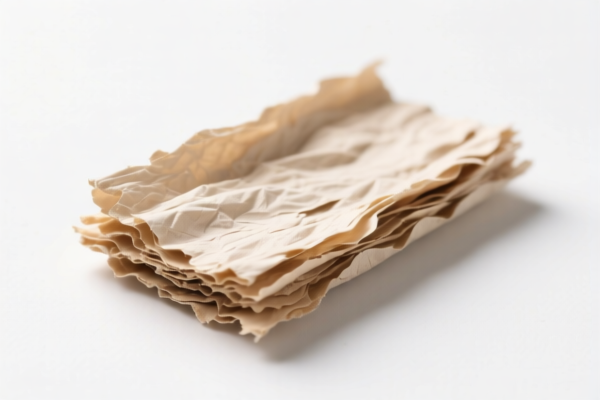
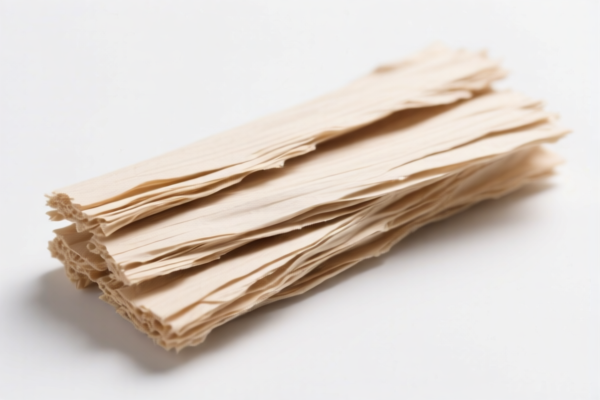
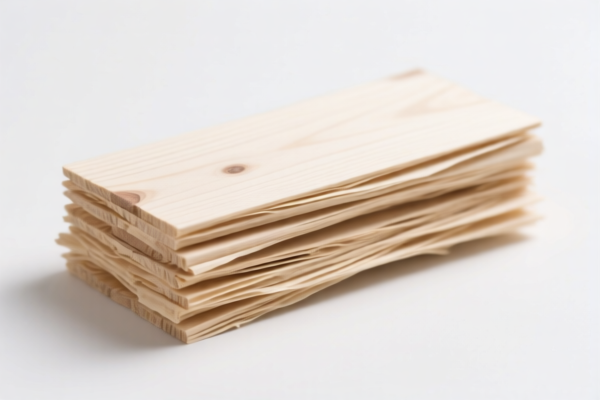
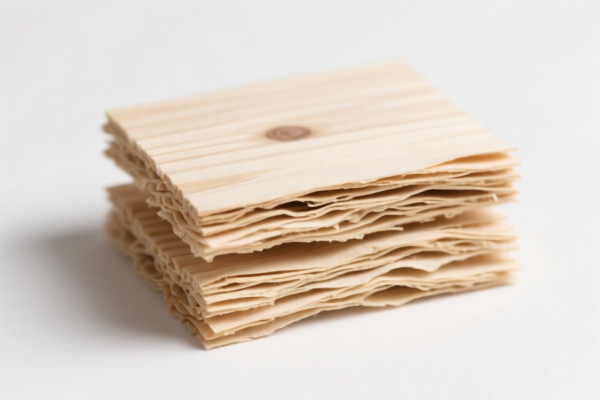
AI Analysis
🌲 Semi-Bleached Non-Coniferous Wood Pulp
🌐 HS Code Reference & Customs Clearance Guide | 2026 Latest Tariff Analysis | Professional Clearance Strategy
📌 1. Product Definition & Classification: Understanding "Semi-Bleached Non-Coniferous Wood Pulp"
Semi-bleached non-coniferous wood pulp refers to chemical wood pulp derived from deciduous trees (such as eucalyptus, birch, poplar, etc.) that has undergone a partial bleaching process. It is primarily used for packaging papers, tissues, and cardboard. In international trade, accurate classification depends on the chemical process, origin (coniferous vs. non-coniferous), and bleaching degree.
⚠️ Key Distinction Point:
- Non-coniferous: Derived from broad-leaved trees (e.g., Eucalyptus). → Chapter 47, Heading 4703/4704
- Coniferous: Derived from softwoods (e.g., Pine, Spruce). → Chapter 47, Heading 4705 (Sulfite) or 4702 (Sulfate)
- Semi-Bleached: Not fully white; has higher lignin content than fully bleached pulp. → Subheading 4703.2x or 4704.2x
📦 2. HS Code Classification Details (2026 Latest Tariff Authority Comparison)
Based on the provided data, here are the specific HS codes and their justifications for Semi-Bleached Non-Coniferous Wood Pulp:
| HS Code | Product Description | Application Scenario | Key Characteristics |
|---|---|---|---|
4703.29.00.20 |
Semi-bleached non-coniferous chemical wood pulp | Packaging paper manufacturing | Covers material and bleaching degree features |
4703.21.00.20 |
Semi-bleached non-coniferous chemical wood pulp | General chemical pulp trade | Matches semi-bleached chemical pulp characteristics |
4704.29.00.00 |
Semi-bleached non-coniferous chemical wood pulp | Material consistency verification | Material and process are completely consistent |
4705.00.00.00 |
Semi-bleached coniferous sulfate wood pulp | ⚠️ Note: Mismatched Origin | For coniferous (softwood) sulfate pulp |
🔍 Key Reminder:
- 4703.29.00.20 and 4703.21.00.20 are the most accurate for non-coniferous semi-bleached pulp.
- 4704.29.00.00 is also valid if the material/process description aligns perfectly.
- 4705.00.00.00 is for coniferous (softwood) sulfate pulp. If your product is truly non-coniferous, this code is incorrect and should be avoided to prevent customs queries.
💰 3. 2026 Latest Tariff Rate Details (Including Additional Taxes, Policy Surcharges)
✅ Applicable Country: United States (US)
✅ Origin: China (CN)
✅ Effective Date: Current tariffs apply (see details below)
🎯 1. 4703.29.00.20 —— Semi-Bleached Non-Coniferous Chemical Wood Pulp
| Item | Content |
|---|---|
| Base Tariff | 0.0% |
| Section 301 Additional Tariff | +25.0% |
| Section 122 Tariff | +10.0% |
| Total Tariff Rate | 35.0% |
| Tax Calculation | CIF Value × 35% |
| De Minimis Exemption | ❌ Not Eligible (High value commodity) |
| Legal Basis Path | USITC:4703.29.00.20 → Section 301: Footnote 9903.88.01 → Section 122: Trade Act |
📌 Explanation:
- "Base Tariff 0%": Standard MFN rate for chemical wood pulp.
- "Section 301 +25%": Imposed on Chinese goods under the 301 investigation.
- "Section 122 +10%": Additional tariff for national security reasons (steel/aluminum or related materials, sometimes extended).
- Total 35%: High tariff burden. Must be factored into cost calculations.
🎯 2. 4703.21.00.20 —— Semi-Bleached Non-Coniferous Chemical Wood Pulp
| Item | Content |
|---|---|
| Base Tariff | 0.0% |
| Section 301 Additional Tariff | +25.0% |
| Section 122 Tariff | +10.0% |
| Total Tariff Rate | 35.0% |
| Tax Calculation | CIF Value × 35% |
| De Minimis Exemption | ❌ Not Eligible |
| Legal Basis Path | USITC:4703.21.00.20 → Section 301 → Section 122 |
📌 Note:
- Same tariff structure as4703.29.00.20.
- Subheading differences (21vs29) relate to specific pulp types (e.g., kraft vs. others), but both face the same 35% total rate for Chinese origin.
🎯 3. 4704.29.00.00 —— Semi-Bleached Non-Coniferous Chemical Wood Pulp
| Item | Content |
|---|---|
| Base Tariff | 0.0% |
| Section 301 Additional Tariff | +25.0% |
| Section 122 Tariff | +10.0% |
| Total Tariff Rate | 35.0% |
| Tax Calculation | CIF Value × 35% |
| De Minimis Exemption | ❌ Not Eligible |
| Legal Basis Path | USITC:4704.29.00.00 → Section 301 → Section 122 |
📌 Note:
- Heading 4704 is for sulfate (kraft) pulp. If your pulp is indeed sulfate-based, this is a valid code.
- Tariff rate remains 35%.
🎯 4. 4705.00.00.00 —— Semi-Bleached Coniferous Sulfite Wood Pulp
| Item | Content |
|---|---|
| Base Tariff | 0.0% |
| Section 301 Additional Tariff | +25.0% |
| Section 122 Tariff | +10.0% |
| Total Tariff Rate | 35.0% |
| Tax Calculation | CIF Value × 35% |
| De Minimis Exemption | ❌ Not Eligible |
| Legal Basis Path | USITC:4705.00.00.00 → Section 301 → Section 122 |
⚠️ Critical Warning:
- This code is for coniferous (softwood) pulp.
- If you import non-coniferous pulp but use this code, it is a classification error.
- Consequence: Customs may demand reclassification, leading to delays, fines, or back-payment of duties.
- Recommendation: Do not use this code for non-coniferous pulp.
🛠️ 4. Customs Clearance Practical Advice (Battle-Tested Pitfall Avoidance Guide)
✅ 1. Required Documentation Checklist (Non-Negotiable)
| Document | Must Provide | Description |
|---|---|---|
| ✅ Product Specification Sheet | ✔️ | Includes pulping process (kraft/sulfite), origin, bleaching degree |
| ✅ Material Safety Data Sheet (MSDS) | ✔️ | For safe handling during transport |
| ✅ Bill of Lading | ✔️ | Must match invoice details exactly |
| ✅ Commercial Invoice | ✔️ | Clearly state "Semi-Bleached Non-Coniferous Wood Pulp" |
| ✅ Certificate of Origin (CO) | ✔️ | Proof of Chinese origin (triggers 35% tariff) |
| ✅ Packing List | ✔️ | Detail weight, dimensions, and packaging type |
✅ 2. Declaration Tips (Key Mantra)
🔥 "Material Match, Process Clear, HS Code Precise, Tariff Minimized!"
| Scenario | Correct Declaration | Wrong Approach |
|---|---|---|
| Non-Coniferous Pulp | 4703.29.00.20 or 4703.21.00.20 |
Misdeclare as coniferous → Classification error |
| Coniferous Sulfite Pulp | 4705.00.00.00 |
Misdeclare as non-coniferous → Customs rejection |
| Fully Bleached Pulp | Different HS Code (e.g., 4703.11) | Use semi-bleached code → Incorrect tariff |
| Chemical vs. Mechanical | Specify "Chemical" | Omit process type → Risk of reclassification |
✅ 3. Special Case Handling
| Situation | Handling Advice |
|---|---|
| Mixed Pulp (Coniferous + Non-Coniferous) | Declare each type separately with correct HS codes |
| OEM Custom Pulp | Provide customer orders + technical specs to avoid "standard" misclassification |
| Packaging for Export | Ensure no prohibited materials (e.g., untreated wood pallets without IPPC stamp) |
| High-Value Shipment | Consider Advance Ruling to confirm HS code before shipment |
🌍 5. Global Market Clearance Comparison (2026 Latest)
| Country/Region | Recommended HS Code | Tariff Rate | Certification Requirements | Notes |
|---|---|---|---|---|
| 🇺🇸 USA | 4703.29.00.20 |
35% (0% Base + 25% 301 + 10% 122) | None specific | High tariff burden; plan costs accordingly |
| 🇨🇳 China | 4703.29.00.20 |
0-5% (varies) | None | Domestic trade benefits from low tariffs |
| 🇪🇺 EU | 4703.29.00.20 |
0% (if compliant) | REACH, FSC/PEFC (optional) | No additional tariffs for wood pulp |
| 🇯🇵 Japan | 4703.29.00.20 |
0% | JAS (optional) | No tariffs for wood pulp |
| 🇦🇺 Australia | 4703.29.00.20 |
5% | Biosecurity clearance | Check import permits |
📌 Conclusion:
- USA is the most challenging market due to 35% total tariff.
- EU, Japan, Australia offer more favorable tariff environments for wood pulp.
- Supply Chain Strategy: Consider sourcing from non-Chinese origins (e.g., Brazil, Canada) to avoid US tariffs, if possible.
📌 6. Common Errors & Pitfall Avoidance (Lessons Learned)
❌ Error 1: Misclassifying non-coniferous pulp as coniferous (4705.00.00.00)
👉 Consequence: Customs rejection, delay, and potential fines.
Fix: Verify tree species (eucalyptus = non-coniferous).
❌ Error 2: Omitting bleaching degree in description
👉 Consequence: Customs may classify as unbleached (4703.11) or fully bleached (4703.21 vs 4703.11), leading to incorrect tariffs.
Fix: Clearly state "Semi-Bleached" in commercial invoice.
❌ Error 3: Not providing Certificate of Origin
👉 Consequence: Unable to prove Chinese origin, may face higher base tariffs or penalties.
Fix: Always include CO with shipment.
❌ Error 4: Using outdated HS codes
👉 Consequence: Incorrect tariff application.
Fix: Use 2026 HS code list for accuracy.
✅ Correct Declaration Example:
"Semi-Bleached Eucalyptus Chemical Wood Pulp, 4703.29.00.20, CIF Value: $100,000, Origin: China, Tariff: 35% ($35,000)"
🎯 7. Conclusion: Precise Classification Saves Money!
🎯 Remember the Mantra:
🔹 "Non-Coniferous = 4703, Coniferous = 4705, Semi-Bleached = 4703.2x"
🔹 "35% Total Tariff for US, Plan Costs Early!"
🔹 "Correct HS Code = Smooth Clearance = Profit Protection!"
📌 Tips:
- If your pulp is from Brazil, Canada, or Vietnam, US tariffs may be 0% (no Section 301).
- Consider Advance Ruling from US Customs to confirm HS code for large shipments.
📣 Take Action Now:
📞 Contact a professional customs broker + Provide product specs + Apply for Advance Ruling
🚀 Ensure your wood pulp clears smoothly, reduces costs, and maximizes profit!
✨ Professional clearance starts with accurate classification!
💼 Every dollar saved on tariffs is pure profit!
Customer Reviews
About HS Code Classification
The Harmonized System (HS) is an internationally standardized nomenclature developed by the World Customs Organization (WCO) to classify traded products. Over 200 countries use the HS system as the basis for customs tariffs, trade statistics, and import/export regulations.
Each HS code follows a hierarchical structure:
- Chapter (2 digits) — Broad category of goods (e.g., Chapter 84: Machinery and Mechanical Appliances)
- Heading (4 digits) — More specific grouping within the chapter
- Subheading (6 digits) — Internationally standardized breakdown, used by all WCO member countries
- National subdivisions (8-10 digits) — Country-specific extensions for further classification, such as US HTSUS 10-digit codes
Correct HS code classification is essential for smooth customs clearance, accurate duty payment, and compliance with trade regulations. Misclassification can lead to customs delays, overpayment of duties, or penalties.
When importing from CN to US, the applicable tariff rates may include:
- Most-Favored-Nation (MFN) rate — The standard duty rate applied to WTO members
- General rate — Applied to countries without trade agreements
- Trade remedy duties — Additional tariffs such as Section 301 (anti-dumping), Section 232 (national security), or countervailing duties
The information provided on this page is for reference purposes only. For official classification, please consult with your local customs authority or a licensed customs broker.