Sheepskin (Hairless)
CN → US| HS编码 | 关税税率 | 原产国 | 目的国 | 文档 |
|---|---|---|---|---|
| 4105109000 | 12.0% | CN | US | 官方文档 |
| 4105300000 | 12.0% | CN | US | 官方文档 |
| 4112003060 | 12.0% | CN | US | 官方文档 |
| 4112003030 | 12.0% | CN | US | 官方文档 |
| 4102291010 | 17.5% | CN | US | 官方文档 |
商品图片
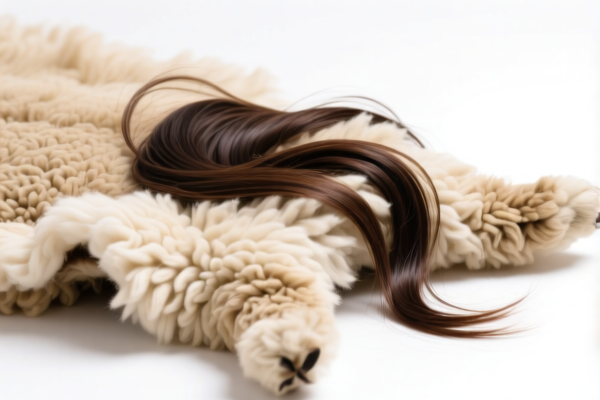


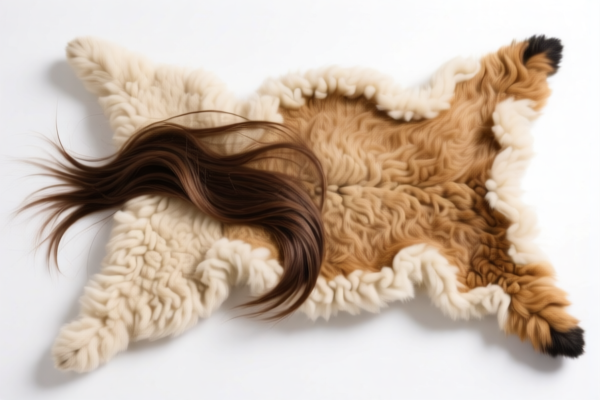
AI分析
🐑 Sheepskin (Hairless) / Raw Sheepskins
🌐 HS Code Reference & Clearance Guide | 2026 Latest Tariff Analysis | Professional Customs Strategy 📌 I. Product Definition & Classification: Do You Truly Understand "Sheepskin"?
Sheepskin in international trade is strictly divided based on its processing state: 1. Raw/Untanned Sheepskins: Skins removed from the animal, possibly salted or dried, but not chemically tanned. 2. Tanned Sheepskins: Skins that have undergone the tanning process to become durable leather. Note: In this context, "Hairless" (Without Hair) specifies that the wool/hair has been removed, leaving the raw hide or tanned leather.
⚠️ Key Distinction: - If the skin is untanned (raw salted/dried) → It falls under Chapter 41, Heading 4102. - If the skin is tanned (processed leather) → It falls under Chapter 41, Heading 4105 or 4112.
📦 II. HS Code Classification Details (2026 Latest Tariff Authority对照)
Based on the provided <DATA>, here is the precise breakdown for Sheepskin (Hairless):
| HS Code | Product Description | Processing State | Key Characteristics |
|---|---|---|---|
4102.29.10.10 |
Sheepskins, without wool (Raw/Untanned) | Untanned | Raw, salted, or dried hides; hair removed. |
4102.29.10.90 |
Sheepskins, without wool (Raw/Untanned) | Untanned | Raw, salted, or dried hides; hair removed. |
4105.10.90.00 |
Tanned Sheepskin Leather (Hairless) | Tanned | Processed leather; hair removed; specific sub-category. |
4105.30.00.00 |
Tanned Sheepskin Leather (Hairless) | Tanned | Processed leather; hair removed; general category. |
4112.00.30.30 |
Tanned Sheepskin Leather (Hairless) | Tanned | Processed leather; hair removed; specific sub-category. |
4112.00.30.60 |
Tanned Sheepskin Leather (Hairless) | Tanned | Processed leather; hair removed; specific sub-category. |
🔍 Critical Note: - Raw vs. Tanned: Misclassifying raw skins as tanned (or vice versa) leads to significant duty discrepancies. - "Hairless": All listed HS codes specify "without wool/hair." If the skin still has hair (shearling), different codes (e.g., 4101 or 4102 specific shearling codes) might apply, but they are not in the provided
<DATA>.
💰 III. 2026 Latest Tariff Rate Details (Including Surcharges & Policy Add-ons)
✅ Applicable Country: United States (US) ✅ Country of Origin: China (CN) (Implied by "122 Clause" and specific surcharge structure in DATA) ✅ Effective Time: Current regulations apply.
🎯 1. Raw Sheepskins (Untanned) – HS Codes 4102.29.10.10 & 4102.29.10.90
| Item | Content |
|---|---|
| Base Tariff | 0.0% (ad valorem) |
| Section 301 / Additional Surcharge | +7.5% |
| "122 Clause" Surcharge | +10.0% |
| Total Tariff Rate | 17.5% |
| Tax Calculation | CIF Value × 17.5% |
| De Minimis Eligibility | ❌ No (High duty rate typically excludes de minimis benefits) |
| Legal Basis Path | Base Rate 0% + Section 301 (7.5%) + "122 Clause" (10%) |
📌 Explanation: - Although the base tariff for raw sheepskins is 0%, the 7.5% Section 301 surcharge and the 10% "122 Clause" surcharge are critical. - Total Cost Impact: You pay 17.5% of the CIF value. This is significantly higher than tanned leather in some cases.
🎯 2. Tanned Sheepskin Leather (Hairless) – HS Codes 4105.10.90.00, 4105.30.00.00, 4112.00.30.30, 4112.00.30.60
| Item | Content |
|---|---|
| Base Tariff | 2.0% (ad valorem) |
| Section 301 / Additional Surcharge | 0.0% |
| "122 Clause" Surcharge | +10.0% |
| Total Tariff Rate | 12.0% |
| Tax Calculation | CIF Value × 12.0% |
| De Minimis Eligibility | ❌ No |
| Legal Basis Path | Base Rate 2% + "122 Clause" (10%) |
📌 Explanation: - Tanned sheepskin leather carries a 2% base tariff. - There is no 7.5% Section 301 surcharge for these specific tanned leather codes (unlike the raw skins). - However, the "122 Clause" 10% surcharge still applies. - Total Cost Impact: 12%. This is 5.5 percentage points lower than raw sheepskins.
🛠️ IV. Customs Clearance Practical Advice (Avoiding Pitfalls)
✅ 1. Documentation Checklist (Mandatory)
| Document | Required | Description |
|---|---|---|
| ✅ Commercial Invoice | ✔️ | Must clearly state: "Sheepskin, Hairless, [Tanned/Untanned]", Value, Country of Origin. |
| ✅ Packing List | ✔️ | Detail weight, number of skins, and packaging type. |
| ✅ Certificate of Origin (CO) | ✔️ | Crucial for proving Chinese origin to apply "122 Clause" correctly. |
| ✅ Processing Certificate | ✔️ | Critical: Must confirm if skins are Tanned or Untanned. A lab test or mill certificate may be required if disputed. |
| ✅ Product Photos | ✔️ | Show texture, lack of hair, and any markings. |
✅ 2. Declaration Strategy (Key Mnemonics)
🔥 "Tanned is Cheaper, Raw is More Expensive! Declare Processing State Clearly!"
| Scenario | Correct HS Code | Total Rate | Error Consequence |
|---|---|---|---|
| Tanned Leather (Finished/Purchased as leather) | 4105.10.90.00 / 4105.30.00.00 / 4112.00.30.30 / 4112.00.30.60 |
12.0% | Misdeclaring as Raw → Pay 17.5% (Overpay!). Misdeclaring as Non-China → Risk of penalty. |
| Raw Sheepskins (Salted/Dried, Hair Removed) | 4102.29.10.10 / 4102.29.10.90 |
17.5% | Misdeclaring as Tanned → Severe Penalty (Underpayment + Fraud Risk). Customs will reject if no tanning proof. |
✅ 3. Special Considerations
| Situation | Handling Advice |
|---|---|
| "122 Clause" Ambiguity | Ensure the declaration explicitly cites the "122 Clause" if applicable. Incorrect omission may lead to incorrect duty calculation. |
| Mixing Tanned & Raw | Never mix raw and tanned skins in one shipment unless declared separately. Mixed declarations cause delays and re-inspection. |
| Hair Residue | If "Hairless" is disputed (hair found), Customs may reclassify to shearling codes, leading to different duties. Ensure "Hairless" is accurate. |
| Origin Verification | Since the surcharges (122 Clause) are origin-specific, ensure the CO matches the origin stated in the declaration. |
🌍 V. Market Comparison (2026 Latest)
| Market | Recommended HS Code (Tanned) | Base Rate | Surcharge (China) | Total Rate | Note |
|---|---|---|---|---|---|
| 🇺🇸 USA | 4105.30.00.00 etc. |
2.0% | +10.0% (122 Clause) | 12.0% | No Section 301 for these codes, but 122 Clause applies. |
| 🇺🇸 USA | 4102.29.10.10 (Raw) |
0.0% | +7.5% (301) +10.0% (122) | 17.5% | Higher duty for raw skins. |
| 🇪🇺 EU | 4105 / 4112 |
Varies | Varies | Varies | EU does not apply "122 Clause". Check MFN rates. |
| 🇨🇳 China (Import) | 4105 / 4112 |
5-8% | None | ~8% | Import into China has different structure. |
📌 Conclusion: - For US Imports from China: Tanned sheepskin leather is more cost-effective (12%) than raw sheepskins (17.5%). - 122 Clause is Universal: It applies to both raw and tanned sheepskin in the provided dataset.
📌 VI. Common Errors & Pitfalls (Lessons Learned)
❌ Error 1: Declaring "Sheepskin" without specifying "Tanned" or "Raw". 👉 Consequence: Customs will detain shipment for classification verification → Delays + Storage Fees.
❌ Error 2: Assuming all Chinese sheepskin attracts the 7.5% Section 301 surcharge.
👉 Consequence: For Tanned leather (4105/4112), there is no 7.5%. Applying it incorrectly leads to overpayment. For Raw (4102), the 7.5% is applied. Know the difference!
❌ Error 3: Ignoring the "122 Clause". 👉 Consequence: Underpayment of 10%. Result: Penalties, Back Duties, and Potential Audits.
✅ Correct Practice:
"Tanned Sheepskin Leather, Hairless, China Origin, HS Code 4105.30.00.00, Subject to 122 Clause Surcharge"
🎯 VII. Conclusion: Precision in Classification Saves Money!
🎯 Remember the Golden Rule:
🔹 "Tanned Leather = 12% (Base 2% + 122 10%)" 🔹 "Raw Skins = 17.5% (Base 0% + 301 7.5% + 122 10%)" 🔹 "Always Declare Processing State: Tanned vs. Raw!"
📌 Pro Tip: If you are importing large volumes, consider applying for a Binding Ruling from U.S. Customs and Border Protection (CBP) to confirm the HS Code and surcharge applicability. This provides legal certainty and avoids surprise duties.
📣 Immediate Action:
📞 Verify with your supplier: "Is the sheepskin tanned or raw?" 📄 Ensure the Certificate of Origin is valid. 🧾 Accurately declare the HS Code and Processing State on the Commercial Invoice.
✨ Professional Clearance, Precise Classification, Maximized Profit! 💼 Your Duty Cost is Determined by the First Word of Your Declaration!
用户评价
关于 HS 编码归类
协调制度(HS)是由世界海关组织(WCO)制定的国际贸易商品分类标准。全球 200 多个国家采用 HS 系统作为海关关税、贸易统计和进出口监管的基础。
每个 HS 编码遵循以下层级结构:
- 章(2 位)——商品大类(例如:第 84 章:机器和机械设备)
- 品目(4 位)——章内的更具体分类
- 子目(6 位)——国际通用细分,所有 WCO 成员国统一使用
- 本国细分(8-10 位)——各国自行扩展的细分编码,如美国 HTSUS 10 位编码
正确的 HS 编码归类对于顺利通关、准确缴纳关税和遵守贸易法规至关重要。错误归类可能导致海关延误、多缴关税或罚款。
从CN进口到US时,适用的关税税率可能包括:
- 最惠国(MFN)税率——适用于 WTO 成员国的标准关税税率
- 普通税率——适用于无贸易协定国家
- 贸易救济关税——附加关税,如 301 条款(反倾销)、232 条款(国家安全)或反补贴税
本页内容仅供参考。如需正式归类,请咨询当地海关或持牌报关代理。