Sheepskin (Hairless)
CN → US| HS Code | Tariff Rate | Origin | Destination | Doc |
|---|---|---|---|---|
| 4105109000 | 12.0% | CN | US | Official Doc |
| 4105300000 | 12.0% | CN | US | Official Doc |
| 4112003060 | 12.0% | CN | US | Official Doc |
| 4112003030 | 12.0% | CN | US | Official Doc |
| 4102291010 | 17.5% | CN | US | Official Doc |
Product Images



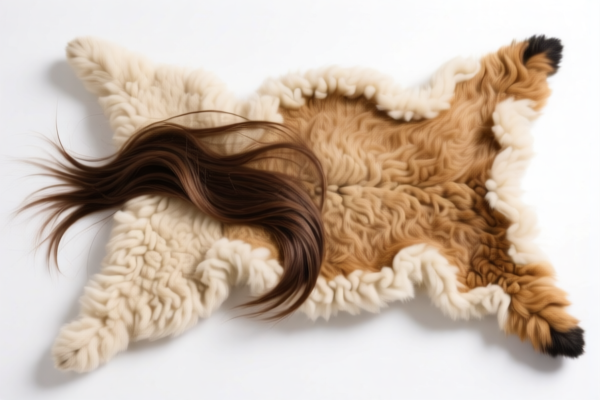
AI Analysis
🐑 Sheepskin (Hairless) / Raw Sheepskins
🌐 HS Code Reference & Clearance Guide | 2026 Latest Tariff Analysis | Professional Customs Strategy 📌 I. Product Definition & Classification: Do You Truly Understand "Sheepskin"?
Sheepskin in international trade is strictly divided based on its processing state: 1. Raw/Untanned Sheepskins: Skins removed from the animal, possibly salted or dried, but not chemically tanned. 2. Tanned Sheepskins: Skins that have undergone the tanning process to become durable leather. Note: In this context, "Hairless" (Without Hair) specifies that the wool/hair has been removed, leaving the raw hide or tanned leather.
⚠️ Key Distinction: - If the skin is untanned (raw salted/dried) → It falls under Chapter 41, Heading 4102. - If the skin is tanned (processed leather) → It falls under Chapter 41, Heading 4105 or 4112.
📦 II. HS Code Classification Details (2026 Latest Tariff Authority对照)
Based on the provided <DATA>, here is the precise breakdown for Sheepskin (Hairless):
| HS Code | Product Description | Processing State | Key Characteristics |
|---|---|---|---|
4102.29.10.10 |
Sheepskins, without wool (Raw/Untanned) | Untanned | Raw, salted, or dried hides; hair removed. |
4102.29.10.90 |
Sheepskins, without wool (Raw/Untanned) | Untanned | Raw, salted, or dried hides; hair removed. |
4105.10.90.00 |
Tanned Sheepskin Leather (Hairless) | Tanned | Processed leather; hair removed; specific sub-category. |
4105.30.00.00 |
Tanned Sheepskin Leather (Hairless) | Tanned | Processed leather; hair removed; general category. |
4112.00.30.30 |
Tanned Sheepskin Leather (Hairless) | Tanned | Processed leather; hair removed; specific sub-category. |
4112.00.30.60 |
Tanned Sheepskin Leather (Hairless) | Tanned | Processed leather; hair removed; specific sub-category. |
🔍 Critical Note: - Raw vs. Tanned: Misclassifying raw skins as tanned (or vice versa) leads to significant duty discrepancies. - "Hairless": All listed HS codes specify "without wool/hair." If the skin still has hair (shearling), different codes (e.g., 4101 or 4102 specific shearling codes) might apply, but they are not in the provided
<DATA>.
💰 III. 2026 Latest Tariff Rate Details (Including Surcharges & Policy Add-ons)
✅ Applicable Country: United States (US) ✅ Country of Origin: China (CN) (Implied by "122 Clause" and specific surcharge structure in DATA) ✅ Effective Time: Current regulations apply.
🎯 1. Raw Sheepskins (Untanned) – HS Codes 4102.29.10.10 & 4102.29.10.90
| Item | Content |
|---|---|
| Base Tariff | 0.0% (ad valorem) |
| Section 301 / Additional Surcharge | +7.5% |
| "122 Clause" Surcharge | +10.0% |
| Total Tariff Rate | 17.5% |
| Tax Calculation | CIF Value × 17.5% |
| De Minimis Eligibility | ❌ No (High duty rate typically excludes de minimis benefits) |
| Legal Basis Path | Base Rate 0% + Section 301 (7.5%) + "122 Clause" (10%) |
📌 Explanation: - Although the base tariff for raw sheepskins is 0%, the 7.5% Section 301 surcharge and the 10% "122 Clause" surcharge are critical. - Total Cost Impact: You pay 17.5% of the CIF value. This is significantly higher than tanned leather in some cases.
🎯 2. Tanned Sheepskin Leather (Hairless) – HS Codes 4105.10.90.00, 4105.30.00.00, 4112.00.30.30, 4112.00.30.60
| Item | Content |
|---|---|
| Base Tariff | 2.0% (ad valorem) |
| Section 301 / Additional Surcharge | 0.0% |
| "122 Clause" Surcharge | +10.0% |
| Total Tariff Rate | 12.0% |
| Tax Calculation | CIF Value × 12.0% |
| De Minimis Eligibility | ❌ No |
| Legal Basis Path | Base Rate 2% + "122 Clause" (10%) |
📌 Explanation: - Tanned sheepskin leather carries a 2% base tariff. - There is no 7.5% Section 301 surcharge for these specific tanned leather codes (unlike the raw skins). - However, the "122 Clause" 10% surcharge still applies. - Total Cost Impact: 12%. This is 5.5 percentage points lower than raw sheepskins.
🛠️ IV. Customs Clearance Practical Advice (Avoiding Pitfalls)
✅ 1. Documentation Checklist (Mandatory)
| Document | Required | Description |
|---|---|---|
| ✅ Commercial Invoice | ✔️ | Must clearly state: "Sheepskin, Hairless, [Tanned/Untanned]", Value, Country of Origin. |
| ✅ Packing List | ✔️ | Detail weight, number of skins, and packaging type. |
| ✅ Certificate of Origin (CO) | ✔️ | Crucial for proving Chinese origin to apply "122 Clause" correctly. |
| ✅ Processing Certificate | ✔️ | Critical: Must confirm if skins are Tanned or Untanned. A lab test or mill certificate may be required if disputed. |
| ✅ Product Photos | ✔️ | Show texture, lack of hair, and any markings. |
✅ 2. Declaration Strategy (Key Mnemonics)
🔥 "Tanned is Cheaper, Raw is More Expensive! Declare Processing State Clearly!"
| Scenario | Correct HS Code | Total Rate | Error Consequence |
|---|---|---|---|
| Tanned Leather (Finished/Purchased as leather) | 4105.10.90.00 / 4105.30.00.00 / 4112.00.30.30 / 4112.00.30.60 |
12.0% | Misdeclaring as Raw → Pay 17.5% (Overpay!). Misdeclaring as Non-China → Risk of penalty. |
| Raw Sheepskins (Salted/Dried, Hair Removed) | 4102.29.10.10 / 4102.29.10.90 |
17.5% | Misdeclaring as Tanned → Severe Penalty (Underpayment + Fraud Risk). Customs will reject if no tanning proof. |
✅ 3. Special Considerations
| Situation | Handling Advice |
|---|---|
| "122 Clause" Ambiguity | Ensure the declaration explicitly cites the "122 Clause" if applicable. Incorrect omission may lead to incorrect duty calculation. |
| Mixing Tanned & Raw | Never mix raw and tanned skins in one shipment unless declared separately. Mixed declarations cause delays and re-inspection. |
| Hair Residue | If "Hairless" is disputed (hair found), Customs may reclassify to shearling codes, leading to different duties. Ensure "Hairless" is accurate. |
| Origin Verification | Since the surcharges (122 Clause) are origin-specific, ensure the CO matches the origin stated in the declaration. |
🌍 V. Market Comparison (2026 Latest)
| Market | Recommended HS Code (Tanned) | Base Rate | Surcharge (China) | Total Rate | Note |
|---|---|---|---|---|---|
| 🇺🇸 USA | 4105.30.00.00 etc. |
2.0% | +10.0% (122 Clause) | 12.0% | No Section 301 for these codes, but 122 Clause applies. |
| 🇺🇸 USA | 4102.29.10.10 (Raw) |
0.0% | +7.5% (301) +10.0% (122) | 17.5% | Higher duty for raw skins. |
| 🇪🇺 EU | 4105 / 4112 |
Varies | Varies | Varies | EU does not apply "122 Clause". Check MFN rates. |
| 🇨🇳 China (Import) | 4105 / 4112 |
5-8% | None | ~8% | Import into China has different structure. |
📌 Conclusion: - For US Imports from China: Tanned sheepskin leather is more cost-effective (12%) than raw sheepskins (17.5%). - 122 Clause is Universal: It applies to both raw and tanned sheepskin in the provided dataset.
📌 VI. Common Errors & Pitfalls (Lessons Learned)
❌ Error 1: Declaring "Sheepskin" without specifying "Tanned" or "Raw". 👉 Consequence: Customs will detain shipment for classification verification → Delays + Storage Fees.
❌ Error 2: Assuming all Chinese sheepskin attracts the 7.5% Section 301 surcharge.
👉 Consequence: For Tanned leather (4105/4112), there is no 7.5%. Applying it incorrectly leads to overpayment. For Raw (4102), the 7.5% is applied. Know the difference!
❌ Error 3: Ignoring the "122 Clause". 👉 Consequence: Underpayment of 10%. Result: Penalties, Back Duties, and Potential Audits.
✅ Correct Practice:
"Tanned Sheepskin Leather, Hairless, China Origin, HS Code 4105.30.00.00, Subject to 122 Clause Surcharge"
🎯 VII. Conclusion: Precision in Classification Saves Money!
🎯 Remember the Golden Rule:
🔹 "Tanned Leather = 12% (Base 2% + 122 10%)" 🔹 "Raw Skins = 17.5% (Base 0% + 301 7.5% + 122 10%)" 🔹 "Always Declare Processing State: Tanned vs. Raw!"
📌 Pro Tip: If you are importing large volumes, consider applying for a Binding Ruling from U.S. Customs and Border Protection (CBP) to confirm the HS Code and surcharge applicability. This provides legal certainty and avoids surprise duties.
📣 Immediate Action:
📞 Verify with your supplier: "Is the sheepskin tanned or raw?" 📄 Ensure the Certificate of Origin is valid. 🧾 Accurately declare the HS Code and Processing State on the Commercial Invoice.
✨ Professional Clearance, Precise Classification, Maximized Profit! 💼 Your Duty Cost is Determined by the First Word of Your Declaration!
Customer Reviews
About HS Code Classification
The Harmonized System (HS) is an internationally standardized nomenclature developed by the World Customs Organization (WCO) to classify traded products. Over 200 countries use the HS system as the basis for customs tariffs, trade statistics, and import/export regulations.
Each HS code follows a hierarchical structure:
- Chapter (2 digits) — Broad category of goods (e.g., Chapter 84: Machinery and Mechanical Appliances)
- Heading (4 digits) — More specific grouping within the chapter
- Subheading (6 digits) — Internationally standardized breakdown, used by all WCO member countries
- National subdivisions (8-10 digits) — Country-specific extensions for further classification, such as US HTSUS 10-digit codes
Correct HS code classification is essential for smooth customs clearance, accurate duty payment, and compliance with trade regulations. Misclassification can lead to customs delays, overpayment of duties, or penalties.
When importing from CN to US, the applicable tariff rates may include:
- Most-Favored-Nation (MFN) rate — The standard duty rate applied to WTO members
- General rate — Applied to countries without trade agreements
- Trade remedy duties — Additional tariffs such as Section 301 (anti-dumping), Section 232 (national security), or countervailing duties
The information provided on this page is for reference purposes only. For official classification, please consult with your local customs authority or a licensed customs broker.