Shoe Covers (Acid and Alkali Resistant)
CN → US| HS编码 | 关税税率 | 原产国 | 目的国 | 文档 |
|---|---|---|---|---|
| 3926909989 | 22.8% | CN | US | 官方文档 |
| 4015900010 | 39.0% | CN | US | 官方文档 |
| 6116109500 | 24.5% | CN | US | 官方文档 |
| 4015900050 | 39.0% | CN | US | 官方文档 |
商品图片
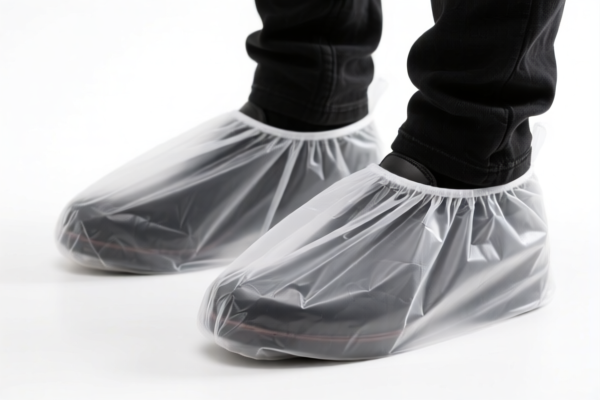
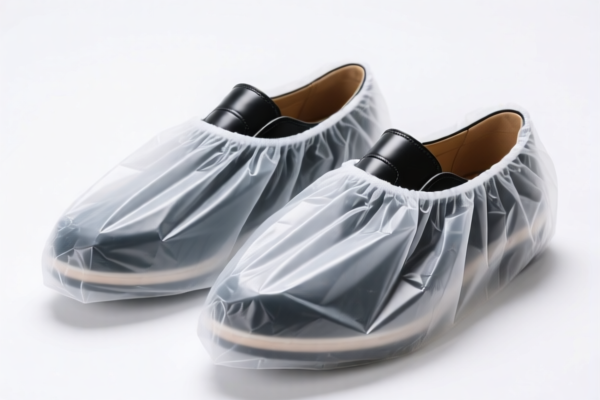
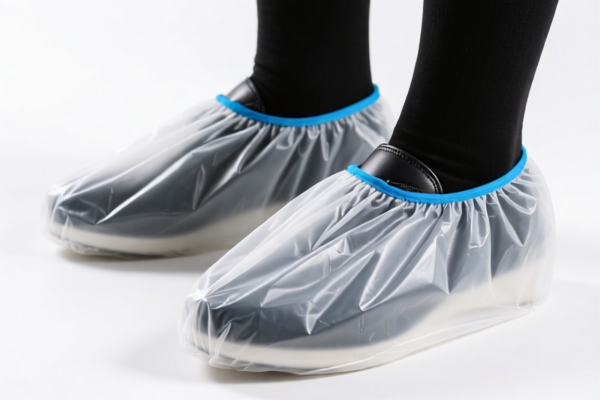

AI分析
🦶 Acid & Alkali Resistant Shoe Covers (Chemical Protective Footwear)
🌐 HS Code Classification & Customs Clearance Guide | 2026 Tariff Landscape for China-Origin Goods | Precision Clearance Strategy
📌 I. Product Definition & Critical Classification Logic: Are Your Shoe Covers "Plastic", "Rubber", or "Gloves"?
Acid and alkali-resistant shoe covers are specialized personal protective equipment (PPE) designed to prevent chemical exposure to footwear in industrial, laboratory, and healthcare settings. In international trade, the HS Code classification is NOT determined solely by the product name, but by the material composition and structural characteristics.
Misclassification is the #1 cause of customs delays and penalty taxes. The product falls into one of three distinct legal categories under the Harmonized System:
- Plastic Other Articles: If made of synthetic polymers/plastics without specific glove features.
- Sulfur-Vulcanized Rubber Accessories: If made of rubber, classified as apparel accessories.
- Gloves/Hosiery: If made of rubber/plastic but structured as "foot gloves" (covering the foot individually like a glove).
⚠️ Key Distinction Logic:
- Material: Is itPlastic(39xx) orRubber(40xx)?
- Function/Structure: Is it anAccessoryto clothing (4015) or aProtective Hand/Footwearitem (6116)?
- Note:6116implies a "glove-like" structure (individual feet covers), while4015implies general "apparel accessories."
📦 II. HS Code Classification Matrix (Based on Provided Data)
The following table details the four specific HS Codes derived from your product data. Note the significant tariff differences based on classification.
| HS Code | Product Description & Logic | Material/Category | Total Tax Rate (US/China Origin) | Breakdown Detail |
|---|---|---|---|---|
| 3926.90.99.89 | Plastic Shoe Covers Classified as "Other articles of plastic." Lowest Tax Option |
Plastic / Other Articles | 22.8% | Base: 5.3% Section 301: 7.5% Section 122: 10% |
| 6116.10.95.00 | Rubber/Plastic Shoe Covers (Glove Type) Classified under "Gloves, Mittens..." Mid-Range Tax |
Rubber/Plastic / Gloves | 24.5% | Base: 7.0% Section 301: 7.5% Section 122: 10% |
| 4015.90.00.10 | Vulcanized Rubber Shoe Covers (Accessory 1) Classified as "Other accessories to outerwear." Highest Tax Option |
Sulfur-Vulcanized Rubber / Apparel Accessory | 39.0% | Base: 4.0% Section 301: 25.0% Section 122: 10% |
| 4015.90.00.50 | Vulcanized Rubber Shoe Covers (Accessory 2) Classified as "Other other apparel accessories." Highest Tax Option |
Sulfur-Vulcanized Rubber / Apparel Accessory | 39.0% | Base: 4.0% Section 301: 25.0% Section 122: 10% |
🔍 Critical Observation:
- Plastic (3926) and Glove-Type Rubber (6116) have similar, lower tax burdens (~23-25%). - Rubber Apparel Accessories (4015) suffer from a 25% Section 301 tariff, bringing the total to 39.0%. - Strategy: If your product is rubber, ensure it does NOT get misclassified as a generic "apparel accessory" under 4015 unless structurally required. However, if it is structurally a "shoe cover" (open toe/heel or slip-on), customs may lean toward 4015. If it covers the foot entirely like a sock/glove, 6116 may apply. Plastic is the safest for lower duties.
💰 III. Detailed Tariff Structure Analysis (2026 Outlook)
✅ Applicable Market: United States (US)
✅ Origin: China (CN)
✅ Key Tariff Components
1. Base Duty (MFN): The standard Most Favored Nation rate applied to all trading partners. 2. Section 301 Tariff: Additional duties imposed on Chinese goods under the US Trade Act. Rates vary by HS Code (5.3%, 7.5%, or 25%). 3. Section 122 Tariff: A specific additional duty (10%) currently applicable to certain Chinese imports (likely referring to recent executive actions or specific trade remedy lists included in the prompt data).
🎯 Case 1: Plastic Shoe Covers (3926.90.99.89)
| Component | Rate | Source |
|---|---|---|
| Base Duty | 5.3% | US HTSUS Standard MFN |
| Section 301 | 7.5% | List 3 / Exclusions check |
| Section 122 | 10.0% | Specific Executive Action |
| TOTAL | 22.8% | Ad Valorem |
📌 Analysis: This is the most cost-effective classification for plastic-based covers. The Section 301 rate is moderate (7.5%).
🎯 Case 2: Glove-Type Covers (6116.10.95.00)
| Component | Rate | Source |
|---|---|---|
| Base Duty | 7.0% | US HTSUS Standard MFN |
| Section 301 | 7.5% | List 3 / Exclusions check |
| Section 122 | 10.0% | Specific Executive Action |
| TOTAL | 24.5% | Ad Valorem |
📌 Analysis: Slightly higher base duty (7.0%) than plastic, but the Section 301 rate remains low (7.5%). Ideal if the product is structurally a "glove" (individual foot encasement).
🎯 Case 3: Rubber Apparel Accessories (4015.90.00.10 / .50)
| Component | Rate | Source |
|---|---|---|
| Base Duty | 4.0% | US HTSUS Standard MFN |
| Section 301 | 25.0% | List 4 / High Risk Category |
| Section 122 | 10.0% | Specific Executive Action |
| TOTAL | 39.0% | Ad Valorem |
📌 Analysis: Despite a low base duty (4.0%), the 25% Section 301 tariff makes this the most expensive option. This classification is applied if customs views the item strictly as a "clothing accessory" rather than protective gear or gloves.
🛠️ IV. Customs Clearance Strategy & Practical Advice
✅ 1. Documentation & Declaration Essentials
To avoid misclassification and subsequent audits, provide the following:
| Document | Requirement | Purpose |
|---|---|---|
| Product Specification | Clearly state Material (Plastic vs. Rubber) and Structure (Slip-on vs. Individual Glove-like). | Determines HS Code (39xx vs 40xx vs 61xx). |
| Technical Data Sheet | Show chemical resistance (Acid/Alkali pH range). | Proves "Protective Equipment" nature, supporting 6116 or 4015 over general goods. |
| Photos (360°) | Show the product on a foot vs. off. Show thickness, texture, and any closures. | Visual proof of "Glove-like" structure (for 6116) vs. "Slip-on Cover" (for 3926/4015). |
| Invoice Description | Use precise language: e.g., "Plastic Acid-Resistant Shoe Covers, Model X, 100% PVC" | Avoid vague terms like "Protective Gear" which invites broader, higher-tariff classifications. |
✅ 2. Classification Optimization Tactics
🟢 Scenario A: Product is Plastic (PVC, PE, PU)
- Recommendation: Declare under
3926.90.99.89. - Reasoning: Lowest total tax (22.8%).
- Declaration Text: "Plastic Shoe Covers, Acid/Alkali Resistant, for Industrial Use, Non-Glove Type."
🟡 Scenario B: Product is Rubber (Latex, Nitrile) & Structurally a "Sleeve" (Slip-on)
- Risk: High (39.0% under 4015).
- Strategy: Argue for
6116.10.95.00if the item fits the definition of "Gloves" (enclosing the foot entirely like a sock). - Declaration Text: "Rubber Protective Foot Gloves, Acid/Alkali Resistant, Individual Foot Encasement."
- Savings: Saves 14.5% compared to 4015.
🔴 Scenario C: Product is Rubber & Classified as Apparel Accessory (4015)
- Risk: Highest Tax (39.0%).
- Mitigation: Only use this if the product is a part of a larger uniform system or strictly defined as an accessory. If possible, request a Binding Ruling from CBP to see if it qualifies for 6116 or 3926 (if mixed material).
✅ 3. Section 122 & Section 301 Compliance
- Section 301 Check: Ensure the HS Code is not on an exclusion list (if applicable for your specific manufacturer).
- Section 122 Compliance: All four codes listed include a 10% Section 122 tariff. This is likely a mandatory surcharge for China-origin goods in the current regulatory climate. No mitigation strategy other than accurate HS code selection.
🌍 V. Global Market Comparison (2026 Snapshot)
| Market | Recommended HS Code | Est. Total Duty | Key Certification |
|---|---|---|---|
| 🇺🇸 USA | 3926.90.99.89 (Plastic) |
22.8% | None specific for PPE (FDA if medical grade) |
| 🇺🇸 USA | 4015.90.00.10 (Rubber) |
39.0% | OSHA Compliance (if industrial) |
| 🇪🇺 EU | 3926.90.90 (Plastic) |
~4-6% | CE Marking (PPE Regulation 2016/425) |
| 🇬🇧 UK | 3926.90.90 (Plastic) |
~5% | UKCA Marking |
| 🇨🇦 Canada | 3926.90.99 (Plastic) |
~5-10% | CSA Certification |
📌 Note: The US Section 301/122 tariffs make the US market significantly more expensive than the EU/UK/Canada for these goods. Always factor in the 10-15% tax differential when pricing for the US vs. other markets.
📌 VI. Common Pitfalls & Error Prevention
❌ Error 1: Declaring "Rubber Shoe Covers" as 3926 (Plastic).
* Consequence: Customs audit → Penalty + Back Taxes + Re-classification to 4015 (39%) or 6116 (24.5%).
* Fix: Verify material composition. If rubber, do NOT use 3926.
❌ Error 2: Declaring "Glove-like Rubber Covers" as 4015 (Accessory).
* Consequence: Overpayment of tax (39% vs 24.5%).
* Fix: Provide photos showing individual foot enclosure to support 6116 classification.
❌ Error 3: Ignoring Section 122. * Consequence: Underpayment → Seizure or Penalty. * Fix: All China-origin goods in the provided list include 122. Ensure your broker applies it correctly.
✅ Best Practice Declaration Example:
"Plastic Acid-Resistant Shoe Covers, Model XYZ, 100% PVC, Non-Glove Slip-On Type, Intended for Industrial Chemical Protection."
🎯 VII. Conclusion: Strategic Classification for Profit Protection
🎯 Key Takeaway:
1. Plastic is King: If your supply chain can accommodate Plastic (PVC/PE), choose 3926.90.99.89 for the lowest tax (22.8%).
2. Rubber is Risky: If using Rubber, fight for 6116.10.95.00 (24.5%) by proving it is a "Glove" structure. Avoid 4015 (39.0%) unless structurally unavoidable.
3. Documentation is Key: Clear photos and material specs are your best defense against customs re-classification.
📞 Action Item:
📂 Submit Pre-Submission Documentation to your customs broker: 1. Material Safety Data Sheet (MSDS) 2. High-res photos of the product structure 3. Bill of Lading description matching the HS Code logic.
🚀 Clear the hurdles of Section 301 & 122 with precision. Protect your margin!
✨ Professional Classification Starts with Accurate Data!
💼 Your Profit Margin Depends on the First Digit of Your HS Code!
用户评价
关于 HS 编码归类
协调制度(HS)是由世界海关组织(WCO)制定的国际贸易商品分类标准。全球 200 多个国家采用 HS 系统作为海关关税、贸易统计和进出口监管的基础。
每个 HS 编码遵循以下层级结构:
- 章(2 位)——商品大类(例如:第 84 章:机器和机械设备)
- 品目(4 位)——章内的更具体分类
- 子目(6 位)——国际通用细分,所有 WCO 成员国统一使用
- 本国细分(8-10 位)——各国自行扩展的细分编码,如美国 HTSUS 10 位编码
正确的 HS 编码归类对于顺利通关、准确缴纳关税和遵守贸易法规至关重要。错误归类可能导致海关延误、多缴关税或罚款。
从CN进口到US时,适用的关税税率可能包括:
- 最惠国(MFN)税率——适用于 WTO 成员国的标准关税税率
- 普通税率——适用于无贸易协定国家
- 贸易救济关税——附加关税,如 301 条款(反倾销)、232 条款(国家安全)或反补贴税
本页内容仅供参考。如需正式归类,请咨询当地海关或持牌报关代理。