Short Receipt Book
CN → US| HS编码 | 关税税率 | 原产国 | 目的国 | 文档 |
|---|---|---|---|---|
| 4820104000 | 35.0% | CN | US | 官方文档 |
| 4820102060 | 35.0% | CN | US | 官方文档 |
商品图片
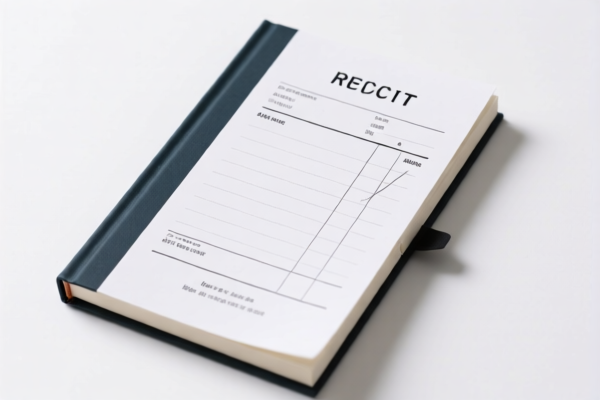
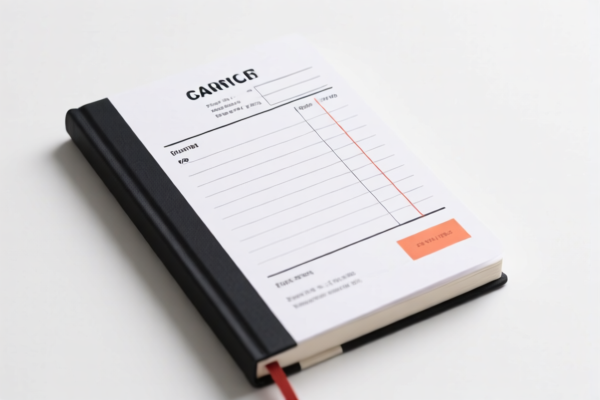
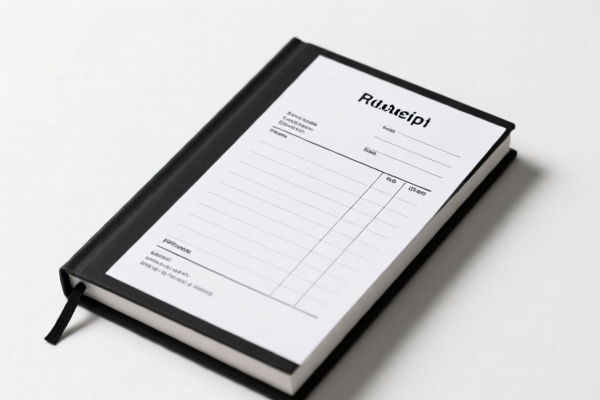
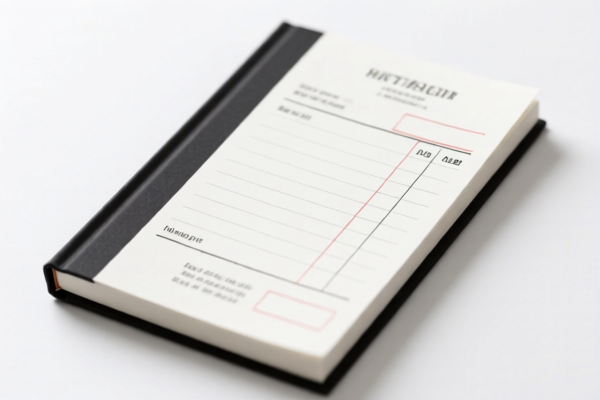
AI分析
📝 Short Receipt Book (Paper Stationery)
🌐 HS Code Reference & Customs Clearance Guide | 2026 Latest Tariff Analysis | Professional Compliance Strategy
📌 I. Product Definition & Classification: What Exactly is a "Short Receipt Book"?
A Short Receipt Book refers to small-format paper products designed for recording minor transactions, tips, informal payments, or quick acknowledgments. In international trade, these fall under the broader category of Paper Stationery.
Key Characteristics: * Material: Made primarily of paper or paperboard. * Format: Compact size, often tear-off sheets, pad-bound, or stapled. * Function: Recording receipts, orders, or account entries. * Distinction: Unlike large bound ledger books or official legal documents, these are typically informal or small-scale business stationery.
⚠️ Critical Distinction Point:
- If the item is a simple pad or loose sheet book for general recording → It is classified as "Other" stationery articles (HS 4820.10.40.00).
- If the item is specifically a Diary, Notebook, or Address Book that is bound (e.g., stitched, glued, or spiral-bound with a cover) → It may fall under "Diaries, notebooks and address books, bound" (HS 4820.10.20.60).
- Note: A "Receipt Book" is generally not considered a "Diary" or "Notebook" in the traditional sense unless it is explicitly marketed as such. However, customs may scrutinize the binding method. If it is a simple perforated pad, it is "Other". If it has a rigid or semi-rigid bound cover, it might be argued as a notebook, but "Receipt Book" usually defaults to "Other" unless specified as a bound diary-like item.
📦 II. HS Code Classification Details (2026 Latest Tariff Authority)
Based on the provided data, there are two potential HS Codes depending on the specific construction and market perception of the "Receipt Book."
| HS Code | Product Description | Key Feature | Applicable Scenario |
|---|---|---|---|
4820.10.40.00 |
Registers, account books, notebooks... Other | Loose-leaf, simple pads, unbound, or loosely bound | Most standard "Short Receipt Books" (perforated pads, stapled sheets without a formal cover). |
4820.10.20.60 |
Diaries, notebooks and address books, bound; memorandum pads... Other | Bound (e.g., glued spine, stitched, or rigid cover) | Receipt books that are constructed like a small diary or notebook with a fixed binding and cover. |
🔍 Key Insight:
- The majority of "Short Receipt Books" sold in retail are perforated pads → Use4820.10.40.00.
- If the receipt book has a cardboard cover and a glued spine (like a small notebook) → It may be classified under4820.10.20.60.
- Warning: Misclassification can lead to delays. Always provide clear photos of the binding and format.
💰 III. 2026 Latest Tariff Rate Details (Including Additional Duties)
✅ Applicable Country: United States (US)
✅ Origin: China (CN)
✅ Effective Date: 2025/2026 (Current Policy)
✅ Total Tax Rate: 25.0%
Both HS Codes listed in the data have identical tax structures.
🎯 1. 4820.10.40.00 – Other Stationery Articles (Including Most Receipt Books)
| Item | Detail |
|---|---|
| Base Tariff Rate | 0.0% (Ad Valorem) |
| Additional Tariff (Section 301) | +25.0% |
| Total Tax Rate | 25.0% |
| Tax Calculation | CIF Value × 25% |
| De Minimis Exemption? | ❌ No (Most paper stationery items do not qualify for $800 de minimis if they are part of a larger shipment or if specific restrictions apply, but typically Section 301 duties apply regardless of de minimis for most commercial goods. Clarification: For single packages under $800, Section 301 duties may be exempted under de minimis, but this is subject to ongoing policy changes. For bulk imports, 25% applies.) |
| Legal Basis | Section 301 Tariff: 9903.01.25 |
🎯 2. 4820.10.20.60 – Bound Diaries/Notebooks (If Applicable)
| Item | Detail |
|---|---|
| Base Tariff Rate | 0.0% (Ad Valorem) |
| Additional Tariff (Section 301) | +25.0% |
| Total Tax Rate | 25.0% |
| Tax Calculation | CIF Value × 25% |
| De Minimis Exemption? | ❌ No (Same as above) |
| Legal Basis | Section 301 Tariff: 9903.01.25 |
📌 Explanation:
- The 0% base rate makes these products relatively cheap in terms of standard duties.
- However, the +25% Section 301 tariff significantly impacts cost. This is a high-cost item for US importers from China.
- No IEEPA surcharge is listed in the provided data for these specific codes (unlike electronics), so the total remains 25%.
🛠️ IV. Customs Clearance Practical Advice (Real-World Pitfall Guide)
✅ 1. Documentation Checklist (Must-Have)
| Document | Required? | Notes |
|---|---|---|
| ✅ Commercial Invoice | ✔️ | Must clearly state "Short Receipt Book" or "Paper Stationery." Avoid vague terms like "Office Supplies." |
| ✅ Packing List | ✔️ | Specify quantity, weight, and dimensions. |
| ✅ Product Photos | ✔️ | Crucial: Show the binding type (perforated pad vs. bound notebook) to justify HS Code choice. |
| ✅ Material Declaration | ✔️ | Confirm 100% paper or paperboard. No electronic components. |
| ✅ Country of Origin | ✔️ | Must be marked "Made in China" to trigger Section 301 duties. |
✅ 2. Classification Strategy (Key Tips)
🔥 Rule of Thumb:
"Simple Pad = Other (40); Bound Notebook = Bound (60). But Tax is Same!"
| Scenario | Recommended HS Code | Reason |
|---|---|---|
| Perforated, stapled, or loose-leaf pad | 4820.10.40.00 |
Falls under "Other" stationery articles. |
| Small book-like receipt book with glued spine & cover | 4820.10.20.60 |
Falls under "Bound diaries/notebooks." |
| Recommendation | 4820.10.40.00 |
Safer and more common for standard receipt books. Less scrutiny than "bound" items which may be confused with books (different chapters). |
✅ 3. Special Circumstances
| Situation | Advice |
|---|---|
| Bulk Import | Expect 25% duty. Plan cash flow accordingly. |
| De Minimis ($800) | If shipping single small samples under $800 via courier (e.g., DHL, FedEx), Section 301 duties might be waived under current de minimis rules, but do not rely on this for commercial shipments. |
| Misclassification Risk | Do not declare as "Books" (Chapter 49) → Different duty, different clearance path. Paper stationery is Chapter 48. |
🌍 V. Global Market Comparison (2026)
| Country/Region | Recommended HS Code | Tariff (China Origin) | Notes |
|---|---|---|---|
| 🇺🇸 USA | 4820.10.40.00 |
25% | Section 301 applies. High cost. |
| 🇨🇳 China | 4820.10.40.00 |
0%~5% | Low import duty. |
| 🇪🇺 EU | 4820.10.00 |
0% | Most paper stationery has 0% duty in EU. |
| 🇬🇧 UK | 4820.10.00 |
0% | No additional tariffs on paper stationery. |
| 🇨🇦 Canada | 4820.10.00 |
0% | FTA benefit may apply if originating. |
📌 Conclusion:
- The USA is the only major market with significant tariffs (25%) on these goods from China.
- EU, UK, Canada, and others offer favorable terms (often 0%), making them attractive for exporters if US market is too costly.
📌 VI. Common Mistakes & Pitfalls (Lessons Learned)
❌ Mistake 1: Declaring as "Books" (HS 4901)
👉 Consequence: Wrong classification, potential duty difference, and customs delay. Paper stationery is Chapter 48, not Chapter 49.
❌ Mistake 2: Ignoring the Binding Type
👉 Consequence: If you declare a bound notebook as "other stationery," customs may reclassify it, causing delays. Provide photos.
❌ Mistake 3: Assuming De Minimis Applies to All Shipments
👉 Consequence: For large commercial shipments, Section 301 duties apply. Only small parcels under $800 might be exempt, but this is not guaranteed.
🎯 VII. Conclusion: Smart Classification Saves Money!
🎯 Remember:
🔹 "Receipt Book = Stationery (Chapter 48)"
🔹 "Simple Pad = 4820.10.40.00"
🔹 "Bound Book = 4820.10.20.60"
🔹 "US Tariff = 25% (Section 301)"
📌 Pro Tip:
If you are importing into the USA, ensure your supplier provides a clear product description and photos to justify the HS Code. Consider sourcing from non-China countries (e.g., Vietnam, India) if possible to avoid the 25% Section 301 tariff.
📣 Action Item:
📞 Consult a licensed customs broker for pre-classification rulings if your shipment volume is high.
🚀 Document everything: Photos, invoices, and binding details are key to smooth customs clearance.
✨ Professional Clearance Starts with Accurate Classification!
💼 Every 1% of duty saved is pure profit.
用户评价
关于 HS 编码归类
协调制度(HS)是由世界海关组织(WCO)制定的国际贸易商品分类标准。全球 200 多个国家采用 HS 系统作为海关关税、贸易统计和进出口监管的基础。
每个 HS 编码遵循以下层级结构:
- 章(2 位)——商品大类(例如:第 84 章:机器和机械设备)
- 品目(4 位)——章内的更具体分类
- 子目(6 位)——国际通用细分,所有 WCO 成员国统一使用
- 本国细分(8-10 位)——各国自行扩展的细分编码,如美国 HTSUS 10 位编码
正确的 HS 编码归类对于顺利通关、准确缴纳关税和遵守贸易法规至关重要。错误归类可能导致海关延误、多缴关税或罚款。
从CN进口到US时,适用的关税税率可能包括:
- 最惠国(MFN)税率——适用于 WTO 成员国的标准关税税率
- 普通税率——适用于无贸易协定国家
- 贸易救济关税——附加关税,如 301 条款(反倾销)、232 条款(国家安全)或反补贴税
本页内容仅供参考。如需正式归类,请咨询当地海关或持牌报关代理。