Short Receipt Book
CN → US| HS Code | Tariff Rate | Origin | Destination | Doc |
|---|---|---|---|---|
| 4820104000 | 35.0% | CN | US | Official Doc |
| 4820102060 | 35.0% | CN | US | Official Doc |
Product Images
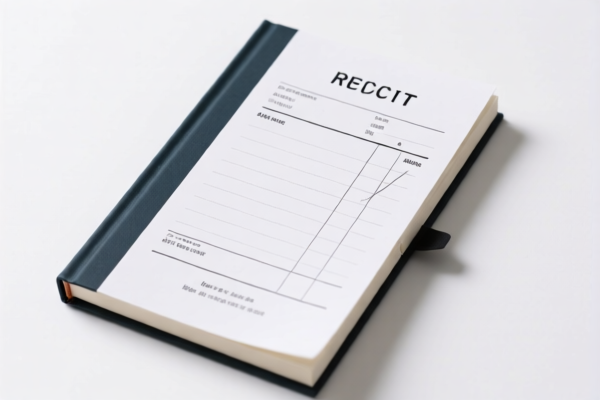
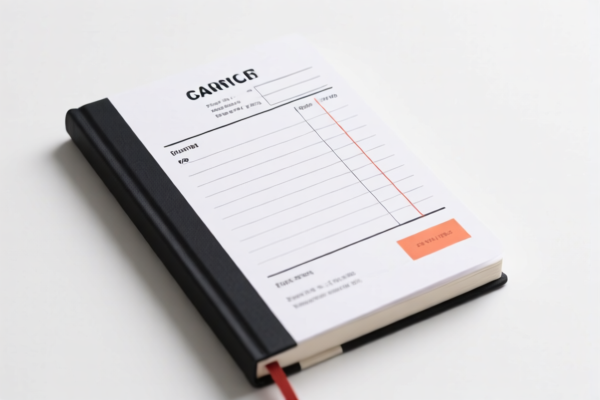
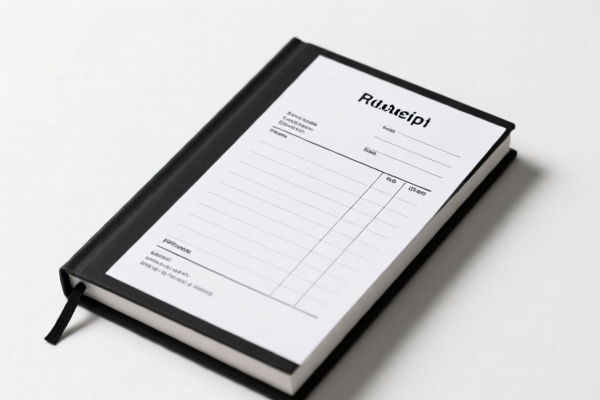
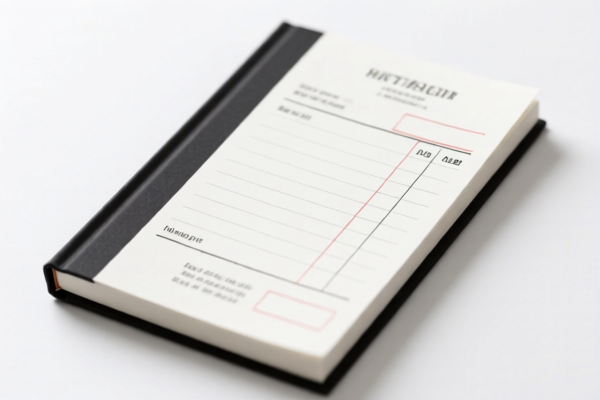
AI Analysis
📝 Short Receipt Book (Paper Stationery)
🌐 HS Code Reference & Customs Clearance Guide | 2026 Latest Tariff Analysis | Professional Compliance Strategy
📌 I. Product Definition & Classification: What Exactly is a "Short Receipt Book"?
A Short Receipt Book refers to small-format paper products designed for recording minor transactions, tips, informal payments, or quick acknowledgments. In international trade, these fall under the broader category of Paper Stationery.
Key Characteristics: * Material: Made primarily of paper or paperboard. * Format: Compact size, often tear-off sheets, pad-bound, or stapled. * Function: Recording receipts, orders, or account entries. * Distinction: Unlike large bound ledger books or official legal documents, these are typically informal or small-scale business stationery.
⚠️ Critical Distinction Point:
- If the item is a simple pad or loose sheet book for general recording → It is classified as "Other" stationery articles (HS 4820.10.40.00).
- If the item is specifically a Diary, Notebook, or Address Book that is bound (e.g., stitched, glued, or spiral-bound with a cover) → It may fall under "Diaries, notebooks and address books, bound" (HS 4820.10.20.60).
- Note: A "Receipt Book" is generally not considered a "Diary" or "Notebook" in the traditional sense unless it is explicitly marketed as such. However, customs may scrutinize the binding method. If it is a simple perforated pad, it is "Other". If it has a rigid or semi-rigid bound cover, it might be argued as a notebook, but "Receipt Book" usually defaults to "Other" unless specified as a bound diary-like item.
📦 II. HS Code Classification Details (2026 Latest Tariff Authority)
Based on the provided data, there are two potential HS Codes depending on the specific construction and market perception of the "Receipt Book."
| HS Code | Product Description | Key Feature | Applicable Scenario |
|---|---|---|---|
4820.10.40.00 |
Registers, account books, notebooks... Other | Loose-leaf, simple pads, unbound, or loosely bound | Most standard "Short Receipt Books" (perforated pads, stapled sheets without a formal cover). |
4820.10.20.60 |
Diaries, notebooks and address books, bound; memorandum pads... Other | Bound (e.g., glued spine, stitched, or rigid cover) | Receipt books that are constructed like a small diary or notebook with a fixed binding and cover. |
🔍 Key Insight:
- The majority of "Short Receipt Books" sold in retail are perforated pads → Use4820.10.40.00.
- If the receipt book has a cardboard cover and a glued spine (like a small notebook) → It may be classified under4820.10.20.60.
- Warning: Misclassification can lead to delays. Always provide clear photos of the binding and format.
💰 III. 2026 Latest Tariff Rate Details (Including Additional Duties)
✅ Applicable Country: United States (US)
✅ Origin: China (CN)
✅ Effective Date: 2025/2026 (Current Policy)
✅ Total Tax Rate: 25.0%
Both HS Codes listed in the data have identical tax structures.
🎯 1. 4820.10.40.00 – Other Stationery Articles (Including Most Receipt Books)
| Item | Detail |
|---|---|
| Base Tariff Rate | 0.0% (Ad Valorem) |
| Additional Tariff (Section 301) | +25.0% |
| Total Tax Rate | 25.0% |
| Tax Calculation | CIF Value × 25% |
| De Minimis Exemption? | ❌ No (Most paper stationery items do not qualify for $800 de minimis if they are part of a larger shipment or if specific restrictions apply, but typically Section 301 duties apply regardless of de minimis for most commercial goods. Clarification: For single packages under $800, Section 301 duties may be exempted under de minimis, but this is subject to ongoing policy changes. For bulk imports, 25% applies.) |
| Legal Basis | Section 301 Tariff: 9903.01.25 |
🎯 2. 4820.10.20.60 – Bound Diaries/Notebooks (If Applicable)
| Item | Detail |
|---|---|
| Base Tariff Rate | 0.0% (Ad Valorem) |
| Additional Tariff (Section 301) | +25.0% |
| Total Tax Rate | 25.0% |
| Tax Calculation | CIF Value × 25% |
| De Minimis Exemption? | ❌ No (Same as above) |
| Legal Basis | Section 301 Tariff: 9903.01.25 |
📌 Explanation:
- The 0% base rate makes these products relatively cheap in terms of standard duties.
- However, the +25% Section 301 tariff significantly impacts cost. This is a high-cost item for US importers from China.
- No IEEPA surcharge is listed in the provided data for these specific codes (unlike electronics), so the total remains 25%.
🛠️ IV. Customs Clearance Practical Advice (Real-World Pitfall Guide)
✅ 1. Documentation Checklist (Must-Have)
| Document | Required? | Notes |
|---|---|---|
| ✅ Commercial Invoice | ✔️ | Must clearly state "Short Receipt Book" or "Paper Stationery." Avoid vague terms like "Office Supplies." |
| ✅ Packing List | ✔️ | Specify quantity, weight, and dimensions. |
| ✅ Product Photos | ✔️ | Crucial: Show the binding type (perforated pad vs. bound notebook) to justify HS Code choice. |
| ✅ Material Declaration | ✔️ | Confirm 100% paper or paperboard. No electronic components. |
| ✅ Country of Origin | ✔️ | Must be marked "Made in China" to trigger Section 301 duties. |
✅ 2. Classification Strategy (Key Tips)
🔥 Rule of Thumb:
"Simple Pad = Other (40); Bound Notebook = Bound (60). But Tax is Same!"
| Scenario | Recommended HS Code | Reason |
|---|---|---|
| Perforated, stapled, or loose-leaf pad | 4820.10.40.00 |
Falls under "Other" stationery articles. |
| Small book-like receipt book with glued spine & cover | 4820.10.20.60 |
Falls under "Bound diaries/notebooks." |
| Recommendation | 4820.10.40.00 |
Safer and more common for standard receipt books. Less scrutiny than "bound" items which may be confused with books (different chapters). |
✅ 3. Special Circumstances
| Situation | Advice |
|---|---|
| Bulk Import | Expect 25% duty. Plan cash flow accordingly. |
| De Minimis ($800) | If shipping single small samples under $800 via courier (e.g., DHL, FedEx), Section 301 duties might be waived under current de minimis rules, but do not rely on this for commercial shipments. |
| Misclassification Risk | Do not declare as "Books" (Chapter 49) → Different duty, different clearance path. Paper stationery is Chapter 48. |
🌍 V. Global Market Comparison (2026)
| Country/Region | Recommended HS Code | Tariff (China Origin) | Notes |
|---|---|---|---|
| 🇺🇸 USA | 4820.10.40.00 |
25% | Section 301 applies. High cost. |
| 🇨🇳 China | 4820.10.40.00 |
0%~5% | Low import duty. |
| 🇪🇺 EU | 4820.10.00 |
0% | Most paper stationery has 0% duty in EU. |
| 🇬🇧 UK | 4820.10.00 |
0% | No additional tariffs on paper stationery. |
| 🇨🇦 Canada | 4820.10.00 |
0% | FTA benefit may apply if originating. |
📌 Conclusion:
- The USA is the only major market with significant tariffs (25%) on these goods from China.
- EU, UK, Canada, and others offer favorable terms (often 0%), making them attractive for exporters if US market is too costly.
📌 VI. Common Mistakes & Pitfalls (Lessons Learned)
❌ Mistake 1: Declaring as "Books" (HS 4901)
👉 Consequence: Wrong classification, potential duty difference, and customs delay. Paper stationery is Chapter 48, not Chapter 49.
❌ Mistake 2: Ignoring the Binding Type
👉 Consequence: If you declare a bound notebook as "other stationery," customs may reclassify it, causing delays. Provide photos.
❌ Mistake 3: Assuming De Minimis Applies to All Shipments
👉 Consequence: For large commercial shipments, Section 301 duties apply. Only small parcels under $800 might be exempt, but this is not guaranteed.
🎯 VII. Conclusion: Smart Classification Saves Money!
🎯 Remember:
🔹 "Receipt Book = Stationery (Chapter 48)"
🔹 "Simple Pad = 4820.10.40.00"
🔹 "Bound Book = 4820.10.20.60"
🔹 "US Tariff = 25% (Section 301)"
📌 Pro Tip:
If you are importing into the USA, ensure your supplier provides a clear product description and photos to justify the HS Code. Consider sourcing from non-China countries (e.g., Vietnam, India) if possible to avoid the 25% Section 301 tariff.
📣 Action Item:
📞 Consult a licensed customs broker for pre-classification rulings if your shipment volume is high.
🚀 Document everything: Photos, invoices, and binding details are key to smooth customs clearance.
✨ Professional Clearance Starts with Accurate Classification!
💼 Every 1% of duty saved is pure profit.
Customer Reviews
About HS Code Classification
The Harmonized System (HS) is an internationally standardized nomenclature developed by the World Customs Organization (WCO) to classify traded products. Over 200 countries use the HS system as the basis for customs tariffs, trade statistics, and import/export regulations.
Each HS code follows a hierarchical structure:
- Chapter (2 digits) — Broad category of goods (e.g., Chapter 84: Machinery and Mechanical Appliances)
- Heading (4 digits) — More specific grouping within the chapter
- Subheading (6 digits) — Internationally standardized breakdown, used by all WCO member countries
- National subdivisions (8-10 digits) — Country-specific extensions for further classification, such as US HTSUS 10-digit codes
Correct HS code classification is essential for smooth customs clearance, accurate duty payment, and compliance with trade regulations. Misclassification can lead to customs delays, overpayment of duties, or penalties.
When importing from CN to US, the applicable tariff rates may include:
- Most-Favored-Nation (MFN) rate — The standard duty rate applied to WTO members
- General rate — Applied to countries without trade agreements
- Trade remedy duties — Additional tariffs such as Section 301 (anti-dumping), Section 232 (national security), or countervailing duties
The information provided on this page is for reference purposes only. For official classification, please consult with your local customs authority or a licensed customs broker.