Silicone Anti Collision Strip
CN → US| HS编码 | 关税税率 | 原产国 | 目的国 | 文档 |
|---|---|---|---|---|
| 3926906520 | 14.2% | CN | US | 官方文档 |
| 4016993000 | 35.0% | CN | US | 官方文档 |
| 4016996050 | 37.5% | CN | US | 官方文档 |
| 4016990500 | 20.9% | CN | US | 官方文档 |
| 5607909000 | 41.3% | CN | US | 官方文档 |
商品图片
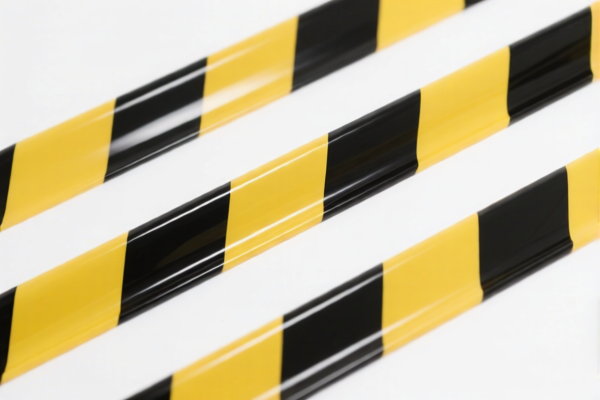
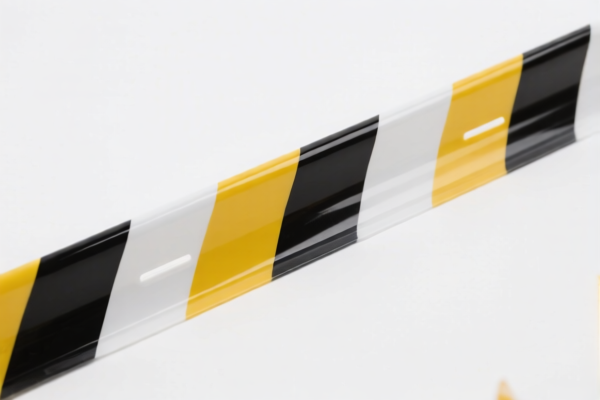
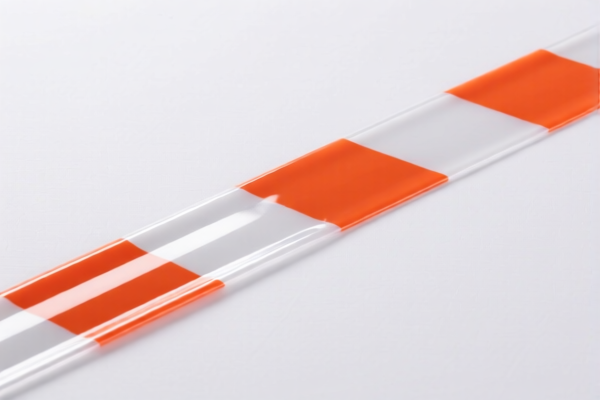
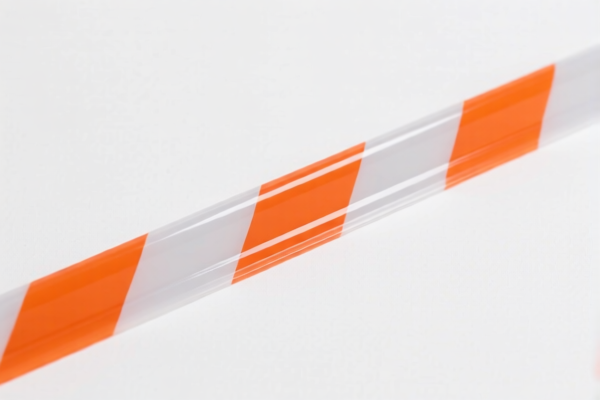
AI分析
🛡️ Silicone Anti-Collision Strip (Silicone Bumpers & Strips)
🌐 HS Code Reference & Customs Clearance Guide | 2026 Latest Tariff Analysis | Professional Level Strategy
📌 I. Product Definition & Classification: Do You Really Understand "Silicone Strips"?
Silicone Anti-Collision Strips are versatile industrial and household components used for vibration damping, impact protection, and sealing. In international trade, they are not treated as a single entity but are split based on material composition and primary function.
Two Main Categories: 1. Rubber/Elastomer Parts: If the strip is made of vulcanized rubber (including silicone rubber in some contexts) and serves as a protective bumpers or sealing element → Chapter 40. 2. Textile/Rope Articles: If the strip is structured as a cord, rope, or braid, often impregnated with non-rubber materials (like plastic or synthetic fibers) → Chapter 56. 3. Miscellaneous Rubber Parts: If it’s a simple rubber profile not fitting specific subheadings → Chapter 39/40 overlap.
⚠️ Key Distinction Point:
- If the product is a solid vulcanized rubber profile (even if silicone-based) used for shock absorption or bumping → It generally falls under 4016.
- If the product is a cord/rope structure (braided or twisted) impregnated with silicone or other coatings → It falls under 5607 or 4016.99.05.00.
- If it is a non-rubber plastic composite or raw rubber strip not vulcanized into a finished good → It may fall under 3926 (though less common for silicone).
📦 II. HS Code Classification Details (2026 Latest Tariff Authority Comparison)
Based on the provided data, here are the four distinct classifications for Silicone Anti-Collision Strips, each with vastly different tax implications:
| HS Code | Product Description | Application Scenario | Material/State |
|---|---|---|---|
3926.90.65.20 |
Rubber Bumper Strip, raw shape, miscellaneous article | General-purpose rubber strip, not specifically vulcanized for shock absorption, or classified as "other articles". | Rubber (Non-vulcanized or generic) |
4016.99.30.00 |
Vulcanized Rubber Bumper Strip, for shock absorption | Industrial bumpers, machinery dampers, vehicle parts. High duty due to "Shock Absorption" use. | Vulcanized Rubber (Silicone counted here) |
4016.99.60.50 |
Vulcanized Rubber Strip, Other (Non-specific use) | General sealing, general bumpers not specifically for shock absorption. | Vulcanized Rubber (Silicone counted here) |
4016.99.05.00 |
Silicone Anti-Slip Cord/Rope, Household Use | Silicone cords, ropes, or strips used in homes (e.g., drawer liners, pot holders). | Vulcanized Silicone Rubber (Household item) |
5607.90.90.00 |
Silicone-Coated Cord/Rope, Non-Rubber/Plastic Impregnated | Braided silicone cords, synthetic ropes with silicone coating. Not solid rubber. | Non-Rubber/Plastic (Impregnated) |
🔍 Critical Reminder:
- Vulcanization is Key: If it is a finished, elastic bumpers, it is likely 4016. If it is a raw strip, it might be 3926.
- Shape Matters: If it is a rope/cord, it goes to 5607 or 4016.99.05.00. If it is a solid profile, it goes to 4016 or 3926.
- Usage Matters: "Shock Absorption" triggers a higher duty (4016.99.30.00) compared to "Other" (4016.99.60.50).
💰 III. 2026 Latest Tariff Rate Breakdown (Including Additional Taxes & Policies)
✅ Applicable Country: United States (US)
✅ Origin: China (CN)
✅ Effective Time: 2025/2026 Import Cycle (Includes Section 301 & IEEPA)
🎯 1. 3926.90.65.20 —— Rubber Bumper Strip (Miscellaneous Article)
| Item | Content |
|---|---|
| Base Rate | 4.2% |
| Section 301 (Add-on) | 0.0% |
| IEEPA (Section 122) | 10% |
| Total Tax Rate | 14.2% |
| Calculation | CIF Value × 14.2% |
| De Minimis Eligibility | ✅ Possible (Check specific value limits, usually < $800) |
| Legal Path | IEEPA:9903.01.25 → USITC:3926.90.65.20 |
📌 Explanation:
- This is the Lowest Duty option.
- It assumes the product is not classified as a specific rubber article (like shock absorbers) or is made of non-vulcanized rubber/plastic composite.
- Risk: If customs inspectors deem it "Vulcanized Rubber for Shock Absorption," this code will be rejected, and you’ll be reassigned to a higher rate.
🎯 2. 4016.99.30.00 —— Vulcanized Rubber Bumper (Shock Absorption Use)
| Item | Content |
|---|---|
| Base Rate | 0.0% |
| Section 301 (Add-on) | 25.0% |
| IEEPA (Section 122) | 10% |
| Total Tax Rate | 35.0% |
| Calculation | CIF Value × 35.0% |
| De Minimis Eligibility | ❌ Not Eligible |
| Legal Path | IEEPA:9903.01.25 → USITC:4016.99.30.00 → FOOTNOTE:9903.88.01 |
📌 Explanation:
- High Duty due to 25% Section 301 Tariff.
- This code is used if the strip is vulcanized AND explicitly for shock absorption/damping.
- Why 0% Base? Many rubber articles have low base rates, but the 25% punitive tariff kills it.
🎯 3. 4016.99.60.50 —— Vulcanized Rubber Strip (Other/General Use)
| Item | Content |
|---|---|
| Base Rate | 2.5% |
| Section 301 (Add-on) | 25.0% |
| IEEPA (Section 122) | 10% |
| Total Tax Rate | 37.5% |
| Calculation | CIF Value × 37.5% |
| De Minimis Eligibility | ❌ Not Eligible |
| Legal Path | IEEPA:9903.01.25 → USITC:4016.99.60.50 → FOOTNOTE:9903.88.01 |
📌 Explanation:
- Highest Duty among rubber classifications.
- Used for vulcanized rubber articles that are not specifically for shock absorption or household cords.
- Risk: This is a "catch-all" for rubber goods. Avoid unless you have no other classification option.
🎯 4. 4016.99.05.00 —— Silicone Anti-Slip Cord (Household Use)
| Item | Content |
|---|---|
| Base Rate | 3.4% |
| Section 301 (Add-on) | 7.5% |
| IEEPA (Section 122) | 10% |
| Total Tax Rate | 20.9% |
| Calculation | CIF Value × 20.9% |
| De Minimis Eligibility | ❌ Not Eligible |
| Legal Path | IEEPA:9901.25 → USITC:4016.99.05.00 |
📌 Explanation:
- Moderate Duty.
- Only applies if the product is a cord/rope (not a solid strip) AND for household use.
- If you are exporting industrial silicone strips, do not use this code.
🎯 5. 5607.90.90.00 —— Silicone-Coated Rope/Cord (Non-Rubber Material)
| Item | Content |
|---|---|
| Base Rate | 6.3% |
| Section 301 (Add-on) | 25.0% |
| IEEPA (Section 122) | 10% |
| Total Tax Rate | 41.3% |
| Calculation | CIF Value × 41.3% |
| De Minimis Eligibility | ❌ Not Eligible |
| Legal Path | IEEPA:9903.01.25 → USITC:5607.90.90.00 |
📌 Explanation:
- Highest Duty Overall.
- Only applies if the product is a textile/plastic rope impregnated with silicone, not a solid rubber product.
- Avoid unless your product is literally a rope.
🛠️ IV. Customs Clearance Practical Advice (Battle-Tested Pitfall Avoidance)
✅ 1. Preparation Checklist (Non-Negotiable)
| Document | Must Provide | Reason |
|---|---|---|
| ✅ Product Specification Sheet | ✔️ | Details: Material (Vulcanized Silicone? Non-vulcanized Rubber?), Dimensions, Hardness (Shore A). |
| ✅ Product Photos | ✔️ | Clear shots of cross-section. Is it solid? Braided? Coated? |
| ✅ Usage Statement | ✔️ | "For Shock Absorption in Machinery" vs. "For Drawer Sealing in Home." Critical for HS Code selection. |
| ✅ Material Safety Data Sheet (MSDS) | ✔️ | To prove it is silicone/rubber and not hazardous. |
| ✅ Commercial Invoice | ✔️ | Accurate description: e.g., "Vulcanized Silicone Bumper Strip for Industrial Machinery." |
| ✅ Packing List | ✔️ | Net/Gross weight, number of packages. |
✅ 2. Declaration Strategy (Key Mantra)
🔥 “Solid Rubber = 4016, Rope = 5607, Raw/Other = 3926. Usage Defines Duty!”
| Scenario | Correct HS Code | Why? |
|---|---|---|
| Industrial Bumper (Solid, Vulcanized, Shock Absorbing) | 4016.99.30.00 |
Explicitly for shock absorption → High Duty (35%). |
| General Sealing Strip (Solid, Vulcanized, Non-Shock) | 4016.99.60.50 |
General rubber article → Highest Duty (37.5%). |
| Household Silicone Cord (Braided, Household Use) | 4016.99.05.00 |
Household cord → Moderate Duty (20.9%). |
| Raw Rubber Strip / Non-Vulcanized | 3926.90.65.20 |
Not a finished rubber good → Lowest Duty (14.2%). |
| Silicone-Coated Rope (Textile Base) | 5607.90.90.00 |
Not rubber, it’s textile/plastic → Highest Duty (41.3%). |
⚠️ Warning:
- If you declare a vulcanized rubber bumper as3926.90.65.20to save taxes, customs may audit you. If they prove it is vulcanized, you will face back taxes + penalties.
- If you declare a solid strip as5607(rope), it will be rejected immediately.
✅ 3. Special Cases & Mitigation
| Situation | Handling Advice |
|---|---|
| Silicone is considered "Rubber" | In US Customs, silicone is often treated as rubber (Chapter 40). Ensure your spec sheet says "Vulcanized Silicone Rubber." |
| Product is a "Kit" | If shipping strips + adhesive + tools, declare as Kit. The duty is based on the chief use (likely the strip). |
| Small Quantity (< $800) | Try to structure as De Minimis (Section 321) if possible. 3926.90.65.20 has a low rate, so it’s safer. 4016 codes are NOT de minimis eligible. |
| OEM Custom Shape | Provide CAD drawings. If the shape is unique, emphasize the function (e.g., "Damping Pad") to argue for 4016.99.30.00 if it reduces duty elsewhere, or 3926 if it’s considered a "part." |
🌍 V. Global Market Customs Comparison (2026 Latest)
| Country/Region | Recommended HS Code | Duty (China Origin) | Certification | Notes |
|---|---|---|---|---|
| 🇺🇸 USA | 3926.90.65.20 (If possible) |
14.2% | None | Best Option. Avoid 4016 due to 35%+ duty. |
| 🇺🇸 USA | 4016.99.30.00 (If Shock Absorption) |
35.0% | None | Inevitable if product is clearly a shock absorber. |
| 🇪🇺 EU | 4016.93.00 |
0% - 4% | REACH, RoHS | Much Lower Duty. Silicone is favored. |
| 🇬🇧 UK | 4016.93.00 |
0% - 4% | UKCA, RoHS | Post-Brexit, still low for rubber articles. |
| 🇨🇳 China | 4016.93.00 |
0% | CCC (if applicable) | No import duty on many rubber articles. |
📌 Conclusion:
- USA is the most expensive market due to Section 301 and IEEPA tariffs.
- EU/UK are much cheaper for silicone/rubber goods.
- Strategy for USA: Try to classify under3926.90.65.20if the product is not strictly a "rubber article" but a "miscellaneous plastic/rubber part," or if it is non-vulcanized.
📌 VI. Common Mistakes & Pitfalls (Blood Lessons)
❌ Mistake 1: Declaring a Vulcanized Rubber Bumper as 3926.90.65.20 to get 14.2% instead of 35%.
👉 Consequence: Customs rejects. You pay the difference + 20% penalty + storage fees.
❌ Mistake 2: Calling a Solid Strip a "Rope" to use 5607.
👉 Consequence: Immediate rejection. Solid strips are not ropes. Duty jumps to 41.3%.
❌ Mistake 3: Ignoring Vulcanization Status.
👉 Consequence: If it’s vulcanized, it’s Chapter 40. If not, it might be Chapter 39 or 40. Misdeclaration leads to reclassification.
❌ Mistake 4: Using 4016.99.60.50 for Shock Absorbing parts.
👉 Consequence: Customs may reclassify to 4016.99.30.00. Duty difference is minor (37.5% vs 35%), but the inconsistency raises red flags.
✅ Correct Practice:
“Vulcanized Silicone Rubber Bumper Strip, for Industrial Machinery Damping, Black, 10mm x 5mm, HS Code 4016.99.30.00”
🎯 VII. Conclusion: Precise Classification Saves Thousands!
🎯 Remember the Mantra:
🔹 “Shock Absorption = 4016.30 (35%)”
🔹 “General Rubber = 4016.60 (37.5%)”
🔹 “Household Cord = 4016.05 (20.9%)”
🔹 “Misc/Non-Rubber = 3926 (14.2%) 🏆 Best Rate”
🔹 “Silicone Rope = 5607 (41.3%) 🚫 Avoid”
📌 Pro Tip:
If your silicone strip is not explicitly for shock absorption and can be argued as a “Miscellaneous Rubber Article” or “Plastic-Rubber Composite,” push for 3926.90.65.20 (14.2%). This is your tax optimization golden key for the US market.
📣 Immediate Action:
📞 Provide Product Photos + Spec Sheet to Your Customs Broker.
🚀 Ask for a Pre-Ruling (Advance Ruling) from USCBP if the value is high.
💼 Stop guessing. Start classifying correctly. Save your profit margin!
✨ Professional Customs Clearance Starts with Accurate Classification!
💼 Your Every Dollar of Tax Savings is Earned by Precision!
用户评价
关于 HS 编码归类
协调制度(HS)是由世界海关组织(WCO)制定的国际贸易商品分类标准。全球 200 多个国家采用 HS 系统作为海关关税、贸易统计和进出口监管的基础。
每个 HS 编码遵循以下层级结构:
- 章(2 位)——商品大类(例如:第 84 章:机器和机械设备)
- 品目(4 位)——章内的更具体分类
- 子目(6 位)——国际通用细分,所有 WCO 成员国统一使用
- 本国细分(8-10 位)——各国自行扩展的细分编码,如美国 HTSUS 10 位编码
正确的 HS 编码归类对于顺利通关、准确缴纳关税和遵守贸易法规至关重要。错误归类可能导致海关延误、多缴关税或罚款。
从CN进口到US时,适用的关税税率可能包括:
- 最惠国(MFN)税率——适用于 WTO 成员国的标准关税税率
- 普通税率——适用于无贸易协定国家
- 贸易救济关税——附加关税,如 301 条款(反倾销)、232 条款(国家安全)或反补贴税
本页内容仅供参考。如需正式归类,请咨询当地海关或持牌报关代理。