Silicone Anti Collision Strip
CN → US| HS Code | Tariff Rate | Origin | Destination | Doc |
|---|---|---|---|---|
| 3926906520 | 14.2% | CN | US | Official Doc |
| 4016993000 | 35.0% | CN | US | Official Doc |
| 4016996050 | 37.5% | CN | US | Official Doc |
| 4016990500 | 20.9% | CN | US | Official Doc |
| 5607909000 | 41.3% | CN | US | Official Doc |
Product Images
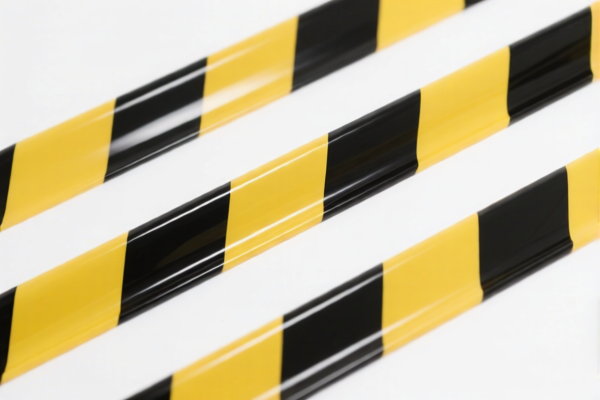
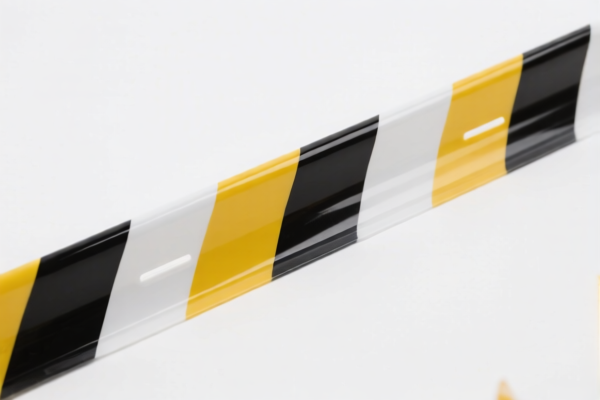
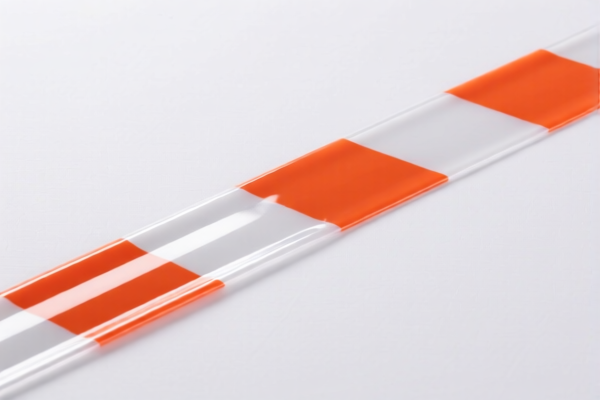
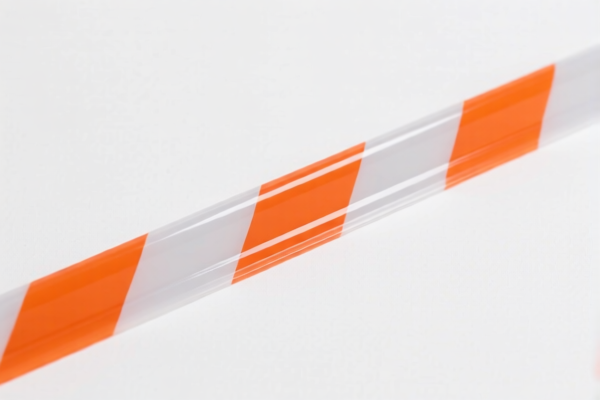
AI Analysis
🛡️ Silicone Anti-Collision Strip (Silicone Bumpers & Strips)
🌐 HS Code Reference & Customs Clearance Guide | 2026 Latest Tariff Analysis | Professional Level Strategy
📌 I. Product Definition & Classification: Do You Really Understand "Silicone Strips"?
Silicone Anti-Collision Strips are versatile industrial and household components used for vibration damping, impact protection, and sealing. In international trade, they are not treated as a single entity but are split based on material composition and primary function.
Two Main Categories: 1. Rubber/Elastomer Parts: If the strip is made of vulcanized rubber (including silicone rubber in some contexts) and serves as a protective bumpers or sealing element → Chapter 40. 2. Textile/Rope Articles: If the strip is structured as a cord, rope, or braid, often impregnated with non-rubber materials (like plastic or synthetic fibers) → Chapter 56. 3. Miscellaneous Rubber Parts: If it’s a simple rubber profile not fitting specific subheadings → Chapter 39/40 overlap.
⚠️ Key Distinction Point:
- If the product is a solid vulcanized rubber profile (even if silicone-based) used for shock absorption or bumping → It generally falls under 4016.
- If the product is a cord/rope structure (braided or twisted) impregnated with silicone or other coatings → It falls under 5607 or 4016.99.05.00.
- If it is a non-rubber plastic composite or raw rubber strip not vulcanized into a finished good → It may fall under 3926 (though less common for silicone).
📦 II. HS Code Classification Details (2026 Latest Tariff Authority Comparison)
Based on the provided data, here are the four distinct classifications for Silicone Anti-Collision Strips, each with vastly different tax implications:
| HS Code | Product Description | Application Scenario | Material/State |
|---|---|---|---|
3926.90.65.20 |
Rubber Bumper Strip, raw shape, miscellaneous article | General-purpose rubber strip, not specifically vulcanized for shock absorption, or classified as "other articles". | Rubber (Non-vulcanized or generic) |
4016.99.30.00 |
Vulcanized Rubber Bumper Strip, for shock absorption | Industrial bumpers, machinery dampers, vehicle parts. High duty due to "Shock Absorption" use. | Vulcanized Rubber (Silicone counted here) |
4016.99.60.50 |
Vulcanized Rubber Strip, Other (Non-specific use) | General sealing, general bumpers not specifically for shock absorption. | Vulcanized Rubber (Silicone counted here) |
4016.99.05.00 |
Silicone Anti-Slip Cord/Rope, Household Use | Silicone cords, ropes, or strips used in homes (e.g., drawer liners, pot holders). | Vulcanized Silicone Rubber (Household item) |
5607.90.90.00 |
Silicone-Coated Cord/Rope, Non-Rubber/Plastic Impregnated | Braided silicone cords, synthetic ropes with silicone coating. Not solid rubber. | Non-Rubber/Plastic (Impregnated) |
🔍 Critical Reminder:
- Vulcanization is Key: If it is a finished, elastic bumpers, it is likely 4016. If it is a raw strip, it might be 3926.
- Shape Matters: If it is a rope/cord, it goes to 5607 or 4016.99.05.00. If it is a solid profile, it goes to 4016 or 3926.
- Usage Matters: "Shock Absorption" triggers a higher duty (4016.99.30.00) compared to "Other" (4016.99.60.50).
💰 III. 2026 Latest Tariff Rate Breakdown (Including Additional Taxes & Policies)
✅ Applicable Country: United States (US)
✅ Origin: China (CN)
✅ Effective Time: 2025/2026 Import Cycle (Includes Section 301 & IEEPA)
🎯 1. 3926.90.65.20 —— Rubber Bumper Strip (Miscellaneous Article)
| Item | Content |
|---|---|
| Base Rate | 4.2% |
| Section 301 (Add-on) | 0.0% |
| IEEPA (Section 122) | 10% |
| Total Tax Rate | 14.2% |
| Calculation | CIF Value × 14.2% |
| De Minimis Eligibility | ✅ Possible (Check specific value limits, usually < $800) |
| Legal Path | IEEPA:9903.01.25 → USITC:3926.90.65.20 |
📌 Explanation:
- This is the Lowest Duty option.
- It assumes the product is not classified as a specific rubber article (like shock absorbers) or is made of non-vulcanized rubber/plastic composite.
- Risk: If customs inspectors deem it "Vulcanized Rubber for Shock Absorption," this code will be rejected, and you’ll be reassigned to a higher rate.
🎯 2. 4016.99.30.00 —— Vulcanized Rubber Bumper (Shock Absorption Use)
| Item | Content |
|---|---|
| Base Rate | 0.0% |
| Section 301 (Add-on) | 25.0% |
| IEEPA (Section 122) | 10% |
| Total Tax Rate | 35.0% |
| Calculation | CIF Value × 35.0% |
| De Minimis Eligibility | ❌ Not Eligible |
| Legal Path | IEEPA:9903.01.25 → USITC:4016.99.30.00 → FOOTNOTE:9903.88.01 |
📌 Explanation:
- High Duty due to 25% Section 301 Tariff.
- This code is used if the strip is vulcanized AND explicitly for shock absorption/damping.
- Why 0% Base? Many rubber articles have low base rates, but the 25% punitive tariff kills it.
🎯 3. 4016.99.60.50 —— Vulcanized Rubber Strip (Other/General Use)
| Item | Content |
|---|---|
| Base Rate | 2.5% |
| Section 301 (Add-on) | 25.0% |
| IEEPA (Section 122) | 10% |
| Total Tax Rate | 37.5% |
| Calculation | CIF Value × 37.5% |
| De Minimis Eligibility | ❌ Not Eligible |
| Legal Path | IEEPA:9903.01.25 → USITC:4016.99.60.50 → FOOTNOTE:9903.88.01 |
📌 Explanation:
- Highest Duty among rubber classifications.
- Used for vulcanized rubber articles that are not specifically for shock absorption or household cords.
- Risk: This is a "catch-all" for rubber goods. Avoid unless you have no other classification option.
🎯 4. 4016.99.05.00 —— Silicone Anti-Slip Cord (Household Use)
| Item | Content |
|---|---|
| Base Rate | 3.4% |
| Section 301 (Add-on) | 7.5% |
| IEEPA (Section 122) | 10% |
| Total Tax Rate | 20.9% |
| Calculation | CIF Value × 20.9% |
| De Minimis Eligibility | ❌ Not Eligible |
| Legal Path | IEEPA:9901.25 → USITC:4016.99.05.00 |
📌 Explanation:
- Moderate Duty.
- Only applies if the product is a cord/rope (not a solid strip) AND for household use.
- If you are exporting industrial silicone strips, do not use this code.
🎯 5. 5607.90.90.00 —— Silicone-Coated Rope/Cord (Non-Rubber Material)
| Item | Content |
|---|---|
| Base Rate | 6.3% |
| Section 301 (Add-on) | 25.0% |
| IEEPA (Section 122) | 10% |
| Total Tax Rate | 41.3% |
| Calculation | CIF Value × 41.3% |
| De Minimis Eligibility | ❌ Not Eligible |
| Legal Path | IEEPA:9903.01.25 → USITC:5607.90.90.00 |
📌 Explanation:
- Highest Duty Overall.
- Only applies if the product is a textile/plastic rope impregnated with silicone, not a solid rubber product.
- Avoid unless your product is literally a rope.
🛠️ IV. Customs Clearance Practical Advice (Battle-Tested Pitfall Avoidance)
✅ 1. Preparation Checklist (Non-Negotiable)
| Document | Must Provide | Reason |
|---|---|---|
| ✅ Product Specification Sheet | ✔️ | Details: Material (Vulcanized Silicone? Non-vulcanized Rubber?), Dimensions, Hardness (Shore A). |
| ✅ Product Photos | ✔️ | Clear shots of cross-section. Is it solid? Braided? Coated? |
| ✅ Usage Statement | ✔️ | "For Shock Absorption in Machinery" vs. "For Drawer Sealing in Home." Critical for HS Code selection. |
| ✅ Material Safety Data Sheet (MSDS) | ✔️ | To prove it is silicone/rubber and not hazardous. |
| ✅ Commercial Invoice | ✔️ | Accurate description: e.g., "Vulcanized Silicone Bumper Strip for Industrial Machinery." |
| ✅ Packing List | ✔️ | Net/Gross weight, number of packages. |
✅ 2. Declaration Strategy (Key Mantra)
🔥 “Solid Rubber = 4016, Rope = 5607, Raw/Other = 3926. Usage Defines Duty!”
| Scenario | Correct HS Code | Why? |
|---|---|---|
| Industrial Bumper (Solid, Vulcanized, Shock Absorbing) | 4016.99.30.00 |
Explicitly for shock absorption → High Duty (35%). |
| General Sealing Strip (Solid, Vulcanized, Non-Shock) | 4016.99.60.50 |
General rubber article → Highest Duty (37.5%). |
| Household Silicone Cord (Braided, Household Use) | 4016.99.05.00 |
Household cord → Moderate Duty (20.9%). |
| Raw Rubber Strip / Non-Vulcanized | 3926.90.65.20 |
Not a finished rubber good → Lowest Duty (14.2%). |
| Silicone-Coated Rope (Textile Base) | 5607.90.90.00 |
Not rubber, it’s textile/plastic → Highest Duty (41.3%). |
⚠️ Warning:
- If you declare a vulcanized rubber bumper as3926.90.65.20to save taxes, customs may audit you. If they prove it is vulcanized, you will face back taxes + penalties.
- If you declare a solid strip as5607(rope), it will be rejected immediately.
✅ 3. Special Cases & Mitigation
| Situation | Handling Advice |
|---|---|
| Silicone is considered "Rubber" | In US Customs, silicone is often treated as rubber (Chapter 40). Ensure your spec sheet says "Vulcanized Silicone Rubber." |
| Product is a "Kit" | If shipping strips + adhesive + tools, declare as Kit. The duty is based on the chief use (likely the strip). |
| Small Quantity (< $800) | Try to structure as De Minimis (Section 321) if possible. 3926.90.65.20 has a low rate, so it’s safer. 4016 codes are NOT de minimis eligible. |
| OEM Custom Shape | Provide CAD drawings. If the shape is unique, emphasize the function (e.g., "Damping Pad") to argue for 4016.99.30.00 if it reduces duty elsewhere, or 3926 if it’s considered a "part." |
🌍 V. Global Market Customs Comparison (2026 Latest)
| Country/Region | Recommended HS Code | Duty (China Origin) | Certification | Notes |
|---|---|---|---|---|
| 🇺🇸 USA | 3926.90.65.20 (If possible) |
14.2% | None | Best Option. Avoid 4016 due to 35%+ duty. |
| 🇺🇸 USA | 4016.99.30.00 (If Shock Absorption) |
35.0% | None | Inevitable if product is clearly a shock absorber. |
| 🇪🇺 EU | 4016.93.00 |
0% - 4% | REACH, RoHS | Much Lower Duty. Silicone is favored. |
| 🇬🇧 UK | 4016.93.00 |
0% - 4% | UKCA, RoHS | Post-Brexit, still low for rubber articles. |
| 🇨🇳 China | 4016.93.00 |
0% | CCC (if applicable) | No import duty on many rubber articles. |
📌 Conclusion:
- USA is the most expensive market due to Section 301 and IEEPA tariffs.
- EU/UK are much cheaper for silicone/rubber goods.
- Strategy for USA: Try to classify under3926.90.65.20if the product is not strictly a "rubber article" but a "miscellaneous plastic/rubber part," or if it is non-vulcanized.
📌 VI. Common Mistakes & Pitfalls (Blood Lessons)
❌ Mistake 1: Declaring a Vulcanized Rubber Bumper as 3926.90.65.20 to get 14.2% instead of 35%.
👉 Consequence: Customs rejects. You pay the difference + 20% penalty + storage fees.
❌ Mistake 2: Calling a Solid Strip a "Rope" to use 5607.
👉 Consequence: Immediate rejection. Solid strips are not ropes. Duty jumps to 41.3%.
❌ Mistake 3: Ignoring Vulcanization Status.
👉 Consequence: If it’s vulcanized, it’s Chapter 40. If not, it might be Chapter 39 or 40. Misdeclaration leads to reclassification.
❌ Mistake 4: Using 4016.99.60.50 for Shock Absorbing parts.
👉 Consequence: Customs may reclassify to 4016.99.30.00. Duty difference is minor (37.5% vs 35%), but the inconsistency raises red flags.
✅ Correct Practice:
“Vulcanized Silicone Rubber Bumper Strip, for Industrial Machinery Damping, Black, 10mm x 5mm, HS Code 4016.99.30.00”
🎯 VII. Conclusion: Precise Classification Saves Thousands!
🎯 Remember the Mantra:
🔹 “Shock Absorption = 4016.30 (35%)”
🔹 “General Rubber = 4016.60 (37.5%)”
🔹 “Household Cord = 4016.05 (20.9%)”
🔹 “Misc/Non-Rubber = 3926 (14.2%) 🏆 Best Rate”
🔹 “Silicone Rope = 5607 (41.3%) 🚫 Avoid”
📌 Pro Tip:
If your silicone strip is not explicitly for shock absorption and can be argued as a “Miscellaneous Rubber Article” or “Plastic-Rubber Composite,” push for 3926.90.65.20 (14.2%). This is your tax optimization golden key for the US market.
📣 Immediate Action:
📞 Provide Product Photos + Spec Sheet to Your Customs Broker.
🚀 Ask for a Pre-Ruling (Advance Ruling) from USCBP if the value is high.
💼 Stop guessing. Start classifying correctly. Save your profit margin!
✨ Professional Customs Clearance Starts with Accurate Classification!
💼 Your Every Dollar of Tax Savings is Earned by Precision!
Customer Reviews
About HS Code Classification
The Harmonized System (HS) is an internationally standardized nomenclature developed by the World Customs Organization (WCO) to classify traded products. Over 200 countries use the HS system as the basis for customs tariffs, trade statistics, and import/export regulations.
Each HS code follows a hierarchical structure:
- Chapter (2 digits) — Broad category of goods (e.g., Chapter 84: Machinery and Mechanical Appliances)
- Heading (4 digits) — More specific grouping within the chapter
- Subheading (6 digits) — Internationally standardized breakdown, used by all WCO member countries
- National subdivisions (8-10 digits) — Country-specific extensions for further classification, such as US HTSUS 10-digit codes
Correct HS code classification is essential for smooth customs clearance, accurate duty payment, and compliance with trade regulations. Misclassification can lead to customs delays, overpayment of duties, or penalties.
When importing from CN to US, the applicable tariff rates may include:
- Most-Favored-Nation (MFN) rate — The standard duty rate applied to WTO members
- General rate — Applied to countries without trade agreements
- Trade remedy duties — Additional tariffs such as Section 301 (anti-dumping), Section 232 (national security), or countervailing duties
The information provided on this page is for reference purposes only. For official classification, please consult with your local customs authority or a licensed customs broker.