Silk Handbag (Vintage)
CN → US| HS编码 | 关税税率 | 原产国 | 目的国 | 文档 |
|---|---|---|---|---|
| 6307909891 | 24.5% | CN | US | 官方文档 |
| 5007906090 | 38.9% | CN | US | 官方文档 |
| 4202227000 | 42.0% | CN | US | 官方文档 |
| 4202224010 | 42.4% | CN | US | 官方文档 |
| 4202224020 | 42.4% | CN | US | 官方文档 |
商品图片
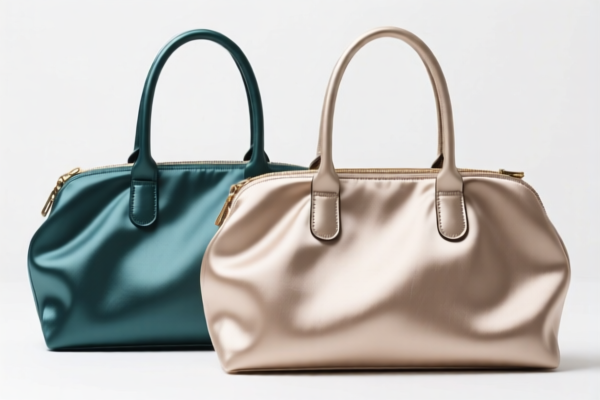
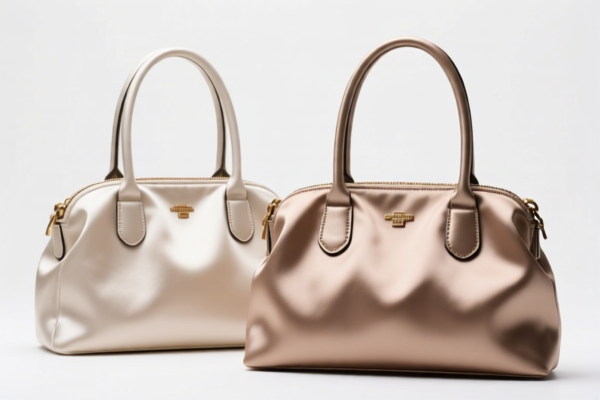
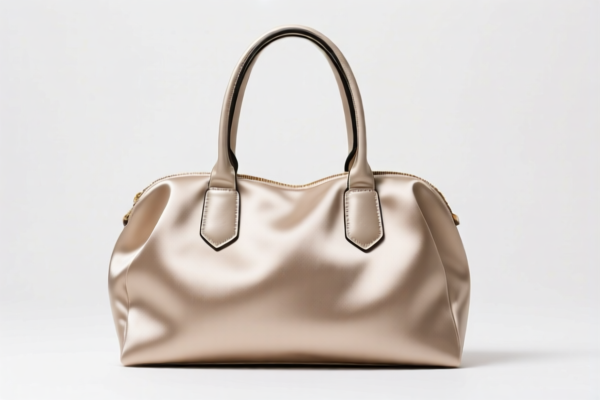
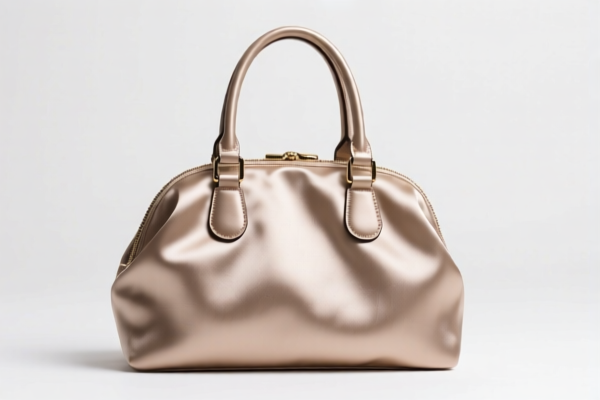
AI分析
👜 Silk Handbag (Vintage) — The Ultimate Clearance & Tax Guide (2026 Edition)
🌐 HS Code Reference & Clearance Guide | Latest Tariff Breakdown | Professional Entry Strategy
📌 I. Product Definition: What Exactly Is a "Silk Handbag"?
A Silk Handbag, particularly vintage styles, is a finished accessory used for carrying personal items. In international trade, it is not just defined by its material ("silk") but by its function and form.
Key Distinctions: * Finished Article (Handbag): A manufactured item with handles/straps, ready for use. → Chapter 42 (Articles of Leather; Saddle harness) * Raw Material (Fabric/Yarn): Silk thread, woven silk fabric, or loose silk fibers. → Chapter 50 (Silk)
⚠️ Critical Classification Point:
If the item is a completed bag with structure, lining, and handles, it must be classified under Chapter 42, not Chapter 50. Classifying a finished bag as raw silk fabric is a major customs error that triggers penalties.
📦 II. HS Code Classification Details (Based on Provided Data)
Below are the 5 specific HS Codes referenced in the data, ordered by logical relevance and tax efficiency. Note that Chapter 42 codes are the most accurate for finished handbags, while Chapter 63 is a fallback for "made-up" textile articles.
| HS Code | Product Description | Logical Basis for Classification | Total Tax Rate |
|---|---|---|---|
6307.90.98.91 |
Other Made-Up Articles | Textile material (silk) formed into a handbag. Classified as a "made-up" textile article rather than a leather/other material bag. | 24.5% |
5007.90.60.90 |
Woven Silk Fabrics | Incorrectly matches the material (silk fabric) but ignores the form (handbag). High penalty due to mismatch. | 38.9% |
4202.22.70.00 |
Handbags with Surface of Textile Materials | Most accurate for textile-based handbags. Assumes >85% silk content. Shape matches handbag requirement. | 42.0% |
4202.22.40.10 |
Handbags with Surface of Textile Materials | Similar to above. Matches "handbag" form + "silk/textile" material. | 42.4% |
4202.22.40.20 |
Handbags (Cotton/Woven Ref) | Reference code for woven handbags. Mentioned as similar material reference, but less precise for pure silk than 70.00. |
42.4% |
🔍 Key Insight:
-6307.90.98.91offers the lowest tax rate (24.5%) because it classifies the bag as a general "made-up textile article."
-4202.22.70.00is the most technically correct for a structured handbag made of textile (silk) but carries a higher tax burden.
-5007.90.60.90is a trap — it treats your finished bag as raw silk fabric, leading to high tariffs.
💰 III. 2026 Tariff Rate Breakdown (Including Surtaxes)
✅ Jurisdiction: United States (US)
✅ Origin: China (CN)
✅ Effective Date: Post-November 2025 policies (Section 301 & IEEPA)
🎯 1. 6307.90.98.91 — Other Made-Up Articles (Lowest Tax)
| Item | Detail |
|---|---|
| Base Duty | 7.0% (Standard MFN rate for other made-up textile articles) |
| Section 301 Surtax | 7.5% (Specific rate for this subheading under Trade Act 301) |
| IEEPA Section 122 | 10.0% (Additional surcharge on Chinese textile/apparel goods) |
| Total Effective Rate | 24.5% |
| Calculation | CIF Value × 24.5% |
| De Minimis Exemption? | ❌ NO (Cannot use $800 de minimis for Chinese textile goods under current rules) |
📌 Explanation:
This code benefits from a lower Section 301 surtax (7.5% vs 25% for handbags), making it the most cost-effective if deemed acceptable by Customs. The 10% IEEPA is standard for Chinese apparel/textiles.
🎯 2. 5007.90.60.90 — Woven Silk Fabrics (High Penalty)
| Item | Detail |
|---|---|
| Base Duty | 3.9% (Low for fabrics) |
| Section 301 Surtax | 25.0% (Standard 301 rate for Chinese textiles) |
| IEEPA Section 122 | 10.0% |
| Total Effective Rate | 38.9% |
| Risk | ⚠️ High Risk of Rejection because a handbag is not "fabric." Customs may reclassify to 4202 and add penalties. |
📌 Warning:
Do not use this code unless you are importing rolls of silk fabric, not finished bags. Misclassification leads to audits.
🎯 3. 4202.22.70.00 — Handbags (Textile Surface) (Most Accurate)
| Item | Detail |
|---|---|
| Base Duty | 7.0% |
| Section 301 Surtax | 25.0% (Full 301 rate for finished handbags from China) |
| IEEPA Section 122 | 10.0% |
| Total Effective Rate | 42.0% |
| Calculation | CIF Value × 42.0% |
| De Minimis Exemption? | ❌ NO |
📌 Explanation:
This is the correct HS Code for a silk handbag. However, it suffers the full 25% Section 301 surtax. It is safe for compliance but expensive.
🎯 4 & 5. 4202.22.40.10 & 4202.22.40.20 — Handbags (Textile)
| Item | Detail |
|---|---|
| Base Duty | 7.4% |
| Section 301 Surtax | 25.0% |
| IEEPA Section 122 | 10.0% |
| Total Effective Rate | 42.4% |
| Difference | Minor base duty difference from 70.00 due to specific subheading details (e.g., weaving type). |
🛠️ IV. Practical Clearance Advice (Avoid Pitfalls)
✅ 1. Documentation Checklist
| Document | Required? | Notes |
|---|---|---|
| Commercial Invoice | ✅ Mandatory | Must state: "Silk Handbag, Made in China, HS Code [Correct Code]" |
| Packing List | ✅ Mandatory | Detail dimensions, weight, and number of pieces. |
| Product Description | ✅ Mandatory | Be specific: "Vintage-style Silk Handbag, Textile Surface, Leather Lining/Handles?" |
| Material Composition | ✅ Mandatory | Crucial: State % of Silk. (e.g., "100% Silk Shell, 100% Polyester Lining"). If >85% silk, it affects classification. |
| Photos | ✅ Recommended | Front, back, interior, label, and handle details. Helps prove it's a "handbag" (Chapter 42) not "fabric" (Chapter 50). |
| Certificate of Origin | ✅ Recommended | Proves origin as China (triggers Section 301/IEEPA). |
✅ 2. Classification Strategy: Which HS Code to Choose?
| Strategy | Recommended HS Code | Pros | Cons |
|---|---|---|---|
| Cost-Optimized | 6307.90.98.91 |
Lowest tax (24.5%). | Risk of being questioned if bag structure is complex (handles, zippers). Customs may argue it's a "bag" (Ch 42). |
| Compliance-Safe | 4202.22.70.00 |
Most accurate for "Handbags." Accepted by CBP. | Higher tax (42.0%). |
| Avoid | 5007.90.60.90 |
N/A | Dangerous. Misclassifies a finished good as raw material. High penalty risk. |
📌 Expert Tip:
If the handbag has leather handles, zippers, or lining,4202.22.70.00is safer. If it is a simple textile pouch or tote with textile handles,6307.90.98.91might be defensible.
Recommendation: For vintage silk handbags with metal hardware/leather accents, use4202.22.70.00to ensure smooth clearance.
✅ 3. Special Considerations for "Vintage" Items
- Antique vs. Vintage: If truly antique (>100 years old), it may qualify for duty-free entry under Chapter 97 or specific exemptions. However, most "vintage" items are 20-90 years old and do not qualify.
- Repairs/Alterations: If the vintage bag has been significantly repaired (e.g., new lining, re-taping), it may be considered "new" for customs purposes.
- Labeling: Ensure labels clearly state "Vintage" and "Made in [Country of Original Manufacture]." If it's a vintage item made in China, it's still subject to China-origin tariffs.
🌍 V. Global Market Comparison (2026)
| Country | Recommended HS Code | Total Tax (China Origin) | Notes |
|---|---|---|---|
| 🇺🇸 USA | 4202.22.70.00 |
42.0% | Includes 25% Section 301 + 10% IEEPA. |
| 🇺🇸 USA (Optimized) | 6307.90.98.91 |
24.5% | Lower tax if accepted as "made-up article." |
| 🇪🇺 EU | 4202.22 |
~12% | No Section 301/IEEPA. Standard EU duty. |
| 🇬🇧 UK | 4202.22 |
~12% | Post-Brexit tariff. No US-style surtaxes. |
| 🇨🇳 China | 4202.22 |
8% | Import duty into China. |
📌 Conclusion:
The US market has the highest barriers for Chinese silk handbags due to political tariffs. Consider transshipment (not recommended without proper legal advice) or sourcing from non-China origins to mitigate costs.
📌 VI. Common Mistakes & How to Avoid Them
❌ Mistake 1: Classifying as 5007 (Silk Fabric)
👉 Result: Customs rejects it as "not fabric," delays shipment, and forces reclassification to 4202 with penalties.
❌ Mistake 2: Ignoring the "IEEPA 10%" Surcharge
👉 Result: Underpayment of duties. The 10% is separate from the 25% Section 301. Total is not 25%, it's 25% + 10% + Base.
❌ Mistake 3: Assuming "Vintage" = "Duty-Free"
👉 Result: Most vintage items are taxable. Only true antiques (>100 years) may be exempt.
✅ Correct Approach:
"Handbag, Silk, Textile Surface, Vintage Style, HS Code 4202.22.70.00. Country of Origin: China. Subject to 25% Section 301 and 10% IEEPA surtax."
🎯 VII. Final Recommendations
- For Compliance: Use
4202.22.70.00. It is the most defensible for a structured handbag. - For Cost Savings: Try
6307.90.98.91. If your handbag is simple (no hard structure, textile handles), this is valid and saves ~17.5% in taxes. - Pre-Clearance: Submit a Binding Tariff Information (BTI) or Advance Ruling request to US Customs if the shipment value is high. This locks in the classification.
- Documentation: Clearly label the commercial invoice with the exact HS Code and duty breakdown.
📣 Act Now:
📞 Consult a licensed customs broker.
📦 Provide sample photos for classification verification.
💡 Save up to 17.5% by choosing the right HS Code!
✨ Precision in Classification = Profit in Clearance!
💼 Don't let hidden tariffs eat your margin!
用户评价
关于 HS 编码归类
协调制度(HS)是由世界海关组织(WCO)制定的国际贸易商品分类标准。全球 200 多个国家采用 HS 系统作为海关关税、贸易统计和进出口监管的基础。
每个 HS 编码遵循以下层级结构:
- 章(2 位)——商品大类(例如:第 84 章:机器和机械设备)
- 品目(4 位)——章内的更具体分类
- 子目(6 位)——国际通用细分,所有 WCO 成员国统一使用
- 本国细分(8-10 位)——各国自行扩展的细分编码,如美国 HTSUS 10 位编码
正确的 HS 编码归类对于顺利通关、准确缴纳关税和遵守贸易法规至关重要。错误归类可能导致海关延误、多缴关税或罚款。
从CN进口到US时,适用的关税税率可能包括:
- 最惠国(MFN)税率——适用于 WTO 成员国的标准关税税率
- 普通税率——适用于无贸易协定国家
- 贸易救济关税——附加关税,如 301 条款(反倾销)、232 条款(国家安全)或反补贴税
本页内容仅供参考。如需正式归类,请咨询当地海关或持牌报关代理。