Silk Handbag (Vintage)
CN → US| HS Code | Tariff Rate | Origin | Destination | Doc |
|---|---|---|---|---|
| 6307909891 | 24.5% | CN | US | Official Doc |
| 5007906090 | 38.9% | CN | US | Official Doc |
| 4202227000 | 42.0% | CN | US | Official Doc |
| 4202224010 | 42.4% | CN | US | Official Doc |
| 4202224020 | 42.4% | CN | US | Official Doc |
Product Images
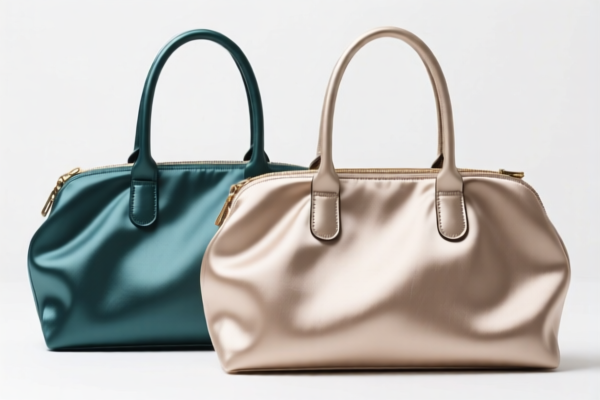
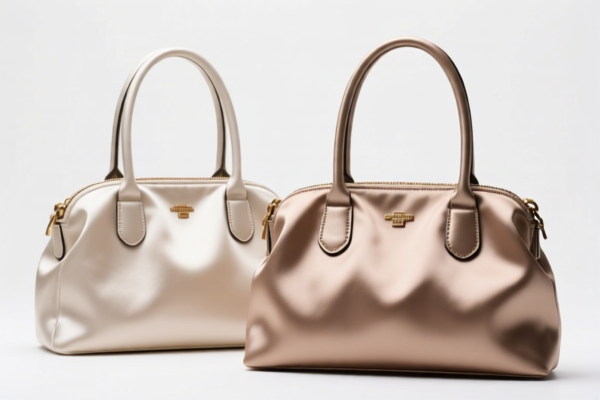
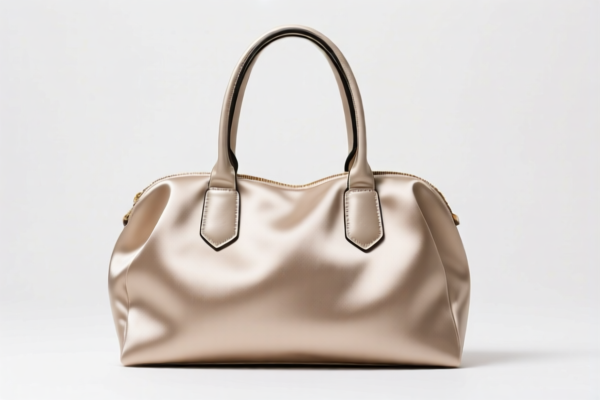
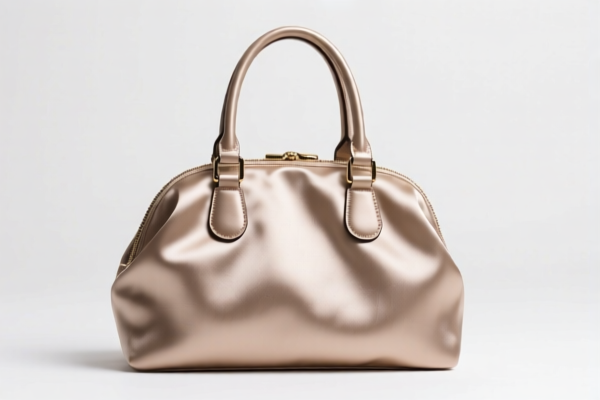
AI Analysis
👜 Silk Handbag (Vintage) — The Ultimate Clearance & Tax Guide (2026 Edition)
🌐 HS Code Reference & Clearance Guide | Latest Tariff Breakdown | Professional Entry Strategy
📌 I. Product Definition: What Exactly Is a "Silk Handbag"?
A Silk Handbag, particularly vintage styles, is a finished accessory used for carrying personal items. In international trade, it is not just defined by its material ("silk") but by its function and form.
Key Distinctions: * Finished Article (Handbag): A manufactured item with handles/straps, ready for use. → Chapter 42 (Articles of Leather; Saddle harness) * Raw Material (Fabric/Yarn): Silk thread, woven silk fabric, or loose silk fibers. → Chapter 50 (Silk)
⚠️ Critical Classification Point:
If the item is a completed bag with structure, lining, and handles, it must be classified under Chapter 42, not Chapter 50. Classifying a finished bag as raw silk fabric is a major customs error that triggers penalties.
📦 II. HS Code Classification Details (Based on Provided Data)
Below are the 5 specific HS Codes referenced in the data, ordered by logical relevance and tax efficiency. Note that Chapter 42 codes are the most accurate for finished handbags, while Chapter 63 is a fallback for "made-up" textile articles.
| HS Code | Product Description | Logical Basis for Classification | Total Tax Rate |
|---|---|---|---|
6307.90.98.91 |
Other Made-Up Articles | Textile material (silk) formed into a handbag. Classified as a "made-up" textile article rather than a leather/other material bag. | 24.5% |
5007.90.60.90 |
Woven Silk Fabrics | Incorrectly matches the material (silk fabric) but ignores the form (handbag). High penalty due to mismatch. | 38.9% |
4202.22.70.00 |
Handbags with Surface of Textile Materials | Most accurate for textile-based handbags. Assumes >85% silk content. Shape matches handbag requirement. | 42.0% |
4202.22.40.10 |
Handbags with Surface of Textile Materials | Similar to above. Matches "handbag" form + "silk/textile" material. | 42.4% |
4202.22.40.20 |
Handbags (Cotton/Woven Ref) | Reference code for woven handbags. Mentioned as similar material reference, but less precise for pure silk than 70.00. |
42.4% |
🔍 Key Insight:
-6307.90.98.91offers the lowest tax rate (24.5%) because it classifies the bag as a general "made-up textile article."
-4202.22.70.00is the most technically correct for a structured handbag made of textile (silk) but carries a higher tax burden.
-5007.90.60.90is a trap — it treats your finished bag as raw silk fabric, leading to high tariffs.
💰 III. 2026 Tariff Rate Breakdown (Including Surtaxes)
✅ Jurisdiction: United States (US)
✅ Origin: China (CN)
✅ Effective Date: Post-November 2025 policies (Section 301 & IEEPA)
🎯 1. 6307.90.98.91 — Other Made-Up Articles (Lowest Tax)
| Item | Detail |
|---|---|
| Base Duty | 7.0% (Standard MFN rate for other made-up textile articles) |
| Section 301 Surtax | 7.5% (Specific rate for this subheading under Trade Act 301) |
| IEEPA Section 122 | 10.0% (Additional surcharge on Chinese textile/apparel goods) |
| Total Effective Rate | 24.5% |
| Calculation | CIF Value × 24.5% |
| De Minimis Exemption? | ❌ NO (Cannot use $800 de minimis for Chinese textile goods under current rules) |
📌 Explanation:
This code benefits from a lower Section 301 surtax (7.5% vs 25% for handbags), making it the most cost-effective if deemed acceptable by Customs. The 10% IEEPA is standard for Chinese apparel/textiles.
🎯 2. 5007.90.60.90 — Woven Silk Fabrics (High Penalty)
| Item | Detail |
|---|---|
| Base Duty | 3.9% (Low for fabrics) |
| Section 301 Surtax | 25.0% (Standard 301 rate for Chinese textiles) |
| IEEPA Section 122 | 10.0% |
| Total Effective Rate | 38.9% |
| Risk | ⚠️ High Risk of Rejection because a handbag is not "fabric." Customs may reclassify to 4202 and add penalties. |
📌 Warning:
Do not use this code unless you are importing rolls of silk fabric, not finished bags. Misclassification leads to audits.
🎯 3. 4202.22.70.00 — Handbags (Textile Surface) (Most Accurate)
| Item | Detail |
|---|---|
| Base Duty | 7.0% |
| Section 301 Surtax | 25.0% (Full 301 rate for finished handbags from China) |
| IEEPA Section 122 | 10.0% |
| Total Effective Rate | 42.0% |
| Calculation | CIF Value × 42.0% |
| De Minimis Exemption? | ❌ NO |
📌 Explanation:
This is the correct HS Code for a silk handbag. However, it suffers the full 25% Section 301 surtax. It is safe for compliance but expensive.
🎯 4 & 5. 4202.22.40.10 & 4202.22.40.20 — Handbags (Textile)
| Item | Detail |
|---|---|
| Base Duty | 7.4% |
| Section 301 Surtax | 25.0% |
| IEEPA Section 122 | 10.0% |
| Total Effective Rate | 42.4% |
| Difference | Minor base duty difference from 70.00 due to specific subheading details (e.g., weaving type). |
🛠️ IV. Practical Clearance Advice (Avoid Pitfalls)
✅ 1. Documentation Checklist
| Document | Required? | Notes |
|---|---|---|
| Commercial Invoice | ✅ Mandatory | Must state: "Silk Handbag, Made in China, HS Code [Correct Code]" |
| Packing List | ✅ Mandatory | Detail dimensions, weight, and number of pieces. |
| Product Description | ✅ Mandatory | Be specific: "Vintage-style Silk Handbag, Textile Surface, Leather Lining/Handles?" |
| Material Composition | ✅ Mandatory | Crucial: State % of Silk. (e.g., "100% Silk Shell, 100% Polyester Lining"). If >85% silk, it affects classification. |
| Photos | ✅ Recommended | Front, back, interior, label, and handle details. Helps prove it's a "handbag" (Chapter 42) not "fabric" (Chapter 50). |
| Certificate of Origin | ✅ Recommended | Proves origin as China (triggers Section 301/IEEPA). |
✅ 2. Classification Strategy: Which HS Code to Choose?
| Strategy | Recommended HS Code | Pros | Cons |
|---|---|---|---|
| Cost-Optimized | 6307.90.98.91 |
Lowest tax (24.5%). | Risk of being questioned if bag structure is complex (handles, zippers). Customs may argue it's a "bag" (Ch 42). |
| Compliance-Safe | 4202.22.70.00 |
Most accurate for "Handbags." Accepted by CBP. | Higher tax (42.0%). |
| Avoid | 5007.90.60.90 |
N/A | Dangerous. Misclassifies a finished good as raw material. High penalty risk. |
📌 Expert Tip:
If the handbag has leather handles, zippers, or lining,4202.22.70.00is safer. If it is a simple textile pouch or tote with textile handles,6307.90.98.91might be defensible.
Recommendation: For vintage silk handbags with metal hardware/leather accents, use4202.22.70.00to ensure smooth clearance.
✅ 3. Special Considerations for "Vintage" Items
- Antique vs. Vintage: If truly antique (>100 years old), it may qualify for duty-free entry under Chapter 97 or specific exemptions. However, most "vintage" items are 20-90 years old and do not qualify.
- Repairs/Alterations: If the vintage bag has been significantly repaired (e.g., new lining, re-taping), it may be considered "new" for customs purposes.
- Labeling: Ensure labels clearly state "Vintage" and "Made in [Country of Original Manufacture]." If it's a vintage item made in China, it's still subject to China-origin tariffs.
🌍 V. Global Market Comparison (2026)
| Country | Recommended HS Code | Total Tax (China Origin) | Notes |
|---|---|---|---|
| 🇺🇸 USA | 4202.22.70.00 |
42.0% | Includes 25% Section 301 + 10% IEEPA. |
| 🇺🇸 USA (Optimized) | 6307.90.98.91 |
24.5% | Lower tax if accepted as "made-up article." |
| 🇪🇺 EU | 4202.22 |
~12% | No Section 301/IEEPA. Standard EU duty. |
| 🇬🇧 UK | 4202.22 |
~12% | Post-Brexit tariff. No US-style surtaxes. |
| 🇨🇳 China | 4202.22 |
8% | Import duty into China. |
📌 Conclusion:
The US market has the highest barriers for Chinese silk handbags due to political tariffs. Consider transshipment (not recommended without proper legal advice) or sourcing from non-China origins to mitigate costs.
📌 VI. Common Mistakes & How to Avoid Them
❌ Mistake 1: Classifying as 5007 (Silk Fabric)
👉 Result: Customs rejects it as "not fabric," delays shipment, and forces reclassification to 4202 with penalties.
❌ Mistake 2: Ignoring the "IEEPA 10%" Surcharge
👉 Result: Underpayment of duties. The 10% is separate from the 25% Section 301. Total is not 25%, it's 25% + 10% + Base.
❌ Mistake 3: Assuming "Vintage" = "Duty-Free"
👉 Result: Most vintage items are taxable. Only true antiques (>100 years) may be exempt.
✅ Correct Approach:
"Handbag, Silk, Textile Surface, Vintage Style, HS Code 4202.22.70.00. Country of Origin: China. Subject to 25% Section 301 and 10% IEEPA surtax."
🎯 VII. Final Recommendations
- For Compliance: Use
4202.22.70.00. It is the most defensible for a structured handbag. - For Cost Savings: Try
6307.90.98.91. If your handbag is simple (no hard structure, textile handles), this is valid and saves ~17.5% in taxes. - Pre-Clearance: Submit a Binding Tariff Information (BTI) or Advance Ruling request to US Customs if the shipment value is high. This locks in the classification.
- Documentation: Clearly label the commercial invoice with the exact HS Code and duty breakdown.
📣 Act Now:
📞 Consult a licensed customs broker.
📦 Provide sample photos for classification verification.
💡 Save up to 17.5% by choosing the right HS Code!
✨ Precision in Classification = Profit in Clearance!
💼 Don't let hidden tariffs eat your margin!
Customer Reviews
About HS Code Classification
The Harmonized System (HS) is an internationally standardized nomenclature developed by the World Customs Organization (WCO) to classify traded products. Over 200 countries use the HS system as the basis for customs tariffs, trade statistics, and import/export regulations.
Each HS code follows a hierarchical structure:
- Chapter (2 digits) — Broad category of goods (e.g., Chapter 84: Machinery and Mechanical Appliances)
- Heading (4 digits) — More specific grouping within the chapter
- Subheading (6 digits) — Internationally standardized breakdown, used by all WCO member countries
- National subdivisions (8-10 digits) — Country-specific extensions for further classification, such as US HTSUS 10-digit codes
Correct HS code classification is essential for smooth customs clearance, accurate duty payment, and compliance with trade regulations. Misclassification can lead to customs delays, overpayment of duties, or penalties.
When importing from CN to US, the applicable tariff rates may include:
- Most-Favored-Nation (MFN) rate — The standard duty rate applied to WTO members
- General rate — Applied to countries without trade agreements
- Trade remedy duties — Additional tariffs such as Section 301 (anti-dumping), Section 232 (national security), or countervailing duties
The information provided on this page is for reference purposes only. For official classification, please consult with your local customs authority or a licensed customs broker.