Sliced Utile Wood Veneer Sheets
CN → US| HS编码 | 关税税率 | 原产国 | 目的国 | 文档 |
|---|---|---|---|---|
| 4408390270 | 35.0% | CN | US | 官方文档 |
| 4408900197 | 35.0% | CN | US | 官方文档 |
| 4407290296 | 35.0% | CN | US | 官方文档 |
商品图片

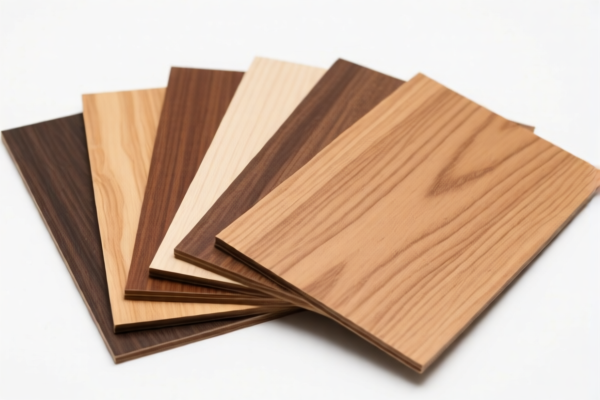
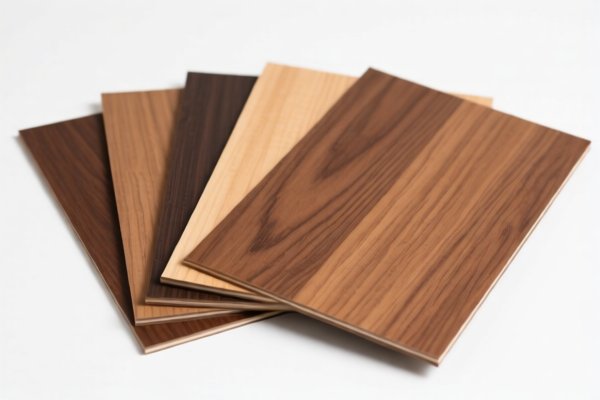
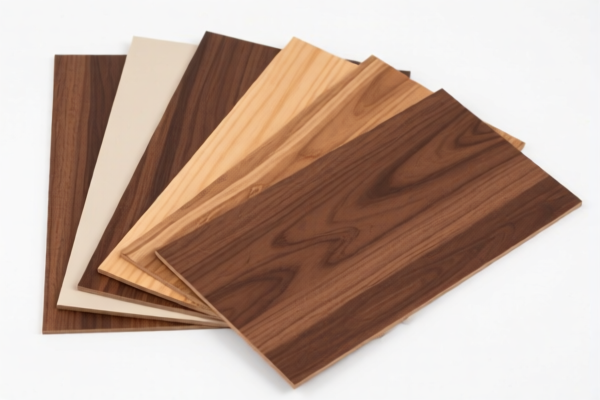
AI分析
🌿 Sliced Utile Wood Veneer Sheets (Entandrophragma spp.)
🌐 HS Code Reference & Customs Clearance Guide | 2026 Latest Tariff Breakdown | Professional Import Strategy
📌 One, Product Definition & Classification: What Exactly Is "Sliced Utile Veneer"?
Sliced Utile Wood Veneer Sheets are thin, decorative wood layers derived from tropical hardwood species of the Entandrophragma genus — commonly known as Utile, Sipo, or Sapelli. These veneers are produced by slicing logs lengthwise using precision machinery, resulting in continuous sheets with natural grain patterns ideal for high-end furniture, cabinetry, flooring, and architectural finishes.
⚠️ Key Classification Criteria:
- Thickness: ≤ 6 mm (critical for classification under 4408.39)
- Processing: Sliced (not peeled or chipped), may be planed, sanded, spliced, or end-jointed
- Origin: Tropical wood (not temperate or softwood)
- Species: Specifically Utile (Entandrophragma spp.), Sapele (Sapelli), or Sipo
- Use: Primarily for veneering, plywood, or laminated wood products✅ If any of these conditions are not met, the product may fall under a different HS Code (e.g., 4408.90.01.97 for "other" veneers).
📦 Two, HS Code Classification Details (2026 Official Tariff Matrix)
| HS Code | Product Description | Applicable Use Case | Thickness | Species | Processing |
|---|---|---|---|---|---|
4408.39.02.70 |
Sheets for veneering, sawn lengthwise, sliced or peeled, ≤6 mm; of tropical wood: Other: Sapele (Sapelli), Sipo or Utile (Entandrophragma spp.) | High-end furniture, luxury cabinetry, decorative panels, veneer cores | ≤6 mm | ✅ Sapele / Sipo / Utile | Sliced, planed, sanded, spliced, or end-jointed |
4408.90.01.97 |
Sheets for veneering, ≤6 mm; Other: Other | General-purpose veneers, non-specific tropical species, or unclear species | ≤6 mm | ❌ Not Sapele/Sipo/Utile | Sliced, planed, sanded, spliced, or end-jointed |
🔍 Critical Note:
- Only veneers from Sapele, Sipo, or Utile (Entandrophragma spp.) qualify for4408.39.02.70
- All other tropical wood veneers (e.g., Mahogany, Teak, Rosewood) fall under4408.90.01.97
- Species identification is mandatory — failure to prove origin = incorrect classification → penalties
💰 Three, 2026 Latest Tariff Breakdown (With附加 Taxes & Legal Basis)
✅ Applicable Country: United States (US)
✅ Origin: China (CN), Vietnam (VN), or other non-FTA countries
✅ Effective Date: November 10, 2025 (inclusive of subsequent imports)
🎯 1. 4408.39.02.70 — Sliced Utile (Entandrophragma spp.) Veneer Sheets
| Item | Detail |
|---|---|
| Base Duty Rate | 0.0% (ad valorem) |
| USITC Additional Tariff | +25.0% (under Section 301 of U.S. Trade Act) |
| IEEPA Additional Tariff | +10.0% (International Emergency Economic Powers Act, targeting China/HK) |
| Total Effective Tariff | 35.0% |
| Tax Calculation | CIF Value × 35.0% |
| De Minimis Threshold | ❌ Not applicable (denied de minimis under 9903.88.01) |
| Legal Pathway | IEEPA:9903.01.24 → USITC:4408.39.02.70 → FOOTNOTE:9903.88.01 |
📌 Explanation:
- The 25% USITC tariff is triggered by the U.S. Trade Representative’s Section 301 investigation into China’s unfair trade practices.
- The 10% IEEPA tariff applies to all goods from China and Hong Kong, regardless of origin.
- Total: 35% — one of the highest effective rates for wood-based decorative materials.
🎯 2. 4408.90.01.97 — Other Tropical Wood Veneer Sheets (Non-Sapele/Sipo/Utile)
| Item | Detail |
|---|---|
| Base Duty Rate | 0.0% |
| USITC Additional Tariff | +25.0% |
| IEEPA Additional Tariff | +10.0% |
| Total Effective Tariff | 35.0% |
| Tax Calculation | CIF Value × 35.0% |
| De Minimis Threshold | ❌ Not applicable |
| Legal Pathway | IEEPA:9901.25 → IEEPA:9903.01.24 → USITC:4408.90.01.97 → FOOTNOTE:9903.88.01 |
📌 Important Note:
- Even if your veneer is not Utile, Sapele, or Sipo, but still tropical and ≤6 mm, it still faces 35% total duty.
- No exception — this applies to all "other" tropical wood veneers.
- Species must be declared accurately — mislabeling can lead to audits, penalties, or seizure.
🛠️ Four, Customs Clearance Best Practices (Pro Tips to Avoid Delays & Fines)
✅ 1. Must-Have Documentation (Non-Negotiable)
| Document | Required? | Purpose |
|---|---|---|
| ✅ Commercial Invoice | ✔️ | Clearly states: "Sliced Utile Veneer, Entandrophragma spp., 4408.39.02.70" |
| ✅ Packing List | ✔️ | Specifies sheet dimensions, quantity, weight, and packaging |
| ✅ Bill of Lading (B/L) | ✔️ | Proves shipment origin and route |
| ✅ Certificate of Origin (CO) | ✔️ | Must confirm origin (e.g., Vietnam, Indonesia, Cameroon) — crucial for tariff eligibility |
| ✅ Species Certificate / Botanical ID | ✔️ | Proof that wood is Entandrophragma spp. (Utile) — required for 4408.39.02.70 |
| ✅ Third-Party Test Report | ✔️ | FSC, PEFC, CITES (if applicable), or wood species verification |
| ✅ Product Photos (with grain & markings) | ✔️ | Helps customs verify species and processing method |
✅ 2.申报技巧(申报口诀)
🔥 “Species precise, thickness under 6mm, origin clear, tax 35% — no shortcuts!”
| Scenario | Correct HS Code | Wrong Practice |
|---|---|---|
| Utile veneer, ≤6 mm, sliced, from Cameroon | 4408.39.02.70 |
Misreported as 4408.90.01.97 → same tax, but risk of audit |
| Sapele veneer, 5.8 mm, sliced | 4408.39.02.70 |
Reported as “tropical wood veneer” without species → risk of penalty |
| Veneer from Vietnam, 5.5 mm, Utile | 4408.39.02.70 |
Declared as “China origin” → 35% tax applies anyway |
| Veneer from Thailand, 4 mm, unknown species | 4408.90.01.97 |
Claimed as “Utile” without proof → penalties + fines |
✅ 3. Special Cases & Risk Mitigation
| Situation | Recommended Action |
|---|---|
| Veneer from Vietnam or Indonesia | Use Certificate of Origin to qualify for potential FTA benefits (though no exemption from 35% in current regime) |
| Veneer with mixed species | Do not combine in one shipment — declare separately or risk incorrect classification |
| Veneer with CITES-protected species | Must obtain CITES permit — even if not listed in data, customs may investigate |
| Veneer used in luxury furniture | Include product photos + design drawings to support classification |
| Re-export or re-import | Declare as “re-imported” with original invoice — avoid double taxation |
🌍 Five, Global Market Comparison (2026 Tariff Snapshot)
| Country/Region | Recommended HS Code | Base Duty | Additional Taxes | Notes |
|---|---|---|---|---|
| 🇺🇸 United States | 4408.39.02.70 or 4408.90.01.97 |
0% | +25% (USITC) +10% (IEEPA) → 35% total | No de minimis |
| 🇨🇳 China | 4408.39.02.70 |
5% | None | FTA benefits available |
| 🇪🇺 European Union | 4408.39.02.70 |
0% (if CE/CEC) | None | No Section 301-style tariffs |
| 🇦🇺 Australia | 4408.39.02.70 |
5% | None | RCM certification required |
| 🇯🇵 Japan | 4408.39.02.70 |
0% | None | PSE certification needed |
📌 Insight:
- The U.S. is the only market imposing 35% effective duty on Utile/Sapele/Sipo veneers.
- China, EU, Japan, and Australia have much lower or zero tariffs — consider shifting supply chain.
📌 Six, Common Mistakes & Risk Alerts (Avoid These!)
❌ Mistake 1: Declaring "tropical wood veneer" without specifying Utile, Sapele, or Sipo
👉 Result: Incorrect HS Code → 35% tax + potential penalties
❌ Mistake 2: Using a generic "wood veneer" description on invoice
👉 Result: Customs cannot verify species → delayed clearance or refusal
❌ Mistake 3: Failing to provide species certificate or botanical ID
👉 Result: Audit, seizure, or demand for reclassification
❌ Mistake 4: Shipping from China but claiming Vietnam origin without proof
👉 Result: False origin → penalties under 19 CFR 151.22
❌ Mistake 5: Not checking thickness — if >6 mm, it falls under 4407.29.02.96 (wood sawn lengthwise)
👉 Result: Wrong classification → higher tariff or reclassification
🎯 Seven, Conclusion: Precision Matters — One Misstep = 35% Tax!
🎯 Remember the Golden Rule:
🔹 "Species first, thickness second, origin third — declare it all, or pay the price!"
🔹 "35% is the cost of entry into the U.S. — no exceptions, no waivers."
📌 Pro Tip:
If your veneer is originating from Vietnam, Indonesia, or Cameroon, apply for pre-ruling (Advance Ruling) from U.S. Customs to lock in the correct HS Code and avoid disputes.
📣 Take Action Now:
📞 Contact a licensed customs broker + provide:
- Product photos
- Species certificate
- Commercial invoice
- Certificate of Origin
✅ Get your HS Code pre-approved before shipment!
✨ Professional Clearance Starts with Accurate Classification!
💼 Your profit margin depends on every percentage point — don’t let tax surprises eat it!
用户评价
关于 HS 编码归类
协调制度(HS)是由世界海关组织(WCO)制定的国际贸易商品分类标准。全球 200 多个国家采用 HS 系统作为海关关税、贸易统计和进出口监管的基础。
每个 HS 编码遵循以下层级结构:
- 章(2 位)——商品大类(例如:第 84 章:机器和机械设备)
- 品目(4 位)——章内的更具体分类
- 子目(6 位)——国际通用细分,所有 WCO 成员国统一使用
- 本国细分(8-10 位)——各国自行扩展的细分编码,如美国 HTSUS 10 位编码
正确的 HS 编码归类对于顺利通关、准确缴纳关税和遵守贸易法规至关重要。错误归类可能导致海关延误、多缴关税或罚款。
从CN进口到US时,适用的关税税率可能包括:
- 最惠国(MFN)税率——适用于 WTO 成员国的标准关税税率
- 普通税率——适用于无贸易协定国家
- 贸易救济关税——附加关税,如 301 条款(反倾销)、232 条款(国家安全)或反补贴税
本页内容仅供参考。如需正式归类,请咨询当地海关或持牌报关代理。