Sliced Utile Wood Veneer Sheets
CN → US| HS Code | Tariff Rate | Origin | Destination | Doc |
|---|---|---|---|---|
| 4408390270 | 35.0% | CN | US | Official Doc |
| 4408900197 | 35.0% | CN | US | Official Doc |
| 4407290296 | 35.0% | CN | US | Official Doc |
Product Images

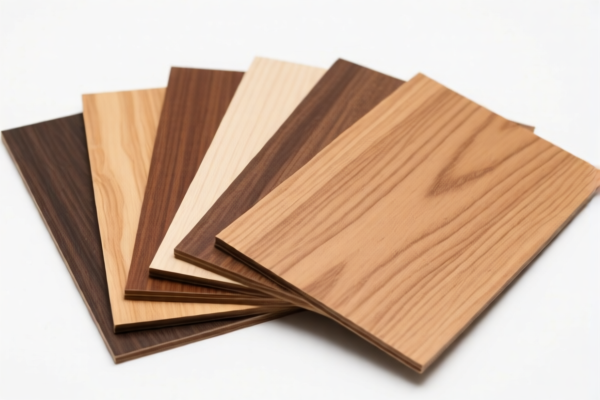
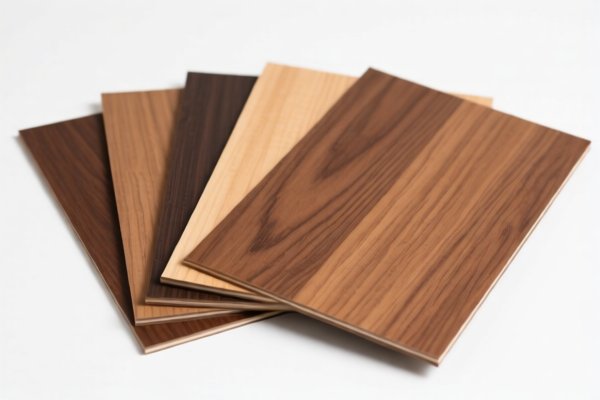
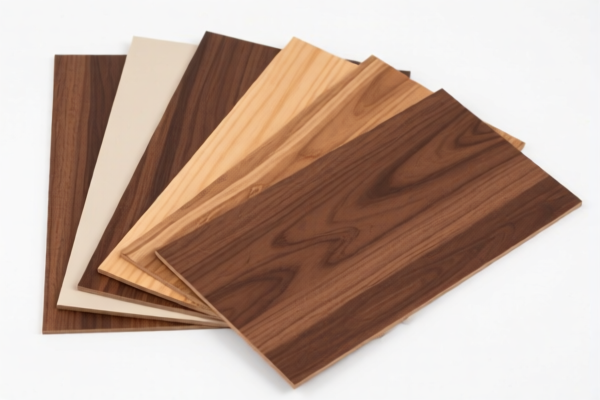
AI Analysis
🌿 Sliced Utile Wood Veneer Sheets (Entandrophragma spp.)
🌐 HS Code Reference & Customs Clearance Guide | 2026 Latest Tariff Breakdown | Professional Import Strategy
📌 One, Product Definition & Classification: What Exactly Is "Sliced Utile Veneer"?
Sliced Utile Wood Veneer Sheets are thin, decorative wood layers derived from tropical hardwood species of the Entandrophragma genus — commonly known as Utile, Sipo, or Sapelli. These veneers are produced by slicing logs lengthwise using precision machinery, resulting in continuous sheets with natural grain patterns ideal for high-end furniture, cabinetry, flooring, and architectural finishes.
⚠️ Key Classification Criteria:
- Thickness: ≤ 6 mm (critical for classification under 4408.39)
- Processing: Sliced (not peeled or chipped), may be planed, sanded, spliced, or end-jointed
- Origin: Tropical wood (not temperate or softwood)
- Species: Specifically Utile (Entandrophragma spp.), Sapele (Sapelli), or Sipo
- Use: Primarily for veneering, plywood, or laminated wood products✅ If any of these conditions are not met, the product may fall under a different HS Code (e.g., 4408.90.01.97 for "other" veneers).
📦 Two, HS Code Classification Details (2026 Official Tariff Matrix)
| HS Code | Product Description | Applicable Use Case | Thickness | Species | Processing |
|---|---|---|---|---|---|
4408.39.02.70 |
Sheets for veneering, sawn lengthwise, sliced or peeled, ≤6 mm; of tropical wood: Other: Sapele (Sapelli), Sipo or Utile (Entandrophragma spp.) | High-end furniture, luxury cabinetry, decorative panels, veneer cores | ≤6 mm | ✅ Sapele / Sipo / Utile | Sliced, planed, sanded, spliced, or end-jointed |
4408.90.01.97 |
Sheets for veneering, ≤6 mm; Other: Other | General-purpose veneers, non-specific tropical species, or unclear species | ≤6 mm | ❌ Not Sapele/Sipo/Utile | Sliced, planed, sanded, spliced, or end-jointed |
🔍 Critical Note:
- Only veneers from Sapele, Sipo, or Utile (Entandrophragma spp.) qualify for4408.39.02.70
- All other tropical wood veneers (e.g., Mahogany, Teak, Rosewood) fall under4408.90.01.97
- Species identification is mandatory — failure to prove origin = incorrect classification → penalties
💰 Three, 2026 Latest Tariff Breakdown (With附加 Taxes & Legal Basis)
✅ Applicable Country: United States (US)
✅ Origin: China (CN), Vietnam (VN), or other non-FTA countries
✅ Effective Date: November 10, 2025 (inclusive of subsequent imports)
🎯 1. 4408.39.02.70 — Sliced Utile (Entandrophragma spp.) Veneer Sheets
| Item | Detail |
|---|---|
| Base Duty Rate | 0.0% (ad valorem) |
| USITC Additional Tariff | +25.0% (under Section 301 of U.S. Trade Act) |
| IEEPA Additional Tariff | +10.0% (International Emergency Economic Powers Act, targeting China/HK) |
| Total Effective Tariff | 35.0% |
| Tax Calculation | CIF Value × 35.0% |
| De Minimis Threshold | ❌ Not applicable (denied de minimis under 9903.88.01) |
| Legal Pathway | IEEPA:9903.01.24 → USITC:4408.39.02.70 → FOOTNOTE:9903.88.01 |
📌 Explanation:
- The 25% USITC tariff is triggered by the U.S. Trade Representative’s Section 301 investigation into China’s unfair trade practices.
- The 10% IEEPA tariff applies to all goods from China and Hong Kong, regardless of origin.
- Total: 35% — one of the highest effective rates for wood-based decorative materials.
🎯 2. 4408.90.01.97 — Other Tropical Wood Veneer Sheets (Non-Sapele/Sipo/Utile)
| Item | Detail |
|---|---|
| Base Duty Rate | 0.0% |
| USITC Additional Tariff | +25.0% |
| IEEPA Additional Tariff | +10.0% |
| Total Effective Tariff | 35.0% |
| Tax Calculation | CIF Value × 35.0% |
| De Minimis Threshold | ❌ Not applicable |
| Legal Pathway | IEEPA:9901.25 → IEEPA:9903.01.24 → USITC:4408.90.01.97 → FOOTNOTE:9903.88.01 |
📌 Important Note:
- Even if your veneer is not Utile, Sapele, or Sipo, but still tropical and ≤6 mm, it still faces 35% total duty.
- No exception — this applies to all "other" tropical wood veneers.
- Species must be declared accurately — mislabeling can lead to audits, penalties, or seizure.
🛠️ Four, Customs Clearance Best Practices (Pro Tips to Avoid Delays & Fines)
✅ 1. Must-Have Documentation (Non-Negotiable)
| Document | Required? | Purpose |
|---|---|---|
| ✅ Commercial Invoice | ✔️ | Clearly states: "Sliced Utile Veneer, Entandrophragma spp., 4408.39.02.70" |
| ✅ Packing List | ✔️ | Specifies sheet dimensions, quantity, weight, and packaging |
| ✅ Bill of Lading (B/L) | ✔️ | Proves shipment origin and route |
| ✅ Certificate of Origin (CO) | ✔️ | Must confirm origin (e.g., Vietnam, Indonesia, Cameroon) — crucial for tariff eligibility |
| ✅ Species Certificate / Botanical ID | ✔️ | Proof that wood is Entandrophragma spp. (Utile) — required for 4408.39.02.70 |
| ✅ Third-Party Test Report | ✔️ | FSC, PEFC, CITES (if applicable), or wood species verification |
| ✅ Product Photos (with grain & markings) | ✔️ | Helps customs verify species and processing method |
✅ 2.申报技巧(申报口诀)
🔥 “Species precise, thickness under 6mm, origin clear, tax 35% — no shortcuts!”
| Scenario | Correct HS Code | Wrong Practice |
|---|---|---|
| Utile veneer, ≤6 mm, sliced, from Cameroon | 4408.39.02.70 |
Misreported as 4408.90.01.97 → same tax, but risk of audit |
| Sapele veneer, 5.8 mm, sliced | 4408.39.02.70 |
Reported as “tropical wood veneer” without species → risk of penalty |
| Veneer from Vietnam, 5.5 mm, Utile | 4408.39.02.70 |
Declared as “China origin” → 35% tax applies anyway |
| Veneer from Thailand, 4 mm, unknown species | 4408.90.01.97 |
Claimed as “Utile” without proof → penalties + fines |
✅ 3. Special Cases & Risk Mitigation
| Situation | Recommended Action |
|---|---|
| Veneer from Vietnam or Indonesia | Use Certificate of Origin to qualify for potential FTA benefits (though no exemption from 35% in current regime) |
| Veneer with mixed species | Do not combine in one shipment — declare separately or risk incorrect classification |
| Veneer with CITES-protected species | Must obtain CITES permit — even if not listed in data, customs may investigate |
| Veneer used in luxury furniture | Include product photos + design drawings to support classification |
| Re-export or re-import | Declare as “re-imported” with original invoice — avoid double taxation |
🌍 Five, Global Market Comparison (2026 Tariff Snapshot)
| Country/Region | Recommended HS Code | Base Duty | Additional Taxes | Notes |
|---|---|---|---|---|
| 🇺🇸 United States | 4408.39.02.70 or 4408.90.01.97 |
0% | +25% (USITC) +10% (IEEPA) → 35% total | No de minimis |
| 🇨🇳 China | 4408.39.02.70 |
5% | None | FTA benefits available |
| 🇪🇺 European Union | 4408.39.02.70 |
0% (if CE/CEC) | None | No Section 301-style tariffs |
| 🇦🇺 Australia | 4408.39.02.70 |
5% | None | RCM certification required |
| 🇯🇵 Japan | 4408.39.02.70 |
0% | None | PSE certification needed |
📌 Insight:
- The U.S. is the only market imposing 35% effective duty on Utile/Sapele/Sipo veneers.
- China, EU, Japan, and Australia have much lower or zero tariffs — consider shifting supply chain.
📌 Six, Common Mistakes & Risk Alerts (Avoid These!)
❌ Mistake 1: Declaring "tropical wood veneer" without specifying Utile, Sapele, or Sipo
👉 Result: Incorrect HS Code → 35% tax + potential penalties
❌ Mistake 2: Using a generic "wood veneer" description on invoice
👉 Result: Customs cannot verify species → delayed clearance or refusal
❌ Mistake 3: Failing to provide species certificate or botanical ID
👉 Result: Audit, seizure, or demand for reclassification
❌ Mistake 4: Shipping from China but claiming Vietnam origin without proof
👉 Result: False origin → penalties under 19 CFR 151.22
❌ Mistake 5: Not checking thickness — if >6 mm, it falls under 4407.29.02.96 (wood sawn lengthwise)
👉 Result: Wrong classification → higher tariff or reclassification
🎯 Seven, Conclusion: Precision Matters — One Misstep = 35% Tax!
🎯 Remember the Golden Rule:
🔹 "Species first, thickness second, origin third — declare it all, or pay the price!"
🔹 "35% is the cost of entry into the U.S. — no exceptions, no waivers."
📌 Pro Tip:
If your veneer is originating from Vietnam, Indonesia, or Cameroon, apply for pre-ruling (Advance Ruling) from U.S. Customs to lock in the correct HS Code and avoid disputes.
📣 Take Action Now:
📞 Contact a licensed customs broker + provide:
- Product photos
- Species certificate
- Commercial invoice
- Certificate of Origin
✅ Get your HS Code pre-approved before shipment!
✨ Professional Clearance Starts with Accurate Classification!
💼 Your profit margin depends on every percentage point — don’t let tax surprises eat it!
Customer Reviews
About HS Code Classification
The Harmonized System (HS) is an internationally standardized nomenclature developed by the World Customs Organization (WCO) to classify traded products. Over 200 countries use the HS system as the basis for customs tariffs, trade statistics, and import/export regulations.
Each HS code follows a hierarchical structure:
- Chapter (2 digits) — Broad category of goods (e.g., Chapter 84: Machinery and Mechanical Appliances)
- Heading (4 digits) — More specific grouping within the chapter
- Subheading (6 digits) — Internationally standardized breakdown, used by all WCO member countries
- National subdivisions (8-10 digits) — Country-specific extensions for further classification, such as US HTSUS 10-digit codes
Correct HS code classification is essential for smooth customs clearance, accurate duty payment, and compliance with trade regulations. Misclassification can lead to customs delays, overpayment of duties, or penalties.
When importing from CN to US, the applicable tariff rates may include:
- Most-Favored-Nation (MFN) rate — The standard duty rate applied to WTO members
- General rate — Applied to countries without trade agreements
- Trade remedy duties — Additional tariffs such as Section 301 (anti-dumping), Section 232 (national security), or countervailing duties
The information provided on this page is for reference purposes only. For official classification, please consult with your local customs authority or a licensed customs broker.