Slicer
CN → US| HS编码 | 关税税率 | 原产国 | 目的国 | 文档 |
|---|---|---|---|---|
| 8438800000 | 35.0% | CN | US | 官方文档 |
| 8210000000 | 38.7% | CN | US | 官方文档 |
| 8438600000 | 35.0% | CN | US | 官方文档 |
商品图片


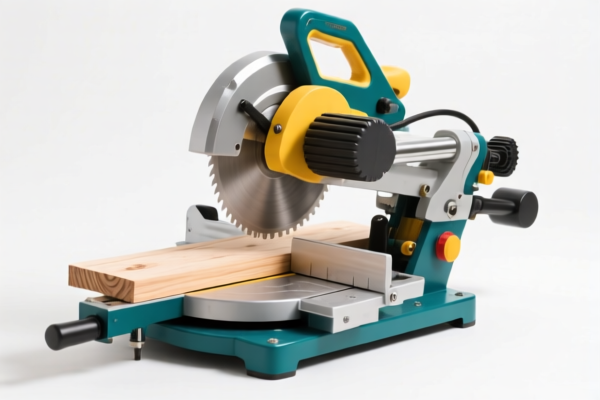
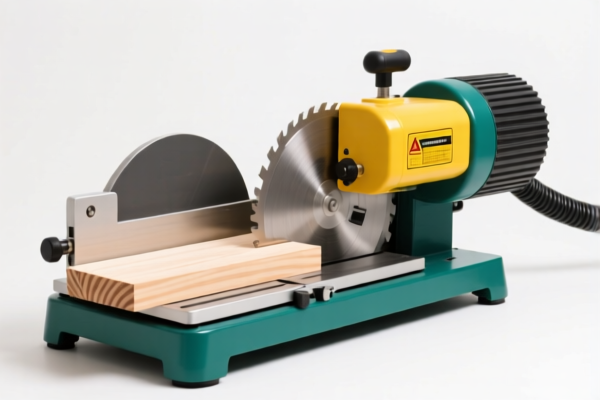
AI分析
🍎 Slicer: The Ultimate Global Trade & Tariff Guide (2026 Edition)
🌐 HS Code Classification & Customs Clearance Strategy | 2026 Tariff Deep Dive | Professional Entry Tips
📌 I. Product Definition & Classification: What Exactly is a "Slicer"?
A Slicer is a versatile tool found in both commercial kitchens and industrial food processing plants. Its classification hinges on two critical factors:
1. Mechanism: Is it a simple manual tool or a powered machine?
2. Intended Use: Is it for preparing fresh produce (fruits/vegetables/nuts) or for general food manufacturing?
⚠️ Critical Distinction:
- Manual Slicers: Often fall under Chapter 82 (Tools) as "Hand-operated mechanical appliances."
- Powered/Industrial Slicers: Usually fall under Chapter 84 (Machinery), specifically designed for "Preparation of food or beverages" or "Fruits, Nuts, Vegetables."
Misclassification leads to massive tariff shocks!
📦 II. HS Code Classification Matrix (2026 Tariff Authority)
| HS Code | Product Description | Application Logic | Typical Tax Burden (China Origin → US) |
|---|---|---|---|
| 8438.80.00.00 | Machinery for Preparation of Food/Drinks (General Industrial) | • Logic: Fits "Industrial preparation" logic. • Material: Metal/Plastic (No conflict). • Type: General food processing machines. |
35.0% (Base 0% + 25% Sec 301 + 10% 122) |
| 8210.00.00.00 | Hand-operated Mechanical Appliances | • Logic: Fits "Food preparation utensil" + "Manual mechanical" shape. • Type: Manual gear-slicers, handheld rotary slicers. |
38.7% (Base 3.7% + 25% Sec 301 + 10% 122) |
| 8438.60.00.00 | Machinery for Fruits, Nuts, Vegetables | • Logic: Specific fit for "Fruits/Nuts/Veg" preparation. • Assumption: Infers mechanical/semi-mechanical nature due to lack of material specs. |
35.0% (Base 0% + 25% Sec 301 + 10% 122) |
🔍 Analysis:
- 8210.00.00.00 carries the highest rate (38.7%) because it includes a Base Tariff of 3.7% on top of the heavy sanctions. This code is strictly for manual or hand-operated units.
- 8438.x0.00.00 codes (8438.80 & 8438.60) offer a Base Tariff of 0%, making them significantly cheaper before sanctions are applied, but the final landed cost remains high due to Section 301 and 122 tariffs.
💰 III. 2026 Tariff Rate Breakdown (China Origin → USA)
✅ Target Market: United States (US)
✅ Origin: China (CN)
✅ Effective Date: As per 2026 latest trade policies (Section 301 + Section 122)
🎯 1. Code 8438.80.00.00 & 8438.60.00.00 — Industrial/Pro Machinery
| Tax Component | Rate | Legal Basis | Details |
|---|---|---|---|
| Base Tariff | 0.0% | HTSUS 2026 | Duty-free entry for general machinery. |
| Section 301 Add-on | +25.0% | USITC Footnote 9903.88.01 | "Section 301" tariffs on Chinese goods (2018/2019 lists). |
| Section 122 Add-on | +10.0% | IEEPA 9903.01.10+ | Specific "122 Clause" surcharge for China-origin food machinery. |
| 🔴 TOTAL RATE | 35.0% | Calculated on CIF Value |
📌 Interpretation:
Even with a 0% base rate, the Section 301 (25%) and Section 122 (10%) penalties apply immediately. This results in a flat 35% tax burden. No de minimis exemption is available.
🎯 2. Code 8210.00.00.00 — Manual/Hand Tools
| Tax Component | Rate | Legal Basis | Details |
|---|---|---|---|
| Base Tariff | 3.7% | HTSUS 2026 | Standard duty for "Tools" and "Hand-operated appliances." |
| Section 301 Add-on | +25.0% | USITC Footnote 9903.88.01 | Applies to all Chinese-made tools. |
| Section 122 Add-on | +10.0% | IEEPA 9903.01.10+ | Specific surcharge on food prep tools. |
| 🔴 TOTAL RATE | 38.7% | Calculated on CIF Value |
📌 Interpretation:
This is the most expensive classification for slicers. The 3.7% Base Tariff makes it 3.7% higher than the machine codes, compounding the 35% penalty. Only use this if the slicer is strictly manual with no motor.
🛠️ IV. Customs Clearance Strategy (Pro Tips for 2026)
✅ 1. Documentation Checklist (The "Must-Haves")
| Document | Requirement | Why It Matters |
|---|---|---|
| Technical Spec Sheet | Critical | Must explicitly state: "Motorized" vs. "Manual", Power Rating (Watts), Voltage. |
| Material Composition | Critical | Confirm metal/plastic ratio to rule out "hand tools" if it's actually an electric machine. |
| Product Photos | Clear | Show the entire unit. If it has a plug/cord, it's Chapter 84, not 82. |
| Commercial Invoice | Precise | Use terms: "Food Processing Machine" (for 8438) or "Manual Food Prep Tool" (for 8210). |
| Origin Certificate | Mandatory | Prove China origin to trigger/calculate correct Section 301 & 122 taxes. |
| User Manual | Recommended | Demonstrates intended use (e.g., "Industrial" vs. "Home"). |
✅ 2. Classification Strategy: How to Avoid the 38.7% Trap
🔥 Golden Rule: "If it has a motor, it's 8438! If it's hand-cranked, it's 8210."
| Scenario | Correct HS Code | Tax Rate | Strategy |
|---|---|---|---|
| Electric Commercial Slicer (Countertop with motor) | 8438.80.00.00 |
35.0% | ✅ Recommended: Lower base tariff (0%). |
| Electric Fruit/Veg Slicer (Specialized) | 8438.60.00.00 |
35.0% | ✅ Recommended: Specific use case fits perfectly. |
| Manual Hand-Crank Slicer | 8210.00.00.00 |
38.7% | ⚠️ High Risk: Avoid unless truly manual. The 3.7% base hurts. |
| Electric Blade + Base | 8438.80.00.00 |
35.0% | ✅ Ensure the "base" isn't classified separately. |
📌 Expert Warning:
Do NOT try to classify a motorized slicer as8210to "save money." CBP (Customs and Border Protection) will reject it based on the motor. The penalty for misclassification is 100% of the tax + 20% penalty + Audit Risk!
✅ 3. Special Circumstances
| Situation | Action Plan |
|---|---|
| OEM Slicers for US Brands | Ensure the "Made in China" label is clear. Section 301 applies regardless of the US brand name. |
| Hybrid Slicers (Manual/Electric) | Classify based on primary power source. If it has an electric motor option, it must be 8438. |
| Slicers with Accessories | If sold with extra blades or stands, declare them as part of the machine (8438). Do not split them into 8210 to manipulate tax. |
| Small Business (De Minimis) | ⚠️ NO EXEMPTION: Section 301 and Section 122 tariffs do not apply to the $800 de minimis exemption for these specific codes. Taxes apply even on small shipments. |
🌍 V. Global Market Comparison (2026)
| Market | Recommended Code | Estimated Tax (China Origin) | Key Constraint |
|---|---|---|---|
| 🇺🇸 USA | 8438.80.00.00 |
35.0% | Section 301 + 122 clauses active. |
| 🇨🇳 China | 8438.80.00.00 |
0% (Export) | Free export, but imports to other countries face high duties. |
| 🇪🇺 EU | 8438.80.00.00 |
~2.5% - 3% | No Section 301, but CE certification required. |
| 🇦🇺 Australia | 8438.80.00.00 |
0% - 5% | FTA advantages may apply depending on rules of origin. |
📌 Strategic Insight:
The US market is the most hostile for Slicers due to the combination of Section 301 (25%) and Section 122 (10%).
Alternative Strategy: If possible, source or assemble in Vietnam or Mexico to avoid "Made in China" penalties, though final assembly rules must be strictly followed.
📌 VI. Common Pitfalls & Solutions (Lessons Learned)
❌ Pitfall 1: Calling a motorized slicer a "Kitchen Tool" to fit 8210.
👉 Result: Customs flags it, demands back-taxes of 38.7%, plus fines.
✅ Fix: Always declare as "Machinery" (8438) if it has a motor.
❌ Pitfall 2: Splitting the motor, blades, and base into separate HS codes.
👉 Result: "Essential character" rule violation. CBP will consolidate and charge the highest rate.
✅ Fix: Declare as a complete set under 8438.80.00.00.
❌ Pitfall 3: Assuming "De Minimis" applies.
👉 Result: Shipment held, taxed 35% on the first dollar.
✅ Fix: Budget for full tax on all imports >$800 (if applicable) or prepare for full duty on small shipments of restricted goods.
🎯 VII. Conclusion: The Path to Profitable Clearance
🔹 "Machine = 8438 (0% Base), Manual = 8210 (3.7% Base). Avoid 38.7% if possible!"
🔹 "Section 301 + 122 = 35% Total. No loopholes for slicers."
🔹 "Specs are King: Motor or No Motor?"
📌 Final Pro Tip:
If you are importing electric slicers, your best defense is precision documentation. Ensure your invoice explicitly states:
"Electric Food Slicing Machine, Model X, 500W Motor, Industrial Grade, HS 8438.80.00.00."
🚀 Action Plan:
1. Verify if your slicer is manual or electric.
2. Select 8438.80.00.00 (if electric) or 8438.60.00.00 (if specialized).
3. Calculate your landed cost: CIF Price × 1.35.
4. Prepare technical specs and photos immediately.
Clearance starts with the right code. Don't guess—calculate!
✨ Precision in HS Codes = Profit in Your Pocket
💼 Your Slicer is ready for the global stage—let's make it legal and tax-efficient!
用户评价
关于 HS 编码归类
协调制度(HS)是由世界海关组织(WCO)制定的国际贸易商品分类标准。全球 200 多个国家采用 HS 系统作为海关关税、贸易统计和进出口监管的基础。
每个 HS 编码遵循以下层级结构:
- 章(2 位)——商品大类(例如:第 84 章:机器和机械设备)
- 品目(4 位)——章内的更具体分类
- 子目(6 位)——国际通用细分,所有 WCO 成员国统一使用
- 本国细分(8-10 位)——各国自行扩展的细分编码,如美国 HTSUS 10 位编码
正确的 HS 编码归类对于顺利通关、准确缴纳关税和遵守贸易法规至关重要。错误归类可能导致海关延误、多缴关税或罚款。
从CN进口到US时,适用的关税税率可能包括:
- 最惠国(MFN)税率——适用于 WTO 成员国的标准关税税率
- 普通税率——适用于无贸易协定国家
- 贸易救济关税——附加关税,如 301 条款(反倾销)、232 条款(国家安全)或反补贴税
本页内容仅供参考。如需正式归类,请咨询当地海关或持牌报关代理。