Slicer
CN → US| HS Code | Tariff Rate | Origin | Destination | Doc |
|---|---|---|---|---|
| 8438800000 | 35.0% | CN | US | Official Doc |
| 8210000000 | 38.7% | CN | US | Official Doc |
| 8438600000 | 35.0% | CN | US | Official Doc |
Product Images


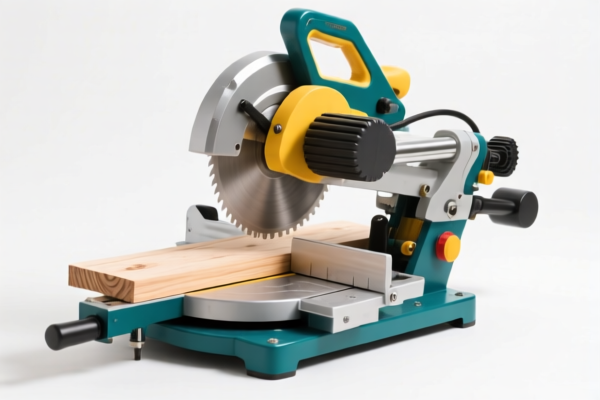
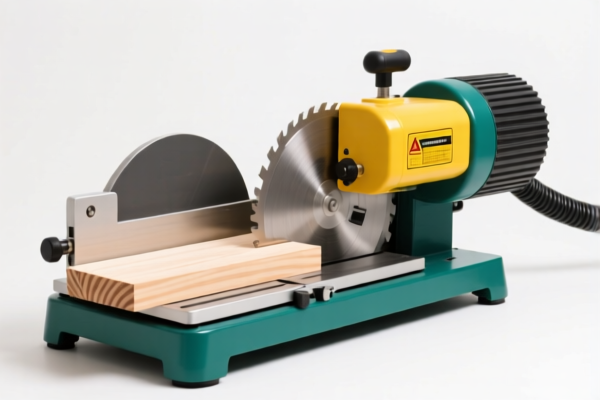
AI Analysis
🍎 Slicer: The Ultimate Global Trade & Tariff Guide (2026 Edition)
🌐 HS Code Classification & Customs Clearance Strategy | 2026 Tariff Deep Dive | Professional Entry Tips
📌 I. Product Definition & Classification: What Exactly is a "Slicer"?
A Slicer is a versatile tool found in both commercial kitchens and industrial food processing plants. Its classification hinges on two critical factors:
1. Mechanism: Is it a simple manual tool or a powered machine?
2. Intended Use: Is it for preparing fresh produce (fruits/vegetables/nuts) or for general food manufacturing?
⚠️ Critical Distinction:
- Manual Slicers: Often fall under Chapter 82 (Tools) as "Hand-operated mechanical appliances."
- Powered/Industrial Slicers: Usually fall under Chapter 84 (Machinery), specifically designed for "Preparation of food or beverages" or "Fruits, Nuts, Vegetables."
Misclassification leads to massive tariff shocks!
📦 II. HS Code Classification Matrix (2026 Tariff Authority)
| HS Code | Product Description | Application Logic | Typical Tax Burden (China Origin → US) |
|---|---|---|---|
| 8438.80.00.00 | Machinery for Preparation of Food/Drinks (General Industrial) | • Logic: Fits "Industrial preparation" logic. • Material: Metal/Plastic (No conflict). • Type: General food processing machines. |
35.0% (Base 0% + 25% Sec 301 + 10% 122) |
| 8210.00.00.00 | Hand-operated Mechanical Appliances | • Logic: Fits "Food preparation utensil" + "Manual mechanical" shape. • Type: Manual gear-slicers, handheld rotary slicers. |
38.7% (Base 3.7% + 25% Sec 301 + 10% 122) |
| 8438.60.00.00 | Machinery for Fruits, Nuts, Vegetables | • Logic: Specific fit for "Fruits/Nuts/Veg" preparation. • Assumption: Infers mechanical/semi-mechanical nature due to lack of material specs. |
35.0% (Base 0% + 25% Sec 301 + 10% 122) |
🔍 Analysis:
- 8210.00.00.00 carries the highest rate (38.7%) because it includes a Base Tariff of 3.7% on top of the heavy sanctions. This code is strictly for manual or hand-operated units.
- 8438.x0.00.00 codes (8438.80 & 8438.60) offer a Base Tariff of 0%, making them significantly cheaper before sanctions are applied, but the final landed cost remains high due to Section 301 and 122 tariffs.
💰 III. 2026 Tariff Rate Breakdown (China Origin → USA)
✅ Target Market: United States (US)
✅ Origin: China (CN)
✅ Effective Date: As per 2026 latest trade policies (Section 301 + Section 122)
🎯 1. Code 8438.80.00.00 & 8438.60.00.00 — Industrial/Pro Machinery
| Tax Component | Rate | Legal Basis | Details |
|---|---|---|---|
| Base Tariff | 0.0% | HTSUS 2026 | Duty-free entry for general machinery. |
| Section 301 Add-on | +25.0% | USITC Footnote 9903.88.01 | "Section 301" tariffs on Chinese goods (2018/2019 lists). |
| Section 122 Add-on | +10.0% | IEEPA 9903.01.10+ | Specific "122 Clause" surcharge for China-origin food machinery. |
| 🔴 TOTAL RATE | 35.0% | Calculated on CIF Value |
📌 Interpretation:
Even with a 0% base rate, the Section 301 (25%) and Section 122 (10%) penalties apply immediately. This results in a flat 35% tax burden. No de minimis exemption is available.
🎯 2. Code 8210.00.00.00 — Manual/Hand Tools
| Tax Component | Rate | Legal Basis | Details |
|---|---|---|---|
| Base Tariff | 3.7% | HTSUS 2026 | Standard duty for "Tools" and "Hand-operated appliances." |
| Section 301 Add-on | +25.0% | USITC Footnote 9903.88.01 | Applies to all Chinese-made tools. |
| Section 122 Add-on | +10.0% | IEEPA 9903.01.10+ | Specific surcharge on food prep tools. |
| 🔴 TOTAL RATE | 38.7% | Calculated on CIF Value |
📌 Interpretation:
This is the most expensive classification for slicers. The 3.7% Base Tariff makes it 3.7% higher than the machine codes, compounding the 35% penalty. Only use this if the slicer is strictly manual with no motor.
🛠️ IV. Customs Clearance Strategy (Pro Tips for 2026)
✅ 1. Documentation Checklist (The "Must-Haves")
| Document | Requirement | Why It Matters |
|---|---|---|
| Technical Spec Sheet | Critical | Must explicitly state: "Motorized" vs. "Manual", Power Rating (Watts), Voltage. |
| Material Composition | Critical | Confirm metal/plastic ratio to rule out "hand tools" if it's actually an electric machine. |
| Product Photos | Clear | Show the entire unit. If it has a plug/cord, it's Chapter 84, not 82. |
| Commercial Invoice | Precise | Use terms: "Food Processing Machine" (for 8438) or "Manual Food Prep Tool" (for 8210). |
| Origin Certificate | Mandatory | Prove China origin to trigger/calculate correct Section 301 & 122 taxes. |
| User Manual | Recommended | Demonstrates intended use (e.g., "Industrial" vs. "Home"). |
✅ 2. Classification Strategy: How to Avoid the 38.7% Trap
🔥 Golden Rule: "If it has a motor, it's 8438! If it's hand-cranked, it's 8210."
| Scenario | Correct HS Code | Tax Rate | Strategy |
|---|---|---|---|
| Electric Commercial Slicer (Countertop with motor) | 8438.80.00.00 |
35.0% | ✅ Recommended: Lower base tariff (0%). |
| Electric Fruit/Veg Slicer (Specialized) | 8438.60.00.00 |
35.0% | ✅ Recommended: Specific use case fits perfectly. |
| Manual Hand-Crank Slicer | 8210.00.00.00 |
38.7% | ⚠️ High Risk: Avoid unless truly manual. The 3.7% base hurts. |
| Electric Blade + Base | 8438.80.00.00 |
35.0% | ✅ Ensure the "base" isn't classified separately. |
📌 Expert Warning:
Do NOT try to classify a motorized slicer as8210to "save money." CBP (Customs and Border Protection) will reject it based on the motor. The penalty for misclassification is 100% of the tax + 20% penalty + Audit Risk!
✅ 3. Special Circumstances
| Situation | Action Plan |
|---|---|
| OEM Slicers for US Brands | Ensure the "Made in China" label is clear. Section 301 applies regardless of the US brand name. |
| Hybrid Slicers (Manual/Electric) | Classify based on primary power source. If it has an electric motor option, it must be 8438. |
| Slicers with Accessories | If sold with extra blades or stands, declare them as part of the machine (8438). Do not split them into 8210 to manipulate tax. |
| Small Business (De Minimis) | ⚠️ NO EXEMPTION: Section 301 and Section 122 tariffs do not apply to the $800 de minimis exemption for these specific codes. Taxes apply even on small shipments. |
🌍 V. Global Market Comparison (2026)
| Market | Recommended Code | Estimated Tax (China Origin) | Key Constraint |
|---|---|---|---|
| 🇺🇸 USA | 8438.80.00.00 |
35.0% | Section 301 + 122 clauses active. |
| 🇨🇳 China | 8438.80.00.00 |
0% (Export) | Free export, but imports to other countries face high duties. |
| 🇪🇺 EU | 8438.80.00.00 |
~2.5% - 3% | No Section 301, but CE certification required. |
| 🇦🇺 Australia | 8438.80.00.00 |
0% - 5% | FTA advantages may apply depending on rules of origin. |
📌 Strategic Insight:
The US market is the most hostile for Slicers due to the combination of Section 301 (25%) and Section 122 (10%).
Alternative Strategy: If possible, source or assemble in Vietnam or Mexico to avoid "Made in China" penalties, though final assembly rules must be strictly followed.
📌 VI. Common Pitfalls & Solutions (Lessons Learned)
❌ Pitfall 1: Calling a motorized slicer a "Kitchen Tool" to fit 8210.
👉 Result: Customs flags it, demands back-taxes of 38.7%, plus fines.
✅ Fix: Always declare as "Machinery" (8438) if it has a motor.
❌ Pitfall 2: Splitting the motor, blades, and base into separate HS codes.
👉 Result: "Essential character" rule violation. CBP will consolidate and charge the highest rate.
✅ Fix: Declare as a complete set under 8438.80.00.00.
❌ Pitfall 3: Assuming "De Minimis" applies.
👉 Result: Shipment held, taxed 35% on the first dollar.
✅ Fix: Budget for full tax on all imports >$800 (if applicable) or prepare for full duty on small shipments of restricted goods.
🎯 VII. Conclusion: The Path to Profitable Clearance
🔹 "Machine = 8438 (0% Base), Manual = 8210 (3.7% Base). Avoid 38.7% if possible!"
🔹 "Section 301 + 122 = 35% Total. No loopholes for slicers."
🔹 "Specs are King: Motor or No Motor?"
📌 Final Pro Tip:
If you are importing electric slicers, your best defense is precision documentation. Ensure your invoice explicitly states:
"Electric Food Slicing Machine, Model X, 500W Motor, Industrial Grade, HS 8438.80.00.00."
🚀 Action Plan:
1. Verify if your slicer is manual or electric.
2. Select 8438.80.00.00 (if electric) or 8438.60.00.00 (if specialized).
3. Calculate your landed cost: CIF Price × 1.35.
4. Prepare technical specs and photos immediately.
Clearance starts with the right code. Don't guess—calculate!
✨ Precision in HS Codes = Profit in Your Pocket
💼 Your Slicer is ready for the global stage—let's make it legal and tax-efficient!
Customer Reviews
About HS Code Classification
The Harmonized System (HS) is an internationally standardized nomenclature developed by the World Customs Organization (WCO) to classify traded products. Over 200 countries use the HS system as the basis for customs tariffs, trade statistics, and import/export regulations.
Each HS code follows a hierarchical structure:
- Chapter (2 digits) — Broad category of goods (e.g., Chapter 84: Machinery and Mechanical Appliances)
- Heading (4 digits) — More specific grouping within the chapter
- Subheading (6 digits) — Internationally standardized breakdown, used by all WCO member countries
- National subdivisions (8-10 digits) — Country-specific extensions for further classification, such as US HTSUS 10-digit codes
Correct HS code classification is essential for smooth customs clearance, accurate duty payment, and compliance with trade regulations. Misclassification can lead to customs delays, overpayment of duties, or penalties.
When importing from CN to US, the applicable tariff rates may include:
- Most-Favored-Nation (MFN) rate — The standard duty rate applied to WTO members
- General rate — Applied to countries without trade agreements
- Trade remedy duties — Additional tariffs such as Section 301 (anti-dumping), Section 232 (national security), or countervailing duties
The information provided on this page is for reference purposes only. For official classification, please consult with your local customs authority or a licensed customs broker.