Small Shopping Cart
CN → US| HS编码 | 关税税率 | 原产国 | 目的国 | 文档 |
|---|---|---|---|---|
| 8716805020 | 38.2% | CN | US | 官方文档 |
| 8716805090 | 38.2% | CN | US | 官方文档 |
商品图片



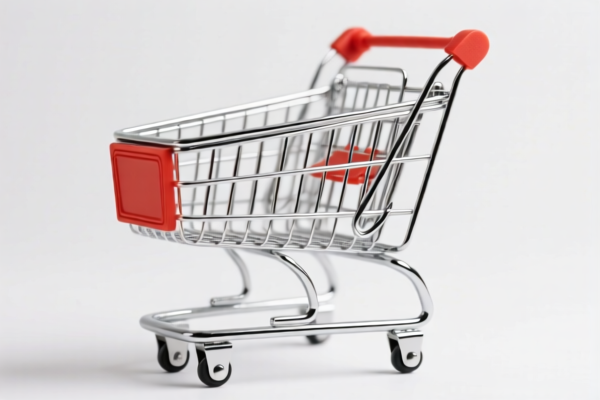
AI分析
🛒 Portable Shopping Carts (Luggage Trolleys)
🌐 HS Code Reference & Customs Clearance Guide | 2026 Latest Tariff Analysis | Professional Clearance Strategy
📌 I. Product Definition & Classification: What is a "Small Shopping Cart"?
In international trade, "Small Shopping Carts" (often referred to as Portable Luggage Carts, Foldable Trolleys, or Hand Carts) fall under Chapter 87: Vehicles other than railway or tramway rolling-stock, and parts and accessories thereof.
These are non-mechanically propelled vehicles. This means they rely entirely on human power or animal power and have no engine or motor.
⚠️ Key Distinction:
- If it has a motor → It is an electric vehicle (Chapter 87, but different heading).
- If it is fixed to the ground (e.g., parking barriers) → It is not a vehicle.
- If it is purely stationary storage → It may be furniture.
- Correct Category: Freestanding, movable, non-mechanical carts for carrying goods/luggage → Heading 8716.
📦 II. HS Code Classification Details (2026 Latest Tariff Authority)
Based on the provided <DATA>, the specific HS Codes for "Small Shopping Carts" are classified under 8716.80 ("Other vehicles") and further subdivided.
| HS Code | Product Description | Application Scenario | Key Features |
|---|---|---|---|
8716.80.50.20 |
Other Portable luggage carts | Foldable shopping carts, airport trolleys, travel luggage carts | Designed for portability, often foldable, used for personal luggage or small shopping items. |
8716.80.50.90 |
Other Other Other | Other non-mechanically propelled vehicles not specified elsewhere | General "catch-all" for other types of non-mechanical carts (e.g., specific industrial hand trucks not classified as luggage carts). |
🔍 Important Note:
- The term "Portable Luggage Carts" is the primary classification for most consumer-facing "small shopping carts" that resemble trolleys or folded trolleys.
- If the cart is not considered a "luggage cart" (e.g., a large industrial dolly), it may fall under8716.80.50.90.
- Do not classify as bicycles (8712) or trailers (8716.10/8716.20) as they are not attached to a motor vehicle.
💰 III. 2026 Latest Tariff Rate Breakdown (Detailed)
✅ Applicable Country: United States (US)
✅ Origin: China (CN)
✅ Effective Date: Current rates apply as per the provided data.
🎯 1. 8716.80.50.20 — Other Portable Luggage Carts
| Item | Content |
|---|---|
| Base Tariff Rate | 3.2% |
| Additional Tariff (Section 301) | 25.0% |
| Total Tax Rate | 28.2% |
| Tax Calculation | CIF Value × 28.2% |
| De Minimis Eligibility | ❌ Not Eligible (Subject to full duty if above threshold, or blocked if below due to Section 301) |
| Legal Basis Path | USITC:8716.80.50.20 → FOOTNOTE:301 (25% Additional Duty) |
📌 Explanation:
- The 3.2% is the standard Most Favored Nation (MFN) base tariff for non-mechanically propelled vehicles.
- The 25.0% is a punitive additional tariff imposed under Section 301 of the Trade Act of 1974 against Chinese goods.
- Total Liability: 28.2% of the customs value (CIF).
🎯 2. 8716.80.50.90 — Other Non-Mechanically Propelled Vehicles
| Item | Content |
|---|---|
| Base Tariff Rate | 3.2% |
| Additional Tariff (Section 301) | 25.0% |
| Total Tax Rate | 28.2% |
| Tax Calculation | CIF Value × 28.2% |
| De Minimis Eligibility | ❌ Not Eligible |
| Legal Basis Path | USITC:8716.80.50.90 → FOOTNOTE:301 (25% Additional Duty) |
📌 Note:
- Both sub-categories share the same total tax rate of 28.2%.
- The distinction is purely descriptive for customs inspection, but financially, the burden is identical.
🛠️ IV. Customs Clearance Practical Advice (Real-World Pitfall Guide)
✅ 1. Required Documentation Checklist
| Document | Must Provide? | Description |
|---|---|---|
| ✅ Product Description | ✔️ | Must explicitly state "Non-mechanically propelled", "Portable", "Luggage Cart" or "Shopping Trolley". |
| ✅ Product Images | ✔️ | Front, side, and folded view (if applicable). Must show wheels and handle. |
| ✅ Material Specification | ✔️ | Frame material (steel, aluminum, plastic). |
| ✅ HS Code Justification | ✔️ | Explain why it is 8716 and not 9403 (furniture) or 8306 (stands). |
| ✅ Commercial Invoice | ✔️ | Clearly list unit price, quantity, and total value. |
| ✅ Packing List | ✔️ | Indicate gross weight and net weight. |
✅ 2. Classification Tips (Key Mantra)
🔥 "Non-mechanical, Portable, Cart = 8716"
| Scenario | Correct HS Code | Incorrect Approach | Consequence |
|---|---|---|---|
| Foldable shopping trolley | 8716.80.50.20 |
Classifying as "Furniture" (9403) | Misclassification penalty; higher tariff risk. |
| Large industrial hand truck | 8716.80.50.90 |
Classifying as "Luggage Cart" | Minor discrepancy, but 8716.80.50.90 is safer for non-luggage items. |
| Electric scooter/cart | NOT 8716 | Classifying as 8716 | Major Error: Must use Chapter 87 (e.g., 8711 or 8703). |
| Fixed cart for display | NOT 8716 | Classifying as 8716 | Must be classified as "Stand" or "Furniture" (9403/8306). |
✅ 3. Special Situations
| Situation | Handling Advice |
|---|---|
| Foldable vs. Non-Foldable | Both are 8716. Foldable may help justify "Portable Luggage Cart" (50.20). |
| With Brakes? | If the cart has a simple mechanical brake, it is still non-mechanically propelled. Do not confuse with "mechanical propulsion" (engine). |
| Assembled vs. Knocked Down (KD) | Tariff rate is the same. Ensure KD parts are properly declared to avoid "assembly" penalties. |
| Material Composition | If the cart is mostly plastic, it is still 8716 (vehicle), not 3926 (plastic articles). Vehicles take precedence. |
🌍 V. Global Market Comparison (2026 Latest)
| Country/Region | Recommended HS Code | Tariff (China Origin) | Certification Requirements | Notes |
|---|---|---|---|---|
| 🇺🇸 USA | 8716.80.50.20 |
28.2% (3.2% + 25%) | None typically required | High tariff due to Section 301. |
| 🇨🇳 China | 8716.80.50.20 |
~10-14% (Import Duty) | None | Varies by specific sub-item. |
| 🇪🇺 EU | 8716.80.50.20 |
0% (Mostly) | CE Mark (if applicable) | Generally duty-free for non-mechanical carts. |
| 🇬🇧 UK | 8716.80.50.20 |
0% | UKCA Mark (if applicable) | Generally duty-free. |
| 🇦🇺 Australia | 8716.80.50.20 |
5% | None | Standard MFN rate. |
📌 Conclusion:
- USA is the only major market with high additional tariffs (25%) for this product from China.
- EU, UK, Australia offer significantly lower or zero tariffs, making them more cost-effective destinations for Chinese manufacturers.
📌 VI. Common Errors & Pitfall Guide (Lessons Learned)
❌ Error 1: Classifying as 9403.60.90 (Other furniture)
👉 Consequence: If classified as furniture, it might seem cheaper, but customs will reclassify it as 8716, leading to penalties and retroactive duties (28.2% vs. potential lower furniture duty, but with fines).
❌ Error 2: Claiming it is mechanically propelled
👉 Consequence: Wrong chapter. Must be 8716. Misdeclaration leads to delays.
❌ Error 3: Ignoring the 25% Section 301 Tariff
👉 Consequence: Budgeting only for the 3.2% base rate leads to cash flow crisis at customs. Total liability is 28.2%.
❌ Error 4: Describing as "Toy" or "Playground Equipment"
👉 Consequence: If it is a child's toy, it falls under 9503. If it is for adult shopping/luggage, it is 8716. Misuse of "toy" declaration triggers fraud investigations.
✅ Correct Practice:
"Foldable Portable Luggage Cart, Steel Frame, Plastic Wheels, Non-Mechanically Propelled, Model XYZ, HS 8716.80.50.20"
🎯 VII. Conclusion: Professional Declaration, Cost Control, Efficiency!
🎯 Remember the Mantra:
🔹 "Non-mechanical = 8716. Base 3.2% + Add 25% = 28.2% Total!"
🔹 "Portable Luggage Cart or Other Vehicle, both 28.2% if from China!"
📌 Pro Tip:
If your product is foldable and clearly intended for personal luggage or shopping, use 8716.80.50.20. It is more descriptive and reduces customs scrutiny compared to the vague 8716.80.50.90.
📣 Immediate Action:
📞 Verify Product Design: Is it non-mechanical?
📄 Prepare Images: Show wheels and handle.
🧮 Calculate Cost: Include 28.2% in your landed cost calculation.
🚀 Avoid Surprises: Declare accurately to prevent hold-ups and fines!
✨ Professional Clearance Starts with Accurate Classification!
💼 Every percent matters in global trade!
用户评价
关于 HS 编码归类
协调制度(HS)是由世界海关组织(WCO)制定的国际贸易商品分类标准。全球 200 多个国家采用 HS 系统作为海关关税、贸易统计和进出口监管的基础。
每个 HS 编码遵循以下层级结构:
- 章(2 位)——商品大类(例如:第 84 章:机器和机械设备)
- 品目(4 位)——章内的更具体分类
- 子目(6 位)——国际通用细分,所有 WCO 成员国统一使用
- 本国细分(8-10 位)——各国自行扩展的细分编码,如美国 HTSUS 10 位编码
正确的 HS 编码归类对于顺利通关、准确缴纳关税和遵守贸易法规至关重要。错误归类可能导致海关延误、多缴关税或罚款。
从CN进口到US时,适用的关税税率可能包括:
- 最惠国(MFN)税率——适用于 WTO 成员国的标准关税税率
- 普通税率——适用于无贸易协定国家
- 贸易救济关税——附加关税,如 301 条款(反倾销)、232 条款(国家安全)或反补贴税
本页内容仅供参考。如需正式归类,请咨询当地海关或持牌报关代理。