Small Shopping Cart
CN → US| HS Code | Tariff Rate | Origin | Destination | Doc |
|---|---|---|---|---|
| 8716805020 | 38.2% | CN | US | Official Doc |
| 8716805090 | 38.2% | CN | US | Official Doc |
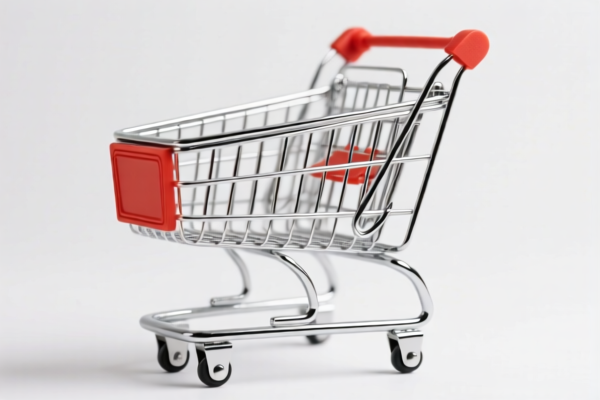
Product Images



AI Analysis
🛒 Portable Shopping Carts (Luggage Trolleys)
🌐 HS Code Reference & Customs Clearance Guide | 2026 Latest Tariff Analysis | Professional Clearance Strategy
📌 I. Product Definition & Classification: What is a "Small Shopping Cart"?
In international trade, "Small Shopping Carts" (often referred to as Portable Luggage Carts, Foldable Trolleys, or Hand Carts) fall under Chapter 87: Vehicles other than railway or tramway rolling-stock, and parts and accessories thereof.
These are non-mechanically propelled vehicles. This means they rely entirely on human power or animal power and have no engine or motor.
⚠️ Key Distinction:
- If it has a motor → It is an electric vehicle (Chapter 87, but different heading).
- If it is fixed to the ground (e.g., parking barriers) → It is not a vehicle.
- If it is purely stationary storage → It may be furniture.
- Correct Category: Freestanding, movable, non-mechanical carts for carrying goods/luggage → Heading 8716.
📦 II. HS Code Classification Details (2026 Latest Tariff Authority)
Based on the provided <DATA>, the specific HS Codes for "Small Shopping Carts" are classified under 8716.80 ("Other vehicles") and further subdivided.
| HS Code | Product Description | Application Scenario | Key Features |
|---|---|---|---|
8716.80.50.20 |
Other Portable luggage carts | Foldable shopping carts, airport trolleys, travel luggage carts | Designed for portability, often foldable, used for personal luggage or small shopping items. |
8716.80.50.90 |
Other Other Other | Other non-mechanically propelled vehicles not specified elsewhere | General "catch-all" for other types of non-mechanical carts (e.g., specific industrial hand trucks not classified as luggage carts). |
🔍 Important Note:
- The term "Portable Luggage Carts" is the primary classification for most consumer-facing "small shopping carts" that resemble trolleys or folded trolleys.
- If the cart is not considered a "luggage cart" (e.g., a large industrial dolly), it may fall under8716.80.50.90.
- Do not classify as bicycles (8712) or trailers (8716.10/8716.20) as they are not attached to a motor vehicle.
💰 III. 2026 Latest Tariff Rate Breakdown (Detailed)
✅ Applicable Country: United States (US)
✅ Origin: China (CN)
✅ Effective Date: Current rates apply as per the provided data.
🎯 1. 8716.80.50.20 — Other Portable Luggage Carts
| Item | Content |
|---|---|
| Base Tariff Rate | 3.2% |
| Additional Tariff (Section 301) | 25.0% |
| Total Tax Rate | 28.2% |
| Tax Calculation | CIF Value × 28.2% |
| De Minimis Eligibility | ❌ Not Eligible (Subject to full duty if above threshold, or blocked if below due to Section 301) |
| Legal Basis Path | USITC:8716.80.50.20 → FOOTNOTE:301 (25% Additional Duty) |
📌 Explanation:
- The 3.2% is the standard Most Favored Nation (MFN) base tariff for non-mechanically propelled vehicles.
- The 25.0% is a punitive additional tariff imposed under Section 301 of the Trade Act of 1974 against Chinese goods.
- Total Liability: 28.2% of the customs value (CIF).
🎯 2. 8716.80.50.90 — Other Non-Mechanically Propelled Vehicles
| Item | Content |
|---|---|
| Base Tariff Rate | 3.2% |
| Additional Tariff (Section 301) | 25.0% |
| Total Tax Rate | 28.2% |
| Tax Calculation | CIF Value × 28.2% |
| De Minimis Eligibility | ❌ Not Eligible |
| Legal Basis Path | USITC:8716.80.50.90 → FOOTNOTE:301 (25% Additional Duty) |
📌 Note:
- Both sub-categories share the same total tax rate of 28.2%.
- The distinction is purely descriptive for customs inspection, but financially, the burden is identical.
🛠️ IV. Customs Clearance Practical Advice (Real-World Pitfall Guide)
✅ 1. Required Documentation Checklist
| Document | Must Provide? | Description |
|---|---|---|
| ✅ Product Description | ✔️ | Must explicitly state "Non-mechanically propelled", "Portable", "Luggage Cart" or "Shopping Trolley". |
| ✅ Product Images | ✔️ | Front, side, and folded view (if applicable). Must show wheels and handle. |
| ✅ Material Specification | ✔️ | Frame material (steel, aluminum, plastic). |
| ✅ HS Code Justification | ✔️ | Explain why it is 8716 and not 9403 (furniture) or 8306 (stands). |
| ✅ Commercial Invoice | ✔️ | Clearly list unit price, quantity, and total value. |
| ✅ Packing List | ✔️ | Indicate gross weight and net weight. |
✅ 2. Classification Tips (Key Mantra)
🔥 "Non-mechanical, Portable, Cart = 8716"
| Scenario | Correct HS Code | Incorrect Approach | Consequence |
|---|---|---|---|
| Foldable shopping trolley | 8716.80.50.20 |
Classifying as "Furniture" (9403) | Misclassification penalty; higher tariff risk. |
| Large industrial hand truck | 8716.80.50.90 |
Classifying as "Luggage Cart" | Minor discrepancy, but 8716.80.50.90 is safer for non-luggage items. |
| Electric scooter/cart | NOT 8716 | Classifying as 8716 | Major Error: Must use Chapter 87 (e.g., 8711 or 8703). |
| Fixed cart for display | NOT 8716 | Classifying as 8716 | Must be classified as "Stand" or "Furniture" (9403/8306). |
✅ 3. Special Situations
| Situation | Handling Advice |
|---|---|
| Foldable vs. Non-Foldable | Both are 8716. Foldable may help justify "Portable Luggage Cart" (50.20). |
| With Brakes? | If the cart has a simple mechanical brake, it is still non-mechanically propelled. Do not confuse with "mechanical propulsion" (engine). |
| Assembled vs. Knocked Down (KD) | Tariff rate is the same. Ensure KD parts are properly declared to avoid "assembly" penalties. |
| Material Composition | If the cart is mostly plastic, it is still 8716 (vehicle), not 3926 (plastic articles). Vehicles take precedence. |
🌍 V. Global Market Comparison (2026 Latest)
| Country/Region | Recommended HS Code | Tariff (China Origin) | Certification Requirements | Notes |
|---|---|---|---|---|
| 🇺🇸 USA | 8716.80.50.20 |
28.2% (3.2% + 25%) | None typically required | High tariff due to Section 301. |
| 🇨🇳 China | 8716.80.50.20 |
~10-14% (Import Duty) | None | Varies by specific sub-item. |
| 🇪🇺 EU | 8716.80.50.20 |
0% (Mostly) | CE Mark (if applicable) | Generally duty-free for non-mechanical carts. |
| 🇬🇧 UK | 8716.80.50.20 |
0% | UKCA Mark (if applicable) | Generally duty-free. |
| 🇦🇺 Australia | 8716.80.50.20 |
5% | None | Standard MFN rate. |
📌 Conclusion:
- USA is the only major market with high additional tariffs (25%) for this product from China.
- EU, UK, Australia offer significantly lower or zero tariffs, making them more cost-effective destinations for Chinese manufacturers.
📌 VI. Common Errors & Pitfall Guide (Lessons Learned)
❌ Error 1: Classifying as 9403.60.90 (Other furniture)
👉 Consequence: If classified as furniture, it might seem cheaper, but customs will reclassify it as 8716, leading to penalties and retroactive duties (28.2% vs. potential lower furniture duty, but with fines).
❌ Error 2: Claiming it is mechanically propelled
👉 Consequence: Wrong chapter. Must be 8716. Misdeclaration leads to delays.
❌ Error 3: Ignoring the 25% Section 301 Tariff
👉 Consequence: Budgeting only for the 3.2% base rate leads to cash flow crisis at customs. Total liability is 28.2%.
❌ Error 4: Describing as "Toy" or "Playground Equipment"
👉 Consequence: If it is a child's toy, it falls under 9503. If it is for adult shopping/luggage, it is 8716. Misuse of "toy" declaration triggers fraud investigations.
✅ Correct Practice:
"Foldable Portable Luggage Cart, Steel Frame, Plastic Wheels, Non-Mechanically Propelled, Model XYZ, HS 8716.80.50.20"
🎯 VII. Conclusion: Professional Declaration, Cost Control, Efficiency!
🎯 Remember the Mantra:
🔹 "Non-mechanical = 8716. Base 3.2% + Add 25% = 28.2% Total!"
🔹 "Portable Luggage Cart or Other Vehicle, both 28.2% if from China!"
📌 Pro Tip:
If your product is foldable and clearly intended for personal luggage or shopping, use 8716.80.50.20. It is more descriptive and reduces customs scrutiny compared to the vague 8716.80.50.90.
📣 Immediate Action:
📞 Verify Product Design: Is it non-mechanical?
📄 Prepare Images: Show wheels and handle.
🧮 Calculate Cost: Include 28.2% in your landed cost calculation.
🚀 Avoid Surprises: Declare accurately to prevent hold-ups and fines!
✨ Professional Clearance Starts with Accurate Classification!
💼 Every percent matters in global trade!
Customer Reviews
About HS Code Classification
The Harmonized System (HS) is an internationally standardized nomenclature developed by the World Customs Organization (WCO) to classify traded products. Over 200 countries use the HS system as the basis for customs tariffs, trade statistics, and import/export regulations.
Each HS code follows a hierarchical structure:
- Chapter (2 digits) — Broad category of goods (e.g., Chapter 84: Machinery and Mechanical Appliances)
- Heading (4 digits) — More specific grouping within the chapter
- Subheading (6 digits) — Internationally standardized breakdown, used by all WCO member countries
- National subdivisions (8-10 digits) — Country-specific extensions for further classification, such as US HTSUS 10-digit codes
Correct HS code classification is essential for smooth customs clearance, accurate duty payment, and compliance with trade regulations. Misclassification can lead to customs delays, overpayment of duties, or penalties.
When importing from CN to US, the applicable tariff rates may include:
- Most-Favored-Nation (MFN) rate — The standard duty rate applied to WTO members
- General rate — Applied to countries without trade agreements
- Trade remedy duties — Additional tariffs such as Section 301 (anti-dumping), Section 232 (national security), or countervailing duties
The information provided on this page is for reference purposes only. For official classification, please consult with your local customs authority or a licensed customs broker.