Smart Electricity Meter
CN → US| HS编码 | 关税税率 | 原产国 | 目的国 | 文档 |
|---|---|---|---|---|
| 8537109170 | 37.7% | CN | US | 官方文档 |
| 8543706000 | 35.0% | CN | US | 官方文档 |
| 8543709860 | 37.6% | CN | US | 官方文档 |
| 9028300000 | 10.0% | CN | US | 官方文档 |
| 9028900040 | 35.0% | CN | US | 官方文档 |
商品图片
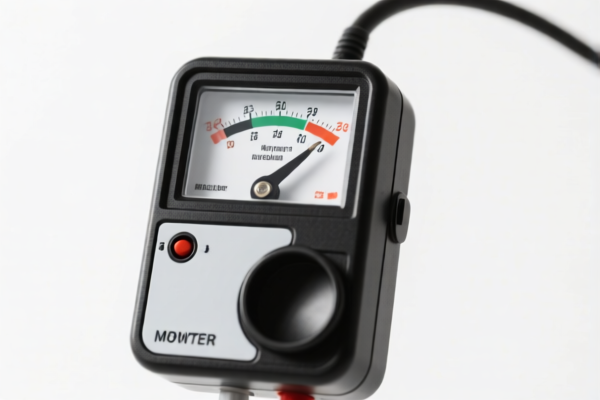
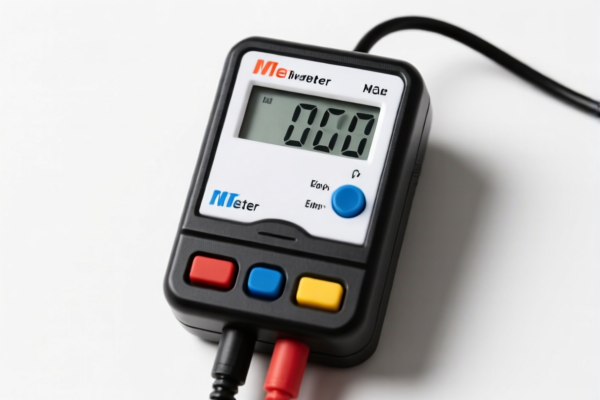
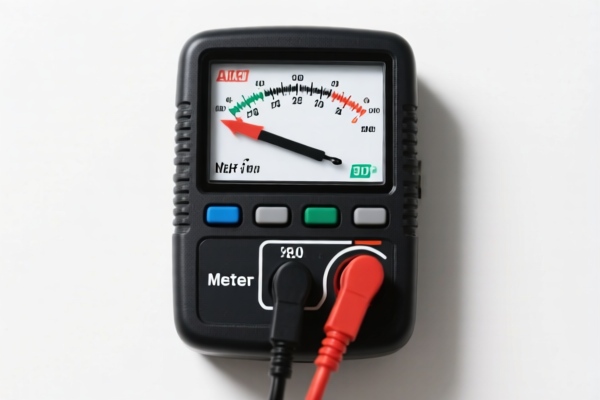
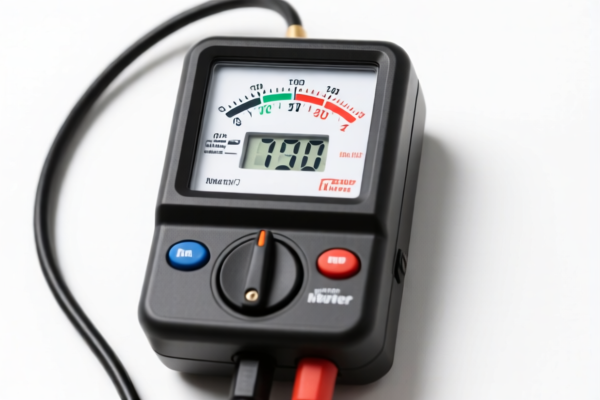
AI分析
⚡ Smart Electricity Meter: Global HS Code Classification & Customs Clearance Guide (2026 Edition)
🌐 HS Code Reference & Customs Clearance Guide | Latest Tariff Analysis | Strategic通关 Strategy
📌 I. Product Definition & Classification: Do You Really Understand "Smart Meters"?
A Smart Electricity Meter is not just a simple counter; it is a sophisticated digital device used to measure electric energy consumption (active or reactive). Unlike traditional mechanical meters, smart meters feature: * Two-way Communication: Transmit data to utility companies (via PLC, RF, Zigbee, or Cellular). * Digital Display & Processing: Internal microprocessors for data handling. * Remote Control: Ability to disconnect/reconnect remotely.
In international trade, the classification depends heavily on whether the device includes communication network interfaces and its primary function (pure measurement vs. control/data processing).
⚠️ Key Distinction Point:
- If the device is primarily an energy meter with simple communication features → Often falls under 9028 (Measurement/Testing Instruments).
- If the device is primarily a networked data processing unit or lacks specific metering exclusions → May fall under 8537 (Control Panels) or 8543 (Other Electric Machines).
- Crucial Warning: The US imposes significant "Section 301" and "IEEPA" tariffs on these codes if sourced from China.
📦 II. HS Code Classification Details (Based on Provided Data)
Below are the 5 potential HS Codes derived from the input data, ranked by logical fit and tax implications.
| HS Code | Product Description (Derived from Input) | Tax Rate (Total) | Key Justification & Logic |
|---|---|---|---|
| 9028.30.00.00 | Electricity Meters (Pure Metering) | 10.0% | ✅ Best Fit for Standard Meters. Summary: "Fully conforms to the definition of Electricity meters." No material or form conflicts. Lowest tax liability among options. |
| 8543.70.60.00 | Machines for Connecting to Telegraph/Telephone Networks | 35.0% | ⚠️ High Risk/Niche. Summary: "Intended for connection to telegraph/telephone networks." Fits if the meter’s primary identity is its networking capability rather than pure measurement. High tax due to Section 301/IEEPA. |
| 8543.70.98.60 | Other Electric Machines/Devices | 37.6% | ⚠️ "Other" Category Risk. Summary: "Independent functional electrical device." No material conflict. Highest base tariff (2.6%) + Section 301/IEEPA. |
| 8537.10.91.70 | Electric Control/Distribution Equipment (>1000V or "Other") | 37.7% | ❌ Likely Misclassification. Summary: "Inferred as voltage ≤1000V control equipment." Excludes switches, CNC, panels, PLCs. Only if the meter is part of a larger control panel system. |
| 9028.90.00.40 | Parts for Electricity Meters | 35.0% | ❌ Wrong Classification. Summary: "Conforms to 'for use with electricity meters'." Only for spare parts, not the whole meter. |
💰 III. Detailed Tariff Breakdown (US Market Focus)
✅ Applicable Country: United States (US)
✅ Origin: China (CN)
✅ Effective Date: Post-2025 Tariff Regime (Section 301 + IEEPA)
🎯 1. 9028.30.00.00 — The "Golden Path" (Lowest Tax)
This code is classified under Chapter 90: Optical, Photographic, Cinematographic, Measuring, Checking, Precision, Medical or Surgical Instruments and Apparatus.
| Item | Detail |
|---|---|
| Base Duty | 0.0% |
| Section 301 (Additional) | 0.0% (Note: Some meters may be exempt, but check latest lists) |
| IEEPA (122 Clause) | 10.0% |
| Total Effective Rate | 10.0% |
| Legal Basis | HTSUS 9028.30.00.00 |
| Verdict | ✅ RECOMMENDED if the product is purely a meter. |
📌 Explanation:
- Code9028.30.00.00explicitly covers "Electricity meters."
- It avoids the high "Electrical Machinery" (Chapter 85) tariffs which attract 25% (Section 301) + 10% (IEEPA) = 35-37.7%.
- Strategy: Prove the primary function is measurement, not data processing or control.
🎯 2. 8543.70.60.00 & 8543.70.98.60 — The "Network/Device" Path (High Tax)
These codes fall under Chapter 85: Electrical Machinery and Equipment.
| Item | Detail |
|---|---|
| Base Duty | 0.0% - 2.6% |
| Section 301 (Additional) | +25.0% |
| IEEPA (122 Clause) | +10.0% |
| Total Effective Rate | 35.0% - 37.6% |
| Legal Basis | HTSUS 8543.70.60.00 / 8543.70.98.60 |
| Verdict | ❌ AVOID unless the meter is legally defined as a "networking device" or "other electric machine." |
📌 Explanation:
- If Customs determines the smart meter is primarily a "machine for connecting to telegraph/telephone networks" (8543.70.60.00), it attracts the full tariff burden.
- This often happens if the device is marketed as an "IoT Gateway" or "Data Concentrator" rather than a meter.
🎯 3. 8537.10.91.70 — The "Control Panel" Path (Highest Tax & Risk)
| Item | Detail |
|---|---|
| Base Duty | 2.7% |
| Section 301 (Additional) | +25.0% |
| IEEPA (122 Clause) | +10.0% |
| Total Effective Rate | 37.7% |
| Legal Basis | HTSUS 8537.10.91.70 |
| Verdict | ❌ HIGH RISK. |
📌 Explanation:
- This code is for "Boards, Panels, Consoles..." for voltage ≤1000V.
- A standalone smart meter is NOT a panel. Using this code may lead to audit flags for misclassification, resulting in penalties + back taxes.
🛠️ IV. Customs Clearance Practical Advice (Avoiding Pitfalls)
✅ 1. Documentation Checklist (Essential)
| Document | Requirement | Purpose |
|---|---|---|
| Product Specification Sheet | Must clearly state "Function: Energy Measurement" | To support 9028.30.00.00 classification. |
| Communication Protocol Info | List protocols (PLC, RF, LTE). Avoid terms like "Computer Network Device." | To distinguish from 8543 (Networking machines). |
| Circuit Diagram | Show power metering core + communication module. | Prove communication is secondary to measurement. |
| Commercial Invoice | Description: "Smart Electricity Meter, Model XYZ, for Measuring AC Power Consumption." | Clear, unambiguous description. |
| Certifications | ANSI C12.1, NEMA, UL, FCC ID. | Compliance with US standards. |
✅ 2. Classification Strategy (The "Primary Function" Test)
| Scenario | Recommended HS Code | Reason |
|---|---|---|
| Standalone Smart Meter (measures kWh, sends data via PLC) | 9028.30.00.00 | Primary function is measurement. Lowest tax (10%). |
| Smart Meter + Data Concentrator (aggregates data from 100s of meters) | 8543.70.60.00 | Primary function is data processing/networking. Higher tax (35%). |
| Smart Meter with Integrated Switch/Breaker | 8537.10.91.70 or 9028.30.00.00 | Complex. If switching is primary, 8537. If metering is primary, 9028. |
| Spare Parts for Meters | 9028.90.00.40 | Only for parts, not whole units. |
🔥 Pro Tip:
When shipping, emphasize "METER" and "MEASUREMENT" in the product title and description. Avoid words like "Computer," "Processor," or "Network Server" as the primary descriptor.
✅ 3. Special Cases & Risks
| Case | Handling Advice |
|---|---|
| OEM Custom Meters | Provide original design docs showing metering core is the main component. |
| Pre-paid Meters | Still classified as 9028.30.00.00 if measurement is primary. |
| Three-Phase Industrial Meters | Still 9028.30.00.00. Do not split into "industrial equipment" (8543) unless it has complex control logic. |
| Smart Meters with USB/RS485 | Still 9028.30.00.00. Communication interfaces do not automatically push it to Chapter 85. |
🌍 V. Global Market Comparison (2026)
| Region | Recommended HS Code | Duty Rate (China Origin) | Key Requirement |
|---|---|---|---|
| 🇺🇸 USA | 9028.30.00.00 | 10% (Best Case) | Must prove "Measurement" primary function. Avoid Chapter 85 codes. |
| 🇺🇸 USA | 8543.70.60.00 | 35% | If misclassified as "Network Device." |
| 🇪🇺 EU | 9028.30.00 | 0% (Generally) | CE Marking, MID (Measuring Instruments Directive). |
| 🇨🇳 China | 9028.30.00 | 0% | CCC Certification (if applicable). |
| 🇬🇧 UK | 9028.30.00 | 0% | UKCA Marking. |
| 🇦🇺 Australia | 9028.30.00 | 5% | RCM Certification. |
📌 Conclusion:
- USA is the most complex market due to Section 301 and IEEPA tariffs.
- Aggressively pursue 9028.30.00.00 to save 25-27% in duties.
- EU/UK/AU are tariff-friendly; focus on compliance (CE/MID) rather than tariff optimization.
📌 VI. Common Errors & Pitfalls (Lessons Learned)
❌ Error 1: Classifying Smart Meter as "Data Processing Unit" (8543)
👉 Consequence: Tax jumps from 10% to 35%.
👉 Fix: Highlight "Energy Measurement" in all documentation.
❌ Error 2: Using "Control Panel" (8537) for a standalone meter
👉 Consequence: Customs rejection or penalty for misclassification.
👉 Fix: Use "Electricity Meter" explicitly.
❌ Error 3: Ignoring Communication Protocols
👉 Consequence: Customs may view the device as a "Network Device."
👉 Fix: State that communication is ancillary to metering.
❌ Error 4: Splitting Meter + Communication Module as separate shipments
👉 Consequence: Higher combined tax + logistics cost.
👉 Fix: Ship as one integrated unit.
🎯 VII. Conclusion: Professional Classification Saves Money!
🎯 Golden Rule:
🔹 "Measure First, Communicate Second → 9028.30.00.00 (10% Tax)"
🔹 "Network First, Measure Second → 8543.70.60.00 (35% Tax)"
📌 Action Plan for Importers: 1. Review Product Specs: Ensure "Measurement" is the primary function. 2. Draft Accurate Description: Use "Smart Electricity Meter for Power Measurement" — not "IoT Data Gateway." 3. Apply for Advance Ruling (USA): If unsure, file a 177.11 Advance Ruling with US CBP to lock in the 10% rate. 4. Verify Certifications: Ensure FCC, UL, and ANSI C12.1 compliance.
📣 Immediate Action:
📞 Contact your customs broker with the Product Specification Sheet highlighting Measurement Function.
🚀 Secure the 10% Rate! Don't Pay 35% for a 10% Product!
✨ Smart Classification, Smart Savings!
💼 Your Bottom Line Depends on This Code!
用户评价
关于 HS 编码归类
协调制度(HS)是由世界海关组织(WCO)制定的国际贸易商品分类标准。全球 200 多个国家采用 HS 系统作为海关关税、贸易统计和进出口监管的基础。
每个 HS 编码遵循以下层级结构:
- 章(2 位)——商品大类(例如:第 84 章:机器和机械设备)
- 品目(4 位)——章内的更具体分类
- 子目(6 位)——国际通用细分,所有 WCO 成员国统一使用
- 本国细分(8-10 位)——各国自行扩展的细分编码,如美国 HTSUS 10 位编码
正确的 HS 编码归类对于顺利通关、准确缴纳关税和遵守贸易法规至关重要。错误归类可能导致海关延误、多缴关税或罚款。
从CN进口到US时,适用的关税税率可能包括:
- 最惠国(MFN)税率——适用于 WTO 成员国的标准关税税率
- 普通税率——适用于无贸易协定国家
- 贸易救济关税——附加关税,如 301 条款(反倾销)、232 条款(国家安全)或反补贴税
本页内容仅供参考。如需正式归类,请咨询当地海关或持牌报关代理。