Smart Electricity Meter
CN → US| HS Code | Tariff Rate | Origin | Destination | Doc |
|---|---|---|---|---|
| 8537109170 | 37.7% | CN | US | Official Doc |
| 8543706000 | 35.0% | CN | US | Official Doc |
| 8543709860 | 37.6% | CN | US | Official Doc |
| 9028300000 | 10.0% | CN | US | Official Doc |
| 9028900040 | 35.0% | CN | US | Official Doc |
Product Images
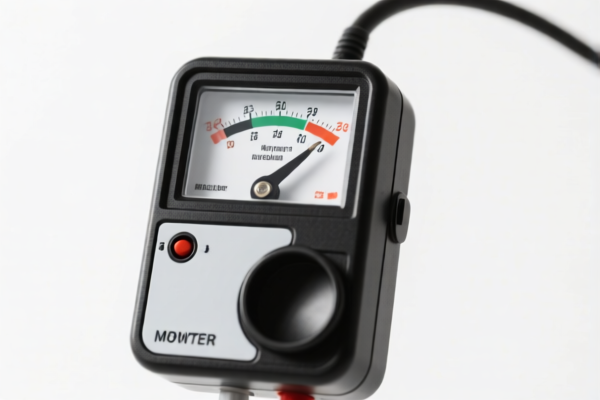
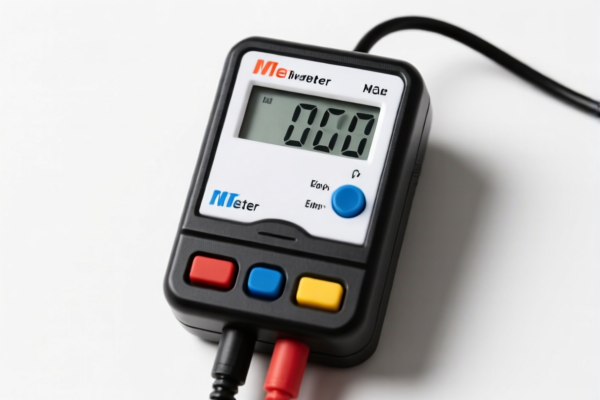
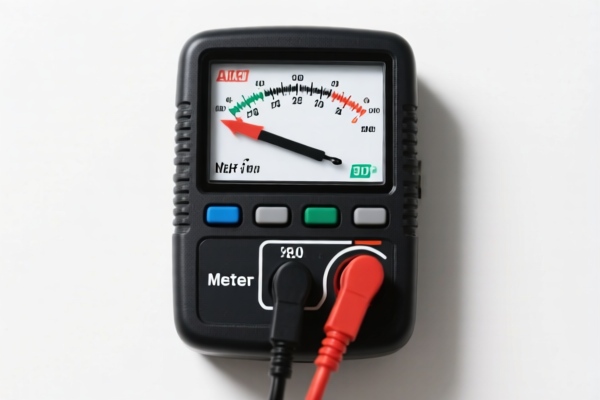
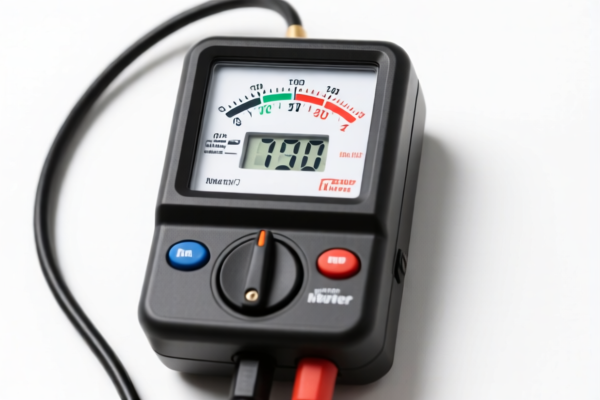
AI Analysis
⚡ Smart Electricity Meter: Global HS Code Classification & Customs Clearance Guide (2026 Edition)
🌐 HS Code Reference & Customs Clearance Guide | Latest Tariff Analysis | Strategic通关 Strategy
📌 I. Product Definition & Classification: Do You Really Understand "Smart Meters"?
A Smart Electricity Meter is not just a simple counter; it is a sophisticated digital device used to measure electric energy consumption (active or reactive). Unlike traditional mechanical meters, smart meters feature: * Two-way Communication: Transmit data to utility companies (via PLC, RF, Zigbee, or Cellular). * Digital Display & Processing: Internal microprocessors for data handling. * Remote Control: Ability to disconnect/reconnect remotely.
In international trade, the classification depends heavily on whether the device includes communication network interfaces and its primary function (pure measurement vs. control/data processing).
⚠️ Key Distinction Point:
- If the device is primarily an energy meter with simple communication features → Often falls under 9028 (Measurement/Testing Instruments).
- If the device is primarily a networked data processing unit or lacks specific metering exclusions → May fall under 8537 (Control Panels) or 8543 (Other Electric Machines).
- Crucial Warning: The US imposes significant "Section 301" and "IEEPA" tariffs on these codes if sourced from China.
📦 II. HS Code Classification Details (Based on Provided Data)
Below are the 5 potential HS Codes derived from the input data, ranked by logical fit and tax implications.
| HS Code | Product Description (Derived from Input) | Tax Rate (Total) | Key Justification & Logic |
|---|---|---|---|
| 9028.30.00.00 | Electricity Meters (Pure Metering) | 10.0% | ✅ Best Fit for Standard Meters. Summary: "Fully conforms to the definition of Electricity meters." No material or form conflicts. Lowest tax liability among options. |
| 8543.70.60.00 | Machines for Connecting to Telegraph/Telephone Networks | 35.0% | ⚠️ High Risk/Niche. Summary: "Intended for connection to telegraph/telephone networks." Fits if the meter’s primary identity is its networking capability rather than pure measurement. High tax due to Section 301/IEEPA. |
| 8543.70.98.60 | Other Electric Machines/Devices | 37.6% | ⚠️ "Other" Category Risk. Summary: "Independent functional electrical device." No material conflict. Highest base tariff (2.6%) + Section 301/IEEPA. |
| 8537.10.91.70 | Electric Control/Distribution Equipment (>1000V or "Other") | 37.7% | ❌ Likely Misclassification. Summary: "Inferred as voltage ≤1000V control equipment." Excludes switches, CNC, panels, PLCs. Only if the meter is part of a larger control panel system. |
| 9028.90.00.40 | Parts for Electricity Meters | 35.0% | ❌ Wrong Classification. Summary: "Conforms to 'for use with electricity meters'." Only for spare parts, not the whole meter. |
💰 III. Detailed Tariff Breakdown (US Market Focus)
✅ Applicable Country: United States (US)
✅ Origin: China (CN)
✅ Effective Date: Post-2025 Tariff Regime (Section 301 + IEEPA)
🎯 1. 9028.30.00.00 — The "Golden Path" (Lowest Tax)
This code is classified under Chapter 90: Optical, Photographic, Cinematographic, Measuring, Checking, Precision, Medical or Surgical Instruments and Apparatus.
| Item | Detail |
|---|---|
| Base Duty | 0.0% |
| Section 301 (Additional) | 0.0% (Note: Some meters may be exempt, but check latest lists) |
| IEEPA (122 Clause) | 10.0% |
| Total Effective Rate | 10.0% |
| Legal Basis | HTSUS 9028.30.00.00 |
| Verdict | ✅ RECOMMENDED if the product is purely a meter. |
📌 Explanation:
- Code9028.30.00.00explicitly covers "Electricity meters."
- It avoids the high "Electrical Machinery" (Chapter 85) tariffs which attract 25% (Section 301) + 10% (IEEPA) = 35-37.7%.
- Strategy: Prove the primary function is measurement, not data processing or control.
🎯 2. 8543.70.60.00 & 8543.70.98.60 — The "Network/Device" Path (High Tax)
These codes fall under Chapter 85: Electrical Machinery and Equipment.
| Item | Detail |
|---|---|
| Base Duty | 0.0% - 2.6% |
| Section 301 (Additional) | +25.0% |
| IEEPA (122 Clause) | +10.0% |
| Total Effective Rate | 35.0% - 37.6% |
| Legal Basis | HTSUS 8543.70.60.00 / 8543.70.98.60 |
| Verdict | ❌ AVOID unless the meter is legally defined as a "networking device" or "other electric machine." |
📌 Explanation:
- If Customs determines the smart meter is primarily a "machine for connecting to telegraph/telephone networks" (8543.70.60.00), it attracts the full tariff burden.
- This often happens if the device is marketed as an "IoT Gateway" or "Data Concentrator" rather than a meter.
🎯 3. 8537.10.91.70 — The "Control Panel" Path (Highest Tax & Risk)
| Item | Detail |
|---|---|
| Base Duty | 2.7% |
| Section 301 (Additional) | +25.0% |
| IEEPA (122 Clause) | +10.0% |
| Total Effective Rate | 37.7% |
| Legal Basis | HTSUS 8537.10.91.70 |
| Verdict | ❌ HIGH RISK. |
📌 Explanation:
- This code is for "Boards, Panels, Consoles..." for voltage ≤1000V.
- A standalone smart meter is NOT a panel. Using this code may lead to audit flags for misclassification, resulting in penalties + back taxes.
🛠️ IV. Customs Clearance Practical Advice (Avoiding Pitfalls)
✅ 1. Documentation Checklist (Essential)
| Document | Requirement | Purpose |
|---|---|---|
| Product Specification Sheet | Must clearly state "Function: Energy Measurement" | To support 9028.30.00.00 classification. |
| Communication Protocol Info | List protocols (PLC, RF, LTE). Avoid terms like "Computer Network Device." | To distinguish from 8543 (Networking machines). |
| Circuit Diagram | Show power metering core + communication module. | Prove communication is secondary to measurement. |
| Commercial Invoice | Description: "Smart Electricity Meter, Model XYZ, for Measuring AC Power Consumption." | Clear, unambiguous description. |
| Certifications | ANSI C12.1, NEMA, UL, FCC ID. | Compliance with US standards. |
✅ 2. Classification Strategy (The "Primary Function" Test)
| Scenario | Recommended HS Code | Reason |
|---|---|---|
| Standalone Smart Meter (measures kWh, sends data via PLC) | 9028.30.00.00 | Primary function is measurement. Lowest tax (10%). |
| Smart Meter + Data Concentrator (aggregates data from 100s of meters) | 8543.70.60.00 | Primary function is data processing/networking. Higher tax (35%). |
| Smart Meter with Integrated Switch/Breaker | 8537.10.91.70 or 9028.30.00.00 | Complex. If switching is primary, 8537. If metering is primary, 9028. |
| Spare Parts for Meters | 9028.90.00.40 | Only for parts, not whole units. |
🔥 Pro Tip:
When shipping, emphasize "METER" and "MEASUREMENT" in the product title and description. Avoid words like "Computer," "Processor," or "Network Server" as the primary descriptor.
✅ 3. Special Cases & Risks
| Case | Handling Advice |
|---|---|
| OEM Custom Meters | Provide original design docs showing metering core is the main component. |
| Pre-paid Meters | Still classified as 9028.30.00.00 if measurement is primary. |
| Three-Phase Industrial Meters | Still 9028.30.00.00. Do not split into "industrial equipment" (8543) unless it has complex control logic. |
| Smart Meters with USB/RS485 | Still 9028.30.00.00. Communication interfaces do not automatically push it to Chapter 85. |
🌍 V. Global Market Comparison (2026)
| Region | Recommended HS Code | Duty Rate (China Origin) | Key Requirement |
|---|---|---|---|
| 🇺🇸 USA | 9028.30.00.00 | 10% (Best Case) | Must prove "Measurement" primary function. Avoid Chapter 85 codes. |
| 🇺🇸 USA | 8543.70.60.00 | 35% | If misclassified as "Network Device." |
| 🇪🇺 EU | 9028.30.00 | 0% (Generally) | CE Marking, MID (Measuring Instruments Directive). |
| 🇨🇳 China | 9028.30.00 | 0% | CCC Certification (if applicable). |
| 🇬🇧 UK | 9028.30.00 | 0% | UKCA Marking. |
| 🇦🇺 Australia | 9028.30.00 | 5% | RCM Certification. |
📌 Conclusion:
- USA is the most complex market due to Section 301 and IEEPA tariffs.
- Aggressively pursue 9028.30.00.00 to save 25-27% in duties.
- EU/UK/AU are tariff-friendly; focus on compliance (CE/MID) rather than tariff optimization.
📌 VI. Common Errors & Pitfalls (Lessons Learned)
❌ Error 1: Classifying Smart Meter as "Data Processing Unit" (8543)
👉 Consequence: Tax jumps from 10% to 35%.
👉 Fix: Highlight "Energy Measurement" in all documentation.
❌ Error 2: Using "Control Panel" (8537) for a standalone meter
👉 Consequence: Customs rejection or penalty for misclassification.
👉 Fix: Use "Electricity Meter" explicitly.
❌ Error 3: Ignoring Communication Protocols
👉 Consequence: Customs may view the device as a "Network Device."
👉 Fix: State that communication is ancillary to metering.
❌ Error 4: Splitting Meter + Communication Module as separate shipments
👉 Consequence: Higher combined tax + logistics cost.
👉 Fix: Ship as one integrated unit.
🎯 VII. Conclusion: Professional Classification Saves Money!
🎯 Golden Rule:
🔹 "Measure First, Communicate Second → 9028.30.00.00 (10% Tax)"
🔹 "Network First, Measure Second → 8543.70.60.00 (35% Tax)"
📌 Action Plan for Importers: 1. Review Product Specs: Ensure "Measurement" is the primary function. 2. Draft Accurate Description: Use "Smart Electricity Meter for Power Measurement" — not "IoT Data Gateway." 3. Apply for Advance Ruling (USA): If unsure, file a 177.11 Advance Ruling with US CBP to lock in the 10% rate. 4. Verify Certifications: Ensure FCC, UL, and ANSI C12.1 compliance.
📣 Immediate Action:
📞 Contact your customs broker with the Product Specification Sheet highlighting Measurement Function.
🚀 Secure the 10% Rate! Don't Pay 35% for a 10% Product!
✨ Smart Classification, Smart Savings!
💼 Your Bottom Line Depends on This Code!
Customer Reviews
About HS Code Classification
The Harmonized System (HS) is an internationally standardized nomenclature developed by the World Customs Organization (WCO) to classify traded products. Over 200 countries use the HS system as the basis for customs tariffs, trade statistics, and import/export regulations.
Each HS code follows a hierarchical structure:
- Chapter (2 digits) — Broad category of goods (e.g., Chapter 84: Machinery and Mechanical Appliances)
- Heading (4 digits) — More specific grouping within the chapter
- Subheading (6 digits) — Internationally standardized breakdown, used by all WCO member countries
- National subdivisions (8-10 digits) — Country-specific extensions for further classification, such as US HTSUS 10-digit codes
Correct HS code classification is essential for smooth customs clearance, accurate duty payment, and compliance with trade regulations. Misclassification can lead to customs delays, overpayment of duties, or penalties.
When importing from CN to US, the applicable tariff rates may include:
- Most-Favored-Nation (MFN) rate — The standard duty rate applied to WTO members
- General rate — Applied to countries without trade agreements
- Trade remedy duties — Additional tariffs such as Section 301 (anti-dumping), Section 232 (national security), or countervailing duties
The information provided on this page is for reference purposes only. For official classification, please consult with your local customs authority or a licensed customs broker.