Sodium Alginate Mask Raw Material
CN → US| HS编码 | 关税税率 | 原产国 | 目的国 | 文档 |
|---|---|---|---|---|
| 1302390090 | 20.7% | CN | US | 官方文档 |
| 3913100000 | 21.7% | CN | US | 官方文档 |
| 3913902090 | 40.8% | CN | US | 官方文档 |
| 3304995000 | 35.0% | CN | US | 官方文档 |
| 3304910050 | 35.0% | CN | US | 官方文档 |
商品图片
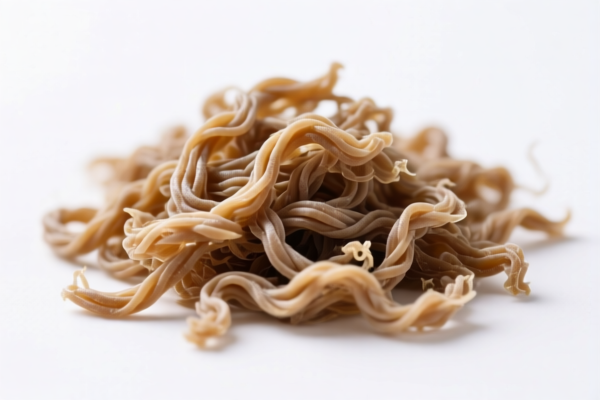
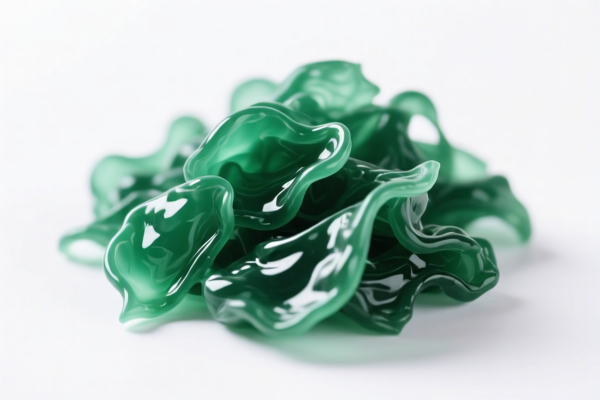
AI分析
🧪 Sodium Alginate Mask Raw Material: HS Code Classification & Customs Clearance Guide
🌐 HS Code Reference & Customs Guide | 2026 Latest Tariff Analysis | Professional Clearance Strategy
📌 I. Product Definition & Classification: What is "Sodium Alginate Mask Raw Material"?
Sodium Alginate is a natural polymer derived from brown algae (seaweed). In the context of "Mask Raw Material," it serves as a thickening agent, gelling agent, or primary film-forming ingredient for cosmetic masks (sheet masks, wash-off masks, etc.).
Key Classification Distinction:
The classification depends heavily on chemical state and intended use:
1. As a Natural Polymer/Thickener: If imported primarily as a raw chemical substance for industrial or cosmetic formulation without being a "preparation" of a kind used in cosmetics, it may fall under Chapter 13 or 39.
2. As a Cosmetic Ingredient: If specifically prepared for use in skin care, it might be argued for Chapter 33 (Essential Oils and Resinoids; Cosmetic or Toilet Preparations).
⚠️ Critical Note:
- Chapter 13 (1302.39): Covers "Vegetable saps and extracts; vegetable mucilages and thickeners." This is often the most accurate for raw, unmodified or slightly modified alginate.
- Chapter 39 (3913.10 / 3913.90): Covers "Unmodified natural polymers (e.g., alginic acid, its salts) or chemically modified natural polymers."
- Chapter 33 (3304.99 / 3304.91): Covers "Make-up preparations and preparations for the care of the skin (other than medicament)." If the alginate is already part of a "preparation" or specifically marketed as a cosmetic raw material, customs may lean here, but raw powders are frequently rejected from Chapter 33 unless specified as "preparations."
📦 II. HS Code Classification Details (2026 Latest Tariff Mapping)
Based on the provided data, here are the five potential HS Codes with their specific reasoning:
| HS Code | Product Description | Classification Logic | Application Scenario |
|---|---|---|---|
1302.39.00.90 |
Vegetable mucilages and thickeners; other | Alginate is a plant-derived mucilage/thickener. As a raw material, it fits "other" vegetable mucilages. | ✅ Best Fit for Raw Thickener |
3913.10.00.00 |
Alginic acid and its salts; unmodified natural polymers | Alginate is a salt of alginic acid. It is a natural polymer in its primary form. | ✅ Best Fit for Chemical/Polymer Definition |
3913.90.20.90 |
Other chemically modified natural polymers | If the alginate is chemically modified (e.g., cross-linked) beyond simple salt formation. | ⚠️ Higher Risk/Rate |
3304.99.50.00 |
Other make-up and skin care preparations (not medicament) | If declared as a cosmetic raw material specifically for masks, some may interpret it as a "preparation." | ⚠️ Debatable for Raw Powder |
3304.91.00.50 |
Powders, whether or not compressed, for make-up or skin care | If specifically prepared and sold as a cosmetic ingredient powder. | ⚠️ Debatable for Raw Powder |
🔍 Key Insight:
-1302.39.00.90and3913.10.00.00are the most technically accurate for raw Sodium Alginate.
-3304.99and3304.91are risky because Chapter 33 typically applies to "preparations" (mixtures/formulations) rather than single chemical entities like raw alginate powder. However, some importers attempt this for cosmetic marketing reasons, leading to potential disputes.
💰 III. 2026 Latest Tariff Rate Breakdown (Detailed)
✅ Applicable Country: United States (US)
✅ Origin: China (CN)
✅ Effective Date: From 2025-11-10 onwards
🎯 1. 1302.39.00.90 – Vegetable Mucilages and Thickeners
| Item | Detail |
|---|---|
| Base Tariff | 3.2% |
| Section 301 (Trade War) Tariff | 7.5% |
| Section 122 Tariff | 10% |
| Total Tariff Rate | 20.7% |
| Calculation Basis | CIF Value × 20.7% |
| De Minimis Exemption | ❌ Not Eligible |
| Legal Path | HTSUS:1302.39.00.90 + Section 301: 7.5% + Section 122: 10% |
📌 Explanation:
- This is the lowest total tariff among the options.
- Section 122 refers to recent emergency tariffs (often related to national security or specific supply chain issues).
- Advantage: Lower cost, technically sound for "vegetable mucilage."
🎯 2. 3913.10.00.00 – Alginic Acid and Its Salts
| Item | Detail |
|---|---|
| Base Tariff | 4.2% |
| Section 301 (Trade War) Tariff | 7.5% |
| Section 122 Tariff | 10% |
| Total Tariff Rate | 21.7% |
| Calculation Basis | CIF Value × 21.7% |
| De Minimis Exemption | ❌ Not Eligible |
| Legal Path | HTSUS:3913.10.00.00 + Section 301: 7.5% + Section 122: 10% |
📌 Explanation:
- Slightly higher base tariff (4.2% vs 3.2%) but same additional tariffs.
- Technically accurate for "salts of alginic acid."
- Advantage: Very close to 1302.39, often accepted by customs as a polymer.
🎯 3. 3913.90.20.90 – Other Chemically Modified Natural Polymers
| Item | Detail |
|---|---|
| Base Tariff | 5.8% |
| Section 301 (Trade War) Tariff | 25.0% |
| Section 122 Tariff | 10% |
| Total Tariff Rate | 40.8% |
| Calculation Basis | CIF Value × 40.8% |
| De Minimis Exemption | ❌ Not Eligible |
| Legal Path | HTSUS:3913.90.20.90 + Section 301: 25% + Section 122: 10% |
📌 Warning:
- Avoid this code unless necessary. The Section 301 tariff jumps to 25% for "other" polymers.
- Only use if the alginate is significantly chemically modified and does not fit 3913.10.
🎯 4. 3304.99.50.00 – Other Skin Care Preparations
| Item | Detail |
|---|---|
| Base Tariff | 0.0% |
| Section 301 (Trade War) Tariff | 25.0% |
| Section 122 Tariff | 10% |
| Total Tariff Rate | 35.0% |
| Calculation Basis | CIF Value × 35.0% |
| De Minimis Exemption | ❌ Not Eligible |
| Legal Path | HTSUS:3304.99.50.00 + Section 301: 25% + Section 122: 10% |
📌 Risk:
- Although base tariff is 0%, the Section 301 tariff is 25%.
- Customs may challenge this classification, arguing raw alginate is not a "preparation." Risk of audit and reassessment to Chapter 13/39.
🎯 5. 3304.91.00.50 – Powders for Skin Care
| Item | Detail |
|---|---|
| Base Tariff | 0.0% |
| Section 301 (Trade War) Tariff | 25.0% |
| Section 122 Tariff | 10% |
| Total Tariff Rate | 35.0% |
| Calculation Basis | CIF Value × 35.0% |
| De Minimis Exemption | ❌ Not Eligible |
| Legal Path | HTSUS:3304.91.00.50 + Section 301: 25% + Section 122: 10% |
📌 Risk:
- Same as above. High risk of misclassification. Only use if the product is a finished cosmetic formulation, not raw alginate.
🛠️ IV. Customs Clearance Practical Advice (Avoid Pitfalls)
✅ 1. Documentation Checklist (Must-Have)
| Document | Requirement | Notes |
|---|---|---|
| Product Specification Sheet | ✔️ | Must list chemical composition, CAS number (9005-38-3 for Sodium Alginate), and form (powder). |
| Certificate of Origin (CO) | ✔️ | Essential for determining country of origin for Section 122/301 tariffs. |
| Ingredient Declaration | ✔️ | Clarify if it’s 100% Sodium Alginate or a blend. |
| Safety Data Sheet (SDS) | ✔️ | Required for chemical imports. |
| Commercial Invoice | ✔️ | Clearly state "Sodium Alginate Raw Material" or "Vegetable Mucilage," not "Cosmetic Mask." |
| Usage Statement | ✔️ | "For use as a thickening agent in cosmetic formulation," not "Ready-to-use mask." |
✅ 2. Classification Strategy (Key Tips)
🔥 "Raw Material vs. Preparation: Know the Difference!"
| Scenario | Recommended HS Code | Why? |
|---|---|---|
| 100% Sodium Alginate Powder | 1302.39.00.90 or 3913.10.00.00 |
These are raw chemical/natural substances. Lowest risk, lowest tariff (20.7%/21.7%). |
| Alginate Mixed with Other Cosmetic Ingredients | 3304.99.50.00 |
If it’s a pre-mixed cosmetic ingredient, Chapter 33 may apply, but higher tariff (35%). |
| Pre-mixed Mask Powder for End Consumer | 3304.99.50.00 |
If sold as a "kit" for consumers to make a mask, it’s a preparation. |
📌 Critical Warning:
- Do NOT declare raw alginate as a cosmetic preparation (3304) just to avoid Section 301 tariffs. Customs has specific rules for chemical raw materials. Misclassification can lead to penalties, back-duties, and shipment delays.
- Prefer1302.39.00.90for the best balance of compliance and cost (20.7% total).
✅ 3. Special Considerations
| Situation | Advice |
|---|---|
| Small Sample Shipments | Still subject to tariffs. De minimis does not apply to Section 122/301 goods from China. |
| Bulk Industrial Import | Ensure SDS and TDS are ready for CBP (Customs and Border Protection) review. |
| Origin Transshipment | If shipped via Vietnam/Malaysia, ensure no substantial transformation occurred. Otherwise, still subject to China-origin tariffs. |
🌍 V. Global Market Comparison (2026)
| Country | Recommended HS Code | Total Tariff (Est.) | Notes |
|---|---|---|---|
| 🇺🇸 USA | 1302.39.00.90 |
20.7% | Includes Section 122 (10%) + Section 301 (7.5%). |
| 🇨🇳 China | 1302.39.00.90 |
~5-10% | Import tariffs vary; no Section 122/301. |
| 🇪🇺 EU | 1302.39.90 |
~6.5% | Standard EU common customs tariff. No US-style added tariffs. |
| 🇬🇧 UK | 1302.39.90 |
~6.5% | Similar to EU post-Brexit. |
| 🇦🇺 Australia | 1302.39.90 |
~5% | Low base tariff, no major added tariffs. |
📌 Conclusion:
- The USA is the most challenging market due to Section 122 and Section 301 tariffs.
- EU/UK/Australia offer significantly lower duties for the same product.
📌 VI. Common Mistakes & Pitfalls
❌ Mistake 1: Declaring raw alginate as "Cosmetic Mask"
👉 Consequence: HS Code misclassification (Chapter 33 vs 13/39). High risk of audit.
❌ Mistake 2: Ignoring Section 122 Tariff
👉 Consequence: Underpayment of 10%. Customs will demand back-payment + interest.
❌ Mistake 3: Using Chapter 39.13 for simple salts
👉 Consequence: While 3913.10 is valid, 1302.39 is often more common for "mucilages." Both are acceptable, but 1302 has a lower base rate.
✅ Correct Approach:
"Sodium Alginate (CAS 9005-38-3), Powder, for use as a thickening agent in cosmetic formulation."
HS Code:1302.39.00.90
Total Duty: 20.7%
🎯 VII. Conclusion: Smart Classification for Cost Efficiency
🎯 Key Takeaway:
🔹 For Raw Sodium Alginate: Use
1302.39.00.90or3913.10.00.00.
🔹 Avoid Chapter 33 for raw materials unless it’s a formulated mixture.
🔹 Budget for 20.7% in the USA (not 35%+).
🔹 Always include CAS Number and SDS in documentation.
📌 Pro Tip:
If your volume is high, consider applying for a Binding Ruling (Ruling Letter) from US CBP to confirm the HS Code (1302.39.00.90) before shipment. This provides legal certainty and avoids future disputes.
📣 Immediate Action Required:
📞 Verify with your freight forwarder if they are aware of Section 122 tariffs.
📄 Prepare SDS and CAS Number documentation now.
🚀 Optimize supply chain to mitigate 20.7% duty impact.
✨ Accurate Classification = Lower Costs + Smooth Clearance!
💼 Don’t let customs errors eat your profit margin.
用户评价
关于 HS 编码归类
协调制度(HS)是由世界海关组织(WCO)制定的国际贸易商品分类标准。全球 200 多个国家采用 HS 系统作为海关关税、贸易统计和进出口监管的基础。
每个 HS 编码遵循以下层级结构:
- 章(2 位)——商品大类(例如:第 84 章:机器和机械设备)
- 品目(4 位)——章内的更具体分类
- 子目(6 位)——国际通用细分,所有 WCO 成员国统一使用
- 本国细分(8-10 位)——各国自行扩展的细分编码,如美国 HTSUS 10 位编码
正确的 HS 编码归类对于顺利通关、准确缴纳关税和遵守贸易法规至关重要。错误归类可能导致海关延误、多缴关税或罚款。
从CN进口到US时,适用的关税税率可能包括:
- 最惠国(MFN)税率——适用于 WTO 成员国的标准关税税率
- 普通税率——适用于无贸易协定国家
- 贸易救济关税——附加关税,如 301 条款(反倾销)、232 条款(国家安全)或反补贴税
本页内容仅供参考。如需正式归类,请咨询当地海关或持牌报关代理。