Solution Polymerized Styrene Butadiene Rubber (S SBR) Bundle
CN → US| HS编码 | 关税税率 | 原产国 | 目的国 | 文档 |
|---|---|---|---|---|
| 3913901000 | 35.0% | CN | US | 官方文档 |
| 4005200000 | 35.0% | CN | US | 官方文档 |
| 4002190016 | 35.0% | CN | US | 官方文档 |
| 4005990000 | 35.0% | CN | US | 官方文档 |
商品图片
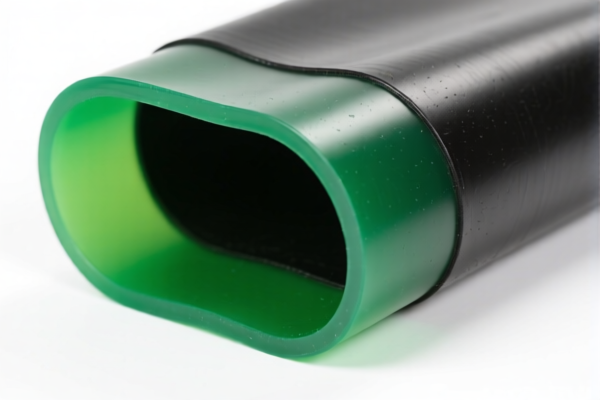
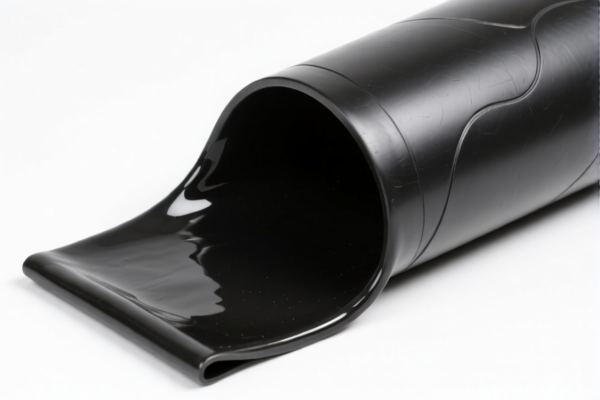
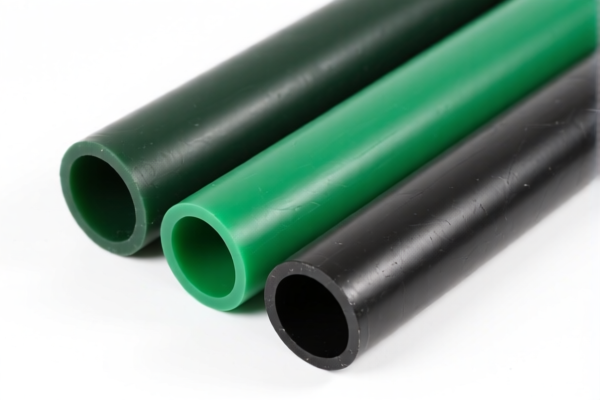
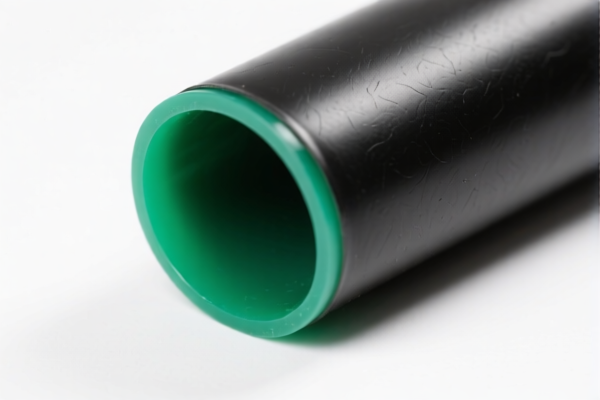
AI分析
🧪 Solution Polymerized Styrene-Butadiene Rubber (S-SBR) in Bales
🌐 HS Code Reference & Customs Clearance Guide | 2026 Latest Tariff Analysis | Professional Clearance Strategy 📌 I. Product Definition & Classification: What is S-SBR?
Styrene-Butadiene Rubber (SBR) is the most widely used synthetic rubber globally, prized for its abrasion resistance and aging properties. It is primarily produced via two methods: Emulsion Polymerization (E-SBR) and Solution Polymerization (S-SBR).
Solution Polymerized SBR (S-SBR) is a high-performance variant produced using organometallic catalysts (such as lithium). It offers superior control over polymer structure, resulting in better wet traction, lower rolling resistance, and higher fuel efficiency compared to E-SBR.
Key Distinction in Customs Classification: * Form: The product is specified as being in "Bales" (primary forms), which dictates its classification under Chapter 40 (Rubber and articles thereof) rather than Chapter 39 (Plastics). * Production Method: The critical differentiator is "Solution Polymerization" vs. "Emulsion Polymerization." * Styrene Content: The classification assumes the S-SBR contains 50% or less styrene by weight of the dry polymer (standard for most tire-grade S-SBR).
⚠️ Critical Classification Point: - If it is Solution Polymerized SBR in bales → 4002.19.00.16 (0% Duty) - If it is Emulsion Polymerized SBR in bales → 4002.19.00.15 (25% Duty) - Do not confuse S-SBR with E-SBR. They are distinct subheadings due to different manufacturing processes and final properties.
📦 II. HS Code Classification Details (2026 Latest Tariff Authority对照)
| HS Code | Product Description | Applicable Scenario | Key Identifier |
|---|---|---|---|
4005.20.00.00 |
Compounded Rubber, Unvulcanized: Solutions; dispersions other than 4005.10 | Rubber compounds containing S-SBR as an ingredient | ⛔ Not Applicable (Unless compounded with other agents) |
4005.99.00.00 |
Compounded Rubber, Unvulcanized: Other: Other | Other unvulcanized compounds not elsewhere specified | ⛔ Not Applicable (Pure S-SBR is not a "compound" if unblended) |
3913.90.10.00 |
Natural Polymers... Chemical derivatives of natural rubber | Derivatives like hydroxylated or epoxidized natural rubber | ⛔ Not Applicable (S-SBR is synthetic, not natural derivative) |
3913.90.20.90 |
Polysaccharides and their derivatives | Alginic acid, guar gum, etc. | ⛔ Not Applicable (S-SBR is not a polysaccharide) |
4002.19.00.15 |
Synthetic Rubber (SBR/XSBR): E-SBR in Bales | Emulsion polymerized SBR, styrene ≤50% | ❌ High Duty (25% Total) |
4002.19.00.16 |
Synthetic Rubber (SBR/XSBR): S-SBR in Bales | Solution polymerized SBR, styrene ≤50% | ✅ Zero Duty (0% Total) |
🔍 Key Reminder: - 4002.19.00.16 is the only code for Solution Polymerized SBR in bales with ≤50% styrene. - 4002.19.00.15 is for Emulsion Polymerized SBR. Misclassification here leads to a 25% penalty. - Compounded Rubber (4005) applies only if the S-SBR is mixed with other rubber compounds, fillers, or chemicals before export. If it is pure polymer, it remains in 4002.
💰 III. 2026 Latest Tariff Rate Breakdown (Including Additional Taxes, Policy Add-ons)
✅ Applicable Country: United States (US) ✅ Origin: China (CN) ✅ Effective Date: 2025 November 10 (and subsequent imports)
🎯 1. 4002.19.00.16 —— Solution Polymerized SBR (S-SBR) in Bales
| Item | Content |
|---|---|
| Base Tariff Rate | 0.0% (Ad Valorem) |
| Section 301 Additional Duty | 0.0% (Exempt from 25% tariff) |
| Total Tax Rate | 0.0% |
| Tax Calculation | CIF Value × 0% = $0 |
| De Minimis Eligibility | ❌ Not Applicable (Large volume commercial shipment) |
| Legal Basis Path | USITC:4002.19.00.16 → Footnote: 301 Exemption List 4 |
📌 Explanation: - Why 0%? The USITC (U.S. International Trade Commission) has specifically exempted Solution Polymerized SBR (S-SBR) in bales from the 25% Section 301 tariffs due to limited domestic production capacity and high demand from the automotive/tire industry. - Contrast with E-SBR: Emulsion SBR (E-SBR) does not enjoy this exemption and is taxed at 25%. - Strategic Advantage: Importers using S-SBR have a significant cost advantage over those using E-SBR if sourcing from China.
🎯 2. 4002.19.00.15 —— Emulsion Polymerized SBR (E-SBR) in Bales (For Comparison)
| Item | Content |
|---|---|
| Base Tariff Rate | 0.0% |
| Section 301 Additional Duty | +25.0% |
| Total Tax Rate | 25.0% |
| Tax Calculation | CIF Value × 25% |
| De Minimis Eligibility | ❌ Not Applicable |
| Legal Basis Path | USITC:4002.19.00.15 → Footnote: 301 Tariff List |
📌 Warning: - If your product is E-SBR but declared as S-SBR, you will face severe penalties for fraud. - Always provide Technical Data Sheets (TDS) proving the polymerization method (e.g., "Lithium-initiated solution polymerization") to justify the 0% rate.
🎯 3. Compounded Rubbers (4005.20.00.00 & 4005.99.00.00)
| Item | Content |
|---|---|
| Base Tariff Rate | 0.0% |
| Section 301 Additional Duty | +25.0% |
| Total Tax Rate | 25.0% |
| Tax Calculation | CIF Value × 25% |
| Legal Basis Path | USITC:4005.20.00.00 / 4005.99.00.00 |
📌 Note: - If S-SBR is compounded (mixed with carbon black, silica, etc.), it loses its "pure polymer" status and falls under Chapter 4005. - Compounded S-SBR is NOT exempt from the 25% tariff. This is a crucial distinction for manufacturers who blend rubber before export.
🛠️ IV. Customs Clearance Practical Advice (Battle-Tested Pitfall Avoidance Guide)
✅ 1. Documentation Checklist (Mandatory)
| Document | Required | Explanation |
|---|---|---|
| ✅ Technical Data Sheet (TDS) | ✔️ | Must explicitly state "Solution Polymerized" and "Styrene Content ≤50%". |
| ✅ Certificate of Analysis (COA) | ✔️ | Laboratory confirmation of polymerization method. |
| ✅ Product Photo | ✔️ | Clear image of bales, labels, and UN numbers (if applicable). |
| ✅ Commercial Invoice | ✔️ | Must specify "Styrene-Butadiene Rubber, Solution Polymerized (S-SBR)". |
| ✅ Packing List | ✔️ | Detail weight, dimensions, and bale count. |
| ✅ Origin Certificate | ✔️ | Confirm China origin (to apply 301 rules). |
✅ 2. Declaration Strategy (Key Mantra)
🔥 "S-SBR is Zero, E-SBR is Twenty-Five; Compounding Kills the Exemption!"
| Scenario | Correct Declaration | Incorrect Declaration |
|---|---|---|
| Pure S-SBR in Bales | 4002.19.00.16 (0%) |
4002.19.00.15 (25%) |
| Pure E-SBR in Bales | 4002.19.00.15 (25%) |
4002.19.00.16 (Fraud/0%) |
| Compounded S-SBR | 4005.20.00.00 or 4005.99.00.00 (25%) |
4002.19.00.16 (Incorrect) |
✅ 3. Special Handling Cases
| Scenario | Handling Advice |
|---|---|
| Mixed S-SBR and E-SBR | Do not mix in one shipment if claiming 0%. If mixed, the entire shipment may be downgraded to the highest applicable duty (25%). |
| Private Label/White Label | Ensure the TDS is from the manufacturer, not the brand owner. Customs looks at the production process. |
| Import for Resale | Declare as "For Sale" or "For Use in Tire Manufacturing." Provide end-use statement if requested. |
| Small Sample Shipments | Even small quantities must be correctly classified. De Minimis ($800) does not apply to misclassified goods, but duty calculation is still based on CIF. |
🌍 V. Global Market Comparison (2026 Latest)
| Country/Region | Recommended HS Code | Tariff | Certification | Notes |
|---|---|---|---|---|
| 🇺🇸 USA | 4002.19.00.16 |
0% | No specific certification | Exempt from 301 due to domestic shortage. |
| 🇨🇳 China | 4002.19.00.16 |
~10-15% | None | Import duties vary; check latest Chinese tariff book. |
| 🇪🇺 EU | 4002.19.00.00 |
0% | REACH Registration | S-SBR must be registered under REACH for EU market. |
| 🇯🇵 Japan | 4002.19.00.00 |
0-5% | JIS Standards | Low duties, but strict quality checks. |
| 🇮🇳 India | 4002.19.00.00 |
7.5-10% | BIS Certification | Basic Customs Duty + SWS applies. |
📌 Conclusion: - USA offers the best duty advantage for S-SBR (0%) due to specific exemptions. - EU and Japan have low base duties but require compliance with chemical regulations (REACH/JIS). - India has moderate duties but is a growing market for tire manufacturing.
📌 VI. Common Errors & Pitfalls (Lessons Learned from Blood & Tears)
❌ Error 1: Declaring Compounded S-SBR as Pure S-SBR (4002.19.00.16)
👉 Consequence: 25% back-tariff + penalties + seizure risk.
Fix: If compounded, use 4005 codes.
❌ Error 2: Confusing S-SBR with E-SBR 👉 Consequence: Paying 25% when you could have paid 0%, or getting caught for fraud if you claim 0% for E-SBR. Fix: Use TDS to prove "Solution Polymerization" (usually lithium-based).
❌ Error 3: Using "General Purpose Rubber" as the description 👉 Consequence: Customs officer may assign a generic code with higher duties or delay shipment for further review. Fix: Be specific: "Styrene-Butadiene Rubber, Solution Polymerized, S-SBR, Bales."
❌ Error 4: Ignoring Styrene Content
👉 Consequence: If styrene content >50%, the code changes to 4002.19.00.20 (or similar), which may have different duties.
Fix: Ensure TDS states styrene % ≤50% for 4002.19.00.16.
✅ Correct Declaration Example:
"Styrene-Butadiene Rubber (S-SBR), Solution Polymerized, Unvulcanized, in Bales, Styrene Content 25% by Weight, Model XX, for Tire Manufacturing, Origin: China"
🎯 VII. Conclusion: Precision Classification Saves Millions!
🎯 Remember the Mantra:
🔹 "S-SBR is Zero, E-SBR is Twenty-Five; Compounding Kills the Exemption!" 🔹 "TDS is King, TDS is Queen, Prove it's Solution, Keep the Duty Clean!"
📌 Pro Tip: If your S-SBR is compounded with other rubber types, you lose the 0% duty. Consider importing pure S-SBR and blending it domestically in the US (if feasible) to save on tariffs. Always consult with a customs broker to verify the polymerization method on your TDS.
📣 Immediate Action:
📞 Contact your Customs Broker + Provide TDS + Verify "Solution Polymerized" claim 🚀 Let your S-SBR shipments clear smoothly, pay 0% duty, and boost your margins!
✨ Professional Clearance Starts with Precise Classification! 💼 Every cent of tariff saved is pure profit earned!
用户评价
关于 HS 编码归类
协调制度(HS)是由世界海关组织(WCO)制定的国际贸易商品分类标准。全球 200 多个国家采用 HS 系统作为海关关税、贸易统计和进出口监管的基础。
每个 HS 编码遵循以下层级结构:
- 章(2 位)——商品大类(例如:第 84 章:机器和机械设备)
- 品目(4 位)——章内的更具体分类
- 子目(6 位)——国际通用细分,所有 WCO 成员国统一使用
- 本国细分(8-10 位)——各国自行扩展的细分编码,如美国 HTSUS 10 位编码
正确的 HS 编码归类对于顺利通关、准确缴纳关税和遵守贸易法规至关重要。错误归类可能导致海关延误、多缴关税或罚款。
从CN进口到US时,适用的关税税率可能包括:
- 最惠国(MFN)税率——适用于 WTO 成员国的标准关税税率
- 普通税率——适用于无贸易协定国家
- 贸易救济关税——附加关税,如 301 条款(反倾销)、232 条款(国家安全)或反补贴税
本页内容仅供参考。如需正式归类,请咨询当地海关或持牌报关代理。