Solution Polymerized Styrene Butadiene Rubber (S SBR) Bundle
CN → US| HS Code | Tariff Rate | Origin | Destination | Doc |
|---|---|---|---|---|
| 3913901000 | 35.0% | CN | US | Official Doc |
| 4005200000 | 35.0% | CN | US | Official Doc |
| 4002190016 | 35.0% | CN | US | Official Doc |
| 4005990000 | 35.0% | CN | US | Official Doc |
Product Images
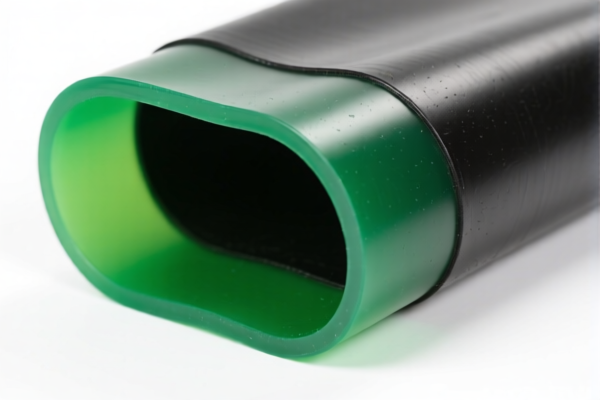
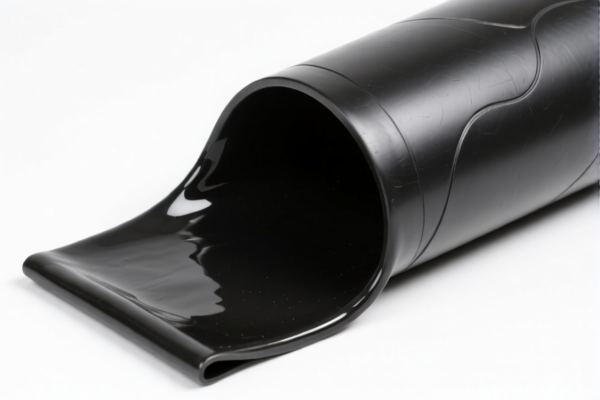
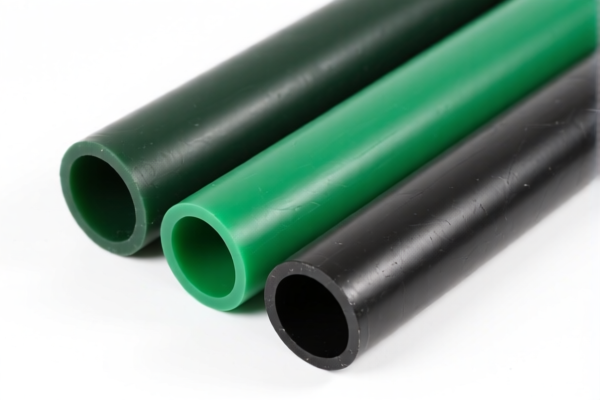
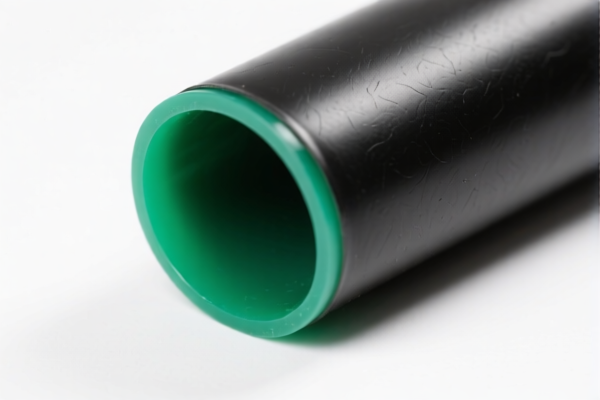
AI Analysis
🧪 Solution Polymerized Styrene-Butadiene Rubber (S-SBR) in Bales
🌐 HS Code Reference & Customs Clearance Guide | 2026 Latest Tariff Analysis | Professional Clearance Strategy 📌 I. Product Definition & Classification: What is S-SBR?
Styrene-Butadiene Rubber (SBR) is the most widely used synthetic rubber globally, prized for its abrasion resistance and aging properties. It is primarily produced via two methods: Emulsion Polymerization (E-SBR) and Solution Polymerization (S-SBR).
Solution Polymerized SBR (S-SBR) is a high-performance variant produced using organometallic catalysts (such as lithium). It offers superior control over polymer structure, resulting in better wet traction, lower rolling resistance, and higher fuel efficiency compared to E-SBR.
Key Distinction in Customs Classification: * Form: The product is specified as being in "Bales" (primary forms), which dictates its classification under Chapter 40 (Rubber and articles thereof) rather than Chapter 39 (Plastics). * Production Method: The critical differentiator is "Solution Polymerization" vs. "Emulsion Polymerization." * Styrene Content: The classification assumes the S-SBR contains 50% or less styrene by weight of the dry polymer (standard for most tire-grade S-SBR).
⚠️ Critical Classification Point: - If it is Solution Polymerized SBR in bales → 4002.19.00.16 (0% Duty) - If it is Emulsion Polymerized SBR in bales → 4002.19.00.15 (25% Duty) - Do not confuse S-SBR with E-SBR. They are distinct subheadings due to different manufacturing processes and final properties.
📦 II. HS Code Classification Details (2026 Latest Tariff Authority对照)
| HS Code | Product Description | Applicable Scenario | Key Identifier |
|---|---|---|---|
4005.20.00.00 |
Compounded Rubber, Unvulcanized: Solutions; dispersions other than 4005.10 | Rubber compounds containing S-SBR as an ingredient | ⛔ Not Applicable (Unless compounded with other agents) |
4005.99.00.00 |
Compounded Rubber, Unvulcanized: Other: Other | Other unvulcanized compounds not elsewhere specified | ⛔ Not Applicable (Pure S-SBR is not a "compound" if unblended) |
3913.90.10.00 |
Natural Polymers... Chemical derivatives of natural rubber | Derivatives like hydroxylated or epoxidized natural rubber | ⛔ Not Applicable (S-SBR is synthetic, not natural derivative) |
3913.90.20.90 |
Polysaccharides and their derivatives | Alginic acid, guar gum, etc. | ⛔ Not Applicable (S-SBR is not a polysaccharide) |
4002.19.00.15 |
Synthetic Rubber (SBR/XSBR): E-SBR in Bales | Emulsion polymerized SBR, styrene ≤50% | ❌ High Duty (25% Total) |
4002.19.00.16 |
Synthetic Rubber (SBR/XSBR): S-SBR in Bales | Solution polymerized SBR, styrene ≤50% | ✅ Zero Duty (0% Total) |
🔍 Key Reminder: - 4002.19.00.16 is the only code for Solution Polymerized SBR in bales with ≤50% styrene. - 4002.19.00.15 is for Emulsion Polymerized SBR. Misclassification here leads to a 25% penalty. - Compounded Rubber (4005) applies only if the S-SBR is mixed with other rubber compounds, fillers, or chemicals before export. If it is pure polymer, it remains in 4002.
💰 III. 2026 Latest Tariff Rate Breakdown (Including Additional Taxes, Policy Add-ons)
✅ Applicable Country: United States (US) ✅ Origin: China (CN) ✅ Effective Date: 2025 November 10 (and subsequent imports)
🎯 1. 4002.19.00.16 —— Solution Polymerized SBR (S-SBR) in Bales
| Item | Content |
|---|---|
| Base Tariff Rate | 0.0% (Ad Valorem) |
| Section 301 Additional Duty | 0.0% (Exempt from 25% tariff) |
| Total Tax Rate | 0.0% |
| Tax Calculation | CIF Value × 0% = $0 |
| De Minimis Eligibility | ❌ Not Applicable (Large volume commercial shipment) |
| Legal Basis Path | USITC:4002.19.00.16 → Footnote: 301 Exemption List 4 |
📌 Explanation: - Why 0%? The USITC (U.S. International Trade Commission) has specifically exempted Solution Polymerized SBR (S-SBR) in bales from the 25% Section 301 tariffs due to limited domestic production capacity and high demand from the automotive/tire industry. - Contrast with E-SBR: Emulsion SBR (E-SBR) does not enjoy this exemption and is taxed at 25%. - Strategic Advantage: Importers using S-SBR have a significant cost advantage over those using E-SBR if sourcing from China.
🎯 2. 4002.19.00.15 —— Emulsion Polymerized SBR (E-SBR) in Bales (For Comparison)
| Item | Content |
|---|---|
| Base Tariff Rate | 0.0% |
| Section 301 Additional Duty | +25.0% |
| Total Tax Rate | 25.0% |
| Tax Calculation | CIF Value × 25% |
| De Minimis Eligibility | ❌ Not Applicable |
| Legal Basis Path | USITC:4002.19.00.15 → Footnote: 301 Tariff List |
📌 Warning: - If your product is E-SBR but declared as S-SBR, you will face severe penalties for fraud. - Always provide Technical Data Sheets (TDS) proving the polymerization method (e.g., "Lithium-initiated solution polymerization") to justify the 0% rate.
🎯 3. Compounded Rubbers (4005.20.00.00 & 4005.99.00.00)
| Item | Content |
|---|---|
| Base Tariff Rate | 0.0% |
| Section 301 Additional Duty | +25.0% |
| Total Tax Rate | 25.0% |
| Tax Calculation | CIF Value × 25% |
| Legal Basis Path | USITC:4005.20.00.00 / 4005.99.00.00 |
📌 Note: - If S-SBR is compounded (mixed with carbon black, silica, etc.), it loses its "pure polymer" status and falls under Chapter 4005. - Compounded S-SBR is NOT exempt from the 25% tariff. This is a crucial distinction for manufacturers who blend rubber before export.
🛠️ IV. Customs Clearance Practical Advice (Battle-Tested Pitfall Avoidance Guide)
✅ 1. Documentation Checklist (Mandatory)
| Document | Required | Explanation |
|---|---|---|
| ✅ Technical Data Sheet (TDS) | ✔️ | Must explicitly state "Solution Polymerized" and "Styrene Content ≤50%". |
| ✅ Certificate of Analysis (COA) | ✔️ | Laboratory confirmation of polymerization method. |
| ✅ Product Photo | ✔️ | Clear image of bales, labels, and UN numbers (if applicable). |
| ✅ Commercial Invoice | ✔️ | Must specify "Styrene-Butadiene Rubber, Solution Polymerized (S-SBR)". |
| ✅ Packing List | ✔️ | Detail weight, dimensions, and bale count. |
| ✅ Origin Certificate | ✔️ | Confirm China origin (to apply 301 rules). |
✅ 2. Declaration Strategy (Key Mantra)
🔥 "S-SBR is Zero, E-SBR is Twenty-Five; Compounding Kills the Exemption!"
| Scenario | Correct Declaration | Incorrect Declaration |
|---|---|---|
| Pure S-SBR in Bales | 4002.19.00.16 (0%) |
4002.19.00.15 (25%) |
| Pure E-SBR in Bales | 4002.19.00.15 (25%) |
4002.19.00.16 (Fraud/0%) |
| Compounded S-SBR | 4005.20.00.00 or 4005.99.00.00 (25%) |
4002.19.00.16 (Incorrect) |
✅ 3. Special Handling Cases
| Scenario | Handling Advice |
|---|---|
| Mixed S-SBR and E-SBR | Do not mix in one shipment if claiming 0%. If mixed, the entire shipment may be downgraded to the highest applicable duty (25%). |
| Private Label/White Label | Ensure the TDS is from the manufacturer, not the brand owner. Customs looks at the production process. |
| Import for Resale | Declare as "For Sale" or "For Use in Tire Manufacturing." Provide end-use statement if requested. |
| Small Sample Shipments | Even small quantities must be correctly classified. De Minimis ($800) does not apply to misclassified goods, but duty calculation is still based on CIF. |
🌍 V. Global Market Comparison (2026 Latest)
| Country/Region | Recommended HS Code | Tariff | Certification | Notes |
|---|---|---|---|---|
| 🇺🇸 USA | 4002.19.00.16 |
0% | No specific certification | Exempt from 301 due to domestic shortage. |
| 🇨🇳 China | 4002.19.00.16 |
~10-15% | None | Import duties vary; check latest Chinese tariff book. |
| 🇪🇺 EU | 4002.19.00.00 |
0% | REACH Registration | S-SBR must be registered under REACH for EU market. |
| 🇯🇵 Japan | 4002.19.00.00 |
0-5% | JIS Standards | Low duties, but strict quality checks. |
| 🇮🇳 India | 4002.19.00.00 |
7.5-10% | BIS Certification | Basic Customs Duty + SWS applies. |
📌 Conclusion: - USA offers the best duty advantage for S-SBR (0%) due to specific exemptions. - EU and Japan have low base duties but require compliance with chemical regulations (REACH/JIS). - India has moderate duties but is a growing market for tire manufacturing.
📌 VI. Common Errors & Pitfalls (Lessons Learned from Blood & Tears)
❌ Error 1: Declaring Compounded S-SBR as Pure S-SBR (4002.19.00.16)
👉 Consequence: 25% back-tariff + penalties + seizure risk.
Fix: If compounded, use 4005 codes.
❌ Error 2: Confusing S-SBR with E-SBR 👉 Consequence: Paying 25% when you could have paid 0%, or getting caught for fraud if you claim 0% for E-SBR. Fix: Use TDS to prove "Solution Polymerization" (usually lithium-based).
❌ Error 3: Using "General Purpose Rubber" as the description 👉 Consequence: Customs officer may assign a generic code with higher duties or delay shipment for further review. Fix: Be specific: "Styrene-Butadiene Rubber, Solution Polymerized, S-SBR, Bales."
❌ Error 4: Ignoring Styrene Content
👉 Consequence: If styrene content >50%, the code changes to 4002.19.00.20 (or similar), which may have different duties.
Fix: Ensure TDS states styrene % ≤50% for 4002.19.00.16.
✅ Correct Declaration Example:
"Styrene-Butadiene Rubber (S-SBR), Solution Polymerized, Unvulcanized, in Bales, Styrene Content 25% by Weight, Model XX, for Tire Manufacturing, Origin: China"
🎯 VII. Conclusion: Precision Classification Saves Millions!
🎯 Remember the Mantra:
🔹 "S-SBR is Zero, E-SBR is Twenty-Five; Compounding Kills the Exemption!" 🔹 "TDS is King, TDS is Queen, Prove it's Solution, Keep the Duty Clean!"
📌 Pro Tip: If your S-SBR is compounded with other rubber types, you lose the 0% duty. Consider importing pure S-SBR and blending it domestically in the US (if feasible) to save on tariffs. Always consult with a customs broker to verify the polymerization method on your TDS.
📣 Immediate Action:
📞 Contact your Customs Broker + Provide TDS + Verify "Solution Polymerized" claim 🚀 Let your S-SBR shipments clear smoothly, pay 0% duty, and boost your margins!
✨ Professional Clearance Starts with Precise Classification! 💼 Every cent of tariff saved is pure profit earned!
Customer Reviews
About HS Code Classification
The Harmonized System (HS) is an internationally standardized nomenclature developed by the World Customs Organization (WCO) to classify traded products. Over 200 countries use the HS system as the basis for customs tariffs, trade statistics, and import/export regulations.
Each HS code follows a hierarchical structure:
- Chapter (2 digits) — Broad category of goods (e.g., Chapter 84: Machinery and Mechanical Appliances)
- Heading (4 digits) — More specific grouping within the chapter
- Subheading (6 digits) — Internationally standardized breakdown, used by all WCO member countries
- National subdivisions (8-10 digits) — Country-specific extensions for further classification, such as US HTSUS 10-digit codes
Correct HS code classification is essential for smooth customs clearance, accurate duty payment, and compliance with trade regulations. Misclassification can lead to customs delays, overpayment of duties, or penalties.
When importing from CN to US, the applicable tariff rates may include:
- Most-Favored-Nation (MFN) rate — The standard duty rate applied to WTO members
- General rate — Applied to countries without trade agreements
- Trade remedy duties — Additional tariffs such as Section 301 (anti-dumping), Section 232 (national security), or countervailing duties
The information provided on this page is for reference purposes only. For official classification, please consult with your local customs authority or a licensed customs broker.