Soothing Vibration Mat
CN → US| HS编码 | 关税税率 | 原产国 | 目的国 | 文档 |
|---|---|---|---|---|
| 7326908688 | 87.9% | CN | US | 官方文档 |
| 4016993000 | 35.0% | CN | US | 官方文档 |
| 4016995500 | 37.5% | CN | US | 官方文档 |
商品图片
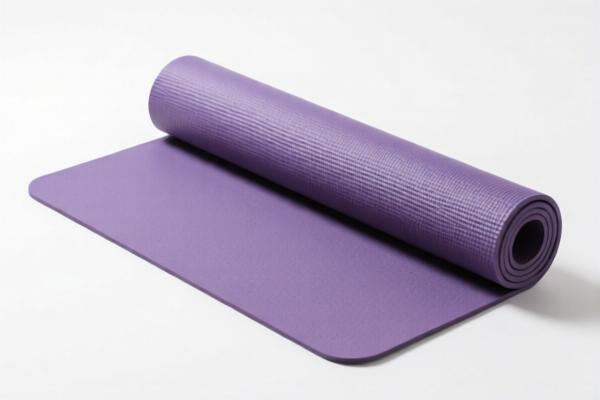

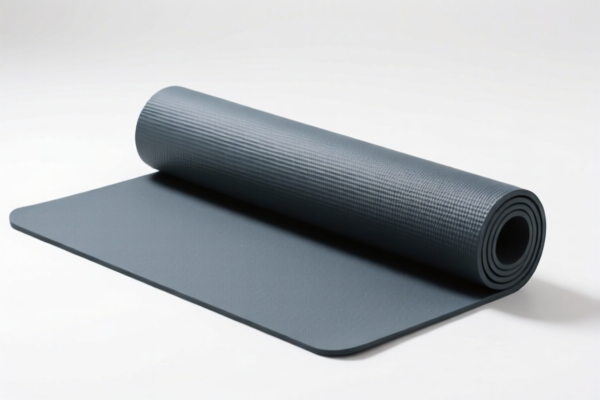
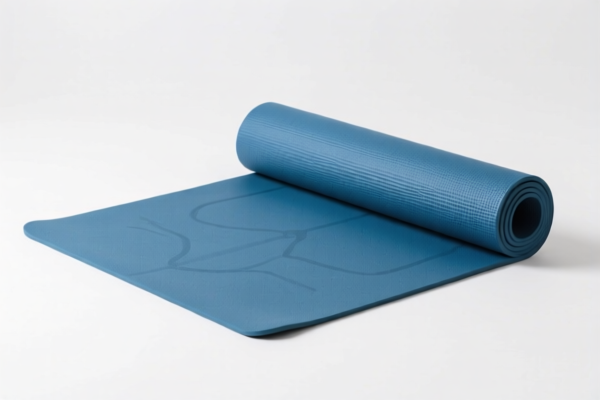
AI分析
🧘♀️ Soothing Vibration Mat (Massage & Relaxation Device)
🌐 HS Code Reference & Customs Clearance Guide | 2026 Latest Tariff Analysis | Professional Entry Strategy
📌 I. Product Definition: What is a "Soothing Vibration Mat"?
A "Soothing Vibration Mat" is typically an electric or mechanical device designed for relaxation, muscle relief, or sleep aid. It uses vibration motors to create rhythmic pulsations.
Key Classification Dilemma: The classification hinges heavily on the primary material and specific composition: 1. Rubber/Silicone Body: If the mat is primarily made of vulcanized rubber (common for shock absorption), it falls under Chapter 40. 2. Metal Frame/Structure: If the structural integrity relies on iron/steel (even if covered by other materials), or if no specific rubber classification fits perfectly, it may fall under the "catch-all" for Chapter 73.
⚠️ Critical Distinction:
- Is the mat predominantly rubber? → Look at 4016.
- Is the mat primarily metal (or unclassifiable as a specific rubber article)? → Look at 7326.
📦 II. HS Code Classification Details (Based on Provided Data)
| HS Code | Product Description | Matching Logic & Summary | Total Tax Rate* |
|---|---|---|---|
7326.90.86.88 |
Other Articles of Iron or Steel | Material Inference: Vibration mats are often metal (iron/steel) or rubber/plastic. Since the target code is the "catch-all" for "Other articles of iron or steel," and there is no explicit material conflict (e.g., explicitly stated as plastic), it is deemed likely compliant. | 87.9% |
4016.99.30.00 |
Other Vulcanized Rubber Articles (Shock Absorbing) | Usage Match: The name "Vibration Mat" implies shock-absorbing functions, matching the code's purpose. As an "Other" category code, and without conflicting natural rubber descriptions, it is deemed likely compliant based on usage and lack of material conflict. | 35.0% |
4016.99.55.00 |
Other Vulcanized Rubber Articles (General) | Common Sense Inference: Based on common knowledge, vibration mats are reasonably inferred to be made of rubber for comfort/vibration transmission. It matches "Other vulcanized rubber articles" with no conflict. | 37.5% |
🔍 Note on Tax Rates:
All rates below assume Origin: China importing into the USA (subject to Section 301 and Section 232/122 tariffs as detailed in the source data).
💰 III. 2026 Tariff Rate Breakdown (Detailed Policy Add-ons)
✅ Applicable Country: United States (US)
✅ Origin: China (CN)
✅ Effective Time: Current rates (2025-2026)
🎯 1. 7326.90.86.88 — Other Articles of Iron or Steel (High Risk/High Cost)
This code attracts the highest combined tariffs due to its classification as an iron/steel product, triggering both general 301 tariffs and specific steel/aluminum Section 232/122 tariffs.
| Item | Content |
|---|---|
| Base Tariff | 2.9% (Ad Valorem) |
| Section 301 Tariff | +25.0% (General Add-on for Chinese goods) |
| Section 122/232 Tariff | +50.0% (Specific Add-on for Steel/Aluminum/Copper products under Section 122 or related steel tariffs) |
| Total Effective Rate | 87.9% |
| Tax Calculation | CIF Value × 87.9% |
| De Minimis Exemption | ❌ Not Applicable (High tariff rate excludes small package relief) |
| Legal Basis Path | HTSUS 7326.90.86.88 → Section 301 (Footnote 9903.88.01) → Section 232/122 Steel/Aluminum provisions |
📌 Explanation:
- The 2.9% is the standard Most Favored Nation (MFN) rate.
- The 25% is the standard US-China trade war tariff (Section 301).
- The 50% is a crucial penalty: Many iron/steel articles are subject to additional duties under Section 232 (National Security) or Section 122 (Trade Expansion Act) depending on the specific steel formulation or import volume controls.
- Result: A nearly 88% tax burden makes this classification economically unviable for most commercial shipments unless the product value is extremely low or subsidized.
🎯 2. 4016.99.30.00 — Other Vulcanized Rubber Articles (Shock Absorbing)
This is likely the most favorable classification if the product can be proven to be primarily rubber and used for shock absorption (vibration damping).
| Item | Content |
|---|---|
| Base Tariff | 0.0% |
| Section 301 Tariff | +25.0% |
| Section 122/232 Tariff | 0% (Rubber is not steel/aluminum) |
| Total Effective Rate | 35.0% |
| Tax Calculation | CIF Value × 35.0% |
| De Minimis Exemption | ❌ Not Applicable (Still >15% or specific exclusions apply for high-tariff categories) |
| Legal Basis Path | HTSUS 4016.99.30.00 → Section 301 (Footnote 9903.01.24) |
📌 Explanation:
- 0% Base: Rubber articles often have low or zero base MFN rates.
- 25% Add-on: Applies as it is a Chinese-origin good under Section 301.
- No Steel Tariff: Since it’s rubber, the heavy 50% steel tariff does not apply.
- Result: 35% total is significantly cheaper than the 87.9% option.
🎯 3. 4016.99.55.00 — Other Vulcanized Rubber Articles (General)
Similar to above, but the base tariff is slightly higher than the shock-absorbing specific code.
| Item | Content |
|---|---|
| Base Tariff | 2.5% |
| Section 301 Tariff | +25.0% |
| Section 122/232 Tariff | 0% |
| Total Effective Rate | 37.5% |
| Tax Calculation | CIF Value × 37.5% |
| De Minimis Exemption | ❌ Not Applicable |
| Legal Basis Path | HTSUS 4016.99.55.00 → Section 301 |
📌 Explanation:
- The 2.5% base reflects the general "other rubber articles" rate.
- Total 37.5% is only 2.5% higher than the shock-absorbing code.
- Decision Factor: If the product is explicitly marketed for "shock absorption" or "vibration control,"4016.99.30.00is preferred. If it’s a general-purpose mat,4016.99.55.00is safe.
🛠️ IV. Customs Clearance Practical Advice
✅ 1. Material Declaration Strategy (Crucial!)
| Scenario | Recommended HS Code | Why? |
|---|---|---|
| Mat is >50% Rubber (e.g., silicone surface, rubber base) | 4016.99.30.00 or 4016.99.55.00 |
Rubber is not subject to the 50% steel tariff. Saves ~50% in taxes compared to 7326. |
| Mat is Metal Frame with Rubber Coating (Structural metal) | 7326.90.86.88 |
If metal provides the main structure, customs may classify as iron/steel. Avoid if possible due to 87.9% tax. |
| Mixed Material (Unspecified) | Consult Specialist | Risk of reclassification. Best to declare clearly as "Rubber Vibration Mat" with material specs. |
📌 Key Tip:
- If the product contains any steel/iron, customs may default to7326unless you provide strong evidence that rubber is the essential character.
- Provide Material Composition Reports from manufacturers stating: "Product is 95% Vulcanized Rubber, 5% Silicone."
✅ 2. Required Documentation
| Document | Requirement | Purpose |
|---|---|---|
| Commercial Invoice | Must state: "Soothing Vibration Mat, Rubber Construction" | Avoids ambiguity; prevents default to steel codes. |
| Product Description | Include: "Used for relaxation, shock absorption, vibration damping" | Matches the "shock absorbing" subheading 4016.99.30.00. |
| Material Certificate | From supplier: Confirming rubber/silicone content | Proves it is NOT primarily steel, avoiding the 50% penalty. |
| Photos | Show rubber texture, no visible metal frame | Visual proof of rubber construction. |
✅ 3. Common Mistakes to Avoid
❌ Mistake 1: Listing the product simply as "Vibration Mat" without material details.
👉 Consequence: Customs may assume it’s a metal-framed industrial mat → 7326 → 87.9% tax.
❌ Mistake 2: Claiming it’s "Plastic" when it’s actually Rubber.
👉 Consequence: Misdeclaration penalties. Rubber (4016) and Plastic (3926) have different rates. Ensure accuracy.
❌ Mistake 3: Ignoring Section 301 (25% tariff).
👉 Consequence: Underpayment of duties. All Chinese goods are subject to this unless specifically exempt.
🌍 V. Global Market Comparison (2026)
| Country/Region | Recommended HS Code | Est. Total Tax (China Origin) | Notes |
|---|---|---|---|
| 🇺🇸 USA | 4016.99.30.00 |
35.0% | Best option. Avoid 7326 (87.9%). |
| 🇨🇳 China | 4016.99.30.00 |
~2.5-3.0% | Low import duty. No Section 301. |
| 🇪🇺 EU | 4016.99.00 |
0-3.5% | Generally low tariffs for rubber articles. |
| 🇬🇧 UK | 4016.99.00 |
0-4.5% | Post-Brexit rates similar to EU for rubber. |
📌 Conclusion for US Market:
- Always aim for4016(Rubber).
- Never declare as7326(Steel) unless absolutely necessary. The tax difference (87.9% vs 35%) is massive.
📌 VI. Final Recommendations
- Material Proof: Obtain a detailed material breakdown from your supplier. Emphasize Rubber/Silicone content.
- Usage Statement: Clearly state "For Shock Absorption/Vibration Damping" to support
4016.99.30.00. - Pre-Ruling: Consider applying for an IRS Ruling (Pre-Ruling) if shipping large volumes. This locks in the 35% rate and protects against future reclassification.
- Avoid Steel Keywords: Do not use words like "Steel Frame," "Iron Base," or "Metal Construction" in the product description unless it’s purely cosmetic.
🎯 Bottom Line:
💡 Choose
4016.99.30.00→ 35% Tax
🚫 Avoid7326.90.86.88→ 87.9% Tax
📞 Action Item:
Contact your freight forwarder to confirm the "Essential Character" of your product. If it’s rubber-based, insist on the 4016 classification to save over 50% in duties.
✨ Smart Classification = Maximized Profit
📦 Ensure Smooth Customs Clearance Today!
用户评价
关于 HS 编码归类
协调制度(HS)是由世界海关组织(WCO)制定的国际贸易商品分类标准。全球 200 多个国家采用 HS 系统作为海关关税、贸易统计和进出口监管的基础。
每个 HS 编码遵循以下层级结构:
- 章(2 位)——商品大类(例如:第 84 章:机器和机械设备)
- 品目(4 位)——章内的更具体分类
- 子目(6 位)——国际通用细分,所有 WCO 成员国统一使用
- 本国细分(8-10 位)——各国自行扩展的细分编码,如美国 HTSUS 10 位编码
正确的 HS 编码归类对于顺利通关、准确缴纳关税和遵守贸易法规至关重要。错误归类可能导致海关延误、多缴关税或罚款。
从CN进口到US时,适用的关税税率可能包括:
- 最惠国(MFN)税率——适用于 WTO 成员国的标准关税税率
- 普通税率——适用于无贸易协定国家
- 贸易救济关税——附加关税,如 301 条款(反倾销)、232 条款(国家安全)或反补贴税
本页内容仅供参考。如需正式归类,请咨询当地海关或持牌报关代理。