Soothing Vibration Mat
CN → US| HS Code | Tariff Rate | Origin | Destination | Doc |
|---|---|---|---|---|
| 7326908688 | 87.9% | CN | US | Official Doc |
| 4016993000 | 35.0% | CN | US | Official Doc |
| 4016995500 | 37.5% | CN | US | Official Doc |
Product Images


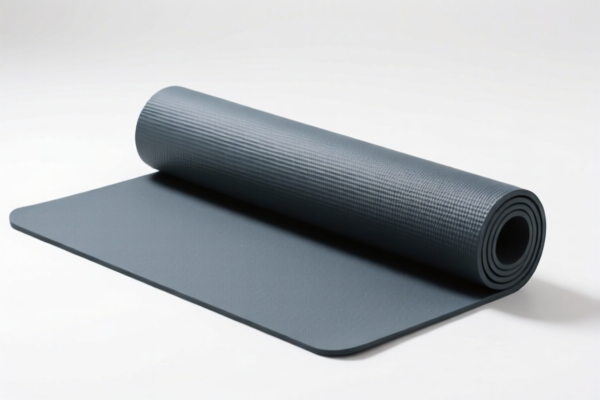
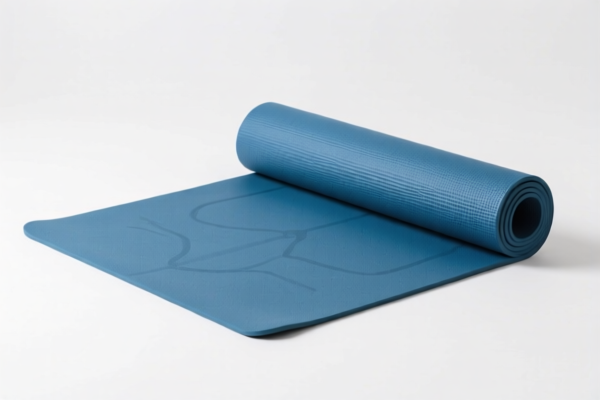
AI Analysis
🧘♀️ Soothing Vibration Mat (Massage & Relaxation Device)
🌐 HS Code Reference & Customs Clearance Guide | 2026 Latest Tariff Analysis | Professional Entry Strategy
📌 I. Product Definition: What is a "Soothing Vibration Mat"?
A "Soothing Vibration Mat" is typically an electric or mechanical device designed for relaxation, muscle relief, or sleep aid. It uses vibration motors to create rhythmic pulsations.
Key Classification Dilemma: The classification hinges heavily on the primary material and specific composition: 1. Rubber/Silicone Body: If the mat is primarily made of vulcanized rubber (common for shock absorption), it falls under Chapter 40. 2. Metal Frame/Structure: If the structural integrity relies on iron/steel (even if covered by other materials), or if no specific rubber classification fits perfectly, it may fall under the "catch-all" for Chapter 73.
⚠️ Critical Distinction:
- Is the mat predominantly rubber? → Look at 4016.
- Is the mat primarily metal (or unclassifiable as a specific rubber article)? → Look at 7326.
📦 II. HS Code Classification Details (Based on Provided Data)
| HS Code | Product Description | Matching Logic & Summary | Total Tax Rate* |
|---|---|---|---|
7326.90.86.88 |
Other Articles of Iron or Steel | Material Inference: Vibration mats are often metal (iron/steel) or rubber/plastic. Since the target code is the "catch-all" for "Other articles of iron or steel," and there is no explicit material conflict (e.g., explicitly stated as plastic), it is deemed likely compliant. | 87.9% |
4016.99.30.00 |
Other Vulcanized Rubber Articles (Shock Absorbing) | Usage Match: The name "Vibration Mat" implies shock-absorbing functions, matching the code's purpose. As an "Other" category code, and without conflicting natural rubber descriptions, it is deemed likely compliant based on usage and lack of material conflict. | 35.0% |
4016.99.55.00 |
Other Vulcanized Rubber Articles (General) | Common Sense Inference: Based on common knowledge, vibration mats are reasonably inferred to be made of rubber for comfort/vibration transmission. It matches "Other vulcanized rubber articles" with no conflict. | 37.5% |
🔍 Note on Tax Rates:
All rates below assume Origin: China importing into the USA (subject to Section 301 and Section 232/122 tariffs as detailed in the source data).
💰 III. 2026 Tariff Rate Breakdown (Detailed Policy Add-ons)
✅ Applicable Country: United States (US)
✅ Origin: China (CN)
✅ Effective Time: Current rates (2025-2026)
🎯 1. 7326.90.86.88 — Other Articles of Iron or Steel (High Risk/High Cost)
This code attracts the highest combined tariffs due to its classification as an iron/steel product, triggering both general 301 tariffs and specific steel/aluminum Section 232/122 tariffs.
| Item | Content |
|---|---|
| Base Tariff | 2.9% (Ad Valorem) |
| Section 301 Tariff | +25.0% (General Add-on for Chinese goods) |
| Section 122/232 Tariff | +50.0% (Specific Add-on for Steel/Aluminum/Copper products under Section 122 or related steel tariffs) |
| Total Effective Rate | 87.9% |
| Tax Calculation | CIF Value × 87.9% |
| De Minimis Exemption | ❌ Not Applicable (High tariff rate excludes small package relief) |
| Legal Basis Path | HTSUS 7326.90.86.88 → Section 301 (Footnote 9903.88.01) → Section 232/122 Steel/Aluminum provisions |
📌 Explanation:
- The 2.9% is the standard Most Favored Nation (MFN) rate.
- The 25% is the standard US-China trade war tariff (Section 301).
- The 50% is a crucial penalty: Many iron/steel articles are subject to additional duties under Section 232 (National Security) or Section 122 (Trade Expansion Act) depending on the specific steel formulation or import volume controls.
- Result: A nearly 88% tax burden makes this classification economically unviable for most commercial shipments unless the product value is extremely low or subsidized.
🎯 2. 4016.99.30.00 — Other Vulcanized Rubber Articles (Shock Absorbing)
This is likely the most favorable classification if the product can be proven to be primarily rubber and used for shock absorption (vibration damping).
| Item | Content |
|---|---|
| Base Tariff | 0.0% |
| Section 301 Tariff | +25.0% |
| Section 122/232 Tariff | 0% (Rubber is not steel/aluminum) |
| Total Effective Rate | 35.0% |
| Tax Calculation | CIF Value × 35.0% |
| De Minimis Exemption | ❌ Not Applicable (Still >15% or specific exclusions apply for high-tariff categories) |
| Legal Basis Path | HTSUS 4016.99.30.00 → Section 301 (Footnote 9903.01.24) |
📌 Explanation:
- 0% Base: Rubber articles often have low or zero base MFN rates.
- 25% Add-on: Applies as it is a Chinese-origin good under Section 301.
- No Steel Tariff: Since it’s rubber, the heavy 50% steel tariff does not apply.
- Result: 35% total is significantly cheaper than the 87.9% option.
🎯 3. 4016.99.55.00 — Other Vulcanized Rubber Articles (General)
Similar to above, but the base tariff is slightly higher than the shock-absorbing specific code.
| Item | Content |
|---|---|
| Base Tariff | 2.5% |
| Section 301 Tariff | +25.0% |
| Section 122/232 Tariff | 0% |
| Total Effective Rate | 37.5% |
| Tax Calculation | CIF Value × 37.5% |
| De Minimis Exemption | ❌ Not Applicable |
| Legal Basis Path | HTSUS 4016.99.55.00 → Section 301 |
📌 Explanation:
- The 2.5% base reflects the general "other rubber articles" rate.
- Total 37.5% is only 2.5% higher than the shock-absorbing code.
- Decision Factor: If the product is explicitly marketed for "shock absorption" or "vibration control,"4016.99.30.00is preferred. If it’s a general-purpose mat,4016.99.55.00is safe.
🛠️ IV. Customs Clearance Practical Advice
✅ 1. Material Declaration Strategy (Crucial!)
| Scenario | Recommended HS Code | Why? |
|---|---|---|
| Mat is >50% Rubber (e.g., silicone surface, rubber base) | 4016.99.30.00 or 4016.99.55.00 |
Rubber is not subject to the 50% steel tariff. Saves ~50% in taxes compared to 7326. |
| Mat is Metal Frame with Rubber Coating (Structural metal) | 7326.90.86.88 |
If metal provides the main structure, customs may classify as iron/steel. Avoid if possible due to 87.9% tax. |
| Mixed Material (Unspecified) | Consult Specialist | Risk of reclassification. Best to declare clearly as "Rubber Vibration Mat" with material specs. |
📌 Key Tip:
- If the product contains any steel/iron, customs may default to7326unless you provide strong evidence that rubber is the essential character.
- Provide Material Composition Reports from manufacturers stating: "Product is 95% Vulcanized Rubber, 5% Silicone."
✅ 2. Required Documentation
| Document | Requirement | Purpose |
|---|---|---|
| Commercial Invoice | Must state: "Soothing Vibration Mat, Rubber Construction" | Avoids ambiguity; prevents default to steel codes. |
| Product Description | Include: "Used for relaxation, shock absorption, vibration damping" | Matches the "shock absorbing" subheading 4016.99.30.00. |
| Material Certificate | From supplier: Confirming rubber/silicone content | Proves it is NOT primarily steel, avoiding the 50% penalty. |
| Photos | Show rubber texture, no visible metal frame | Visual proof of rubber construction. |
✅ 3. Common Mistakes to Avoid
❌ Mistake 1: Listing the product simply as "Vibration Mat" without material details.
👉 Consequence: Customs may assume it’s a metal-framed industrial mat → 7326 → 87.9% tax.
❌ Mistake 2: Claiming it’s "Plastic" when it’s actually Rubber.
👉 Consequence: Misdeclaration penalties. Rubber (4016) and Plastic (3926) have different rates. Ensure accuracy.
❌ Mistake 3: Ignoring Section 301 (25% tariff).
👉 Consequence: Underpayment of duties. All Chinese goods are subject to this unless specifically exempt.
🌍 V. Global Market Comparison (2026)
| Country/Region | Recommended HS Code | Est. Total Tax (China Origin) | Notes |
|---|---|---|---|
| 🇺🇸 USA | 4016.99.30.00 |
35.0% | Best option. Avoid 7326 (87.9%). |
| 🇨🇳 China | 4016.99.30.00 |
~2.5-3.0% | Low import duty. No Section 301. |
| 🇪🇺 EU | 4016.99.00 |
0-3.5% | Generally low tariffs for rubber articles. |
| 🇬🇧 UK | 4016.99.00 |
0-4.5% | Post-Brexit rates similar to EU for rubber. |
📌 Conclusion for US Market:
- Always aim for4016(Rubber).
- Never declare as7326(Steel) unless absolutely necessary. The tax difference (87.9% vs 35%) is massive.
📌 VI. Final Recommendations
- Material Proof: Obtain a detailed material breakdown from your supplier. Emphasize Rubber/Silicone content.
- Usage Statement: Clearly state "For Shock Absorption/Vibration Damping" to support
4016.99.30.00. - Pre-Ruling: Consider applying for an IRS Ruling (Pre-Ruling) if shipping large volumes. This locks in the 35% rate and protects against future reclassification.
- Avoid Steel Keywords: Do not use words like "Steel Frame," "Iron Base," or "Metal Construction" in the product description unless it’s purely cosmetic.
🎯 Bottom Line:
💡 Choose
4016.99.30.00→ 35% Tax
🚫 Avoid7326.90.86.88→ 87.9% Tax
📞 Action Item:
Contact your freight forwarder to confirm the "Essential Character" of your product. If it’s rubber-based, insist on the 4016 classification to save over 50% in duties.
✨ Smart Classification = Maximized Profit
📦 Ensure Smooth Customs Clearance Today!
Customer Reviews
About HS Code Classification
The Harmonized System (HS) is an internationally standardized nomenclature developed by the World Customs Organization (WCO) to classify traded products. Over 200 countries use the HS system as the basis for customs tariffs, trade statistics, and import/export regulations.
Each HS code follows a hierarchical structure:
- Chapter (2 digits) — Broad category of goods (e.g., Chapter 84: Machinery and Mechanical Appliances)
- Heading (4 digits) — More specific grouping within the chapter
- Subheading (6 digits) — Internationally standardized breakdown, used by all WCO member countries
- National subdivisions (8-10 digits) — Country-specific extensions for further classification, such as US HTSUS 10-digit codes
Correct HS code classification is essential for smooth customs clearance, accurate duty payment, and compliance with trade regulations. Misclassification can lead to customs delays, overpayment of duties, or penalties.
When importing from CN to US, the applicable tariff rates may include:
- Most-Favored-Nation (MFN) rate — The standard duty rate applied to WTO members
- General rate — Applied to countries without trade agreements
- Trade remedy duties — Additional tariffs such as Section 301 (anti-dumping), Section 232 (national security), or countervailing duties
The information provided on this page is for reference purposes only. For official classification, please consult with your local customs authority or a licensed customs broker.