Speaker including loudspeaker
CN → US| HS编码 | 关税税率 | 原产国 | 目的国 | 文档 |
|---|---|---|---|---|
| 8518210000 | 17.5% | CN | US | 官方文档 |
| 8518220000 | 17.5% | CN | US | 官方文档 |
| 8543709810 | 37.6% | CN | US | 官方文档 |
| 8543709860 | 37.6% | CN | US | 官方文档 |
| 8518210000 | 17.5% | CN | US | 官方文档 |
商品图片
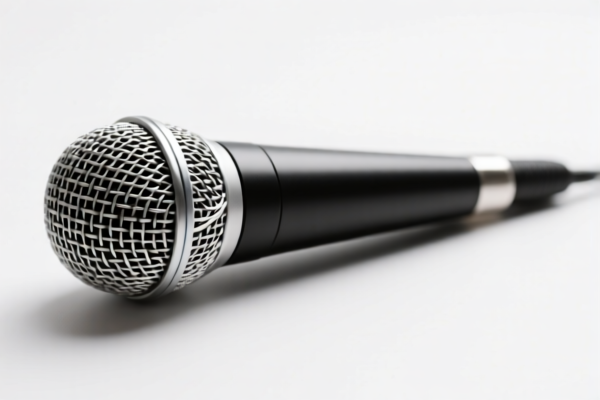
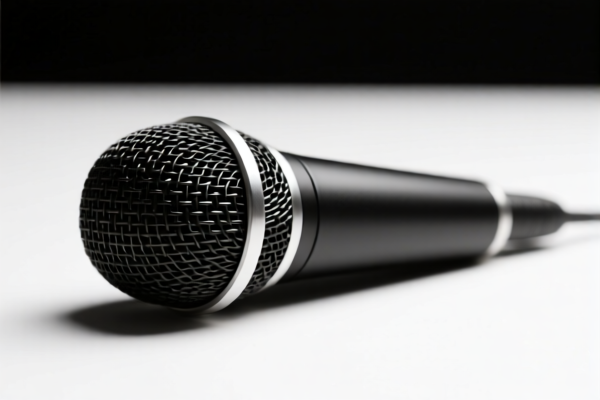
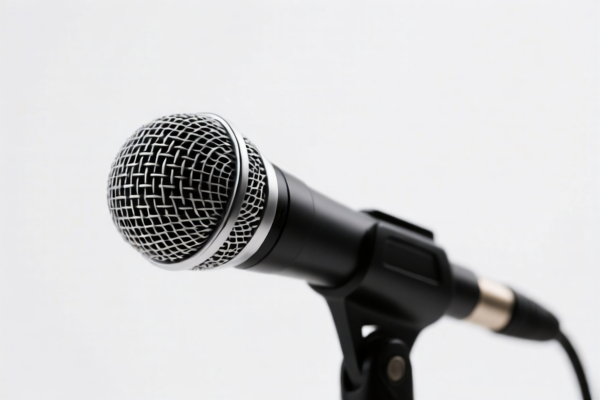
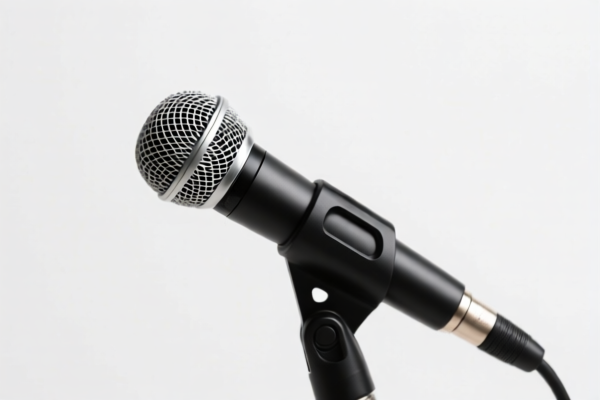
AI分析
🔊 Speaker (Including Loudspeaker)
🌐 HS Code Reference & Customs Clearance Guide | 2026 Latest Tariff Analysis | Professional Strategy
📌 I. Product Definition and Classification: Do You Really Understand "Speakers"?
A Speaker (or Loudspeaker) is an electro-acoustic device that converts electrical signals into audible sound. In international trade, classification depends heavily on whether the unit is standalone or integrated into a housing/cabinet.
Key Distinctions: * Loudspeaker Unit Only (8518.21): A single driver element, often sold as a component for DIY or industrial integration. * Speaker in a Cabinet/Box (8518.22): A complete assembly where the loudspeaker is mounted in a housing. This is the most common form for consumer audio equipment. * Electrically Amplified/Active Speaker (8543.70): If the speaker includes built-in amplification circuits, DSPs, or is classified as an "electrical apparatus" with independent function beyond simple acoustic conversion, it may fall under Chapter 8543.
⚠️ Critical Classification Point:
- If it is a basic loudspeaker (passive, no internal amp) → Likely 8518.21.00.00 or 8518.22.00.00.
- If it is an active/smart speaker with complex electronic processing → Potential risk for 8543.70.98.10 or 8543.70.98.60.
📦 II. HS Code Classification Details (2026 Latest Tariff Alignment)
Based on the provided data, here are the potential HS Codes and the reasoning for each:
| HS Code | Product Description | Classification Reasoning | Total Tax Rate |
|---|---|---|---|
8518.21.00.00 |
Loudspeaker (Unit Only) | Matches the core function of "Loudspeaker." Since no specific housing is mentioned, and assuming it's a component/parts category, it fits the "Loudspeaker" definition in 8518.21. | 17.5% |
8518.22.00.00 |
Speaker (In Cabinet) | The term "Speaker" (音箱) implies a housing. Since speakers are typically sold in cabinets, this matches the description of "Loudspeakers, whether or not mounted in their enclosures." | 17.5% |
8543.70.98.10 |
Electrically Amplified/Active Speaker | Matches if the speaker has independent electrical functionality (e.g., built-in amp, DSP). It is treated as an "electrical apparatus" with independent function, not just a passive acoustic converter. | 37.6% |
8543.70.98.60 |
Other Electrical Machinery/Apparatus | A "catch-all" for具有独立功能的电声设备 (electro-acoustic equipment with independent function) that doesn't fit explicitly into amplifiers or musical instrument effects. | 37.6% |
🔍 Key Takeaway:
- Passive Speakers: Usually classified under 8518 (17.5% total tax).
- Active/Smart Speakers: Risk of classification under 8543 (37.6% total tax) if they contain significant electronic processing components beyond basic amplification.
💰 III. Detailed Tariff Rate Breakdown (Including Surcharges & Policy Add-ons)
✅ Applicable Country: United States (US)
✅ Country of Origin: China (CN)
✅ Effective Date: November 10, 2025 (and subsequent imports)
🎯 1. 8518.21.00.00 & 8518.22.00.00 —— Standard Speakers/Loudspeakers
| Item | Content |
|---|---|
| Base Tariff | 0.0% (ad valorem) |
| Section 301 Tariff (Additional) | +7.5% |
| Section 122 Tariff (IEEPA) | +10% (针对中国产品) |
| Total Effective Tax Rate | 17.5% |
| Tax Calculation | CIF Value × 17.5% |
| De Minimis Exemption? | ❌ No (deny_de_minimis applies to these HS codes under current trade restrictions) |
| Legal Basis Path | Section 301: 7.5% → IEEPA: 122 (10%) → USITC: 8518.21/22 |
📌 Explanation:
- These are standard audio products. While the base MFN rate is 0%, US trade policies impose significant additional tariffs.
- Section 301 (7.5%) is the standard trade war tariff on many Chinese electronics.
- Section 122 (10%) is an additional tariff under the International Emergency Economic Powers Act.
- Total: 17.5%. This is a moderate-to-high burden for standard audio equipment.
🎯 2. 8543.70.98.10 & 8543.70.98.60 —— Advanced/Active Electrical Speakers
| Item | Content |
|---|---|
| Base Tariff | 2.6% |
| Section 301 Tariff (Additional) | +25.0% |
| Section 122 Tariff (IEEPA) | +10% |
| Total Effective Tax Rate | 37.6% |
| Tax Calculation | CIF Value × 37.6% |
| De Minimis Exemption? | ❌ No |
| Legal Basis Path | Section 301: 25% → IEEPA: 122 (10%) → USITC: 8543.70.98 |
📌 Explanation:
- If your speaker is classified as an "electrical apparatus" (e.g., smart speaker with Wi-Fi/Bluetooth processing, active noise cancellation DSPs), it may fall under 8543.
- Section 301 rate is higher (25%) for these types of advanced electronic components.
- Total: 37.6%. This is a significant cost increase. Misclassification here can lead to double the duty cost.
🛠️ IV. Customs Clearance Practical Advice (Real-World Pitfall Avoidance)
✅ 1. Documentation Checklist (Essential)
| Document | Required | Notes |
|---|---|---|
| ✅ Product Specifications | ✔️ | Must clearly state: Passive vs. Active, Power Input, Impedance, Frequency Response. |
| ✅ Circuit Diagram/Schematic | ✔️ | Crucial for distinguishing between 8518 (passive) and 8543 (active/processed). |
| ✅ Product Photos (Clear Labels) | ✔️ | Show brand, model, input/output ports (HDMI, USB, Power Jack). |
| ✅ Commercial Invoice | ✔️ | Accurate description: "Loudspeaker" vs. "Active Audio System with Digital Processing." |
| ✅ Packing List | ✔️ | Detail contents to avoid "split shipment" penalties. |
| ✅ FCC Certification | ✔️ | Mandatory for any electronic device with RF/Wi-Fi/Bluetooth in the US. |
✅ 2. Declaration Strategy (Key Mantra)
🔥 "Passive = 8518, Active = 8543. Be precise!"
| Scenario | Correct Declaration | Risk of Misclassification |
|---|---|---|
| Passive Bookshelf Speaker | 8518.22.00.00 |
Low. Standard for consumer audio. |
| Passive Car Loudspeaker | 8518.21.00.00 |
Low. Component classification. |
| Smart Speaker (Wi-Fi/Alexa) | 8543.70.98.10 or 8543.70.98.60 |
HIGH. If declared as 8518, you face 20.1% underpayment + penalties. |
| Amplifier + Speaker Kit | Separate lines if possible; otherwise, declare based on principal function. | Medium. Complex. |
✅ 3. Special Cases
| Situation | Handling Advice |
|---|---|
| OEM/ODM Speakers | Provide design drawings to prove if internal amps are included. |
| Bluetooth Speakers | If purely a passive speaker + BT module (small), still often 8518. If full DSP/OS, consider 8543. |
| Professional PA Speakers | Often have built-in amps → Lean towards 8543.70.98.10. |
| Car Audio Subwoofers | Usually 8518.21.00.00 unless enclosed and active. |
🌍 V. Global Market Comparison (2026 Update)
| Country/Region | Recommended HS Code | Est. Tariff (China Origin) | Key Certifications | Notes |
|---|---|---|---|---|
| 🇺🇸 USA | 8518.22.00.00 / 8543.70.98.10 |
17.5% or 37.6% | FCC, UL | Highest tariff burden due to Section 301 & 122. |
| 🇨🇳 China | 8518.22.00.00 |
~5-10% (VAT 13% + Tariff) | CCC | Domestic sales have different rules. |
| 🇪🇺 EU | 8518.21.00 / 8518.22.00 |
0% (Most) | CE, RoHS, ErP | No major retaliatory tariffs on audio. |
| 🇯🇵 Japan | 8518.21.00 / 8518.22.00 |
0-7% | PSE | Competitive market, low tariffs. |
| 🇦🇺 Australia | 8518.22.00.00 |
5% | RCM | Moderate tariffs. |
📌 Conclusion:
The US market is the most expensive for Chinese-origin speakers due to the combination of Section 301 and Section 122 tariffs.
EU and Japan remain the most tariff-friendly markets for audio equipment.
📌 VI. Common Errors & Pitfalls (Lessons Learned)
❌ Error 1: Declaring a Smart Speaker (with Wi-Fi/DSP) as a Passive Loudspeaker (8518)
👉 Result: Underpayment of ~20% duty + Potential fraud allegations.
💡 Fix: Clearly describe electronic components in the invoice and specs.
❌ Error 2: Splitting a Speaker + Amplifier kit into separate lines incorrectly
👉 Result: Customs may aggregate them or penalize for inaccurate grouping.
💡 Fix: Declare based on the principal function or as a set if marketed together.
❌ Error 3: Ignoring FCC Certification for Bluetooth/Wi-Fi speakers
👉 Result: Goods detained at US customs until proof of compliance is provided.
💡 Fix: Ensure all RF-equipped devices have valid FCC IDs.
🎯 VII. Final Recommendations: Save Costs, Ensure Clearance
🎯 Remember the Mantra:
🔹 "Passive = 17.5%, Active = 37.6%. Don't guess, check the circuit!"
🔹 "If it has a brain (DSP/Wi-Fi), it's not just a speaker, it's an apparatus."📌 Pro Tip:
- If you are exporting active/smart speakers to the US, consider supply chain diversification (e.g., final assembly in Vietnam or Mexico) to mitigate the 37.6% tariff.
- Apply for an Advance Ruling from US Customs if your product is on the borderline between 8518 and 8543. This provides legal certainty.
📣 Immediate Action:
📞 Consult a licensed customs broker.
📄 Prepare detailed technical specs highlighting passive vs. active components.
🚀 Get your HS Code pre-approved to avoid costly delays and penalties at the port!
✨ Professional Classification Saves Money!
💼 Every percentage point of tariff reduction boosts your profit margin.
用户评价
关于 HS 编码归类
协调制度(HS)是由世界海关组织(WCO)制定的国际贸易商品分类标准。全球 200 多个国家采用 HS 系统作为海关关税、贸易统计和进出口监管的基础。
每个 HS 编码遵循以下层级结构:
- 章(2 位)——商品大类(例如:第 84 章:机器和机械设备)
- 品目(4 位)——章内的更具体分类
- 子目(6 位)——国际通用细分,所有 WCO 成员国统一使用
- 本国细分(8-10 位)——各国自行扩展的细分编码,如美国 HTSUS 10 位编码
正确的 HS 编码归类对于顺利通关、准确缴纳关税和遵守贸易法规至关重要。错误归类可能导致海关延误、多缴关税或罚款。
从CN进口到US时,适用的关税税率可能包括:
- 最惠国(MFN)税率——适用于 WTO 成员国的标准关税税率
- 普通税率——适用于无贸易协定国家
- 贸易救济关税——附加关税,如 301 条款(反倾销)、232 条款(国家安全)或反补贴税
本页内容仅供参考。如需正式归类,请咨询当地海关或持牌报关代理。