Speaker including loudspeaker
CN → US| HS Code | Tariff Rate | Origin | Destination | Doc |
|---|---|---|---|---|
| 8518210000 | 17.5% | CN | US | Official Doc |
| 8518220000 | 17.5% | CN | US | Official Doc |
| 8543709810 | 37.6% | CN | US | Official Doc |
| 8543709860 | 37.6% | CN | US | Official Doc |
| 8518210000 | 17.5% | CN | US | Official Doc |
Product Images
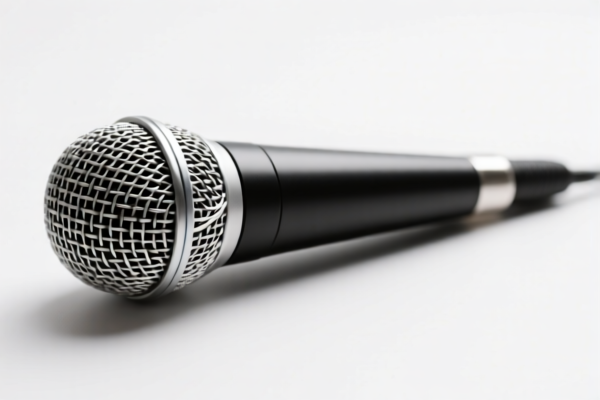
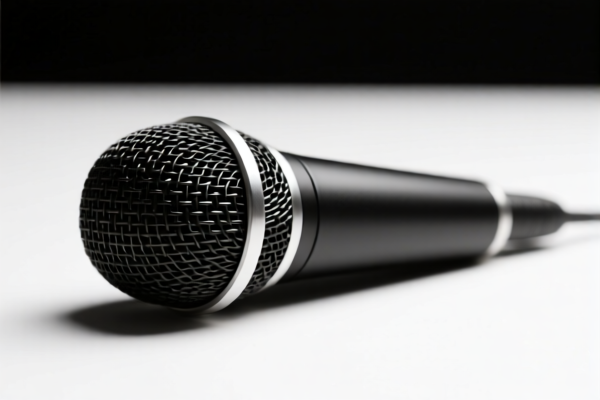
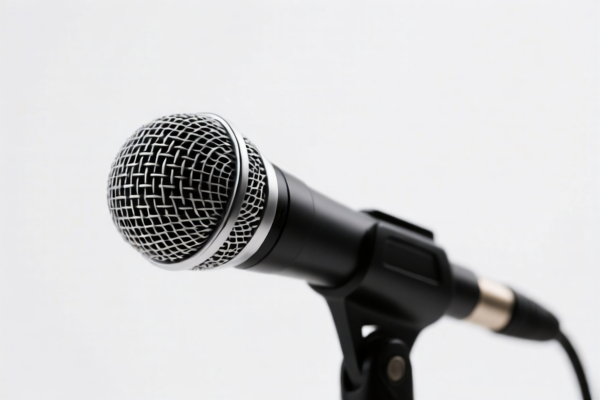
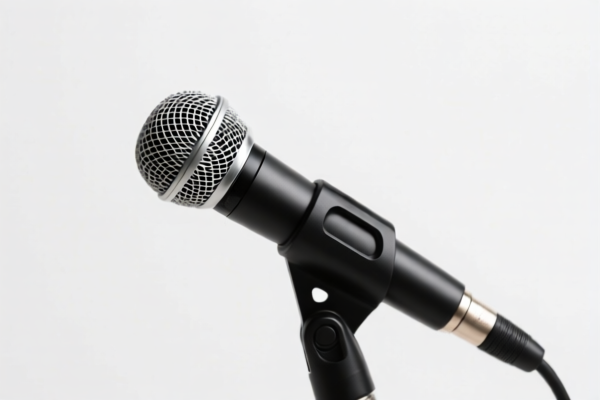
AI Analysis
🔊 Speaker (Including Loudspeaker)
🌐 HS Code Reference & Customs Clearance Guide | 2026 Latest Tariff Analysis | Professional Strategy
📌 I. Product Definition and Classification: Do You Really Understand "Speakers"?
A Speaker (or Loudspeaker) is an electro-acoustic device that converts electrical signals into audible sound. In international trade, classification depends heavily on whether the unit is standalone or integrated into a housing/cabinet.
Key Distinctions: * Loudspeaker Unit Only (8518.21): A single driver element, often sold as a component for DIY or industrial integration. * Speaker in a Cabinet/Box (8518.22): A complete assembly where the loudspeaker is mounted in a housing. This is the most common form for consumer audio equipment. * Electrically Amplified/Active Speaker (8543.70): If the speaker includes built-in amplification circuits, DSPs, or is classified as an "electrical apparatus" with independent function beyond simple acoustic conversion, it may fall under Chapter 8543.
⚠️ Critical Classification Point:
- If it is a basic loudspeaker (passive, no internal amp) → Likely 8518.21.00.00 or 8518.22.00.00.
- If it is an active/smart speaker with complex electronic processing → Potential risk for 8543.70.98.10 or 8543.70.98.60.
📦 II. HS Code Classification Details (2026 Latest Tariff Alignment)
Based on the provided data, here are the potential HS Codes and the reasoning for each:
| HS Code | Product Description | Classification Reasoning | Total Tax Rate |
|---|---|---|---|
8518.21.00.00 |
Loudspeaker (Unit Only) | Matches the core function of "Loudspeaker." Since no specific housing is mentioned, and assuming it's a component/parts category, it fits the "Loudspeaker" definition in 8518.21. | 17.5% |
8518.22.00.00 |
Speaker (In Cabinet) | The term "Speaker" (音箱) implies a housing. Since speakers are typically sold in cabinets, this matches the description of "Loudspeakers, whether or not mounted in their enclosures." | 17.5% |
8543.70.98.10 |
Electrically Amplified/Active Speaker | Matches if the speaker has independent electrical functionality (e.g., built-in amp, DSP). It is treated as an "electrical apparatus" with independent function, not just a passive acoustic converter. | 37.6% |
8543.70.98.60 |
Other Electrical Machinery/Apparatus | A "catch-all" for具有独立功能的电声设备 (electro-acoustic equipment with independent function) that doesn't fit explicitly into amplifiers or musical instrument effects. | 37.6% |
🔍 Key Takeaway:
- Passive Speakers: Usually classified under 8518 (17.5% total tax).
- Active/Smart Speakers: Risk of classification under 8543 (37.6% total tax) if they contain significant electronic processing components beyond basic amplification.
💰 III. Detailed Tariff Rate Breakdown (Including Surcharges & Policy Add-ons)
✅ Applicable Country: United States (US)
✅ Country of Origin: China (CN)
✅ Effective Date: November 10, 2025 (and subsequent imports)
🎯 1. 8518.21.00.00 & 8518.22.00.00 —— Standard Speakers/Loudspeakers
| Item | Content |
|---|---|
| Base Tariff | 0.0% (ad valorem) |
| Section 301 Tariff (Additional) | +7.5% |
| Section 122 Tariff (IEEPA) | +10% (针对中国产品) |
| Total Effective Tax Rate | 17.5% |
| Tax Calculation | CIF Value × 17.5% |
| De Minimis Exemption? | ❌ No (deny_de_minimis applies to these HS codes under current trade restrictions) |
| Legal Basis Path | Section 301: 7.5% → IEEPA: 122 (10%) → USITC: 8518.21/22 |
📌 Explanation:
- These are standard audio products. While the base MFN rate is 0%, US trade policies impose significant additional tariffs.
- Section 301 (7.5%) is the standard trade war tariff on many Chinese electronics.
- Section 122 (10%) is an additional tariff under the International Emergency Economic Powers Act.
- Total: 17.5%. This is a moderate-to-high burden for standard audio equipment.
🎯 2. 8543.70.98.10 & 8543.70.98.60 —— Advanced/Active Electrical Speakers
| Item | Content |
|---|---|
| Base Tariff | 2.6% |
| Section 301 Tariff (Additional) | +25.0% |
| Section 122 Tariff (IEEPA) | +10% |
| Total Effective Tax Rate | 37.6% |
| Tax Calculation | CIF Value × 37.6% |
| De Minimis Exemption? | ❌ No |
| Legal Basis Path | Section 301: 25% → IEEPA: 122 (10%) → USITC: 8543.70.98 |
📌 Explanation:
- If your speaker is classified as an "electrical apparatus" (e.g., smart speaker with Wi-Fi/Bluetooth processing, active noise cancellation DSPs), it may fall under 8543.
- Section 301 rate is higher (25%) for these types of advanced electronic components.
- Total: 37.6%. This is a significant cost increase. Misclassification here can lead to double the duty cost.
🛠️ IV. Customs Clearance Practical Advice (Real-World Pitfall Avoidance)
✅ 1. Documentation Checklist (Essential)
| Document | Required | Notes |
|---|---|---|
| ✅ Product Specifications | ✔️ | Must clearly state: Passive vs. Active, Power Input, Impedance, Frequency Response. |
| ✅ Circuit Diagram/Schematic | ✔️ | Crucial for distinguishing between 8518 (passive) and 8543 (active/processed). |
| ✅ Product Photos (Clear Labels) | ✔️ | Show brand, model, input/output ports (HDMI, USB, Power Jack). |
| ✅ Commercial Invoice | ✔️ | Accurate description: "Loudspeaker" vs. "Active Audio System with Digital Processing." |
| ✅ Packing List | ✔️ | Detail contents to avoid "split shipment" penalties. |
| ✅ FCC Certification | ✔️ | Mandatory for any electronic device with RF/Wi-Fi/Bluetooth in the US. |
✅ 2. Declaration Strategy (Key Mantra)
🔥 "Passive = 8518, Active = 8543. Be precise!"
| Scenario | Correct Declaration | Risk of Misclassification |
|---|---|---|
| Passive Bookshelf Speaker | 8518.22.00.00 |
Low. Standard for consumer audio. |
| Passive Car Loudspeaker | 8518.21.00.00 |
Low. Component classification. |
| Smart Speaker (Wi-Fi/Alexa) | 8543.70.98.10 or 8543.70.98.60 |
HIGH. If declared as 8518, you face 20.1% underpayment + penalties. |
| Amplifier + Speaker Kit | Separate lines if possible; otherwise, declare based on principal function. | Medium. Complex. |
✅ 3. Special Cases
| Situation | Handling Advice |
|---|---|
| OEM/ODM Speakers | Provide design drawings to prove if internal amps are included. |
| Bluetooth Speakers | If purely a passive speaker + BT module (small), still often 8518. If full DSP/OS, consider 8543. |
| Professional PA Speakers | Often have built-in amps → Lean towards 8543.70.98.10. |
| Car Audio Subwoofers | Usually 8518.21.00.00 unless enclosed and active. |
🌍 V. Global Market Comparison (2026 Update)
| Country/Region | Recommended HS Code | Est. Tariff (China Origin) | Key Certifications | Notes |
|---|---|---|---|---|
| 🇺🇸 USA | 8518.22.00.00 / 8543.70.98.10 |
17.5% or 37.6% | FCC, UL | Highest tariff burden due to Section 301 & 122. |
| 🇨🇳 China | 8518.22.00.00 |
~5-10% (VAT 13% + Tariff) | CCC | Domestic sales have different rules. |
| 🇪🇺 EU | 8518.21.00 / 8518.22.00 |
0% (Most) | CE, RoHS, ErP | No major retaliatory tariffs on audio. |
| 🇯🇵 Japan | 8518.21.00 / 8518.22.00 |
0-7% | PSE | Competitive market, low tariffs. |
| 🇦🇺 Australia | 8518.22.00.00 |
5% | RCM | Moderate tariffs. |
📌 Conclusion:
The US market is the most expensive for Chinese-origin speakers due to the combination of Section 301 and Section 122 tariffs.
EU and Japan remain the most tariff-friendly markets for audio equipment.
📌 VI. Common Errors & Pitfalls (Lessons Learned)
❌ Error 1: Declaring a Smart Speaker (with Wi-Fi/DSP) as a Passive Loudspeaker (8518)
👉 Result: Underpayment of ~20% duty + Potential fraud allegations.
💡 Fix: Clearly describe electronic components in the invoice and specs.
❌ Error 2: Splitting a Speaker + Amplifier kit into separate lines incorrectly
👉 Result: Customs may aggregate them or penalize for inaccurate grouping.
💡 Fix: Declare based on the principal function or as a set if marketed together.
❌ Error 3: Ignoring FCC Certification for Bluetooth/Wi-Fi speakers
👉 Result: Goods detained at US customs until proof of compliance is provided.
💡 Fix: Ensure all RF-equipped devices have valid FCC IDs.
🎯 VII. Final Recommendations: Save Costs, Ensure Clearance
🎯 Remember the Mantra:
🔹 "Passive = 17.5%, Active = 37.6%. Don't guess, check the circuit!"
🔹 "If it has a brain (DSP/Wi-Fi), it's not just a speaker, it's an apparatus."📌 Pro Tip:
- If you are exporting active/smart speakers to the US, consider supply chain diversification (e.g., final assembly in Vietnam or Mexico) to mitigate the 37.6% tariff.
- Apply for an Advance Ruling from US Customs if your product is on the borderline between 8518 and 8543. This provides legal certainty.
📣 Immediate Action:
📞 Consult a licensed customs broker.
📄 Prepare detailed technical specs highlighting passive vs. active components.
🚀 Get your HS Code pre-approved to avoid costly delays and penalties at the port!
✨ Professional Classification Saves Money!
💼 Every percentage point of tariff reduction boosts your profit margin.
Customer Reviews
About HS Code Classification
The Harmonized System (HS) is an internationally standardized nomenclature developed by the World Customs Organization (WCO) to classify traded products. Over 200 countries use the HS system as the basis for customs tariffs, trade statistics, and import/export regulations.
Each HS code follows a hierarchical structure:
- Chapter (2 digits) — Broad category of goods (e.g., Chapter 84: Machinery and Mechanical Appliances)
- Heading (4 digits) — More specific grouping within the chapter
- Subheading (6 digits) — Internationally standardized breakdown, used by all WCO member countries
- National subdivisions (8-10 digits) — Country-specific extensions for further classification, such as US HTSUS 10-digit codes
Correct HS code classification is essential for smooth customs clearance, accurate duty payment, and compliance with trade regulations. Misclassification can lead to customs delays, overpayment of duties, or penalties.
When importing from CN to US, the applicable tariff rates may include:
- Most-Favored-Nation (MFN) rate — The standard duty rate applied to WTO members
- General rate — Applied to countries without trade agreements
- Trade remedy duties — Additional tariffs such as Section 301 (anti-dumping), Section 232 (national security), or countervailing duties
The information provided on this page is for reference purposes only. For official classification, please consult with your local customs authority or a licensed customs broker.