Sponge Filter
CN → US| HS编码 | 关税税率 | 原产国 | 目的国 | 文档 |
|---|---|---|---|---|
| 3921135000 | 39.2% | CN | US | 官方文档 |
| 5603949090 | 35.0% | CN | US | 官方文档 |
| 5603949070 | 35.0% | CN | US | 官方文档 |
| 3921190090 | 41.5% | CN | US | 官方文档 |
| 8421990180 | 35.0% | CN | US | 官方文档 |
商品图片
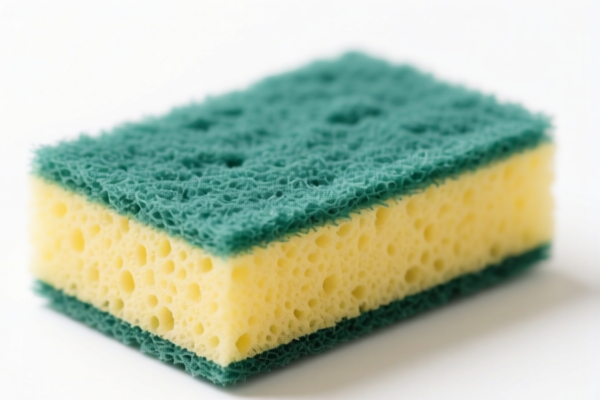
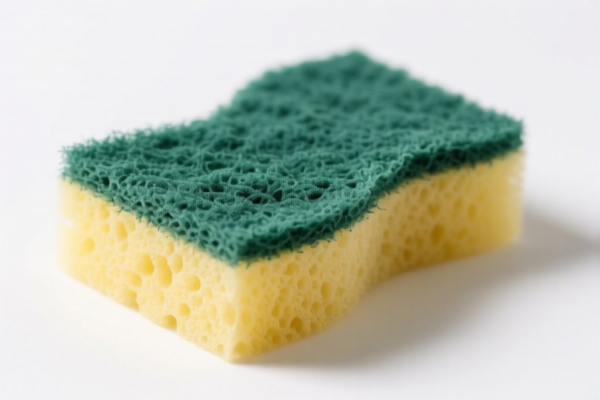
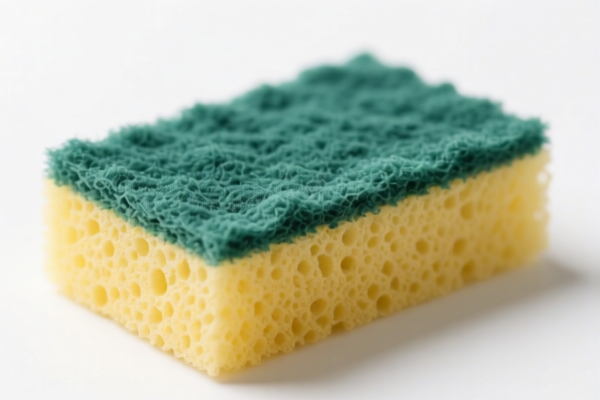
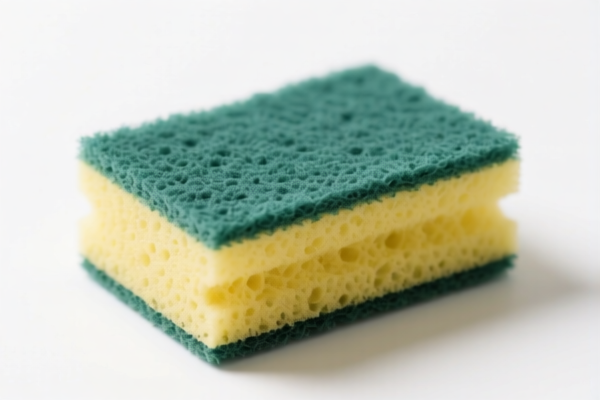
AI分析
🌊 Sponge Filter (PU Foam Air/Water Filter Media)
🌐 HS Code Reference & Customs Clearance Guide | 2026 Latest Tariff Analysis | Professional Clearance Strategy
📌 I. Product Definition & Classification: Do You Really Understand "Sponge Filters"?
A Sponge Filter (typically made of Polyurethane/PU foam) is a porous filtration medium used in aquaculture, industrial air filtration, or liquid purification. In international trade, its classification depends heavily on its physical form (sheet/block vs. fiber mat), manufacturing process (welded/non-welded), and end-use.
⚠️ Key Distinction Point:
- If it is a solid PU foam sheet/block → Classified under Chapter 39 (Plastics).
- If it is a non-woven short fiber mat (even if PU-based) → Classified under Chapter 56 (Non-wovens).
- If it is a specific part of a machine → Classified under Chapter 84 (Machinery).
📦 II. HS Code Classification Details (2026 Latest Tariff Authority对照)
Based on the provided data, here are the 5 possible HS Codes for Sponge Filters, ranked by likelihood and tax impact.
| HS Code | Product Description | Application Scenario | Tax Impact |
|---|---|---|---|
3921.13.50.00 |
PU Foam Sheets/Blocks: Solid polyurethane foam, not cellular rubber | Standard aquarium sponge filters, block-shaped foam filters | 39.2% (Highest Base) |
3921.19.00.90 |
Other Plastic Foam Products: General plastic polymer foam | Generic PU foam sheets not meeting specific "PU foam" criteria | 41.5% (Highest Total) |
5603.94.90.70 |
Sponge-like PU Non-woven: Porous PU fabric, non-woven structure | Soft, flexible foam fabrics for air/water filtration | 35.0% (Lowest Base) |
5603.94.90.90 |
Non-filament Non-woven: Short fiber foam filtration media | Industrial filter pads, non-continuous fiber foam mats | 35.0% (Lowest Base) |
8421.99.01.80 |
Machine Parts: Consumable parts for filtering machinery | Replaceable filter inserts specifically for industrial filtration machines | 35.0% (Lowest Base) |
🔍 Critical Note:
- Chapter 39 vs. Chapter 56: The biggest risk is misclassifying PU Non-wovens (Ch 56) as Solid Foam (Ch 39).
- If the sponge is soft, flexible, and made of bonded fibers, it belongs in 5603.
- If it is a solid, rigid or semi-rigid foam block, it belongs in 3921.
- Misclassification Penalty: Choosing Ch 39 (39.2%-41.5%) over Ch 56 (35.0%) increases tax burden by ~4-6.5% unnecessarily.
💰 III. 2026 Latest Tariff Rate Breakdown (Including Surcharges & Policy Add-ons)
✅ Applicable Country: United States (US)
✅ Origin: China (CN)
✅ Effective Date: Post-November 10, 2025 (Includes subsequent imports)
🎯 1. 3921.13.50.00 & 3921.19.00.90 —— Polyurethane Foam Products (Plastic Chapter)
| Item | Content |
|---|---|
| Base Rate | 4.2% (3921.13) or 6.5% (3921.19) |
| USITC Surcharge (Section 301) | +25.0% |
| IEEPA Surcharge (122 Clause) | +10.0% |
| Total Tax Rate | 39.2% (for 3921.13) or 41.5% (for 3921.19) |
| Tax Calculation | CIF Value × Total Rate |
| De Minimis Eligibility | ❌ NO (deny_de_minimis) |
| Legal Basis Path | IEEPA:9903.01.25 → USITC:3921.xx.xx → FOOTNOTE:301 |
📌 Explanation:
- Base Rate: Chapter 39 has a non-zero base tariff (4.2%-6.5%).
- Surcharges: Both 25% (301 Tariff) and 10% (122 Clause/IEEPA) apply.
- Total: 39.2% - 41.5%. This is the most expensive category.
- Risk: If your sponge is actually a non-woven fabric, declaring it as "PU Foam" leads to overpayment.
🎯 2. 5603.94.90.70 & 5603.94.90.90 —— Non-Woven Sponge/Filter Media (Textile Chapter)
| Item | Content |
|---|---|
| Base Rate | 0.0% |
| USITC Surcharge (Section 301) | +25.0% |
| IEEPA Surcharge (122 Clause) | +10.0% |
| Total Tax Rate | 35.0% |
| Tax Calculation | CIF Value × 35.0% |
| De Minimis Eligibility | ❌ NO (deny_de_minimis) |
| Legal Basis Path | IEEPA:9903.01.25 → USITC:5603.94.90 → FOOTNOTE:301 |
📌 Explanation:
- Base Rate: 0%. This is the key advantage of Chapter 56.
- Surcharges: Still subject to 25% + 10% surcharges.
- Total: 35.0%.
- Savings: Compared to Ch 39, you save 4.2%-6.5% in base tariff.
- Condition: The product must be technically a non-woven or short fiber mat, even if made of PU.
🎯 3. 8421.99.01.80 —— Machine Parts for Filtration (Machinery Chapter)
| Item | Content |
|---|---|
| Base Rate | 0.0% |
| USITC Surcharge (Section 301) | +25.0% |
| IEEPA Surcharge (122 Clause) | +10.0% |
| Total Tax Rate | 35.0% |
| Tax Calculation | CIF Value × 35.0% |
| De Minimis Eligibility | ❌ NO (deny_de_minimis) |
| Legal Basis Path | IEEPA:9903.01.25 → USITC:8421.99.01 → FOOTNOTE:301 |
📌 Explanation:
- Applicability: Only if the sponge is sold as a replaceable part for a specific filtration machine (e.g., an industrial air purifier or water treatment unit).
- Same Rate as Ch 56: 35.0%.
- Advantage: If customs views it as a "part" rather than a "raw material," it may simplify documentation.
🛠️ IV. Customs Clearance Practical Advice (Avoid Pitfalls)
✅ 1. Document Checklist (Mandatory)
| Document | Required | Description |
|---|---|---|
| ✅ Product Specification | ✔️ | Material: PU Foam or Non-woven? Shape: Block or Sheet? Density? |
| ✅ Photos (Clear) | ✔️ | Show texture (fibers vs. solid cell), thickness, and packaging. |
| ✅ Commercial Invoice | ✔️ | Clearly state: "Polyurethane Sponge Filter" or "Non-woven Filter Media". Avoid vague terms like "Plastic Foam". |
| ✅ Packing List | ✔️ | Weight, dimensions, quantity. |
| ✅ Origin Certificate | ✔️ | If applicable, to confirm CN origin for surcharge calculation. |
| ✅ Test Report | ✔️ | If claiming non-woven status, a material analysis report helps justify Ch 56. |
✅ 2. Declaration Tips (Key Mantra)
🔥 "Look at the Structure: Fiber Mat = Ch 56; Solid Block = Ch 39. Save 6% by choosing correctly!"
| Scenario | Correct HS Code | Incorrect Declaration | Consequence |
|---|---|---|---|
| Soft, flexible, fiber-bonded sponge | 5603.94.90.70/90 (35.0%) |
Declare as "PU Foam" (3921) |
Overpay ~6.5% |
| Rigid, solid PU foam block | 3921.13.50.00 (39.2%) |
Declare as "Non-woven" (5603) |
Customs Audit/Refund Risk |
| Filter insert for a machine | 8421.99.01.80 (35.0%) |
Declare as "Raw Material" | Unnecessary Complexity |
| Generic plastic foam (non-PU) | 3921.19.00.90 (41.5%) |
Declare as "PU Foam" | Misclassification Penalty |
✅ 3. Special Handling
| Situation | Recommendation |
|---|---|
| Dual Use (Air & Water) | Declare based on primary use and material structure. |
| OEM Custom Sponges | Provide design blueprints showing fiber bonding (for Ch 56) or foam molding (for Ch 39). |
| Bulk vs. Retail | Bulk rolls often qualify as Ch 56 non-wovens; pre-cut blocks are often Ch 39. |
| Mixed Shipments | If shipment contains both Ch 56 and Ch 39 items, declare separately to avoid penalizing the entire shipment under the higher rate. |
🌍 V. Global Market Comparison (2026 Latest)
| Country/Region | Recommended HS Code | Tax Rate (China Origin) | Certification | Remarks |
|---|---|---|---|---|
| 🇺🇸 USA | 5603.94.90.70 |
35.0% | No specific cert | Best rate if non-woven |
| 🇺🇸 USA | 3921.13.50.00 |
39.2% | No specific cert | Higher base tariff |
| 🇪🇺 EU | 5603.94 |
~4.5% | CE/RoHS | No 301/122 surcharges |
| 🇨🇳 China | 5603.94 |
~5-10% | N/A | Import duty applies |
| 🇬🇧 UK | 5603.94 |
~4.5% | UKCA/RoHS | Post-Brexit tariffs apply |
📌 Conclusion:
- USA is the most challenging market due to 301 + 122 Clauses.
- Optimization: If your sponge can be technically classified as Non-woven (Ch 56) rather than Solid Foam (Ch 39), you save ~6% in base tariff.
- Action: Provide material structure evidence to customs to support Ch 56 classification.
📌 VI. Common Mistakes & Pitfalls (Lessons Learned)
❌ Mistake 1: Calling all sponges "PU Foam" (3921)
👉 Result: Paying 39.2%-41.5% when 35.0% was possible.
👉 Fix: Analyze if it’s fiber-bonded → Use Ch 56.
❌ Mistake 2: Ignoring the "122 Clause" (IEEPA 10%)
👉 Result: Underestimating total landed cost.
👉 Fix: Always include +10% in cost calculations for CN origin goods.
❌ Mistake 3: Vague Description "Sponge"
👉 Result: Customs holds shipment for re-classification.
👉 Fix: Use precise terms: "Polyurethane Non-woven Filter Media" or "PU Foam Block".
❌ Mistake 4: Assuming De Minimis Applies
👉 Result: Package detained at border.
👉 Fix: NO de minimis for HS Codes 3921 and 5603 from China under current rules.
✅ Correct Declaration Example:
"Polyurethane Non-woven Filter Sponge, Porous, Used for Air Filtration, Model XYZ, Made in China"
→ Supports HS 5603.94.90.70 (35.0% Tax).
🎯 VII. Conclusion: Precise Classification, Maximum Savings!
🎯 Remember the Mantra:
🔹 "Non-woven = 35%; Solid Foam = 39.2%; Don't Pay for What You Don't Owes!"
🔹 "Structure Determines Code: Fibers go to 56, Blocks go to 39."
🔹 "122 Clause + 301 = 35%-41.5% Total Tax."
📌 Pro Tip:
- If your sponge is flexible and porous, provide a material cross-section photo to prove it is non-woven/fiber-based.
- Apply for an Advance Ruling from US CBP if you are unsure about Ch 39 vs. Ch 56.
- Consider supply chain diversification if tax burden exceeds 35% significantly affects margins.
📣 Immediate Action:
📞 Consult a licensed customs broker with material structure evidence.
🚀 Optimize your HS Code from3921to5603if applicable → Save 4.2-6.5% instantly!
✨ Professional Customs Clearance Starts with Accurate Classification!
💼 Every Percent Saved is Profit Earned!
用户评价
关于 HS 编码归类
协调制度(HS)是由世界海关组织(WCO)制定的国际贸易商品分类标准。全球 200 多个国家采用 HS 系统作为海关关税、贸易统计和进出口监管的基础。
每个 HS 编码遵循以下层级结构:
- 章(2 位)——商品大类(例如:第 84 章:机器和机械设备)
- 品目(4 位)——章内的更具体分类
- 子目(6 位)——国际通用细分,所有 WCO 成员国统一使用
- 本国细分(8-10 位)——各国自行扩展的细分编码,如美国 HTSUS 10 位编码
正确的 HS 编码归类对于顺利通关、准确缴纳关税和遵守贸易法规至关重要。错误归类可能导致海关延误、多缴关税或罚款。
从CN进口到US时,适用的关税税率可能包括:
- 最惠国(MFN)税率——适用于 WTO 成员国的标准关税税率
- 普通税率——适用于无贸易协定国家
- 贸易救济关税——附加关税,如 301 条款(反倾销)、232 条款(国家安全)或反补贴税
本页内容仅供参考。如需正式归类,请咨询当地海关或持牌报关代理。