Sponge Filter
CN → US| HS Code | Tariff Rate | Origin | Destination | Doc |
|---|---|---|---|---|
| 3921135000 | 39.2% | CN | US | Official Doc |
| 5603949090 | 35.0% | CN | US | Official Doc |
| 5603949070 | 35.0% | CN | US | Official Doc |
| 3921190090 | 41.5% | CN | US | Official Doc |
| 8421990180 | 35.0% | CN | US | Official Doc |
Product Images
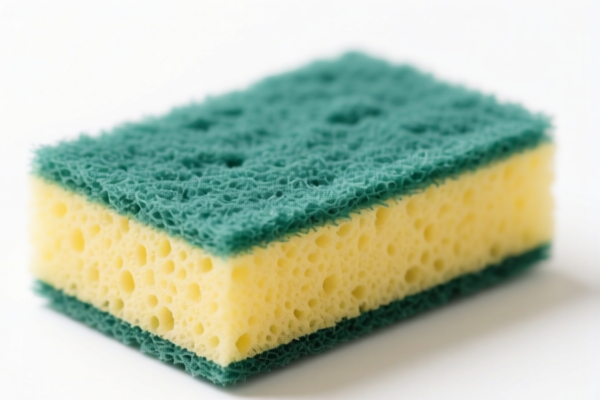
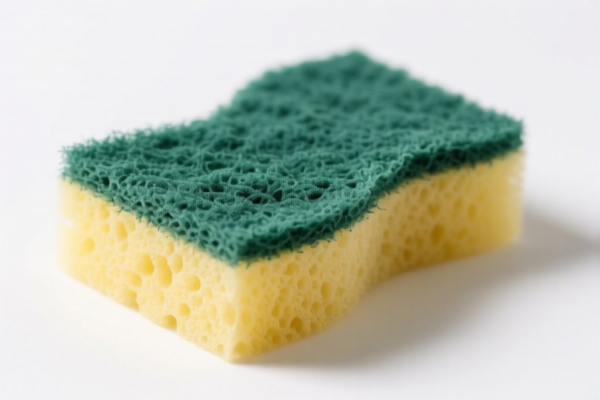
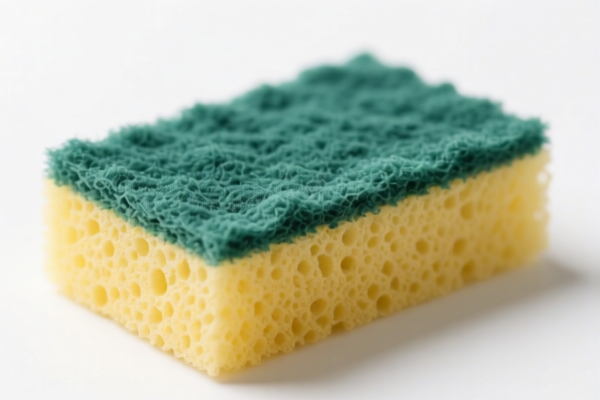
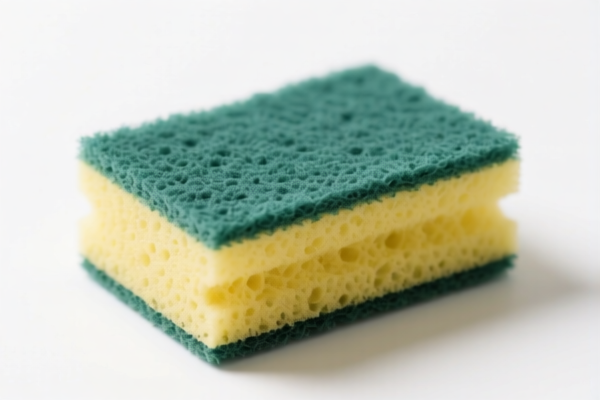
AI Analysis
🌊 Sponge Filter (PU Foam Air/Water Filter Media)
🌐 HS Code Reference & Customs Clearance Guide | 2026 Latest Tariff Analysis | Professional Clearance Strategy
📌 I. Product Definition & Classification: Do You Really Understand "Sponge Filters"?
A Sponge Filter (typically made of Polyurethane/PU foam) is a porous filtration medium used in aquaculture, industrial air filtration, or liquid purification. In international trade, its classification depends heavily on its physical form (sheet/block vs. fiber mat), manufacturing process (welded/non-welded), and end-use.
⚠️ Key Distinction Point:
- If it is a solid PU foam sheet/block → Classified under Chapter 39 (Plastics).
- If it is a non-woven short fiber mat (even if PU-based) → Classified under Chapter 56 (Non-wovens).
- If it is a specific part of a machine → Classified under Chapter 84 (Machinery).
📦 II. HS Code Classification Details (2026 Latest Tariff Authority对照)
Based on the provided data, here are the 5 possible HS Codes for Sponge Filters, ranked by likelihood and tax impact.
| HS Code | Product Description | Application Scenario | Tax Impact |
|---|---|---|---|
3921.13.50.00 |
PU Foam Sheets/Blocks: Solid polyurethane foam, not cellular rubber | Standard aquarium sponge filters, block-shaped foam filters | 39.2% (Highest Base) |
3921.19.00.90 |
Other Plastic Foam Products: General plastic polymer foam | Generic PU foam sheets not meeting specific "PU foam" criteria | 41.5% (Highest Total) |
5603.94.90.70 |
Sponge-like PU Non-woven: Porous PU fabric, non-woven structure | Soft, flexible foam fabrics for air/water filtration | 35.0% (Lowest Base) |
5603.94.90.90 |
Non-filament Non-woven: Short fiber foam filtration media | Industrial filter pads, non-continuous fiber foam mats | 35.0% (Lowest Base) |
8421.99.01.80 |
Machine Parts: Consumable parts for filtering machinery | Replaceable filter inserts specifically for industrial filtration machines | 35.0% (Lowest Base) |
🔍 Critical Note:
- Chapter 39 vs. Chapter 56: The biggest risk is misclassifying PU Non-wovens (Ch 56) as Solid Foam (Ch 39).
- If the sponge is soft, flexible, and made of bonded fibers, it belongs in 5603.
- If it is a solid, rigid or semi-rigid foam block, it belongs in 3921.
- Misclassification Penalty: Choosing Ch 39 (39.2%-41.5%) over Ch 56 (35.0%) increases tax burden by ~4-6.5% unnecessarily.
💰 III. 2026 Latest Tariff Rate Breakdown (Including Surcharges & Policy Add-ons)
✅ Applicable Country: United States (US)
✅ Origin: China (CN)
✅ Effective Date: Post-November 10, 2025 (Includes subsequent imports)
🎯 1. 3921.13.50.00 & 3921.19.00.90 —— Polyurethane Foam Products (Plastic Chapter)
| Item | Content |
|---|---|
| Base Rate | 4.2% (3921.13) or 6.5% (3921.19) |
| USITC Surcharge (Section 301) | +25.0% |
| IEEPA Surcharge (122 Clause) | +10.0% |
| Total Tax Rate | 39.2% (for 3921.13) or 41.5% (for 3921.19) |
| Tax Calculation | CIF Value × Total Rate |
| De Minimis Eligibility | ❌ NO (deny_de_minimis) |
| Legal Basis Path | IEEPA:9903.01.25 → USITC:3921.xx.xx → FOOTNOTE:301 |
📌 Explanation:
- Base Rate: Chapter 39 has a non-zero base tariff (4.2%-6.5%).
- Surcharges: Both 25% (301 Tariff) and 10% (122 Clause/IEEPA) apply.
- Total: 39.2% - 41.5%. This is the most expensive category.
- Risk: If your sponge is actually a non-woven fabric, declaring it as "PU Foam" leads to overpayment.
🎯 2. 5603.94.90.70 & 5603.94.90.90 —— Non-Woven Sponge/Filter Media (Textile Chapter)
| Item | Content |
|---|---|
| Base Rate | 0.0% |
| USITC Surcharge (Section 301) | +25.0% |
| IEEPA Surcharge (122 Clause) | +10.0% |
| Total Tax Rate | 35.0% |
| Tax Calculation | CIF Value × 35.0% |
| De Minimis Eligibility | ❌ NO (deny_de_minimis) |
| Legal Basis Path | IEEPA:9903.01.25 → USITC:5603.94.90 → FOOTNOTE:301 |
📌 Explanation:
- Base Rate: 0%. This is the key advantage of Chapter 56.
- Surcharges: Still subject to 25% + 10% surcharges.
- Total: 35.0%.
- Savings: Compared to Ch 39, you save 4.2%-6.5% in base tariff.
- Condition: The product must be technically a non-woven or short fiber mat, even if made of PU.
🎯 3. 8421.99.01.80 —— Machine Parts for Filtration (Machinery Chapter)
| Item | Content |
|---|---|
| Base Rate | 0.0% |
| USITC Surcharge (Section 301) | +25.0% |
| IEEPA Surcharge (122 Clause) | +10.0% |
| Total Tax Rate | 35.0% |
| Tax Calculation | CIF Value × 35.0% |
| De Minimis Eligibility | ❌ NO (deny_de_minimis) |
| Legal Basis Path | IEEPA:9903.01.25 → USITC:8421.99.01 → FOOTNOTE:301 |
📌 Explanation:
- Applicability: Only if the sponge is sold as a replaceable part for a specific filtration machine (e.g., an industrial air purifier or water treatment unit).
- Same Rate as Ch 56: 35.0%.
- Advantage: If customs views it as a "part" rather than a "raw material," it may simplify documentation.
🛠️ IV. Customs Clearance Practical Advice (Avoid Pitfalls)
✅ 1. Document Checklist (Mandatory)
| Document | Required | Description |
|---|---|---|
| ✅ Product Specification | ✔️ | Material: PU Foam or Non-woven? Shape: Block or Sheet? Density? |
| ✅ Photos (Clear) | ✔️ | Show texture (fibers vs. solid cell), thickness, and packaging. |
| ✅ Commercial Invoice | ✔️ | Clearly state: "Polyurethane Sponge Filter" or "Non-woven Filter Media". Avoid vague terms like "Plastic Foam". |
| ✅ Packing List | ✔️ | Weight, dimensions, quantity. |
| ✅ Origin Certificate | ✔️ | If applicable, to confirm CN origin for surcharge calculation. |
| ✅ Test Report | ✔️ | If claiming non-woven status, a material analysis report helps justify Ch 56. |
✅ 2. Declaration Tips (Key Mantra)
🔥 "Look at the Structure: Fiber Mat = Ch 56; Solid Block = Ch 39. Save 6% by choosing correctly!"
| Scenario | Correct HS Code | Incorrect Declaration | Consequence |
|---|---|---|---|
| Soft, flexible, fiber-bonded sponge | 5603.94.90.70/90 (35.0%) |
Declare as "PU Foam" (3921) |
Overpay ~6.5% |
| Rigid, solid PU foam block | 3921.13.50.00 (39.2%) |
Declare as "Non-woven" (5603) |
Customs Audit/Refund Risk |
| Filter insert for a machine | 8421.99.01.80 (35.0%) |
Declare as "Raw Material" | Unnecessary Complexity |
| Generic plastic foam (non-PU) | 3921.19.00.90 (41.5%) |
Declare as "PU Foam" | Misclassification Penalty |
✅ 3. Special Handling
| Situation | Recommendation |
|---|---|
| Dual Use (Air & Water) | Declare based on primary use and material structure. |
| OEM Custom Sponges | Provide design blueprints showing fiber bonding (for Ch 56) or foam molding (for Ch 39). |
| Bulk vs. Retail | Bulk rolls often qualify as Ch 56 non-wovens; pre-cut blocks are often Ch 39. |
| Mixed Shipments | If shipment contains both Ch 56 and Ch 39 items, declare separately to avoid penalizing the entire shipment under the higher rate. |
🌍 V. Global Market Comparison (2026 Latest)
| Country/Region | Recommended HS Code | Tax Rate (China Origin) | Certification | Remarks |
|---|---|---|---|---|
| 🇺🇸 USA | 5603.94.90.70 |
35.0% | No specific cert | Best rate if non-woven |
| 🇺🇸 USA | 3921.13.50.00 |
39.2% | No specific cert | Higher base tariff |
| 🇪🇺 EU | 5603.94 |
~4.5% | CE/RoHS | No 301/122 surcharges |
| 🇨🇳 China | 5603.94 |
~5-10% | N/A | Import duty applies |
| 🇬🇧 UK | 5603.94 |
~4.5% | UKCA/RoHS | Post-Brexit tariffs apply |
📌 Conclusion:
- USA is the most challenging market due to 301 + 122 Clauses.
- Optimization: If your sponge can be technically classified as Non-woven (Ch 56) rather than Solid Foam (Ch 39), you save ~6% in base tariff.
- Action: Provide material structure evidence to customs to support Ch 56 classification.
📌 VI. Common Mistakes & Pitfalls (Lessons Learned)
❌ Mistake 1: Calling all sponges "PU Foam" (3921)
👉 Result: Paying 39.2%-41.5% when 35.0% was possible.
👉 Fix: Analyze if it’s fiber-bonded → Use Ch 56.
❌ Mistake 2: Ignoring the "122 Clause" (IEEPA 10%)
👉 Result: Underestimating total landed cost.
👉 Fix: Always include +10% in cost calculations for CN origin goods.
❌ Mistake 3: Vague Description "Sponge"
👉 Result: Customs holds shipment for re-classification.
👉 Fix: Use precise terms: "Polyurethane Non-woven Filter Media" or "PU Foam Block".
❌ Mistake 4: Assuming De Minimis Applies
👉 Result: Package detained at border.
👉 Fix: NO de minimis for HS Codes 3921 and 5603 from China under current rules.
✅ Correct Declaration Example:
"Polyurethane Non-woven Filter Sponge, Porous, Used for Air Filtration, Model XYZ, Made in China"
→ Supports HS 5603.94.90.70 (35.0% Tax).
🎯 VII. Conclusion: Precise Classification, Maximum Savings!
🎯 Remember the Mantra:
🔹 "Non-woven = 35%; Solid Foam = 39.2%; Don't Pay for What You Don't Owes!"
🔹 "Structure Determines Code: Fibers go to 56, Blocks go to 39."
🔹 "122 Clause + 301 = 35%-41.5% Total Tax."
📌 Pro Tip:
- If your sponge is flexible and porous, provide a material cross-section photo to prove it is non-woven/fiber-based.
- Apply for an Advance Ruling from US CBP if you are unsure about Ch 39 vs. Ch 56.
- Consider supply chain diversification if tax burden exceeds 35% significantly affects margins.
📣 Immediate Action:
📞 Consult a licensed customs broker with material structure evidence.
🚀 Optimize your HS Code from3921to5603if applicable → Save 4.2-6.5% instantly!
✨ Professional Customs Clearance Starts with Accurate Classification!
💼 Every Percent Saved is Profit Earned!
Customer Reviews
About HS Code Classification
The Harmonized System (HS) is an internationally standardized nomenclature developed by the World Customs Organization (WCO) to classify traded products. Over 200 countries use the HS system as the basis for customs tariffs, trade statistics, and import/export regulations.
Each HS code follows a hierarchical structure:
- Chapter (2 digits) — Broad category of goods (e.g., Chapter 84: Machinery and Mechanical Appliances)
- Heading (4 digits) — More specific grouping within the chapter
- Subheading (6 digits) — Internationally standardized breakdown, used by all WCO member countries
- National subdivisions (8-10 digits) — Country-specific extensions for further classification, such as US HTSUS 10-digit codes
Correct HS code classification is essential for smooth customs clearance, accurate duty payment, and compliance with trade regulations. Misclassification can lead to customs delays, overpayment of duties, or penalties.
When importing from CN to US, the applicable tariff rates may include:
- Most-Favored-Nation (MFN) rate — The standard duty rate applied to WTO members
- General rate — Applied to countries without trade agreements
- Trade remedy duties — Additional tariffs such as Section 301 (anti-dumping), Section 232 (national security), or countervailing duties
The information provided on this page is for reference purposes only. For official classification, please consult with your local customs authority or a licensed customs broker.