Sports Socks
CN → US| HS编码 | 关税税率 | 原产国 | 目的国 | 文档 |
|---|---|---|---|---|
| 6115969020 | 24.6% | CN | US | 官方文档 |
| 6115959000 | 31.0% | CN | US | 官方文档 |
| 6111206050 | 25.6% | CN | US | 官方文档 |
| 6117809510 | 32.1% | CN | US | 官方文档 |
| 6117909080 | 32.1% | CN | US | 官方文档 |
商品图片
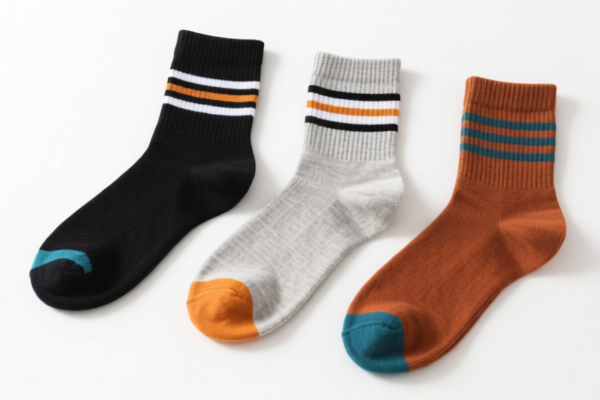
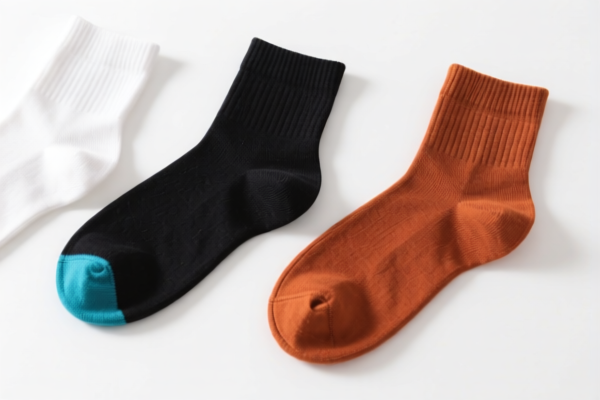
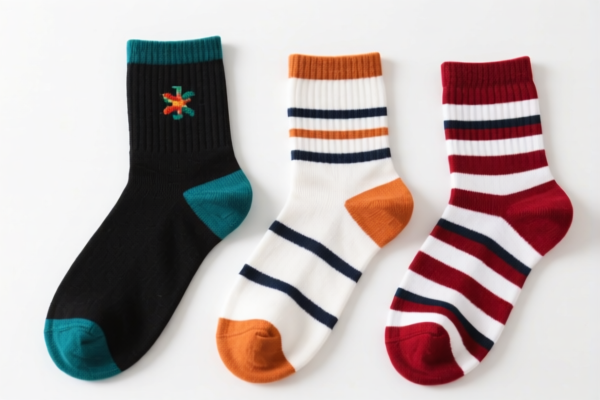
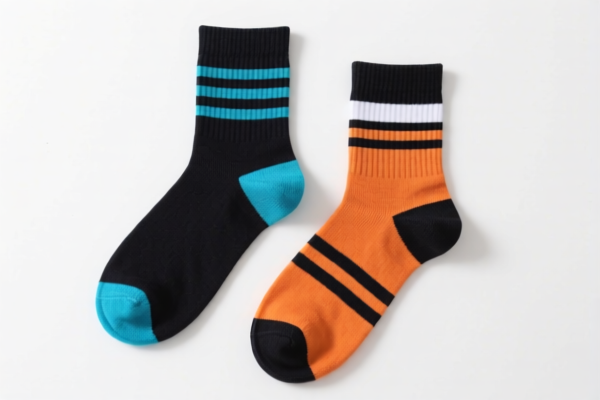
AI分析
🧦 Sports Socks (Ammonia/Synthetic & Cotton Blends)
🌐 HS Code Reference & Customs Clearance Guide | 2026 Latest Tariff Analysis | Professional Clearance Strategy
📌 1. Product Definition & Classification: Are You Clear on "Sports Socks"?
Sports socks are essential athletic apparel designed for performance, comfort, and durability. In international trade, the classification depends heavily on material composition (100% synthetic vs. blends) and product form (socks proper vs. knitting accessories). Misclassification can lead to significant tariff discrepancies, especially under current US trade policies.
⚠️ Key Distinction Point:
- 100% Synthetic Fibers (e.g., Ammonia/Elastane): Generally attract lower base tariffs but may still face Section 301/122 additional duties.
- Blended Fibers (Cotton/Polyester/Spandex): Often categorized under "Other Knitted Socks," attracting higher base tariffs.
- Children’s Cotton Socks: Specific subheadings apply for infant/child wear, which can differ from adult generic socks.
- Knitting Accessories vs. Apparel: Some items classified as "accessories" (e.g., certain children's cotton items) may fall under different chapters (6117) despite being sock-like.
📦 2. HS Code Classification Details (2026 Latest Tariff Authority Cross-Reference)
| HS Code | Product Description | Applicable Scenario | Material/Feature |
|---|---|---|---|
6115.96.90.20 |
Sports socks, matching sock morphology & synthetic fiber material | Adult athletic socks, high elasticity | Synthetic Fiber Only (Ammonia/Elastane focus) |
6115.95.90.00 |
Sports socks, matching sock morphology & Cotton/Polyester/Ammonia blend | General sports socks, mixed materials | Blended Fibers (Cotton/Poly/Spandex) |
6111.20.60.50 |
Children's cotton sports socks, matching cotton material & infant sock attribute | Baby/Toddler athletic wear | 100% Cotton (Infant/Child specific) |
6117.80.95.10 |
Children's cotton sports socks, matching cotton material & knitting apparel accessory form | Children's socks classified as accessories | 100% Cotton (Accessory category) |
6117.90.90.80 |
Children's cotton sports socks, matching cotton material & knitting apparel accessory scope | Children's socks under general accessory scope | 100% Cotton (General Accessory) |
🔍 Critical Reminder:
- Material Dictates Duty: Synthetic-only socks (6115.96) have a lower base tariff (14.6%) compared to blends (6115.95at 13.5%) or cotton accessories (6117at 14.6%).
- Children’s Items: Cotton socks for children can be classified either as knitted socks (6115) or knitting accessories (6117). The choice affects the base duty rate and potentially the tariff burden.
- "Sports" Label: The term "sports" alone does not dictate the HS code; the fiber content and target demographic (adult vs. child) are the primary drivers.
💰 3. 2026 Latest Tariff Rate Breakdown (Including Additional Taxes, Policy Add-ons)
✅ Applicable Country: USA (US)
✅ Origin: China (CN)
✅ Effective Time: 2025/2026 (Current US Trade Policy)
✅ Note: All rates below include Base Duty + Section 301 (Additional) + Section 122 (10%).
🎯 1. 6115.96.90.20 – Sports Socks (Synthetic Fiber)
| Item | Content |
|---|---|
| Base Duty | 14.6% |
| Section 301 Additional | 0.0% (No extra Section 301 added for this specific synthetic subheading) |
| Section 122 Duty | +10.0% |
| Total Effective Rate | 24.6% |
| Calculation Basis | CIF Value × 24.6% |
| De Minimis Exemption? | ❌ No (Deny de minimis for China-origin goods under current rules) |
| Legal Path | HTSUS:6115.96.90.20 → USITC Footnote → Section 122 |
📌 Explanation:
- This is the most cost-effective classification among the list.
- While it has a moderate base duty (14.6%), it avoids Section 301 additional tariffs, resulting in the lowest total tax burden (24.6%).
- Ideal for high-performance synthetic athletic socks.
🎯 2. 6115.95.90.00 – Sports Socks (Cotton/Polyester/Ammonia Blend)
| Item | Content |
|---|---|
| Base Duty | 13.5% |
| Section 301 Additional | +7.5% |
| Section 122 Duty | +10.0% |
| Total Effective Rate | 31.0% |
| Calculation Basis | CIF Value × 31.0% |
| De Minimis Exemption? | ❌ No |
| Legal Path | HTSUS:6115.95.90.00 → Section 301 → Section 122 |
📌 Explanation:
- Despite a slightly lower base duty (13.5%) than pure synthetic, it incurs Section 301 additional duties.
- Total rate is 31.0%, making it 6.4% more expensive than the synthetic-only option.
- Common for mid-range cotton-blend athletic socks.
🎯 3. 6111.20.60.50 – Children’s Cotton Sports Socks (Infant Attribute)
| Item | Content |
|---|---|
| Base Duty | 8.1% |
| Section 301 Additional | +7.5% |
| Section 122 Duty | +10.0% |
| Total Effective Rate | 25.6% |
| Calculation Basis | CIF Value × 25.6% |
| De Minimis Exemption? | ❌ No |
| Legal Path | HTSUS:6111.20.60.50 → Section 301 → Section 122 |
📌 Explanation:
- Infant/children’s cotton socks have the lowest base duty (8.1%) due to preferential treatment for infant wear.
- Total rate is 25.6%, making it very competitive.
- Must clearly declare as Children’s/Infant goods to qualify.
🎯 4. & 5. 6117.80.95.10 & 6117.90.90.80 – Children’s Cotton Sports Socks (Accessory Classification)
| Item | Content |
|---|---|
| Base Duty | 14.6% |
| Section 301 Additional | +7.5% |
| Section 122 Duty | +10.0% |
| Total Effective Rate | 32.1% |
| Calculation Basis | CIF Value × 32.1% |
| De Minimis Exemption? | ❌ No |
| Legal Path | HTSUS:6117.80/90 → Section 301 → Section 122 |
📌 Explanation:
- These codes classify children’s cotton socks as knitting accessories rather than apparel.
- This results in the highest total tax rate (32.1%) among all listed options.
- Avoid this classification if possible; opt for6111.20.60.50(Infant Attribute) instead to save 6.5% in duties.
- Often used when the product is bundled as an accessory or lacks specific infant sizing/labeling.
🛠️ 4. Customs Clearance Practical Advice (Real-World Pitfall Guide)
✅ 1. Preparation Checklist (Non-negotiable)
| Document | Required | Notes |
|---|---|---|
| ✅ Product Specification Sheet | ✔️ | Must detail fiber content (e.g., "80% Cotton, 15% Polyester, 5% Spandex"). |
| ✅ Fabric Composition Label | ✔️ | Clear photo of the care label showing fiber breakdown. |
| ✅ Product Photos | ✔️ | Front, back, and sole view. Distinguish between "sock" and "accessory." |
| ✅ Commercial Invoice | ✔️ | Use precise description: e.g., "Men's Synthetic Sports Socks" or "Infant Cotton Socks." |
| ✅ Packing List | ✔️ | Ensure quantities match invoice. |
| ✅ Origin Certificate | ✔️ | For China-origin goods, required to apply Section 301/122 rates. |
✅ 2. Declaration Tips (Key Mantras)
🔥 "Material First, Child Specific, Accessory Avoided, Tax Reduced!"
| Scenario | Correct Declaration | Wrong Practice |
|---|---|---|
| Pure Synthetic Socks | HS: 6115.96.90.20 |
Misdeclare as blend → Pay 31.0% instead of 24.6% |
| Cotton/Poly Blend | HS: 6115.95.90.00 |
Declare as accessory → Pay 32.1% |
| Children’s Cotton Socks | HS: 6111.20.60.50 |
Declare as generic accessory (6117) → Pay 32.1% |
| Mixed Package | Split Declaration | Bundle synthetic & cotton items → Potential audit & misclassification |
✅ 3. Special Case Handling
| Situation | Handling Advice |
|---|---|
| OEM Private Label | Provide brand authorization and design specs to prove "sports" function if challenged. |
| "No-Show" Athletic Socks | Ensure they are clearly socks (foot coverage). If just ankle bands, might be classified differently. |
| Children’s Socks with No Size Label | Risk of being classified as 6117 (Accessory) → Always label as Infant/Child. |
| Sample vs. Bulk | Samples still subject to full tariffs if declared as commercial goods. Use correct HS even for samples. |
🌍 5. Global Market Comparison (2026 Latest)
| Country/Region | Recommended HS Code | Est. Duty (China Origin) | Certification/Note |
|---|---|---|---|
| 🇺🇸 USA | 6115.96.90.20 |
24.6% | Section 122 + Base. Most cost-effective. |
| 🇨🇳 China | 6115.96.90.20 |
~10-15% | Lower import duty, no Section 301. |
| 🇪🇺 EU | 6115.96.90.20 |
~12-14% | No Section 301/122. CE/RoHS not required for apparel. |
| 🇬🇧 UK | 6115.96.90.20 |
~12-14% | Post-Brexit tariff applies. |
| 🇦🇺 Australia | 6115.96.90.20 |
~5-10% | GSP or FTA benefits may apply depending on origin. |
📌 Conclusion:
- USA is the most expensive market due to Section 122 and potential Section 301 duties.
- Classifying as Synthetic (6115.96) or Infant Cotton (6111.20) is crucial to minimize US duties.
- Avoid Accessory Classification (6117) for children’s socks if you can prove they are apparel/infant wear.
📌 6. Common Mistakes & Pitfalls (Lessons Learned)
❌ Mistake 1: Declaring cotton-blend socks as "Synthetic"
👉 Consequence: Customs inspection reveals cotton content → Reclassification to 6115.95 → Pay 31.0% + Penalties.
❌ Mistake 2: Labeling children’s socks as "Unisex Adult"
👉 Consequence: Lose infant preferential rate → Pay 32.1% instead of 25.6%.
❌ Mistake 3: Using "Hosiery" or "Legwear" as general description
👉 Consequence: Vague description leads to Hold for Inspection → Delays and storage fees.
❌ Mistake 4: Ignoring Section 122 (10%)
👉 Consequence: Underestimation of landed cost → Profit Margin Erosion.
✅ Correct Practice:
"Men's Running Socks, 100% Synthetic Fibers, Ammonia/Elastane, Model XYZ, US Origin (or China Origin)"
"Infant Cotton Sports Socks, 100% Cotton, Size 0-6M, Labelled 'Infant'"
🎯 7. Conclusion: Precise Classification, Maximize Profit!
🎯 Remember the Mantra:
🔹 "Synthetic 24.6%, Blend 31.0%, Infant 25.6%, Accessory 32.1%."
🔹 "Check the Label, Check the Fiber, Avoid the Accessory Trap."
🔹 "One Percent in Declaration, Thousands Saved in Duty."
📌 Pro Tip:
If your socks are not made in China (e.g., Vietnam, Bangladesh), you may avoid Section 301/122 duties entirely, reducing rates to base duty only (often 5-10%).
Always request Proof of Origin from suppliers.
📣 Action Now:
📞 Contact your customs broker with fiber composition data.
🚀 Request HS Code Pre-Ruling if volume is high.
💡 Optimize supply chain by sourcing from non-China origins if US market is primary.
✨ Professional Clearance Starts with Accurate Classification!
💼 Every Dollar Saved in Duty is Pure Profit!
用户评价
关于 HS 编码归类
协调制度(HS)是由世界海关组织(WCO)制定的国际贸易商品分类标准。全球 200 多个国家采用 HS 系统作为海关关税、贸易统计和进出口监管的基础。
每个 HS 编码遵循以下层级结构:
- 章(2 位)——商品大类(例如:第 84 章:机器和机械设备)
- 品目(4 位)——章内的更具体分类
- 子目(6 位)——国际通用细分,所有 WCO 成员国统一使用
- 本国细分(8-10 位)——各国自行扩展的细分编码,如美国 HTSUS 10 位编码
正确的 HS 编码归类对于顺利通关、准确缴纳关税和遵守贸易法规至关重要。错误归类可能导致海关延误、多缴关税或罚款。
从CN进口到US时,适用的关税税率可能包括:
- 最惠国(MFN)税率——适用于 WTO 成员国的标准关税税率
- 普通税率——适用于无贸易协定国家
- 贸易救济关税——附加关税,如 301 条款(反倾销)、232 条款(国家安全)或反补贴税
本页内容仅供参考。如需正式归类,请咨询当地海关或持牌报关代理。