Sports Socks
CN → US| HS Code | Tariff Rate | Origin | Destination | Doc |
|---|---|---|---|---|
| 6115969020 | 24.6% | CN | US | Official Doc |
| 6115959000 | 31.0% | CN | US | Official Doc |
| 6111206050 | 25.6% | CN | US | Official Doc |
| 6117809510 | 32.1% | CN | US | Official Doc |
| 6117909080 | 32.1% | CN | US | Official Doc |
Product Images
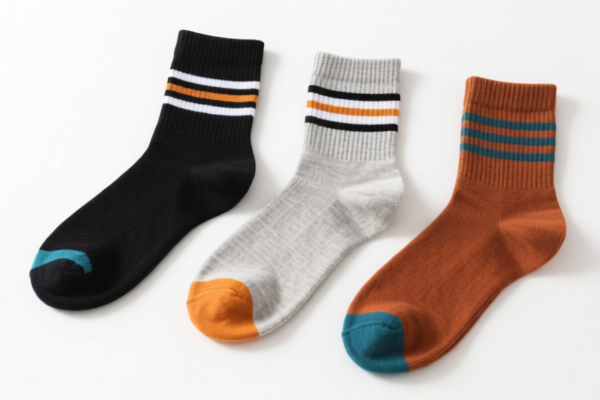
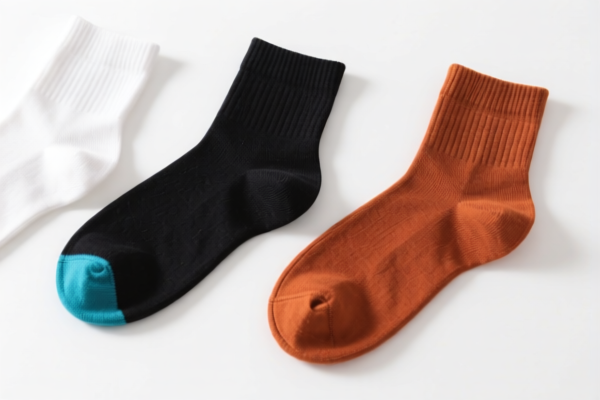
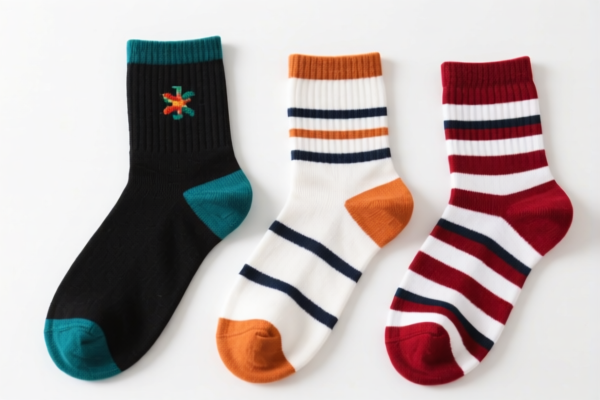
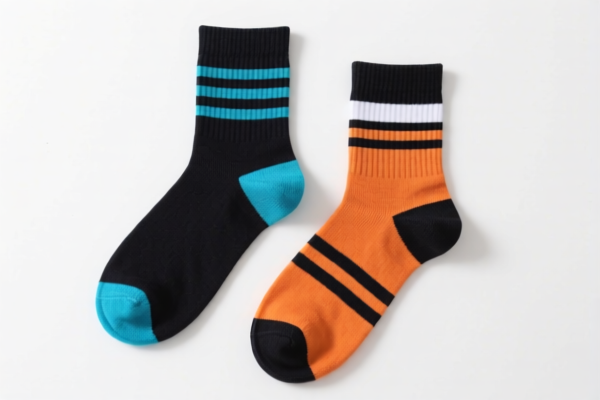
AI Analysis
🧦 Sports Socks (Ammonia/Cotton Blends)
🌐 HS Code Reference & Customs Clearance Guide | 2026 Latest Tariff Analysis | Professional Clearance Strategy
📌 I. Product Definition & Classification: Do You Really Understand “Sports Socks”?
Sports socks, in international trade, are primarily categorized under Chapter 61 (Knitted or Crocheted Clothing Accessories). The classification hinges on three critical factors: 1. Material Composition (Synthetic fibers like Spandex/Amod vs. Cotton blends) 2. Knitting Structure (Knit vs. Crochet) 3. Specific Use/Attributes (General sports wear vs. Infant/Baby specific)
⚠️ Key Distinction Point:
- If made primarily of synthetic fibers (e.g., Spandex/Ammonia dominant) → 6115 series.
- If made of Cotton (even if mixed) and intended for general use → 6117 series (Accessories).
- If specifically designed for Infants/Babies (usually size < 10) → 6111 series (Baby knitted goods).
📦 II. HS Code Classification Details (2026 Latest Tariff Authority Comparison)
| HS Code | Product Description | Application Scenario | Tax Detail Breakdown | Total Tax Rate |
|---|---|---|---|---|
6115.96.90.20 |
Ammonia Sports Socks (Synthetic Fiber Dominant) | High-performance synthetic sports socks | Base: 14.6% + Section 122: 10% | 24.6% |
6115.95.90.00 |
Ammonia Sports Socks (Cotton/Polyester/Spandex Blend) | Mixed-fiber knit socks | Base: 13.5% + Surtax: 7.5% + Section 122: 10% | 31.0% |
6111.20.60.50 |
Children's Cotton Sports Socks (Baby Attributes) | Infant-sized cotton socks meeting baby criteria | Base: 8.1% + Surtax: 7.5% + Section 122: 10% | 25.6% |
6117.80.95.10 |
Children's Cotton Sports Socks (General Accessory) | Cotton knit accessories for children (non-baby) | Base: 14.6% + Surtax: 7.5% + Section 122: 10% | 32.1% |
6117.90.90.80 |
Children's Cotton Sports Socks (Other Accessories) | Other cotton knit/crochet accessories | Base: 14.6% + Surtax: 7.5% + Section 122: 10% | 32.1% |
🔍 Key Reminder:
- Synthetic Dominance: If the sock is primarily "Ammonia/Synthetic" without significant cotton content in the definition, it falls under 6115.
- Cotton Dominance: If it is "Children's Cotton," check if it meets Baby criteria. If yes → 6111. If no → 6117.
- Section 122 Tariff: Note that 10% is added to almost all categories listed above, significantly impacting the final cost.
💰 III. 2026 Latest Tariff Rate Breakdown (Including Surtaxes & Policy Add-ons)
✅ Applicable Country: United States (US)
✅ Origin: China (CN)
✅ Effective Time: 2025/2026 Period
🎯 1. 6115.96.90.20 —— Ammonia Sports Socks (Synthetic)
| Item | Content |
|---|---|
| Base Tariff | 14.6% |
| Section 122 Tariff | +10% |
| Surtax | 0.0% |
| Total Tax Rate | 24.6% |
| Calculation Basis | CIF Value × 24.6% |
| De Minimis Eligibility | ❌ No (High tariff threshold) |
| Legal Basis | Base:14.6% + Sec122:10% |
📌 Explanation:
- This is the lowest tax bracket among the options, applicable to pure synthetic/ammonia blends.
- No Section 301 Surtax applies here, only the specific Section 122 duty.
🎯 2. 6115.95.90.00 —— Ammonia Sports Socks (Mixed Blend)
| Item | Content |
|---|---|
| Base Tariff | 13.5% |
| Surtax | +7.5% |
| Section 122 Tariff | +10% |
| Total Tax Rate | 31.0% |
| Calculation Basis | CIF Value × 31.0% |
| De Minimis Eligibility | ❌ No |
| Legal Basis | Base:13.5% + Surtax:7.5% + Sec122:10% |
📌 Note:
- Although the base tariff is lower (13.5%), the 7.5% surtax pushes the total higher than the pure synthetic category.
- Common for mixed-fiber performance socks.
🎯 3. 6111.20.60.50 —— Children’s Cotton Sports Socks (Baby)
| Item | Content |
|---|---|
| Base Tariff | 8.1% |
| Surtax | +7.5% |
| Section 122 Tariff | +10% |
| Total Tax Rate | 25.6% |
| Calculation Basis | CIF Value × 25.6% |
| De Minimis Eligibility | ❌ No |
| Legal Basis | Base:8.1% + Surtax:7.5% + Sec122:10% |
📌 Critical:
- Must meet "Baby" definition (usually specific size/material standards for infants).
- Has the lowest Base Tariff (8.1%) but still incurs surtax.
🎯 4. 6117.80.95.10 & 6117.90.90.80 —— Children’s Cotton Sports Socks (Non-Baby)
| Item | Content |
|---|---|
| Base Tariff | 14.6% |
| Surtax | +7.5% |
| Section 122 Tariff | +10% |
| Total Tax Rate | 32.1% |
| Calculation Basis | CIF Value × 32.1% |
| De Minimis Eligibility | ❌ No |
| Legal Basis | Base:14.6% + Surtax:7.5% + Sec122:10% |
📌 Warning:
- This is the highest tax bracket (32.1%).
- Applies if the socks are cotton-based but do not qualify as "Baby" items.
- Common mistake: Misclassifying children's socks as "Baby" when they are not, leading to penalties.
🛠️ IV. Customs Clearance Practical Advice (Real-World Pitfall Guide)
✅ 1. Documentation Checklist (Non-negotiable)
| Document | Required? | Explanation |
|---|---|---|
| ✅ Product Specification Sheet | ✔️ | Must detail material composition (e.g., "80% Cotton, 15% Polyester, 5% Spandex"). |
| ✅ Fabric Composition Label | ✔️ | Photo of the tag showing fiber content is crucial for HS Code validation. |
| ✅ Size Chart | ✔️ | Critical for distinguishing between "Baby" (6111) and "Children's" (6117). |
| ✅ Commercial Invoice | ✔️ | Must specify "Sports Socks" and clearly state origin (China). |
| ✅ Packing List | ✔️ | Ensure no mixed containers with different HS codes without proper segregation. |
✅ 2. Declaration Tips (Key Mnemonics)
🔥 “Synthetics 24, Mixed 31, Baby 25, Kids 32!”
| Scenario | Correct Declaration | Wrong Practice |
|---|---|---|
| Pure Synthetic/Ammonia Socks | 6115.96.90.20 |
Misdeclare as Cotton → 32.1% |
| Mixed Fiber Socks | 6115.95.90.00 |
Misdeclare as Pure Synthetic → Audit Risk |
| Infant Socks (<10cm length approx.) | 6111.20.60.50 |
Misdeclare as General Kids → 25.6% vs 32.1% |
| Older Children's Socks | 6117.80.95.10 |
Misdeclare as Baby → Penalty for Fraud |
✅ 3. Special Situation Handling
| Situation | Handling Advice |
|---|---|
| OEM Custom Socks | Provide design proofs and material test reports to prove fiber content. |
| "One Size Fits All" Socks | Likely falls under 6117 (Children's/Adults), not Baby. Use 6117.80.95.10. |
| Mixed Container (Baby + Kids) | Must separate declarations. Baby socks to 6111, Kids to 6117. Do not mix. |
| Sample Shipments | Still subject to tariffs. No De Minimis exemption for these high-tariff items. |
🌍 V. Global Market Clearance Comparison (2026 Latest)
| Country/Region | Recommended HS Code | Tariff (China Origin) | Certification Requirements | Notes |
|---|---|---|---|---|
| 🇺🇸 USA | Varies (See above) | 24.6% - 32.1% | CPSIA (If Baby), ASTM F963 | High Section 122 impact. |
| 🇨🇳 China | Same HS Codes | 7.5% - 14.6% | No specific textile import tax | Export market. |
| 🇪🇺 EU | 6115/6117 | 0% - 12% | REACH, Textile Labeling | No Section 122. |
| 🇦🇺 Australia | 6115/6117 | 5% - 10% | No specific textile certs | Lower base rates. |
| 🇯🇵 Japan | 6115/6117 | 14% - 16% | No specific textile certs | Standard rates. |
📌 Conclusion:
- The US market is the most expensive due to Section 122 and potential Surtaxes.
- EU/Japan/Australia have lower barriers, making them more cost-effective for high-volume sports sock exports.
- Optimization Strategy: If possible, source materials from non-China origins to avoid Section 122/Surtax, or design products to fit the 6115.96.90.20 (24.6%) bracket if synthetic.
📌 VI. Common Errors & Pitfall Guide (Blood & Tears Lessons)
❌ Mistake 1: Declaring "Children's Cotton Socks" as "Baby Socks" to save tax
👉 Consequence: Customs inspection fails → Penalty + Back Taxes + Delay.
👉 Fix: Strictly adhere to size and material definitions for "Baby" (6111).
❌ Mistake 2: Mixing "Synthetic" and "Cotton" socks in one container without proper breakdown
👉 Consequence: Customs may apply the highest rate (32.1%) to the entire shipment or audit the whole batch.
👉 Fix: Separate SKUs clearly in the Commercial Invoice.
❌ Mistake 3: Ignoring the 10% Section 122 Tariff in cost calculations
👉 Consequence: Profit margin wiped out by unexpected duties.
👉 Fix: Always add 10% to base duty calculations for US imports.
✅ Correct Approach:
"Children's Knitted Sports Socks, 80% Cotton, 20% Spandex, Size 4-6Y, for Retail Sale"
Declared as:6117.80.95.10(32.1% Total Tax)
🎯 VII. Conclusion: Precise Classification, Cost Control, Smooth Clearance!
🎯 Remember the Mnemonic:
🔹 “Synthetics 24, Mixed 31, Baby 25, Kids 32!”
🔹 “Section 122 is 10%, Don’t Forget It!”
🔹 “Baby vs. Kids is the Key, Misclassify and Pay!”
📌 Pro Tip:
- If your sports socks are not for infants, avoid 6111.
- If they are not pure synthetic, avoid 6115.96.90.20.
- Pre-ruling (Advance Ruling) is highly recommended for large volumes to lock in the HS Code and tax rate.
📣 Immediate Action:
📞 Contact your customs broker with material test reports + size charts.
🚀 Secure your HS Code, calculate landed costs accurately, and profit safely!
✨ Professional Customs Clearance Starts with Precise Classification!
💼 Every percentage point of tariff difference matters!
Customer Reviews
About HS Code Classification
The Harmonized System (HS) is an internationally standardized nomenclature developed by the World Customs Organization (WCO) to classify traded products. Over 200 countries use the HS system as the basis for customs tariffs, trade statistics, and import/export regulations.
Each HS code follows a hierarchical structure:
- Chapter (2 digits) — Broad category of goods (e.g., Chapter 84: Machinery and Mechanical Appliances)
- Heading (4 digits) — More specific grouping within the chapter
- Subheading (6 digits) — Internationally standardized breakdown, used by all WCO member countries
- National subdivisions (8-10 digits) — Country-specific extensions for further classification, such as US HTSUS 10-digit codes
Correct HS code classification is essential for smooth customs clearance, accurate duty payment, and compliance with trade regulations. Misclassification can lead to customs delays, overpayment of duties, or penalties.
When importing from CN to US, the applicable tariff rates may include:
- Most-Favored-Nation (MFN) rate — The standard duty rate applied to WTO members
- General rate — Applied to countries without trade agreements
- Trade remedy duties — Additional tariffs such as Section 301 (anti-dumping), Section 232 (national security), or countervailing duties
The information provided on this page is for reference purposes only. For official classification, please consult with your local customs authority or a licensed customs broker.